
Table of Contents
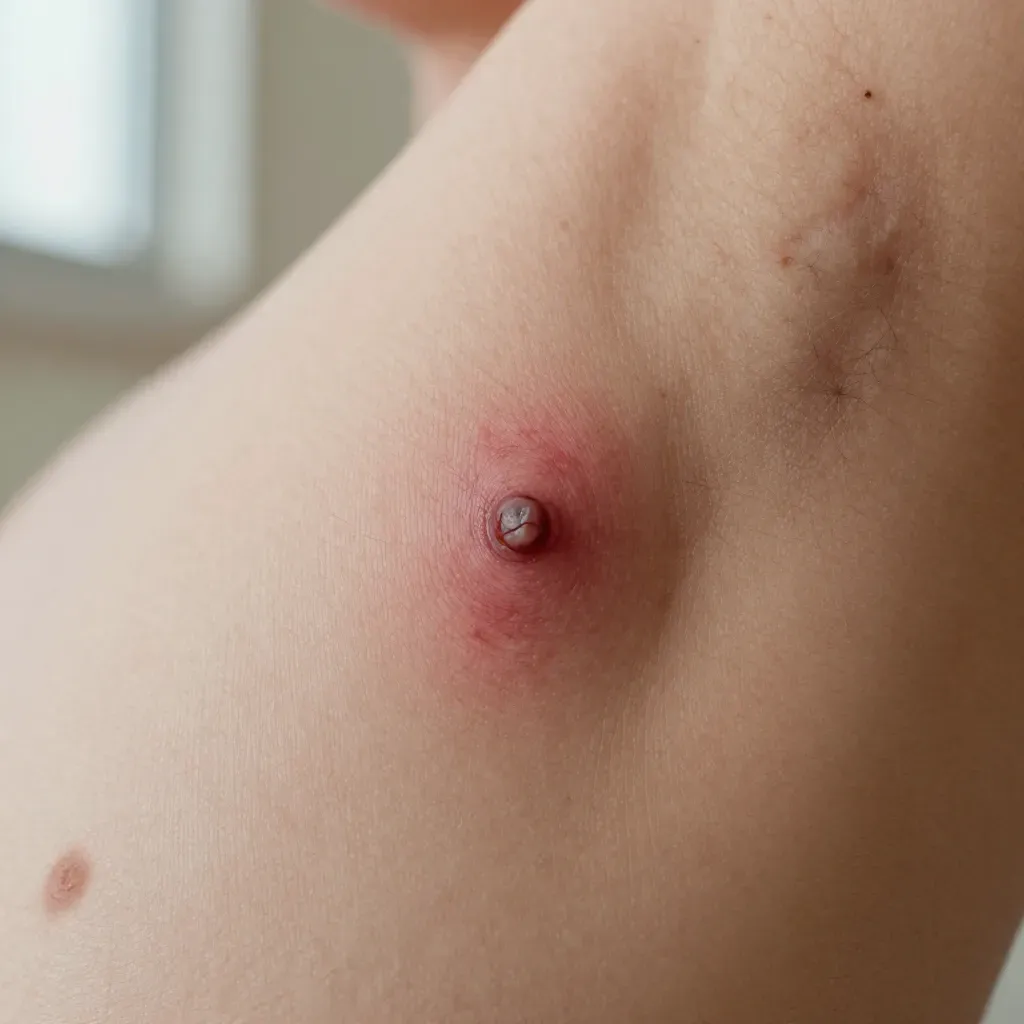
Armpit ingrown hair cysts form when shaved hair grows back into skin. The blunt razor tip pierces skin as curly hair grows sideways. Your body walls off the trapped hair with a fluid sac. This creates a firm painful lump that can become infected.
Treat small cysts at home with warm compresses. Apply heat 10-15 minutes 3-4 times daily for 2-3 days. Sterilize a needle with alcohol and pierce the white tip. Use tweezers to pull the hair out straight. Apply antiseptic cream immediately.
Stop home treatment if the cyst exceeds pea size or causes severe pain. See a doctor for spreading redness, red streaks, foul pus, or fever. Never squeeze or pop the cyst. This pushes bacteria deeper and causes scarring.
Doctors perform incision and drainage under local anesthetic. They inject steroids for swollen non-infected cysts. Oral antibiotics treat spreading infections. Isotretinoin reduces recurrences for chronic cases.
Prevent future cysts by shaving with the grain using a sharp single-blade razor. Exfoliate 2-3 times weekly with salicylic acid pads. Laser hair removal permanently destroys follicles after 6-8 sessions. Wear loose cotton clothing and use non-comedogenic deodorant.
Question | Answer |
|---|---|
What causes armpit ingrown hair cysts? | Shaving cuts hair bluntly and curly hair grows back into skin. |
Can I remove a cyst at home? | Yes, if it is small and you can see the hair after warm compresses. |
When should I see a doctor? | See a doctor for large, painful, or infected cysts with fever. |
What medical treatments exist? | Doctors drain cysts, inject steroids, or prescribe antibiotics. |
How can I prevent future cysts? | Shave with the grain, exfoliate regularly, and get laser hair removal. |
Armpit ingrown hair cysts form when shaved hair grows back into the skin.
Why Armpits Are Prone
The armpit has coarse, curly hair and a warm, moist environment. Shaving cuts hair bluntly. The sharp tip can easily pierce the skin wall as it grows. Dead skin cells can trap the hair before it exits.
The Growth Process
Hair normally grows straight up and out. After shaving, the follicle may push the hair in a curved path. The hair loops back and re-enters the skin. This is pseudofolliculitis barbae. The body treats the ingrown hair as a foreign invader.
Cyst Formation
Inflammation builds around the trapped hair. The body walls it off with a sac of fluid or keratin. This creates a firm, often painful lump under the skin. Infection can turn it into a pus-filled abscess.
Factor | Effect on Armpit Hair |
|---|---|
Blunt cut from razor | Sharp tip easily re-penetrates skin |
Curly hair texture | Grows sideways back into skin |
Skin friction | Clothes rub hair deeper into skin |
Dead skin buildup | Blocks hair exit, forces it sideways |
Key Risk Factors
- Shaving against the grain
- Using a dull razor
- Pulling skin taut while shaving
- Shaving too frequently
- Tight clothing causing constant irritation
The cyst is not the hair itself. It is the body's inflammatory response. The trapped hair acts as a persistent irritant. The cyst can grow for weeks or months. It may resolve on its own if the hair is freed. Often it needs intervention.
Apply warm compresses and use sterile tools for safe home removal.
Step-By-Step Home Removal
Clean the armpit with antibacterial soap. Rinse thoroughly. Apply a warm, damp washcloth for 10-15 minutes. Repeat this 3-4 times daily for 2-3 days. The heat draws the cyst to a head and softens the skin surface. It also increases blood flow to help your body fight any minor infection.
Once you see a white or yellow tip, sterilize a needle with rubbing alcohol. Let it dry completely. Gently pierce the very top of the cyst. Use sterile tweezers to grasp and pull the trapped hair straight out. Do not dig around if you cannot see the hair. Apply antiseptic cream immediately. Cover with a bandage if it is weeping.
Tools You Need
Tool | Purpose |
|---|---|
Clean washcloth | Apply warm compress |
Rubbing alcohol | Disinfect needle and tweezers |
Fine-point needle | Pierce cyst surface only |
Sharp tweezers | Extract hair cleanly |
Antiseptic cream | Prevent infection after |
Bandaids | Cover wound if needed |
Warning Signs to Stop
- Cyst larger than a pea
- Severe pain or throbbing
- Swelling spreads beyond lump
- Red streaks radiating outward
- Pus with foul odor
- Fever, chills, or feeling ill
Home removal only works for small, superficial cysts where you can see the hair. If the cyst is deep, hard, or recurring, see a doctor. Repeated digging causes trauma and worsens inflammation. After healing, exfoliate the area 2-3 times weekly with a gentle scrub to prevent new cysts. Use a single-blade razor and shave with the grain to reduce future occurrences.
See a doctor if the cyst grows large, painful, or shows infection signs.
Red Flags for Medical Care
Seek professional help if the cyst exceeds 1 inch in diameter. Intense throbbing pain that limits arm movement needs evaluation. Spreading redness or warmth indicates cellulitis. Fever over 100.4°F means infection may be spreading. Multiple cysts in one armpit suggest an underlying skin condition.
Home vs Doctor Treatment Thresholds
Feature | Home Care OK | See Doctor |
|---|---|---|
Size | Smaller than pea | Larger than pea or growing |
Pain | Mild tenderness | Severe, worsening pain |
Duration | Less than 1 week | More than 2 weeks |
Drainage | Clear or slightly cloudy | Thick yellow/green pus |
Systemic | Feeling fine | Fever, chills, fatigue |
Medical Procedures
Doctors perform incision and drainage under sterile conditions. They inject local anesthetic, make a small cut, and remove hair and pus. Steroid injections reduce inflammation without surgery. Oral antibiotics treat bacterial infections. For recurrent cysts, doctors may prescribe isotretinoin to shrink oil glands.
When to Consider Specialist Referral
- Cysts return in the same spot repeatedly
- Scarring or tunneling under skin develops
- Multiple family members have similar issues
- Standard treatments fail after 3 attempts
- Possible hidradenitis suppurativa symptoms
Doctors can also test for MRSA if infection is severe. They may culture the drainage to identify the bacteria. Chronic cases benefit from dermatology referral for long-term hair removal planning. Early medical intervention prevents permanent scarring and sinus tract formation.
Medical options include drainage, steroid injections, and antibiotics.
Incision and Drainage
Doctors numb the area with local anesthetic. They cut a small opening at the cyst's peak. They drain pus and remove the trapped hair. They pack the wound with sterile gauze. You replace this packing daily for 3-5 days. This keeps the wound open and prevents return.
Steroid Injections
For swollen but non-infected cysts, doctors inject triamcinolone directly into the lump. This reduces swelling and pain within 1-2 days. It works best on cysts under 1 inch. Doctors give multiple injections for stubborn cysts.
Treatment | Best For | Recovery Time |
|---|---|---|
Incision and Drainage | Infected cysts with pus | 5-7 days |
Steroid Injection | Swollen, non-infected cysts | 1-2 days |
Oral Antibiotics | Infection spreading | 7-10 days |
Isotretinoin | Chronic recurring cysts | 3-6 months |
Antibiotic Treatments
Oral antibiotics like doxycycline treat spreading skin infections. You take them for 7-10 days. Topical antibiotics like mupirocin prevent infection after drainage. Doctors prescribe them for mild cases.
Prescription Medications
Isotretinoin shrinks oil glands and reduces keratin buildup. Doctors use it for severe recurrent cysts. Treatment lasts 3-6 months. Retinoid creams like tretinoin prevent future clogging. They speed up skin cell turnover.
- Incision and drainage: 90% success for single cysts
- Steroid injections: 70% effective for inflamed cysts
- Antibiotics: Required for spreading infection
- Isotretinoin: 80% reduction in recurrences
Doctors often combine treatments. They drain the cyst, inject steroids, and prescribe antibiotics together. For suspected hidradenitis suppurativa, dermatology referral is needed. That condition requires long-term immunosuppressive therapy.
Prevent future cysts through proper shaving, exfoliation, and laser hair removal.
Proper Shaving Technique
Shave with the grain, not against it. Use a sharp single-blade razor. Replace blades every 5-7 shaves. Wet skin thoroughly with warm water. Apply shaving gel, not soap. Rinse razor after each stroke. Do not pull skin taut. Shave every other day, not daily.
Exfoliation Schedule
Exfoliate armpits 2-3 times weekly. Use a gentle scrub with round beads. Chemical exfoliants work better. Apply salicylic acid or glycolic acid pads. These dissolve dead skin cells that trap hair. Do not exfoliate on the same day you shave. Wait 24 hours between.
Laser Hair Removal
Laser destroys the hair follicle completely. This prevents future ingrown hairs. Most people need 6-8 sessions for permanent reduction. Each session costs $75-150 for underarms. Results last years. Works best on dark hair and light skin. Newer lasers work on darker skin too.
Method | Effectiveness | Cost | Time Commitment |
|---|---|---|---|
Proper shaving | Moderate | Low | Daily |
Exfoliation | Good | Low | 2-3x/week |
Laser removal | Excellent | High | 6-8 sessions |
- Use a single-blade safety razor
- Shave after showering when hair is soft
- Apply tea tree oil after shaving
- Wear loose cotton shirts
- Stop shaving for 2 weeks to let skin heal
If you must remove hair, consider waxing or depilatory creams. These methods cause fewer ingrown hairs than shaving. Waxing pulls hair from the root. It grows back with a tapered tip. This tip is less likely to pierce skin. Depilatory creams dissolve hair at skin level. They leave no sharp edge.
Check your deodorant ingredients. Some clog pores. Use non-comedogenic formulas. Avoid aluminum-based antiperspirants if you get frequent cysts. They may block sweat glands. This creates a similar problem to blocked hair follicles.