
Table of Contents
Armpit ingrown hairs form when shaved hair curls back into skin.
Curly hair, friction, and clogged pores increase risk.
Shaving mistakes worsen the problem.
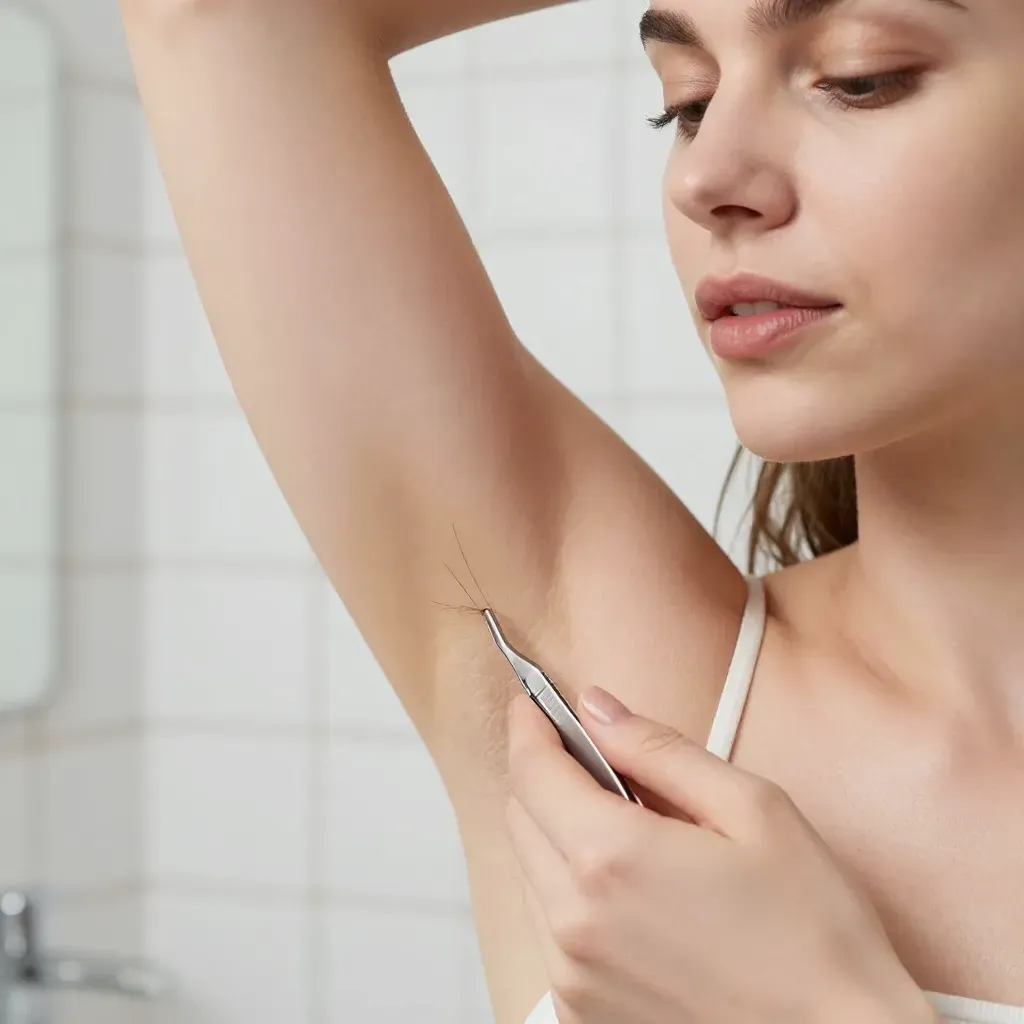
For safe extraction, sterilize tools, use warm compresses, and gently lift hair without squeezing.
Seek medical care for spreading redness, pus, fever, or severe pain.
Prevent by exfoliating 2-3 times weekly with salicylic acid and wearing loose cotton.
Laser hair removal offers permanent prevention.
Untreated infections can cause abscesses or cellulitis.
Question | Answer |
|---|---|
What causes armpit ingrown hairs? | Shaving creates sharp tips that curl back into skin, especially with curly hair and friction. |
How do I safely extract an ingrown hair at home? | Sterilize tools with alcohol, apply warm compress, gently lift hair with tweezers, and never squeeze. |
When should I see a doctor for an ingrown hair? | Seek medical care for spreading redness, pus, fever, severe pain, or if it persists after 2 weeks. |
What prevents armpit ingrown hairs? | Exfoliate 2-3 times weekly with salicylic acid, wear loose cotton clothing, and consider laser hair removal. |
Why is tool sterilization important? | Unsterile tools cause staph infections, cellulitis, abscesses, and scarring. |
Armpit ingrown hairs form when hair grows back into the skin.
Hair curls backward into the follicle instead of growing outward.
Shaving creates a sharp tip that pierces surrounding skin.
Curly and coarse hair types face highest risk.
Dead skin cells block follicles and trap hair underneath.
Underarm friction pushes hair inward daily.
Sweat and deodorant clog pores and irritate follicles.
Your body attacks trapped hair as foreign material.
White blood cells cause inflammation and pus.
This creates red, painful bumps.
Infection can develop if bacteria enters the follicle.
Shaving mistakes that cause this
- Shaving against the grain pulls hair at wrong angles
- Using dull blades that tug instead of cut
- Pulling skin taut makes hair snap back under skin
- Applying too much pressure presses hair into follicle
- Skipping exfoliation leaves dead skin blocking pores
- Wearing tight synthetic fabrics after shaving
- Shaving daily without letting skin recover
Why armpits are high-risk
Factor | How it traps hair | Prevention tip |
|---|---|---|
Constant friction | Arm movement rubs hair back into follicles | Wear loose cotton shirts |
Moist environment | Sweat softens skin, makes penetration easy | Keep area dry, shower after sweating |
Product buildup | Deodorant blocks pores | Apply to clean, dry skin only |
Hair texture | Curly hair grows in circles naturally | Consider waxing or laser |
Shaving frequency | Daily shaving creates too many sharp tips | Space out shaving days |
Poor ventilation | Lack of airflow traps sweat and bacteria | Let skin breathe at night |
Hair removal methods ranked by risk
Method | Risk level | Reason |
|---|---|---|
Shaving | High | Creates sharp angled tips |
Waxing | Medium | Can break hair above root |
Depilatory creams | Medium | Dissolves at skin surface |
Epilator | Medium-High | Pulls hair, can break it |
Laser removal | Low | Stops hair growth permanently |
Genetics play a big role in susceptibility.
People with thick, curly hair experience more frequent issues.
Tight clothing adds friction and pressure.
This forces hair to grow sideways into skin.
Poor hygiene lets bacteria enter irritated follicles.
Infection risk and inflammation severity increase.
Dark underarms often result from chronic ingrown hairs.
The inflammation triggers melanin production.
YouTube videos show safe extraction techniques from dermatologists.
Dermatologists on YouTube demonstrate sterile extraction methods for armpit ingrown hairs.
Board-certified dermatologist Dr. Dustin reacts to popular extraction videos.
He explains proper technique differs from risky DIY attempts.
Professional channels show single-use sterile lancets creating precise entry points.
They use sharp tweezers to lift hair loops without digging.
Videos emphasize stopping if hair remains buried.
Essential tools shown in medical videos
- Sterile hypodermic needle or lancet
- Alcohol swabs for tool and skin sterilization
- Sharp-pointed tweezers with fine tips
- Comedone extractor for surface-level pressure
- Nitrile gloves to prevent bacterial transfer
- Good lighting and magnification
- Antiseptic solution or antibiotic ointment
Step-by-step safe technique
Wash underarms with antibacterial soap first.
Sterilize all tools with 70% isopropyl alcohol.
Apply warm compress for five minutes to soften skin.
Locate visible hair loop at surface level.
Pierce skin gently at one point only if hair is accessible.
Lift hair out with tweezers using upward motion.
Never squeeze surrounding tissue or apply force.
Apply antiseptic immediately and keep area clean.
Red flags that require medical attention
Warning Sign | Why It's Dangerous | Action |
|---|---|---|
Deep, buried hair with no loop visible | Requires surgical removal | See dermatologist |
Spreading redness or warmth | Cellulitis risk | Antibiotics needed |
Pus with foul odor | Staph infection | Medical treatment |
Severe pain and swelling | Abscess formation | Professional drainage |
Fever or swollen lymph nodes | Systemic infection | Urgent care |
What NOT to do (shown in reaction videos)
- Never use fingers to pick or squeeze
- Avoid digging with non-sterile pins or needles
- Do not apply deodorant immediately after extraction
- Skip shaving over the area until healed
- Do not attempt extraction on infected skin
Most dermatologist videos conclude with prevention advice.
They recommend laser hair removal for chronic sufferers.
Sterilize tools properly before any at-home removal attempt.
Sterilization kills bacteria that cause infections.
YouTube dermatologists demonstrate proper cleaning methods.
Unsterile tools cause staph infections and abscesses.
Video-demonstrated sterilization methods
- 70% isopropyl alcohol for minimum 30 seconds
- Boiling metal tools for 10 minutes
- Flame sterilization for needles
- Single-use pre-packaged lancets
- UV sterilizers for daily maintenance
Infection risks from dirty tools
Risk | Cause | Result |
|---|---|---|
Staph infection | Contaminated tweezers | Pus, fever, antibiotics |
Cellulitis | Bacteria in follicle | Spreading redness, hospital |
Abscess | Deep contamination | Surgical drainage |
Scarring | Chronic inflammation | Dark marks, permanent damage |
Step-by-step sterilization process
Wash tools with antibacterial soap.
Rinse thoroughly with hot water.
Submerge in 70% alcohol for one minute.
Air dry on clean paper towel.
Never wipe alcohol off with used cloth.
Tool-specific cleaning requirements
Tool | Cleaning method | Replacement schedule |
|---|---|---|
Tweezers | Boil 10 min + alcohol wipe | When tips dull |
Lancets | Single-use only | Dispose after one use |
Extractors | Autoclave or boil | Annually |
Gloves | Nitrile, disposable | Every session |
Store sterilized tools in sealed container away from humidity.
Always sterilize before and after each use.
Cleanse skin with antiseptic wash before extraction.
Apply antibiotic ointment immediately after.
Exfoliate regularly to prevent future armpit ingrown hairs.
Exfoliation removes dead skin cells blocking hair follicles.
Blocked follicles force hair to grow sideways into skin.
Regular exfoliation keeps pores open for outward hair growth.
Underarm skin is sensitive and needs gentle treatment.
Over-exfoliation causes irritation and more ingrowns.
Exfoliation types and frequency
Type | Best for | Frequency | Application |
|---|---|---|---|
Physical scrub | Immediate smoothing | 2-3x/week | Gentle circular motion |
Salicylic acid 2% | Oily, acne-prone skin | Daily | Leave on 2 minutes |
Glycolic acid 5-10% | Dark spots, thick skin | 3-4x/week | Apply thin layer |
Retinoids | Chronic ingrowns | 2x/week night | Pea-sized amount |
Enzyme exfoliants | Very sensitive skin | 2x/week | 5 minute mask |
How to exfoliate underarms correctly
Cleanse skin with warm water first.
Apply exfoliant in gentle circular motions for 30 seconds.
Focus on shaved areas where problems occur most.
Rinse thoroughly with lukewarm water.
Pat dry completely with clean towel.
Wait 12-24 hours before shaving to avoid irritation.
Moisturize with fragrance-free lotion after exfoliation.
Best ingredients for armpit exfoliation
- Salicylic acid 2% - unclogs pores and reduces inflammation
- Glycolic acid 5-10% - dissolves dead skin cells
- Lactic acid - gentle hydrates while exfoliating
- Charcoal powder - draws out impurities and sweat
- Benzoyl peroxide 2.5% - kills bacteria in follicles
- Tea tree oil - natural antibacterial properties
Timing matters for prevention
Action | Timing | Why | Result |
|---|---|---|---|
Exfoliate before shaving | 12-24 hours prior | Prevents irritation | Smoother shave |
Exfoliate after shaving | Wait 48 hours | Allows skin to heal | No new ingrowns |
Apply deodorant | After exfoliant dries | Prevents chemical reaction | No burning |
Moisturize | Immediately after | Restores skin barrier | Less dryness |
Waxing prep | 24-48 hours before | Removes dead skin | Better wax grip |
Mistakes that cause more ingrowns
- Over-exfoliating irritates skin and causes inflammation
- Using body scrub on same day as shave creates micro-tears
- Applying deodorant immediately after causes chemical burns
- Exfoliating broken or infected skin spreads bacteria
- Sharing exfoliating tools transfers bacteria between users
- Using harsh scrubs with large particles damages delicate underarm skin
- Exfoliating too aggressively increases melanin production and darkening
Quick daily prevention routine
Shower with antibacterial body wash.
Apply salicylic acid toner on dry skin.
Wait 2 minutes before applying deodorant.
Wear loose cotton clothing.
Repeat full exfoliation 2-3 times weekly.
Consistent exfoliation reduces ingrown hairs by up to 80%.
Start with once weekly and increase gradually as skin tolerates.
Stop if redness, burning, or increased sensitivity occurs.
Results visible within 2-4 weeks of regular practice.
See a doctor if you notice signs of infection or severe pain.
Infection spreads fast in warm, moist armpit environment.
DIY extraction can push bacteria deeper into skin.
Medical intervention prevents serious complications.
Immediate red flags requiring urgent care
- Red streaks spreading from bump
- Fever over 100.4°F
- Pus with green or yellow color
- Rapid swelling within hours
- Severe throbbing pain unrelieved by OTC meds
- Difficulty moving arm due to swelling
- Swollen lymph nodes under arm or near collarbone
Infection warning signs
Sign | What it means | Timeline to act |
|---|---|---|
Redness spreading beyond 1 inch | Cellulitis beginning | Within 24 hours |
Warm to touch | Active bacterial growth | Same day |
Pus or drainage | Folliculitis or abscess | 24-48 hours |
Pain worsening daily | Deep tissue involvement | Within 12 hours |
Dark, black center | Necrotic tissue | Immediately |
When home treatment fails
Ingrown hair persists after 2 weeks of proper care.
Bump grows larger despite warm compresses.
Hair remains trapped and visible but unreachable.
Recurrent ingrowns in same spot monthly.
Scarring and hyperpigmentation develop.
Multiple ingrown hairs cluster together.
Medical treatments available
Treatment | Procedure | Recovery time | Success rate |
|---|---|---|---|
Incision and drainage | Small cut to release pus | 3-5 days | 95% |
Steroid injection | Reduces inflammation | 24-48 hours | 85% |
Antibiotic course | Oral medication | 7-10 days | 90% |
Laser hair removal | Permanent solution | Multiple sessions | 80-90% |
Surgical excision | Removes chronic cyst | 1-2 weeks | 98% |
Complications of untreated infections
- Abscess requiring surgical drainage
- Cellulitis spreading to arm and chest
- Sepsis (blood infection) in severe cases
- Permanent scarring and dark marks
- Chronic sinus tract formation
- Recurrent infections every few months
- Keloid formation in predisposed individuals
Where to seek treatment
Provider | Best for | Cost range |
|---|---|---|
Primary care doctor | Mild infection, antibiotics | $75-150 |
Dermatologist | Chronic issues, laser | $150-300 |
Urgent care | Weekend/night emergencies | $100-200 |
ER | Systemic symptoms, fever | $500+ |
Most insurance covers infected ingrown hair treatment.
Document symptoms with photos for doctor visits.
Bring list of home treatments attempted.
Ask about laser hair removal for permanent prevention.