
Table of Contents
Professional barbers extract ingrown hairs safely using sterile tools for $10-$30 per session.
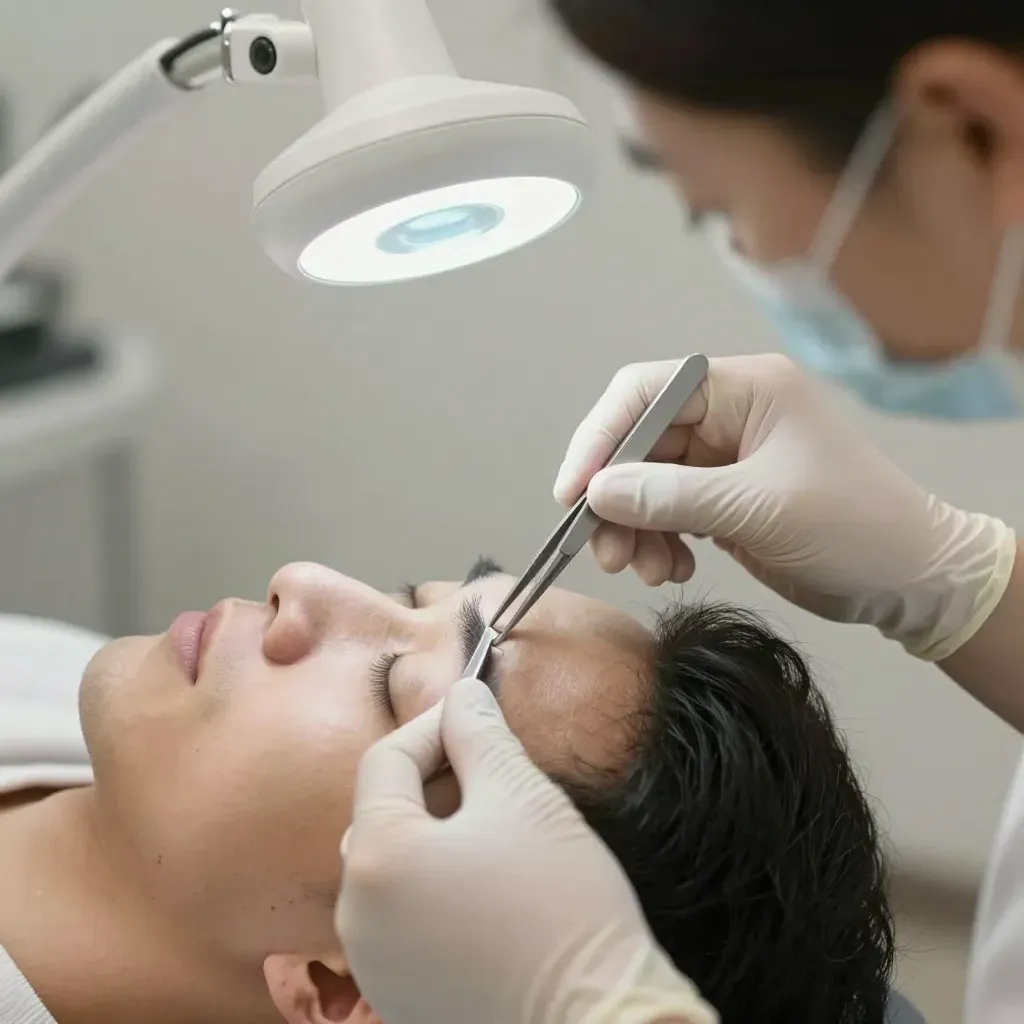
They use autoclave-sterilized precision tweezers, single-use lancets, and magnifying lamps.
Barbers follow strict sanitation protocols to eliminate 99.9% of harmful organisms.
DIY extraction causes permanent scarring and infections.
Home attempts with dull tweezers crush follicles and introduce bacteria.
60% of DIY extractions leave permanent marks while professional removal leaves zero scars.
Barbers cost far less than medical treatment for infections or scar correction.
DIY infections require $50-$150 medical treatment while scar correction costs $100-$3000.
Professional service includes skin assessment, multiple extractions, post-care antiseptic, and prevention demonstration.
Barbers refuse clients with active infections showing redness, pus, swelling, or fever.
Prevention works best through proper shaving technique.
Shave with grain at 30-degree angles using sharp blades replaced every 3-7 shaves.
Pre-shave preparation includes warm water washing, gentle exfoliation, and pre-shave oil.
Post-shave care requires cold water rinse, alcohol-free balm, and daily moisturizing.
Proper technique reduces ingrown hairs by 85%.
Question | Answer |
|---|---|
How much does professional ingrown hair extraction cost? | Professional extraction costs $10-$30 per session based on location and hair count. |
Why is DIY ingrown hair extraction dangerous? | DIY extraction causes permanent scarring, infections, and costly medical treatment. |
When should I see a doctor instead of a barber? | See a doctor for active infections with pus, swelling, fever, or medical conditions like diabetes. |
How can I prevent ingrown hairs? | Prevent ingrown hairs by shaving with grain at 30-degree angles using sharp blades and proper post-shave care. |
Why do barbers use sterile tools? | Sterile tools eliminate 99.9% of harmful organisms and prevent infections during extraction. |
Barbers use sterile tools to extract ingrown hairs safely.
Professional tools barbers use
Barbers use precision tweezers with sterilized pointed tips for ingrown hair extraction.
They employ single-use lancets to puncture skin minimally.
Comedone extractors with various loop sizes lift hairs without digging.
Magnifying lamps help locate deeply embedded hairs.
All reusable tools undergo autoclave sterilization at 270°F.
Sanitation protocol table
Step | Sanitation action | Infection prevention |
|---|---|---|
1 | Antimicrobial hand wash | Kills surface bacteria |
2 | Fresh glove application | Blocks cross-contamination |
3 | Skin antiseptic cleansing | Removes microbes from area |
4 | Sealed sterile tool use | Eliminates pathogen exposure |
5 | Post-extraction antiseptic | Closes pores safely |
Why sterile tools prevent complications
Non-sterile tweezers introduce bacteria into open follicles.
Dirty tools cause painful abscesses and permanent scarring.
Professional sterilization eliminates 99.9% of harmful organisms.
Barbers discard single-use items immediately after extraction.
Professional vs DIY extraction risks
- Barbers extract at correct hair growth angle
- Home attempts often break hair under skin
- Professional tools minimize follicle trauma
- Clean removal prevents future ingrown hairs
Barber technique advantages
Barbers assess hair direction before any extraction attempt.
They wear sterile gloves throughout the entire procedure.
Proper lighting reveals hairs invisible to untrained eyes.
Witch hazel application soothes skin post-removal.
Barbers teach clients proper shaving angles to prevent recurrence.
Tool quality comparison
Feature | Professional grade | Home use |
|---|---|---|
Sharpness | Medical-level precision | Dulls rapidly |
Sanitization | Autoclave sterilization | Basic alcohol wipe |
Storage | Sealed sterile pouches | Exposed to bathroom bacteria |
Outcome | Clean extraction no marks | Risk of cuts infection |
When professional removal becomes necessary
Visit a barber if ingrown hair persists beyond three days.
Barbers remove multiple ingrown hairs in single efficient sessions.
They treat common areas like neck beard line and scalp.
Professional service costs less than medical infection treatment.
Professional removal costs $10-$30 per session.
What determines the price
Number of ingrown hairs affects cost directly.
Facial ingrown removal runs $10-$15 for 1-3 hairs.
Neck and scalp areas cost $15-$20 due to density.
Deep or infected hairs add $5-$10 for extra care.
Barber experience level influences pricing structure.
Shop location in high-rent districts increases rates.
Price comparison table
Service type | Average cost | Time needed | Effectiveness |
|---|---|---|---|
Barber extraction | $10-$30 | 10-20 minutes | Immediate relief |
Dermatologist visit | $100-$200 | 30-60 minutes | Medical grade |
DIY tool kit | $15-$40 | Ongoing | Risky |
Med spa treatment | $75-$150 | 45 minutes | Comprehensive |
Service inclusions
- Skin assessment and consultation
- Sterile tool preparation and setup
- Multiple hair extractions in one session
- Post-care antiseptic application
- Prevention technique demonstration
- Product recommendations for home care
Hidden costs of DIY extraction
Home extraction risks infection requiring $50-$150 medical treatment.
Improper technique causes scarring needing $200-$500 laser correction.
Barber prevention tips save future extraction costs.
Missed work days from infection add financial loss.
DIY tool sterilization failures lead to recurring issues.
Regional price variations
Location type | Typical range | Factors |
|---|---|---|
Small towns | $8-$15 | Lower overhead |
Major cities | $15-$35 | Higher rent costs |
High-end barbershops | $25-$50 | Premium service |
Mobile barber services | $20-$40 | Convenience fee |
Package deals and memberships
Monthly beard maintenance packages include ingrown removal for $30-$50.
Membership clients receive free touch-ups between visits.
Some barbers offer first-time client discounts at $5-$10.
Regular customers pay $8-$12 per session on average.
Annual packages save 20-30% on repeated treatments.
Avoid barber treatment if you have active infections.
Infection warning signs barbers must reject
Redness spreading beyond bump signals active infection.
Pus or yellow discharge confirms bacterial presence.
Skin hot to touch indicates dangerous inflammation.
Swelling larger than pea needs medical evaluation.
Fever shows systemic infection requiring antibiotics.
Why barbers legally refuse infected skin
Tools spread bacteria between clients causing outbreaks.
Extraction forces infection deeper into tissue.
Barbers lack medical licensing for antibiotics.
Insurance excludes infected skin work.
Health codes strictly prohibit this practice.
Infection severity guide
Severity | Signs | Provider |
|---|---|---|
Mild | Small red bump, no pus | Barber OK |
Moderate | Pus present, pain | Doctor |
Severe | Swelling, fever | Urgent care |
Chronic | Recurring spot | Dermatologist |
Medical conditions requiring doctor first
- Diabetes impairs healing
- Immune system disorders
- Blood thinning medication
- MRSA infection history
- Heart conditions
DIY infection treatment risks
Squeezing spreads bacteria to nearby follicles.
Non-sterile needles introduce new pathogens.
Home antibiotics rarely match infection type.
Delaying care increases permanent scarring.
Untreated infections become abscesses requiring surgery.
Safe preparation before barber visit
Apply warm compresses 10 minutes twice daily 3 days.
Use antibiotic cream on mild redness only.
Wait 48 hours after shaving irritation subsides.
Clean with antiseptic wash twice daily.
No pus for 24 hours before appointment.
Consequences of ignoring infection protocols
Action | Immediate risk | Long-term damage |
|---|---|---|
Barber extraction | Cross-contamination | Permanent scarring |
DIY popping | Bloodstream infection | Keloid scars |
No treatment | Abscess formation | Surgical drainage |
DIY risks scarring compared to professional extraction.
DIY mistakes cause permanent scars
Dull tweezers crush follicles instead of gripping hair.
Poor lighting leads to wrong-angle extraction attempts.
People dig too deep searching for hidden hair shafts.
Dirty fingers infect open follicles immediately.
Repeat picking builds layered scar tissue.
Scarring risk comparison
Risk factor | DIY extraction | Professional extraction |
|---|---|---|
Tool precision | Low quality dull tips | Medical grade sharp |
Angle control | Random pulling | 45-degree precision |
Depth | Excessive digging | Surface level only |
Pressure | Heavy squeezing | Gentle lift technique |
DIY scar types and permanence
- Dark spots: 6-12 month fade time
- Keloids: Permanent without medical treatment
- Pitted scars: Require filler injections
- Wide tissue damage: Surgical removal needed
- Color changes: Last years
Professional technique eliminates scarring risk
Barbers extract complete hair shaft intact.
Minimal pressure prevents tissue trauma.
Magnification avoids surrounding skin damage.
Proper angle follows natural growth direction.
Immediate antiseptic stops inflammation.
Correction costs far exceed prevention
Scar type | Correction cost | Prevention cost |
|---|---|---|
Hyperpigmentation | $100-$300 laser | $15 barber visit |
Keloid | $500-$2000+ | $15 barber visit |
Pitted scar | $200-$600 filler | $15 barber visit |
Surgical removal | $1000-$3000 | $15 barber visit |
Long-term DIY damage
Repeated attempts destroy collagen structure permanently.
Scar tissue blocks future hair growth.
Skin texture becomes permanently rough.
Some damage requires surgical correction.
DIY creates compulsive picking habits.
Prevent ingrown hairs with proper shaving techniques.
Shave angle technique table
Area | Angle | Direction | Blade type |
|---|---|---|---|
Face | 30 degrees | With grain | Sharp single blade |
Neck | 15 degrees | Downward only | Safety razor |
Scalp | 45 degrees | Front to back | Fresh cartridge |
Pre-shave preparation prevents ingrowns
Wash with warm water 2 minutes to open pores.
Exfoliate gently with scrub twice weekly.
Apply pre-shave oil to soften hair.
Use hot towel compress 30 seconds.
Let shaving cream sit 60 seconds.
Blade sharpness schedule
- Single blade: Replace every 3 shaves
- Cartridge: Replace every 5-7 shaves
- Safety razor: Replace every 2 shaves
- Disposable: Single use only
- Dull blades cut hair unevenly
Post-shave care routine
Time | Action | Product | Purpose |
|---|---|---|---|
Immediately | Cold water rinse | None | Closes pores |
0-5 min | Pat dry | Clean towel | Removes moisture |
5-10 min | Apply balm | Alcohol-free | Soothes skin |
Daily | Moisturize | Non-comedogenic | Prevents dryness |
Shaving direction rules
Always shave with grain first pass.
Against grain causes sharp hair tips.
Cross-grain shaving acceptable for second pass only.
Never pull skin taut while shaving.
Short strokes prevent blade dragging.
Product ingredient checklist
- Avoid: Alcohol, fragrances, menthol
- Use: Glycerin, aloe, shea butter
- Choose: Cream over foam
- Skip: Bar soap (dries skin)
- Apply: Thin layer only
Common mistakes table
Action | Result | Fix |
|---|---|---|
Shaving too close | Hair trapped under skin | Leave 0.5mm stubble |
Dry shaving | Hair breaks unevenly | Always use cream |
Old blades | Jagged hair tips | Replace regularly |
Too frequent | Irritated follicles | Shave every other day |