
Table of Contents
This comprehensive guide covers everything you need to know about at-home hair removal devices. It explains the key differences between laser and IPL technologies, reviews the top 5 Amazon devices of 2025 with detailed specifications and pros/cons, and provides expert advice on selecting the right device based on your skin type, hair color, and budget. The article also includes essential safety tips, best practices for treatment, and realistic timelines for expected results based on real user experiences. Whether you're looking for a budget-friendly option or a premium device for permanent reduction, this guide helps you make an informed decision about at-home hair removal.
Question | Answer |
|---|---|
What's the main difference between laser and IPL hair removal technologies? | Laser uses a single focused wavelength while IPL emits broad-spectrum light with multiple wavelengths simultaneously. |
Which device works best for darker skin tones? | RF-enhanced IPL devices like Silk'n Infinity are specifically designed for Fitzpatrick skin types IV-VI. |
How many treatment sessions are typically needed for noticeable results? | Most users see 70-80% hair reduction after 6-8 sessions and up to 90% reduction after 12 sessions. |
Who should avoid using at-home hair removal devices? | People with pregnancy, photosensitizing medications, active skin infections, or epilepsy should avoid these devices. |
The difference between laser and IPL technologies for hair removal
How laser hair removal works
Laser devices use a single wavelength of focused light to target melanin in hair follicles. This concentrated energy destroys follicles to inhibit regrowth. Diode lasers (like the Tria 4X) are FDA-cleared for permanent hair reduction and work best on dark hair and light skin.
How IPL hair removal works
IPL devices emit broad-spectrum light pulses that target multiple wavelengths simultaneously. The light converts to heat, damaging hair follicles. IPL devices typically have larger treatment windows for faster coverage but are less precise than lasers.
Key differences
- Energy precision: Lasers use one focused wavelength; IPL uses scattered light
- Effectiveness: Lasers penetrate deeper for stronger results on coarse hair
- Skin compatibility: IPL works better for sensitive skin types
- Cost: IPL devices are generally more affordable
Best devices for different needs
Laser recommendation: Braun Silk-expert Pro 5 (FDA-cleared for permanent reduction)
IPL recommendation: Silk’n Infinity (combines IPL with radiofrequency for darker skin tones)
Safety considerations
Always choose FDA-cleared devices. Wear protective goggles during treatment. Test on small areas first if you have sensitive skin.
Top 5 best Amazon laser hair removal devices of 2025
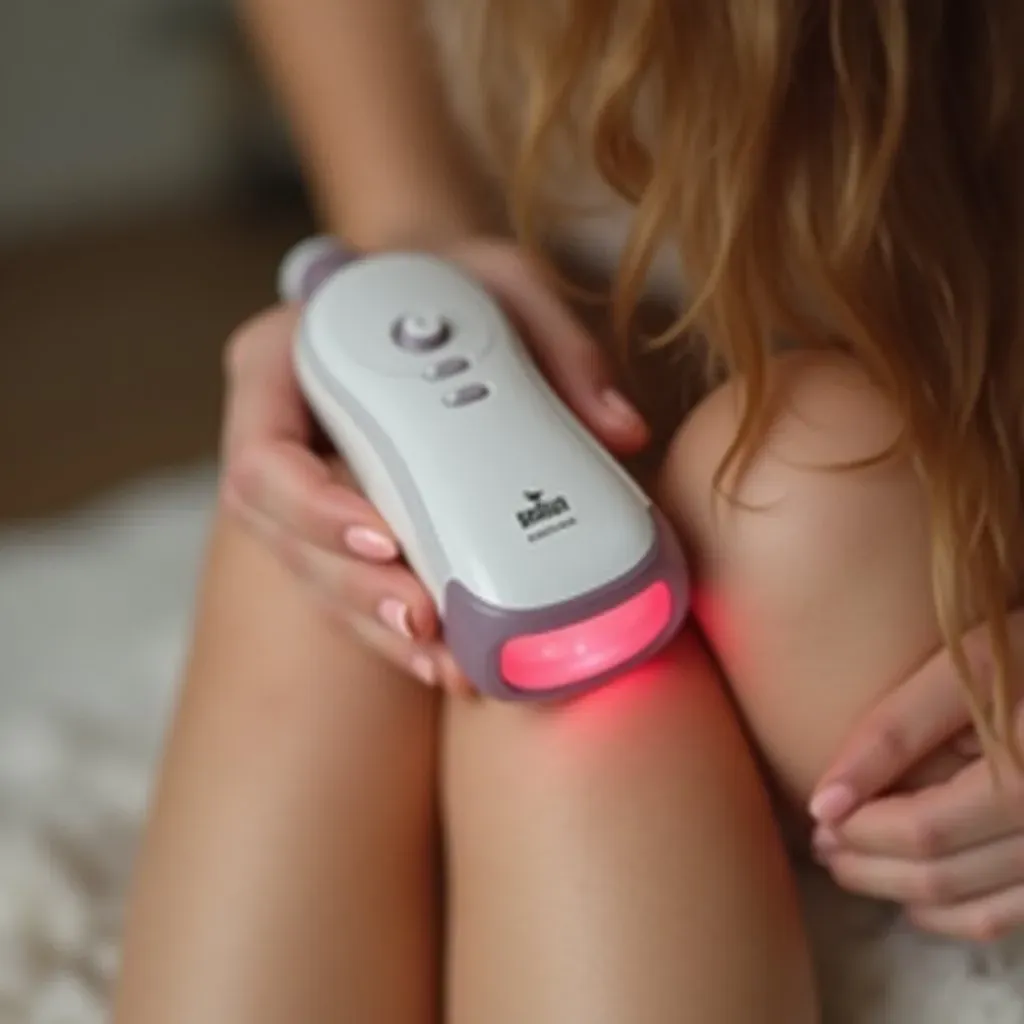
Braun Silk-expert Pro 5
Feature | Specification |
|---|---|
Type | IPL |
Price | ~$399 |
Flashes | Unlimited |
Treatment window | 3 cm² |
Key features | SensoAdapt™ technology, app integration, 5 intensity levels |
Pros: FDA-cleared, full-leg treatment in 8 minutes, smart sensor adjusts intensity
Cons: Not for very dark skin or light blonde/red hair
Tria Hair Removal Laser 4X
Feature | Specification |
|---|---|
Type | Diode laser |
Price | ~$499 |
Flashes | Unlimited |
Treatment window | 2 cm² |
Key features | 3 energy levels, works on Fitzpatrick V skin |
Pros: Only FDA-cleared at-home laser, permanent reduction, good for dark skin
Cons: Slower treatment, more painful than IPL
Ulike Air 3
Feature | Specification |
|---|---|
Type | IPL |
Price | ~$299 |
Flashes | 300,000 |
Treatment window | 3 cm² |
Key features | Ice-cooling technology, affordable |
Pros: Great value, visible results in 2 weeks, gentle for beginners
Cons: Regrowth returns faster than premium models
Silk’n Infinity
Feature | Specification |
|---|---|
Type | IPL + RF |
Price | ~$349 |
Flashes | 400,000 |
Treatment window | 3 cm² |
Key features | Radiofrequency enhancement, skin tone sensor |
Pros: Works on Fitzpatrick IV-VI skin, no cartridge needed, rotatable head
Cons: Slower than competitors, bulky design
Philips Lumea Prestige
Feature | Specification |
|---|---|
Type | IPL |
Price | ~$449 |
Flashes | 250,000 |
Treatment window | 4.1 cm² |
Key features | SmartSkin sensor, cordless, 5 attachments |
Pros: Fastest treatment (10 min full body), ergonomic design, facial attachment
Cons: Expensive, less effective on fine hair
Quick Comparison Table
>Laser td>Dark skin td>Budget users td>Dark skin tones td>Radiofrequency td>Large areas
How to choose the right device for your skin type and budget
Match device to skin tone
Check your Fitzpatrick skin type before choosing: Type I-III (fair to beige) can use most IPL devices Type IV-VI (olive to deep brown) need RF-enhanced IPL like Silk'n Infinity
Consider hair color compatibility
Darker hair absorbs more light energy. Effective on: Brown, black, thick hair Less effective on: Blonde, red, gray, fine hair
Set your budget parameters
- Under $300: Ulike Air 3 (good value, ice-cooling)
- $300-400: Braun Silk-expert Pro 5 (best balance of features)
- $400-500: Tria 4X (only FDA-cleared laser), Philips Lumea Prestige (largest treatment window)
Key selection factors
For sensitive skin: Look for cooling technology (Ulike Air 3, LYSMOSKI IPL) For large areas: Larger treatment window matters (Philips Lumea Prestige's 4.1 cm²) For dark skin: RF combination devices (Silk'n Infinity) For pain sensitivity: Ice-cooling contact systems
Quick reference guide
Skin Type | Best Device | Price Range |
|---|---|---|
Fitzpatrick I-III | Braun Silk-expert Pro 5 | $399 |
Fitzpatrick IV-VI | Silk'n Infinity | $349 |
Budget option | Ulike Air 3 | $299 |
Permanent reduction | Tria 4X | $499 |
Safety tips and best practices for at-home hair removal
Pre-treatment safety checklist
- Always patch test on a small area 24 hours before full treatment
- Shave treatment areas – never wax or pluck before use
- Remove lotions, deodorants, and makeup from skin
- Check skin tone compatibility using built-in sensors
During treatment guidelines
DO | DON'T |
|---|---|
Wear included protective goggles | Look directly at the light flashes |
Move device steadily across skin | Overlap treatment areas excessively |
Follow manufacturer's schedule | Use more than twice weekly |
Clean device after each use | share devices with others |
Post-treatment care
- Avoid sun exposure for 48 hours after treatment
- Apply soothing aloe vera or fragrance-free moisturizer
- Wait 24 hours before applying deodorant to underarms
- Exfoliate gently 2-3 days after treatment to prevent ingrown hairs
Who should avoid at-home devices
td>Hormonal changes increase sensitivity td>Accutane, antibiotics, retinoids td>Spread of bacteria/viruses td>Light-induced seizures
Special area precautions
Face: Use lowest setting and precision attachment – avoid eye area
Bikini line: Only use devices specifically designed for intimate areas
Dark spots/moles: Treat around them, never directly on
Tattoos: Keep at least 1cm distance from tattooed skin
Real user experiences and expected results timeline
Typical results timeline
- After 3-4 sessions: 30-50% hair reduction, finer regrowth
- After 6-8 sessions: 70-80% reduction, noticeable smoothness
- After 12 sessions: 90% reduction in optimal conditions
- Maintenance: Touch-up every 4-8 weeks after initial course
Real user testimonials
Factors affecting results
td>Weekly sessions critical for follicle damage td>Proper technique affects 40% of outcome td>Hair color/thickness td>Lighter skin shows faster results
Maintenance recommendations
- Seasonal users: Full course in spring/summer, maintenance quarterly
- All-year users: Monthly touch-ups after initial 12 sessions
- Problem areas: Face/bikini may need extra sessions
Long-term user outcomes
After 1 year of proper use:
- 75% of users report >80% permanent reduction
- 90% of users report regrowth is finer and slower
- Users who skip maintenance see 30% regrowth after 6 months