
Table of Contents
Warm compresses soften skin before removal. Apply hot washcloth 3-5 minutes, 2-3x daily for 1-2 days. Only lift visible hairs with sterilized tweezers. Never dig. Immediately apply antiseptic to prevent infection. Exfoliate regularly to prevent recurrence. See professional for infections or chronic cases.
Question | Answer |
|---|---|
How do I prepare an ingrown hair for removal? | Apply warm compresses 2-3 times daily for 1-2 days to soften skin. |
How should I sterilize tweezers? | Boil tweezers for 5 minutes or wipe with rubbing alcohol before use. |
What should I do after removing an ingrown hair? | Immediately apply antiseptic like alcohol or antibiotic ointment to prevent infection. |
How can I prevent future ingrown hairs? | Exfoliate regularly with salicylic acid or gentle scrubs to clear dead skin cells. |
When should I see a doctor? | Seek medical care for spreading redness, pus, severe pain, or if hair remains trapped after a week. |
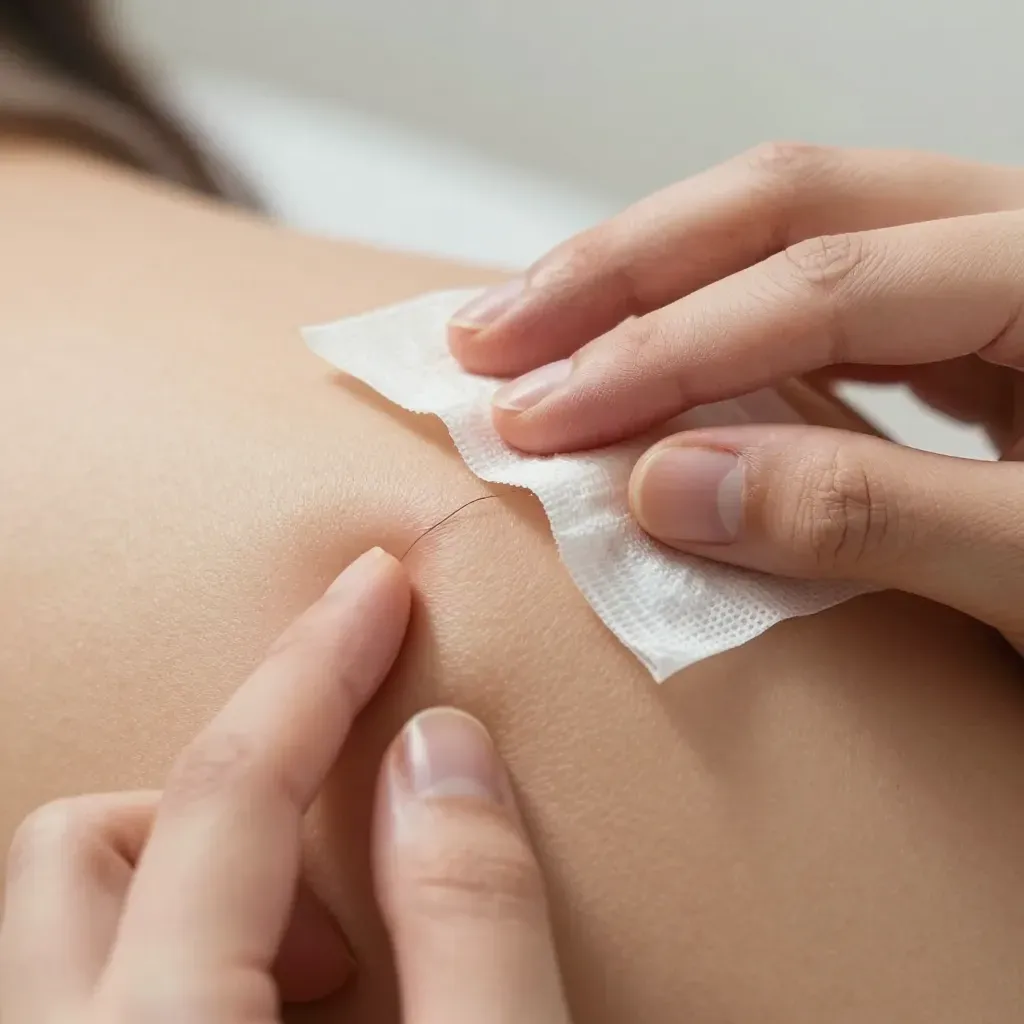
Apply warm compresses to soften skin.
Heat opens pores and softens the skin covering trapped hairs. This makes removal easier and reduces trauma to surrounding tissue.
How to apply heat correctly
Use a clean washcloth soaked in hot water. Water temperature should feel warm but not burning on your inner wrist. Wring out excess water to prevent dripping.
Place the compress directly on the ingrown hair. Hold it in place with gentle pressure for 3-5 minutes. Re-soak the cloth when it cools to maintain consistent heat.
Repeat this process 2-3 times daily for 1-2 days before attempting removal. Persistent ingrown hairs may require up to a week of warm compress therapy.
Alternative heat methods
- Heated gel packs wrapped in clean cloth
- Warm shower spray directed at the area for 5-7 minutes
- Warm bath soak if ingrown hair is on body area
Method | Duration | Frequency |
|---|---|---|
Hot compress | 3-5 min | 2-3x daily |
Warm shower | 5-7 min | Once daily |
Warm bath | 10-15 min | Once daily |
Never apply direct heat sources like heating pads without a protective layer. This prevents burns and skin damage.
After heat application, the skin should appear slightly flushed but not red or irritated. If you experience pain or excessive redness, discontinue and let skin cool.
Gently lift hair with sterile tweezers.
Only attempt tweezing after 1-2 days of warm compresses. The hair should be visible at the surface. If you cannot see the hair tip, do not proceed. Digging into skin causes trauma and infection.
Sterilization is critical
Boil tweezers in water for 5 minutes or wipe thoroughly with rubbing alcohol. Let them air dry completely on a clean paper towel. Never use tweezers that have touched other body parts without re-sterilizing. Store sterilized tools in a sealed container.
Proper lifting technique
- Wash hands thoroughly before starting
- Cleanse the area with mild soap and pat dry
- Hold skin taut with one hand to create a flat surface
- Position tweezers parallel to skin
- Grasp only the visible hair tip, not surrounding skin
- Pull upward and out in the direction of hair growth with a slow steady motion
- Do not pluck the entire hair follicle
- Stop immediately if you draw blood or feel sharp pain
When to avoid tweezing
Condition | Action | Reason |
|---|---|---|
Hair not visible | Do not dig | Risk of scarring |
Deeply embedded | See professional | Requires sterile lancet |
Redness/swelling | Do not touch | Possible infection |
Cyst formation | Medical removal | Needs drainage |
Digging increases infection risk and can cause permanent scarring. Removing the entire hair may lead to another ingrown when it regrows. The goal is to free the trapped portion, not extract the root.
After lifting, leave the area alone. Apply antiseptic solution and let it heal naturally. Do not squeeze or pick at the bump. Cover with a small bandage if clothing rubs the spot.
Treat area with antiseptic post-removal.
Post-removal antiseptic treatment prevents infection and reduces inflammation. The skin barrier is compromised after tweezing, creating entry points for bacteria. Immediate disinfection is non-negotiable.
Choose the right antiseptic
Select alcohol-based solutions or antiseptic creams. Avoid hydrogen peroxide—it damages healthy tissue and delays healing.
Antiseptic | Application | Frequency |
|---|---|---|
Isopropyl alcohol 70% | Dab with cotton swab | Immediately after + twice daily |
Chlorhexidine 4% | Gentle wipe | Once daily |
Bacitracin ointment | Thin layer | 2-3 times daily |
Tea tree oil (diluted) | Spot apply | Twice daily |
Proper application technique
- Wash hands thoroughly before touching the area
- Use sterile cotton swabs, not fingers
- Apply antiseptic with light dabbing motions—no rubbing
- Cover entire affected area plus 1 cm surrounding skin
- Let air dry completely before covering with clothing
- Apply thin layer of antibiotic ointment after alcohol dries
Post-treatment care
Keep area clean and dry for 24 hours. Avoid swimming, hot tubs, and excessive sweating. Wear loose breathable clothing to prevent friction. Do not apply makeup or lotions over the treated spot for 48 hours.
Watch for infection signs
Normal healing | Infection warning | Action |
|---|---|---|
Mild redness | Spreading redness | See doctor |
Slight tenderness | Increasing pain | Medical care |
Small scab | Pus or discharge | Antibiotics needed |
Itch during healing | Warmth and swelling | Professional treatment |
Continue antiseptic treatment for 3-5 days until skin fully closes. If you notice any infection signs, stop home treatment and seek medical attention. Untreated infections can lead to abscess formation and permanent scarring.
Exfoliate regularly to prevent recurrence.
Dead skin cells clog follicle openings and force growing hairs to curve back into skin. Regular exfoliation clears this debris and lets hairs emerge normally.
Physical vs chemical exfoliation
Type | Products | Best for | Frequency |
|---|---|---|---|
Physical | Scrubs, brushes, gloves | Body skin | 2-3x weekly |
Chemical | Acids, retinoids | Face, sensitive areas | Daily to 3x weekly |
Effective exfoliating ingredients
- Salicylic acid (BHA) - penetrates oil, unclogs pores
- Glycolic acid (AHA) - dissolves dead skin surface
- Lactic acid - gentler AHA for sensitive skin
- Retinoids - increase cell turnover long-term
Body area-specific routine
Area | Method | Frequency | Notes |
|---|---|---|---|
Face | Chemical exfoliant | Daily | Use low concentration |
Bikini line | Gentle scrub | 2-3x weekly | Wait 48h after hair removal |
Legs | Body brush/scrub | Daily | Before shaving |
Underarms | Chemical exfoliant | 3x weekly | Let skin recover between |
Proper technique
- Wet skin with warm water first
- Apply product using light circular motions
- Do not scrub aggressively
- Rinse thoroughly with cool water
- Pat dry, never rub
- Follow with moisturizer to restore barrier
Exfoliate before hair removal, not immediately after. Wait minimum 24-48 hours post-shaving or waxing before resuming. Consistent exfoliation shows results in 2-4 weeks. Combine with proper shaving technique for maximum prevention.
See professional for chronic or infected cases.
Medical intervention becomes necessary when infection develops or hair remains trapped deep under skin despite home treatment.
Infection warning signs
Symptom | Meaning | Required action |
|---|---|---|
Spreading redness | Infection advancing | Same-day doctor visit |
Pus/discharge | Abscess forming | Urgent medical care |
Increasing pain | Inflammation worsening | Medical assessment |
Warmth & swelling | Active infection | Antibiotics needed |
When home removal fails
- Hair not visible after week of compresses
- Deeply embedded hair causes cyst formation
- Repeated unsuccessful extraction attempts
- Scar tissue develops over ingrown area
- Multiple ingrown hairs cluster in one spot
Professional treatment options
Procedure | Purpose | Recovery time |
|---|---|---|
Sterile lancet extraction | Doctor opens skin with sterile blade | 2-3 days |
Oral antibiotics | Treats bacterial infection | 5-7 days |
Steroid injection | Reduces inflammation quickly | 24-48 hours |
Laser hair removal | Permanent hair reduction | Multiple sessions |
Chronic ingrown hair solutions
Recurrent ingrown hairs need long-term prevention. Dermatologists prescribe retinoid creams to increase cell turnover. Laser hair removal offers permanent solution by destroying follicles. Electrolysis works for small areas. Medical-grade exfoliation treatments provide stronger prevention than OTC products.
People with curly hair types benefit most from professional prevention. Insurance may cover treatment if ingrown hairs cause medical complications.