
Table of Contents
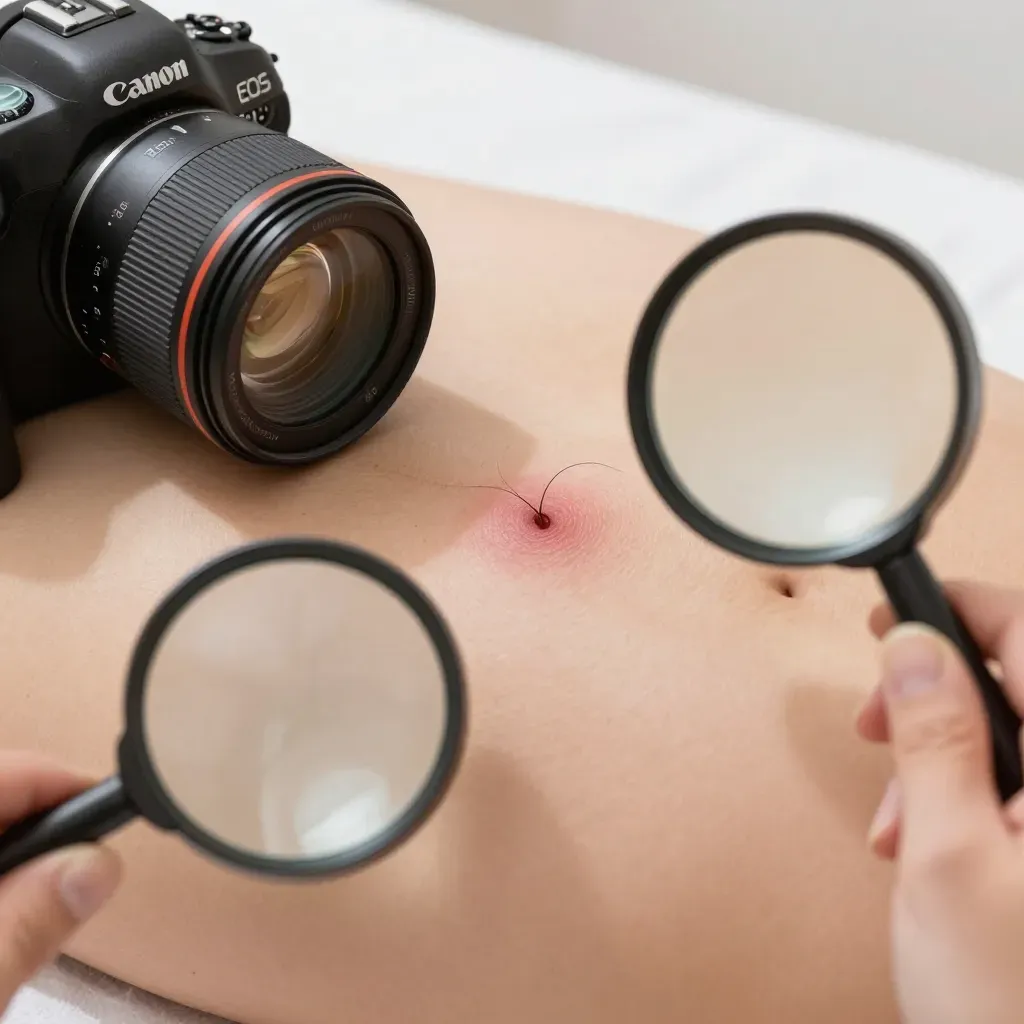
Ingrown pubic hairs appear as small red bumps with trapped hair visible after shaving or waxing.
Identify by dark loops under skin and mild tenderness.
Seek care for spreading redness, severe pain, fever, diabetes, or immune issues.
Prepare by washing hands 30 seconds, sterilizing tools with alcohol, cleaning skin with gentle soap, and applying warm compress 5-10 minutes.
Avoid harsh exfoliants, alcohol products, and dirty tools.
Extract using sterilized needle at 10-15 degree angle to lift hair tip, then grasp at base with tweezers and pull in growth direction.
Stop if bleeding starts or hair not visible.
Limit to one attempt per day.
After removal apply witch hazel and antibiotic ointment, cover with breathable bandage 24 hours.
Cleanse daily with fragrance-free soap, apply aloe vera or tea tree oil midday, moisturize evening.
Avoid tight underwear, swimming, and sexual activity 24-48 hours.
Do not shave or wax for one week.
Normal healing completes within 3-5 days.
See doctor if redness spreads beyond one inch, pus changes color, pain worsens, or symptoms last beyond 7 days.
Laser hair removal prevents future ingrown hairs.
Question | Answer |
|---|---|
How do I identify an ingrown pubic hair? | Look for small red bumps with visible hair trapped underneath after shaving or waxing. |
When should I see a doctor? | Seek care for spreading redness, severe pain, fever, large lumps, diabetes, or immune issues. |
What preparation prevents infection? | Wash hands 30 seconds, sterilize tools with alcohol, clean skin with gentle soap, apply warm compress. |
How do I extract the hair safely? | Lift hair tip with needle at 10-15 degree angle, grasp at base with tweezers, pull in growth direction. |
What aftercare promotes healing? | Apply witch hazel and antibiotic ointment, cover 24 hours, avoid tight clothing and swimming 24-48 hours, no shaving for one week. |
How to identify an ingrown pubic hair safely
Visual signs
Ingrown pubic hairs appear as small red or pink bumps in the pubic region. Look closely for a hair trapped beneath the skin surface. The bump may develop a white pus-filled head similar to a pimple. Check if you recently shaved waxed or used hair removal cream. This recent hair removal history strongly suggests an ingrown hair rather than other skin conditions.
Symptoms checklist
- Small raised bump in the pubic area
- Redness and mild swelling around the bump
- Visible dark line or loop under the skin surface
- Tenderness or itchiness at the site
- White or yellow pus if mildly infected
Differentiate from other conditions
Feature | Ingrown Hair | Herpes | Folliculitis |
|---|---|---|---|
Number | Usually single or few | Multiple clustered sores | Can be many small bumps |
Pain level | Mild tender | Sharp stinging pain | Mild to moderate |
Key visual | Hair visible under skin | Blisters that rupture | Hair at center of each bump |
When to see a doctor
Avoid home removal if you notice spreading redness severe pain fever or large hard lumps. These signs indicate infection. Multiple ingrown hairs in one spot often require medical treatment. People with diabetes or weakened immune systems should always seek professional care. Proper identification prevents serious complications. If you can clearly see the trapped hair and the bump is small and mildly tender it is generally safe to proceed with careful home removal. For detailed guidance on safe removal techniques see how to remove ingrown pubic hair correctly. Persistent bumps that leave scars may need different treatment approaches. Learn about ingrown hair scar removal options.
What preparation steps reduce infection risk
Clean your hands and tools
Wash hands with antibacterial soap for 30 seconds minimum. Scrub under fingernails. Rinse thoroughly with warm water. Dry with clean paper towel not shared cloth towel.
Sterilize tweezers and needle with 70% isopropyl alcohol. Wipe tools completely. Let air dry on clean surface. Boil metal tools for 10 minutes as alternative sterilization method. Never use tools that touched other surfaces without re-sterilizing.
Prepare the skin area
Wash pubic area with warm water and gentle fragrance-free cleanser. Avoid harsh soaps that strip natural oils. Pat skin dry with fresh towel. Apply warm compress for 5-10 minutes to soften skin and open pores. This makes hair extraction easier and less traumatic.
Setup your workspace
Choose well-lit area. Position magnifying mirror for clear close-up view. Place clean white towel underneath treatment area. White background helps spot the hair. Arrange all sterilized supplies within easy reach before starting.
What to avoid before removal
Do Not Use | Reason |
|---|---|
Harsh exfoliants | Increases irritation and infection risk |
Alcohol-based products | Dries skin and damages protective barrier |
Dirty tools | Introduces bacteria directly into skin |
Your fingers | Nails harbor bacteria even after washing |
Makeup or lotions | Clogs pores and complicates removal |
Supplies checklist
- Sterile tweezers with pointed tip
- Sterile needle or lancet
- 70% isopropyl alcohol
- Cotton balls or pads
- Warm compress (clean washcloth)
- Gentle antibacterial soap
- Clean paper towels
- Hydrocortisone cream for aftercare
- Disposable gloves (optional)
Proper preparation prevents most complications. For persistent ingrown hairs consider professional treatment. Laser hair removal prevents ingrown hairs permanently. If you prefer at-home solutions learn about at-home laser hair removal for bikini area.
The proper technique for gentle hair extraction
Needle positioning and lifting method
Hold sterilized needle parallel to skin surface at 10-15 degree angle. Place tip under visible hair loop or trapped end. Use gentle upward scooping motion to lift hair tip above skin surface. Work slowly in 3-5 second increments. Stop if skin shows any signs of tearing. The goal is freeing hair not creating new wound.
Precision tweezer technique
Phase | Action | Time limit | Warning sign |
|---|---|---|---|
1 | Locate exposed hair tip | 10 seconds | Cannot see hair clearly |
2 | Grasp hair at base near skin | 5 seconds | Tweezers slip off hair |
3 | Pull in growth direction | 3 seconds | Hair breaks or snaps |
4 | Verify complete removal | 5 seconds | Root bulb missing |
Critical safety rules
- Never squeeze bump with fingers
- Do not dig needle deep under skin
- Stop at first sign of bleeding
- One attempt per day maximum
- No twisting or jerking motions
- Abort if hair not visible
When extraction fails
If hair resists after one gentle attempt stop completely. Apply antibiotic ointment and cover with sterile bandage. Wait 48 hours before reassessing. Forcing removal damages follicle and causes scarring. Deep or recurrent ingrown hairs need professional extraction. Learn about professional ingrown pubic hair removal options.
Complete removal verification
Inspect extracted hair under good light. Confirm root bulb attached. Check extraction site for broken fragments. Remove any remaining pieces with fresh sterilized tweezers. Clean area with alcohol pad. Apply thin layer of hydrocortisone cream to reduce inflammation. Proper technique prevents ingrown hair scarring. For chronic issues consider laser hair removal to prevent future ingrown hairs. At-home laser devices work well for bikini area. See best at-home laser options for bikini.
Essential aftercare to promote healing
Immediate post-extraction care
Apply gentle pressure with sterile gauze for 60 seconds if any bleeding occurs. Dab area with alcohol-free witch hazel. Spread thin layer of antibiotic ointment. Cover with breathable bandage for first 24 hours. Remove bandage gently to avoid disturbing healing skin.
Daily healing routine
Time | Action | Product |
|---|---|---|
Morning | Cleanse with lukewarm water | Fragrance-free gentle soap |
Midday | Apply soothing treatment | Aloe vera gel or tea tree oil |
Evening | Moisturize and protect | Non-comedogenic lotion |
Avoid these during recovery
- Tight underwear that rubs the area
- Swimming pools hot tubs or baths for 48 hours
- Sexual activity for 24-48 hours
- Shaving or waxing near the site for 1 week
- Perfumed products or scrubs
- Touching or picking at the healing spot
Timeline for normal activities
Most ingrown pubic hair sites heal within 3-5 days. Redness should fade by day 2. Light exercise acceptable after 24 hours. Resume shaving only after complete healing. Persistent redness beyond 7 days needs medical attention. Proper aftercare prevents ingrown hair scars.
Prevent future ingrown hairs
Switch to single-blade razors or consider permanent hair removal. Laser hair removal prevents ingrown hairs completely. At-home devices work for bikini area. See best at-home laser options for bikini. Exfoliate gently 2-3 times weekly after healing. Use soft washcloth in circular motions. Moisturize daily to keep skin supple. For complete removal guidance read how to remove ingrown pubic hair safely.
Signs that require medical professional treatment
Infection warning signs
Spreading redness beyond 1 inch signals infection. Increasing warmth and throbbing pain indicate bacterial growth. Pus turning yellow green or brown needs medical attention. Fever over 100.4°F means systemic infection. Red streaks from site show serious infection spreading.
Normal vs concerning symptoms
Normal healing | See doctor |
|---|---|
Mild redness 1/4 inch around site | Redness spreads beyond 1 inch |
Small amount clear fluid | Thick colored pus |
Tenderness improves daily | Pain worsens or becomes severe |
No fever | Fever chills or body aches |
High-risk groups
- Diabetes patients
- Immunocompromised individuals
- People with blood clotting disorders
- Those on immunosuppressant medications
- Pregnant women with severe symptoms
These groups should never attempt home removal. Minor infections progress quickly.
Complications needing professional care
Large abscesses over 1/2 inch require clinician drainage. Multiple ingrown hairs in one spot indicate underlying folliculitis. Recurrent ingrown hairs suggest distorted follicle. Scarring or dark marks need dermatologist evaluation. Learn about ingrown hair scar removal treatments.
What doctors provide
Doctors prescribe antibiotic ointments or oral antibiotics. They perform sterile incision and drainage when needed. Dermatologists offer permanent solutions like laser hair removal to prevent future ingrown hairs. For at-home prevention see best at-home laser devices for bikini area. Professional care prevents complications. For safe removal guidance see how to remove ingrown pubic hair correctly.