
Table of Contents
Ingrown hairs appear as small red bumps with trapped hair visible under skin.
Identify them correctly before any removal attempt.
Never DIY if you have diabetes, weak immune system, or signs of infection like spreading redness, pus, or severe pain.
Extract at home only when you see a clear hair loop near the surface.
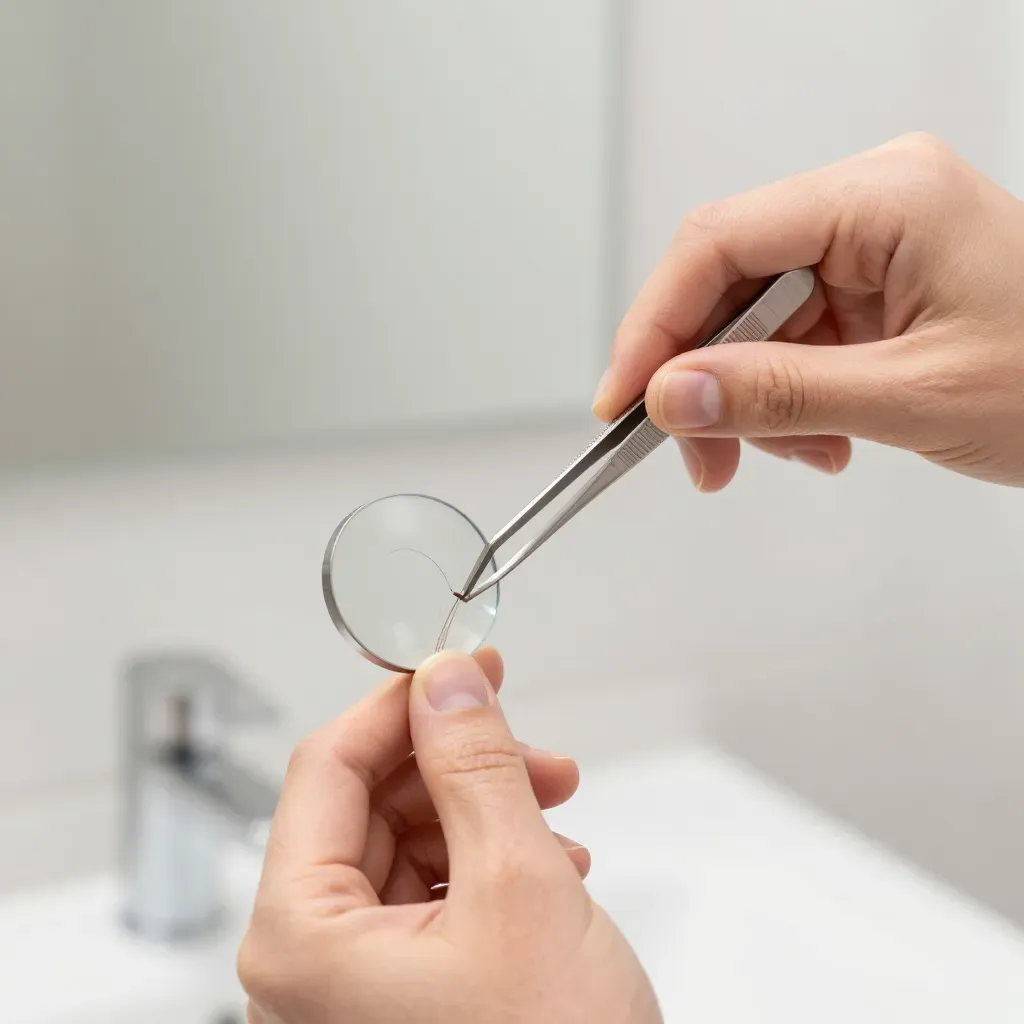
Use sterile pointed tweezers and single-use lancets only.
Boil tools for 10 minutes then soak in 70% alcohol for 5 minutes before use.
Exfoliate with salicylic acid 24-48 hours prior to loosen dead skin.
Apply warm compress at 105-110°F for 10-15 minutes to soften skin and bring hair to surface.
Gently pierce skin surface at shallow angle with lancet if needed.
Lift hair loop with needle tip no deeper than 1mm.
Grasp hair with tweezers close to skin and pull in direction of growth.
Apply antibiotic ointment immediately after.
Never dig, squeeze, or extract more than 3 hairs per session.
Prevent future ingrowns by shaving with the grain using a single-blade razor and zero pressure.
Replace blades every 5-7 shaves.
Exfoliate 2-3 times weekly and moisturize daily.
Wear loose cotton clothing after shaving.
See a dermatologist for bumps larger than 5mm, lasting over 3 weeks, or showing infection signs.
Professional extraction costs $75-200 and takes 5-10 minutes per lesion.
Laser hair removal offers permanent prevention for recurring cases.
Question | Answer |
|---|---|
How do I identify an ingrown hair? | Look for a small red bump with dark hair visible under the surface that feels tender and itchy. |
What sterile tools do I need? | Use fine-pointed stainless steel tweezers, single-use lancets, and 70% alcohol pads for sterilization. |
When should I avoid DIY removal? | Avoid DIY removal if you have diabetes, weak immune system, deep cysts, spreading redness, pus, or bumps larger than a pencil eraser. |
How do warm compresses work? | Apply heat at 105-110°F for 10-15 minutes to soften skin and bring trapped hairs to the surface naturally. |
What prevents future ingrown hairs? | Shave with the grain using a single-blade razor with zero pressure, exfoliate 2-3 times weekly, and moisturize daily. |
Identify ingrown hairs correctly before attempting any removal technique.
Visual identification markers
Ingrown hairs show up as small red or dark bumps on skin.
You will see a hair trapped under surface or curling back into skin.
Look for a dark spot at center where hair tries to break through.
This differs from acne which lacks visible hair.
The bump follows direction of hair growth.
It feels tender when pressed.
Size ranges from pinhead to small pea.
Color varies from pink to deep red depending on inflammation level.
Feature | Ingrown Hair | Acne/Folliculitis |
|---|---|---|
Center | Dark hair visible | Whitehead/blackhead, no hair |
Shape | Linear, follows hair | Round, scattered |
Location | Shaved/waxed spots | Face, back, random |
Pain | Mild, localized | Moderate to severe |
Itch | Common | Less common |
Common locations
Ingrown hairs appear where you remove hair frequently.
Curly or coarse hair types get them more often.
- Bikini line and pubic area - most common spot
- Underarms - friction from shaving causes many
- Beard and neck area - affects many men
- Legs - especially thighs and calves
- Lower back and buttocks - tight clothing contributes
When to avoid DIY removal
Skip at-home removal if you see deep cyst-like lumps, widespread clusters, or bumps larger than pencil eraser.
People with dark skin risk hyperpigmentation from picking or squeezing.
Those with diabetes, HIV, or weak immune systems should never attempt DIY extraction.
Wait 48 hours after shaving before attempting removal.
Do not touch bumps that show no visible hair.
Infection warning signs
See a doctor immediately if you notice spreading redness beyond bump, severe throbbing pain, thick yellow or green discharge, fever, or red streaks radiating outward.
These signal staph infection needing prescription antibiotics.
Swelling that doubles size within 24 hours also requires medical care.
Do not attempt to pop or drain infected bumps yourself.
Use sterile tools and proper exfoliation for safe at-home extraction.
Essential sterile tools
Pointed tweezers, single-use lancets, 70% alcohol pads form the basic kit.
Medical-grade stainless steel tweezers cost $10-15 online.
Buy lancets at pharmacy, 100-count boxes run $5-8.
Regular sewing needles harbor bacteria even after cleaning.
Invest in quality tools to prevent scarring and infection.
Tool | Specification | Why It Matters | Cost |
|---|---|---|---|
Tweezers | Fine-pointed, stainless steel | Precision grip without tearing skin | $10-15 |
Lancet | 18-21 gauge, single-use | Sharp tip, sterile package prevents infection | $5-8/100 |
Alcohol | 70% isopropyl pads | Kills bacteria without leaving residue | $3-5 |
Cotton Swabs | Non-sterile OK for ointment | Apply aftercare without contamination | $2-3 |
Tool sterilization protocol
Boil metal tools for 10 minutes at rolling boil.
Soak in 70% alcohol for minimum 5 minutes.
Let air dry on clean paper towel, not cloth.
Discard lancets immediately after one use.
Store sterilized tools in sealed container away from bathroom humidity.
Repeat sterilization before each extraction session.
Never skip sterilization steps.
Exfoliation before extraction
Exfoliate 24-48 hours before attempting removal.
Chemical exfoliants penetrate deeper than physical scrubs.
- Salicylic acid 2% - unclogs pores and reduces inflammation
- Glycolic acid 5% - dissolves dead skin cells
- Benzoyl peroxide 2.5% - kills bacteria in follicle
- Physical scrub - use gentle circular motions, avoid harsh beads
- Dry brushing - use natural bristles before shower
Stop exfoliation if skin becomes raw or irritated.
Moisturize after exfoliation to maintain barrier.
Step-by-step extraction
Wash hands thoroughly with antibacterial soap for 20 seconds.
Cleanse ingrown area with same soap.
Apply warm compress for 5 minutes to soften skin.
Disinfect skin and tools with alcohol pad, let dry completely.
If hair trapped, gently pierce skin surface with lancet at shallow angle.
Lift hair loop using needle tip, do not go deeper than 1mm.
Grasp exposed hair with tweezers close to skin.
Pull in direction of hair growth, not against it.
Apply antiseptic or antibiotic ointment immediately.
Cover with small bandage if area rubs against clothing.
Wash tools again after use.
Critical mistakes to avoid
Never dig or gouge skin searching for hair.
Do not squeeze bump like pimple, causes scarring.
Avoid extraction if hair not clearly visible under surface.
Stop procedure if bleeding exceeds 30 seconds.
Never reuse lancets or share tools between people.
Do not extract more than 3 hairs per session.
Avoid extraction during active skin infection outbreaks.
Skip extraction if you have active cold sores or open wounds nearby.
Apply warm compresses to soften skin and bring hairs to the surface.
How compresses work
Heat softens skin and opens pores.
This releases trapped hair naturally.
Blood flow increases to fight infection.
Swelling drops within minutes.
Correct temperature and duration
Use 105-110°F water.
Test on wrist first.
Apply for 10-15 minutes.
Reheat every 3-4 minutes.
Never exceed 120°F.
Temp | Time | Result |
|---|---|---|
100-105°F | 15-20 min | Gentle softening |
105-110°F | 10-15 min | Best results |
110-115°F | 5-10 min | Risk of irritation |
115°F+ | Never | Burns skin |
Materials and preparation
Washcloth works best.
Microfiber retains heat longer.
Never use heating pads directly.
Boil water then cool.
Add 1 tsp salt per cup.
- Washcloth - common, easy to clean
- Microfiber - holds heat better
- Gauze - for small spots, disposable
- Rice sock - reusable, microwaveable
Frequency schedule
Apply 2-3 times daily.
Space sessions 4 hours apart.
Continue 2-3 days.
Stop after 5 days if no progress.
Day | How often | Goal |
|---|---|---|
1-2 | 3x daily | Soften skin |
3-4 | 2x daily | Keep progress |
5+ | Stop | See doctor |
Expected results timeline
Hair appears within 24-48 hours.
Redness fades after 2-3 sessions.
Whitehead forming is normal.
Stop if pain increases.
Safety warnings
Never sleep with compress on.
Skip if diabetic or poor circulation.
Stop if skin turns bright red.
Never apply to open wounds.
Test temperature every time.
Throw away cloths used on infected areas.
Prevent future ingrown hairs through proper shaving and skincare routines.
Shaving technique fundamentals
Shave with grain only.
Use single-blade safety razors.
Replace blades every 5-7 shaves.
Apply zero pressure.
Never stretch skin.
One pass per area.
Pre-shave prep
Exfoliate 24h before.
Shower first to soften hair.
Use warm water.
Apply pre-shave oil on coarse hair.
Let cream sit 2 minutes.
Post-shave care
Rinse with cold water.
Pat dry.
Apply alcohol-free aftershave.
Use salicylic acid toner.
Moisturize immediately.
Wear loose clothing.
Daily skincare routine
Exfoliate 2-3x weekly.
Use chemical exfoliants daily.
Moisturize twice daily.
Skip days between shaves.
Product | Key Ingredients | Avoid |
|---|---|---|
Shave Cream | Aloe, glycerin | Fragrance, menthol |
Aftershave | Witch hazel, tea tree | Alcohol |
Exfoliant | Salicylic acid 2% | Plastic beads |
Moisturizer | Hyaluronic acid | Heavy oils |
Alternative methods
Depilatory creams cause fewer ingrowns.
Waxing lasts longer.
Laser removal stops problem permanently.
Clothing factors
Wear breathable cotton.
Avoid tight clothes after shaving.
Change out of sweaty clothes fast.
Seek professional help for deep or infected ingrown hairs.
Red flags requiring medical attention
See doctor if bump exceeds 5mm diameter.
Multiple ingrowns clustering together signal deeper problem.
Duration over 3 weeks means hair trapped too deep.
Pain worsening daily indicates infection.
Symptom | Wait | See Doctor |
|---|---|---|
Size | <3mm | >5mm |
Duration | <1 week | >3 weeks |
Pain | Mild | Severe/throbbing |
Discharge | None | Pus/blood |
Professional treatment options
Dermatologists use sterile lancets and extractors.
They make tiny incision to free hair.
Procedure takes 5-10 minutes per lesion.
They prescribe topical antibiotics for infected cases.
For recurring ingrowns, laser hair removal stops problem permanently.
- Manual extraction - $75-150 per session
- Corticosteroid injection - reduces inflammation fast
- Antibiotic prescription - treats staph infections
- Laser treatment - $200-400 per area
What to expect at appointment
Doctor examines bump with magnifying glass.
They numb area with lidocaine cream.
Hair removal takes seconds.
They apply sterile dressing.
You receive aftercare instructions.
Follow-up appointment scheduled if needed.
Cost and insurance coverage
Medical extraction costs $75-200.
Insurance covers infected cases.
Cosmetic removal usually not covered.
Save receipts for HSA reimbursement.
Ask about payment plans for multiple sessions.
Prevention after treatment
Follow doctor's skincare routine exactly.
Return for follow-up if bumps recur.
Consider permanent hair removal.
Avoid shaving treated area for 2 weeks.
Keep area clean and dry.