
Table of Contents
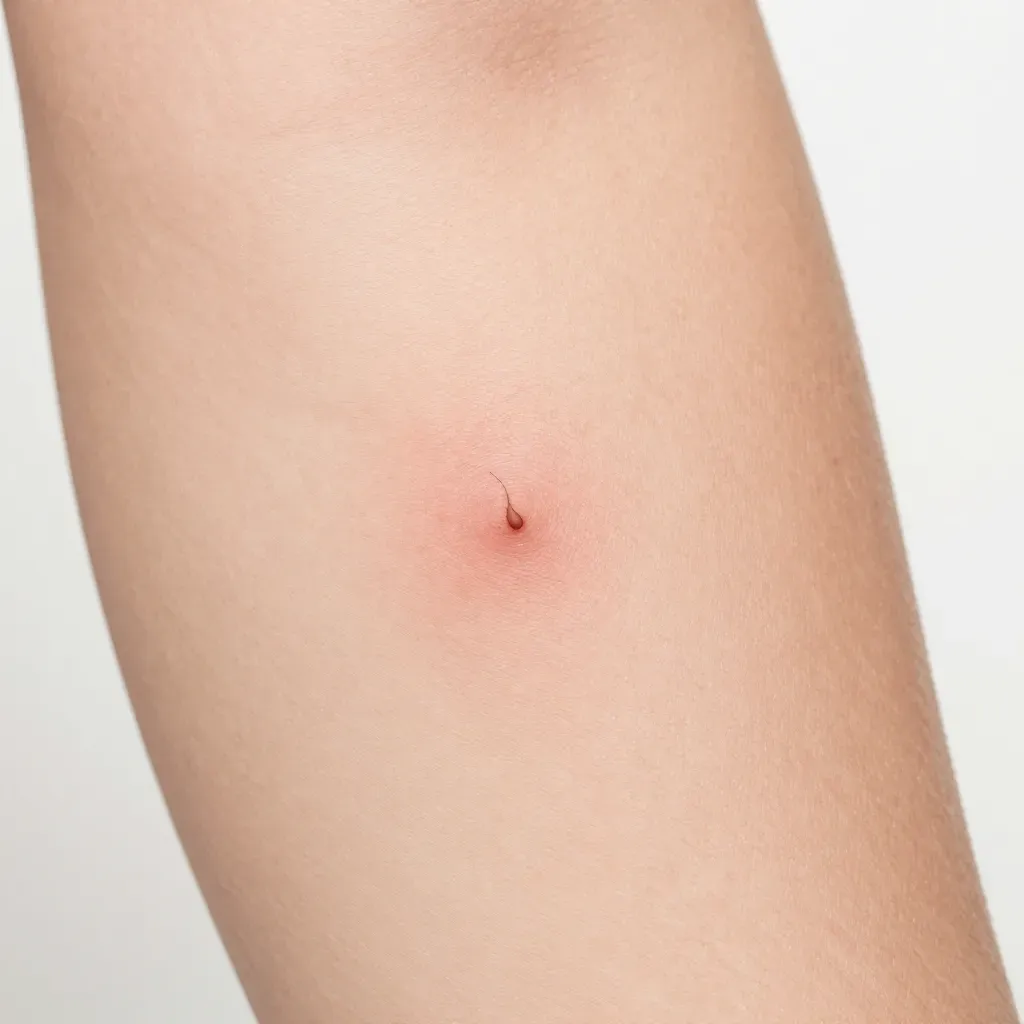
Ingrown hairs curl back into skin causing marble-sized cysts.
Biggest cases exceed quarter-inch reaching fat layers.
Close shaving creates sharp tips piercing skin.
Waxing and plucking distort follicle direction.
Friction and dry skin block hair exits.
Bikini line, beard, thighs, underarms, legs face highest risk.
Coarse curly hair penetrates easier.
Multiple hairs cluster in single lesions.
Chronic cases develop tunneling tracts.
Mayo Clinic advises sterile needle to gently lift hair tip out.
Wash hands, apply hot compress, sterilize needle.
Insert needle parallel to skin, hook hair loop gently.
Pull hair along growth direction.
Never dig under skin or squeeze.
Clean tools before and after.
Stop if bleeding or severe pain.
Apply antibiotic ointment and bandage.
See doctor if bump larger than pencil eraser or shows red streaks.
Infected follicles show pus, heat, swelling, pulsing pain.
Clean with sterile saline and warm compresses.
Apply bacitracin for mild cases.
Doctors prescribe mupirocin or doxycycline for severe infections.
Drainage stops in 24 hours.
Redness decreases in 3 days.
Skin closes completely in 2 weeks.
Exfoliation clears dead skin blocking follicles.
Salicylic acid 2% daily works for bikini and beard areas.
Moisturize within 3 minutes post-shower.
Use non-comedogenic formulas only.
Stop immediately if burning occurs.
Never treat open wounds.
Existing bumps shrink in 5-7 days.
New formations stop in 14 days.
Maintenance prevents 90% of recurrences.
Laser destroys follicle at root permanently.
Requires 6-8 sessions every 4-6 weeks.
Success rates reach 95% for legs, 90% bikini, 85% beard.
Dark hair responds best.
Professional treatment costs $150-$900 per session.
Ingrown hairs stop after 2-3 sessions.
Touch-ups needed annually.
Professional lasers stronger and safer than at-home devices.
Question | Answer |
|---|---|
What causes the biggest ingrown hairs? | Sharp hair tips pierce skin when shaving, waxing, plucking, friction, or dry skin block follicle exits. |
How do you safely remove large ingrown hairs? | Insert sterile needle parallel to skin, hook hair loop gently, and pull along growth direction without digging. |
When should you see a doctor? | Seek medical care if bump exceeds pencil eraser size, shows red streaks, causes fever, or worsens after 48 hours. |
What prevents ingrown hairs? | Exfoliate daily with salicylic acid and moisturize within 3 minutes post-shower to clear follicle blockages. |
Does laser removal work? | Laser destroys follicles permanently with 85-95% success rates after 6-8 sessions for chronic sufferers. |
Biggest ingrown hairs happen when hair grows back into skin
Hair curls backward into follicle wall.
Sharp tip pierces surrounding tissue.
Body attacks trapped hair like splinter.
Immune response inflames follicle.
Pus forms marble-sized cysts.
Biggest cases exceed quarter-inch.
Severe cases embed multiple hair shafts.
Depth can reach subcutaneous fat layer.
Mechanism
Hair grows sideways under epidermis.
Follicle opening gets blocked by dead skin.
Inflammation swells surrounding tissue.
Blockage prevents natural drainage.
Bacteria infects trapped hair shaft.
Infection spreads to adjacent follicles.
Primary triggers
Method | Why it causes ingrown hairs |
|---|---|
Close shaving | Creates sharp angled tip that pierces skin |
Waxing | Breaks hair below surface leaving fragment |
Plucking | Distorts follicle direction |
Friction | Tight clothing forces hair sideways |
Dry skin | Dead cells block exit path |
High-risk zones
- Bikini line - combines shaving and underwear friction
- Beard area - pseudofolliculitis barbae in curly hair
- Inner thighs - constant skin rubbing
- Underarms - sweat and razor combination
- Lower legs - tight jeans compression
Severity escalation factors
Coarse dark hair penetrates skin easier.
Curly hair naturally grows in spiral pattern.
Previous scars distort follicle direction.
Repeated trauma builds keloid tissue.
Multiple hairs cluster in single lesion.
Chronic cases develop tunneling tracts.
Biggest ingrown hairs feel like deep pea-sized nodules.
They often contain pus and blood.
Severe cases require medical intervention.
Chronic sufferers develop permanent scarring.
Use sterile needle to lift out large ingrown hairs
Preparation steps
Wash hands with antibacterial soap.
Clean ingrown area with warm water.
Apply hot compress for 10 minutes.
Sterilize needle with rubbing alcohol.
Pat skin dry with clean towel.
Extraction technique
Insert needle parallel to skin surface.
Gently hook hair loop with needle tip.
Lift hair tip upward and outward.
Pull hair out slowly along growth direction.
Stop if you hit resistance or pain.
Critical safety rules
Do | Never |
|---|---|
Lift hair tip only | Dig under skin surface |
Work in good lighting | Squeeze or pop bump |
Clean tools before/after | Use unsterilized objects |
Stop if bleeding starts | Force hair out |
Alternative release method
Soak washcloth in warm water.
Apply circular motions to bump.
Pressure helps hair surface naturally.
Repeat 3-4 times daily.
Combine with gentle exfoliation.
Post-extraction care
- Apply antibiotic ointment immediately
- Cover with sterile bandage
- Keep area dry for 24 hours
- Avoid friction from clothing
- Watch for infection signs
Red flags - see doctor
Bump larger than pencil eraser.
Pus with red streaks radiating outward.
Fever or chills develop.
Pain becomes severe and throbbing.
No improvement after 48 hours.
Professional extraction costs $50-$200 per lesion.
Insurance covers infected cases.
Dermatologists use sterile lancets and local anesthesia.
They drain abscesses and prescribe antibiotics.
Clean infected follicles with proper wound care
Infection signs
Red streaks radiate from bump.
Yellow-green pus accumulates under skin.
Skin feels hot to touch.
Swelling doubles bump size.
Pain pulses with heartbeat.
- White blood cells attack bacteria
- Inflammation traps infection inside
- Follicle wall ruptures under pressure
Cleaning protocol
Wash hands with antibacterial soap.
Cleanse area with sterile saline.
Apply warm compress for 15 minutes.
Gently express pus with clean gauze.
Never squeeze or force drainage.
Wound care essentials
Do | Avoid |
|---|---|
Apply antibiotic ointment | Touch with dirty fingers |
Cover with breathable bandage | Leave open to air |
Change dressing daily | Reuse old bandages |
Keep area elevated | Tight clothing friction |
Antibiotic options
Over-the-counter bacitracin works for mild cases.
Prescription mupirocin treats staph infections.
Oral antibiotics needed for spreading infection.
Doctors prescribe doxycycline for severe cases.
Complete full antibiotic course.
Healing timeline
- 24 hours: Drainage stops
- 3 days: Redness decreases
- 1 week: Swelling resolves
- 2 weeks: Skin closes completely
- 4 weeks: Scar fades
Medical intervention
Doctors lance abscesses under sterile conditions.
They culture bacteria for targeted antibiotics.
Deep infections need incision and drainage.
Recurrent cases require hormone testing.
Insurance covers infected ingrown hair treatment.
Untreated infections spread to bloodstream.
Sepsis risk increases with diabetes.
MRSA infections require specialist care.
Permanent scarring results from chronic infection.
Early treatment prevents complications.
Stop severe ingrown hairs with exfoliation and moisture
Core mechanism
Dead cells block follicle openings.
Exfoliation clears these obstructions.
Moisture softens skin layers.
Soft skin releases trapped hairs.
Exfoliation methods compared
Type | How often | Best areas |
|---|---|---|
Physical scrub | 2-3x weekly | Legs, arms |
Salicylic acid 2% | Daily | Bikini, beard |
Glycolic acid 5% | Every other day | Face, underarms |
Moisture application
Apply within 3 minutes post-shower.
Use non-comedogenic formulas only.
Layer urea cream for thick skin.
Reapply after heavy sweating.
Product protocol
- AM: Salicylic cleanser + light lotion
- PM: Chemical exfoliant + barrier cream
- Pre-shave: Exfoliate + shave oil
- Post-shave: Aloe vera gel
High-risk zone treatment
Bikini line: Daily acid exfoliation mandatory.
Beard area: Use enzyme exfoliants only.
Inner thighs: Apply friction-reducing powder.
Underarms: Avoid alcohol-based products.
Safety boundaries
Stop immediately if burning occurs.
Never treat open wounds.
Skip retinoids 48 hours before waxing.
Avoid scrubs on active inflamed bumps.
Expected timeline
Existing bumps shrink in 5-7 days.
New formations stop in 14 days.
Skin normalizes within 4 weeks.
Maintenance prevents 90% of recurrences.
Adjust routine based on climate.
Winter needs heavier moisture.
Summer requires lighter layers.
Consistency trumps product strength.
Laser removal ends chronic ingrown hair problems
Mechanism
Laser destroys follicle at root.
Permanently eliminates ingrown source.
Protocol
6-8 sessions every 4-6 weeks.
15-30 minutes per area.
Success rates
Area | Sessions | Success |
|---|---|---|
Bikini | 6-8 | 90% |
Beard | 8-10 | 85% |
Legs | 6-8 | 95% |
Costs
- Bikini: $200-$400 per session
- Legs: $600-$900 per session
- Beard: $150-$300 per session
- Packages cut per-session price
Candidacy
Dark hair responds best.
Light skin shows fastest results.
Dark skin needs ND:YAG laser.
Blonde hair needs more sessions.
Side effects
Temporary redness and swelling.
Rare pigment changes.
Cooling minimizes risks.
Results
Ingrown hairs stop after 2-3 sessions.
Permanent reduction after 6 sessions.
Touch-ups needed annually.
Professional vs at-home
Professional lasers stronger and safer.
At-home devices need 12+ sessions.
DIY risks burns and scarring.