
Table of Contents
Black skin faces more ingrown hairs because curly hair grows parallel to skin and pierces back in after shaving.
Never dig or squeeze ingrowns on melanin-rich skin.
Use warm compresses, sterile extractions only when hair loops show, and melanin-safe chemical exfoliants like salicylic acid 0.5-2%.
Professional ND:YAG laser gives permanent prevention after 6-8 sessions.
Prevention beats treatment: gentle exfoliation, alternative hair removal, and loose clothing prevent ingrowns and hyperpigmentation.
Question | Answer |
|---|---|
Why does black skin get more ingrown hairs? | Curly hair texture grows parallel to skin and naturally pierces back in after shaving. |
What is the safest removal method? | Apply warm compresses and use sterile extractions only when hair loops are visible above skin. |
Which products work best for black skin? | Salicylic acid 0.5-2% and melanin-safe brands like Urban Skin Rx prevent hyperpigmentation. |
Can laser treatment permanently prevent ingrowns? | ND:YAG laser destroys follicles after 6-8 sessions and stops ingrowns permanently. |
What should you absolutely never do? | Never dig, squeeze, or use harsh physical scrubs that cause dark marks and keloids. |
Why black skin gets more ingrown hairs
Black skin ingrown hair removal challenges start with curly hair texture that naturally grows back into the skin.
The sharp curve of Afro-textured hair causes it to re-enter the skin after shaving or waxing.
This creates a cycle of inflammation, dark spots, and potential scarring unique to darker skin tones.
Understanding these root causes prevents further damage.
Hair structure differences
Follicles in darker skin produce tightly coiled hair that grows parallel to the skin surface.
This coil acts like a hook that easily pierces back into the epidermis.
Research shows curved follicles increase ingrown hair risk by up to 50 times compared to straight hair.
The hair itself is often coarse and wiry, making it more likely to burrow rather than exit cleanly.
Each hair strand has a natural curl pattern that fights against normal growth direction.
Shaving impact on black skin
Multi-blade razors cut hair below skin level at sharp angles.
These sharp tips penetrate surrounding skin as they grow.
Close shaving techniques common for smooth results worsen this effect.
Many black men and women shave against the grain for closer results, increasing risk.
Electric razors can also pull and cut hair unevenly, contributing to the problem.
Depilatory creams sometimes cause chemical burns that complicate healing.
Skin healing complications
Inflammation from ingrown hairs triggers hyperpigmentation in melanin-rich skin.
Dark spots can persist for 6-12 months after the ingrown heals.
Keloid scarring occurs 15-20 times more frequently in black skin, creating permanent raised bumps.
Pseudofolliculitis barbae affects up to 60% of African American men who shave regularly.
Even minor irritation can leave lasting marks on darker complexions.
The skin's healing response often creates more pigment, not less.
Treatment challenges
Common advice to "pop" or dig out ingrowns causes more damage on black skin.
Many over-the-counter products contain harsh acids that worsen hyperpigmentation.
Physical exfoliation can create micro-tears leading to more dark spots.
What works for lighter skin often fails or damages melanin-rich skin.
Standard ingrown hair treatments ignore the risk of post-inflammatory hyperpigmentation.
Black skin requires gentler approaches to avoid trading one problem for another.
Risk Factor | Impact Level | Prevention Priority | Why It Matters |
|---|---|---|---|
Curly hair texture | Critical | Essential | Hair naturally curls back into skin |
Close shaving | High | Very High | Creates sharp tips that pierce skin |
Skin sensitivity | High | Essential | Inflammation causes dark marks |
Keloid tendency | Medium | High | Scarring can be permanent |
Product irritation | Medium | High | Chemical burns worsen pigmentation |
Genetic predisposition means prevention must be consistent and gentle.
Regular exfoliation helps but aggressive scrubbing causes more damage.
Understanding these factors guides safer removal choices.
Early intervention prevents long-term hyperpigmentation.
Choosing methods designed for curly hair and dark skin is essential.
Professional consultation often provides better results than trial-and-error.
Safe removal techniques that prevent scarring
Black skin ingrown hair removal requires gentle methods to avoid hyperpigmentation and keloids.
Never dig or squeeze ingrown hairs on dark skin.
Patience and proper technique prevent months of dark marks.
Warm compress technique
Apply a warm, damp washcloth to the area for 5-10 minutes.
This softens skin and brings the hair closer to the surface.
Repeat 2-3 times daily until the hair emerges naturally.
Never use hot water that burns or irritates melanin-rich skin.
Pat dry gently with a clean towel.
Add a drop of tea tree oil to the water for antibacterial benefits.
Test the temperature on your wrist first.
Sterile extraction method
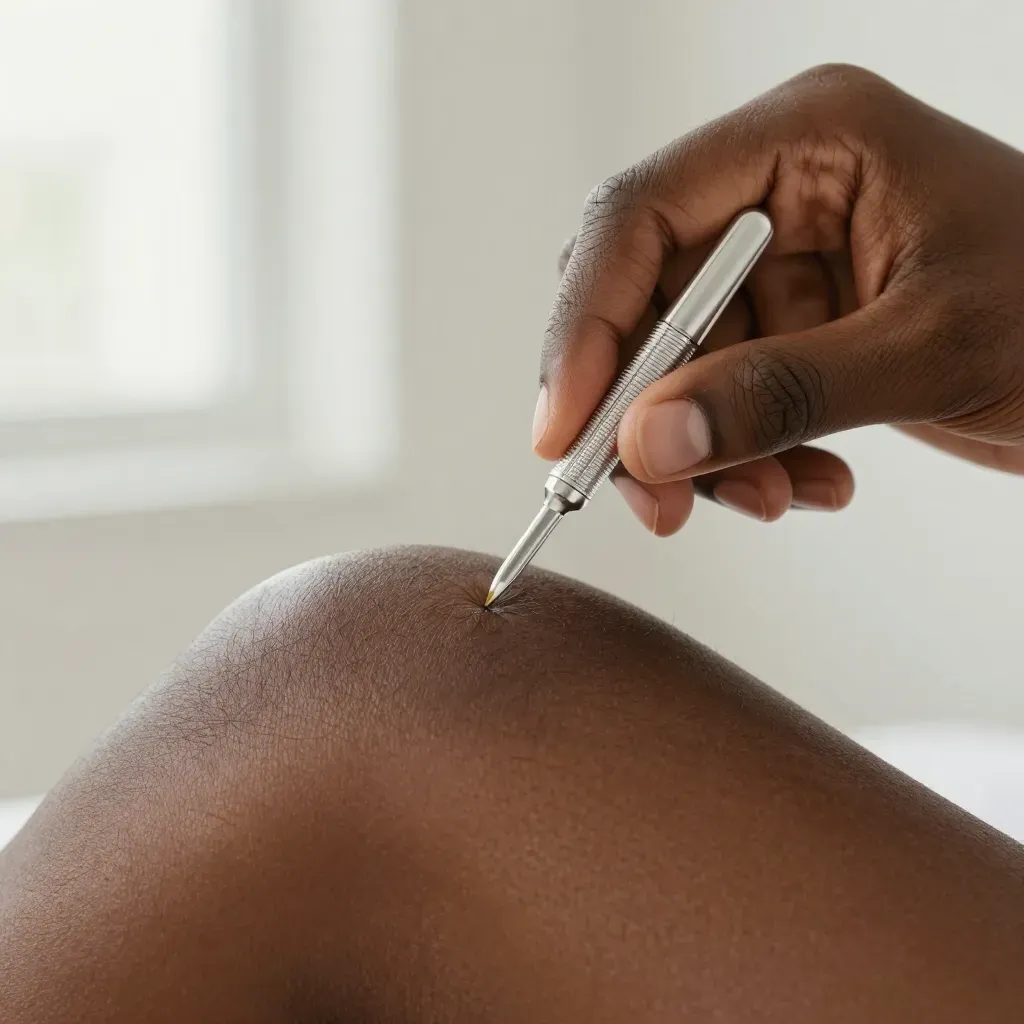
Only extract when you see the hair loop above skin.
Disinfect tweezers with rubbing alcohol.
Slide the tweezers under the hair loop, don't pierce skin.
Pull the loop out gently, don't pluck the entire hair.
Apply antibiotic ointment immediately after.
Use a sterile needle only if absolutely necessary.
Never use fingers or nails to dig.
Chemical exfoliation for black skin
Salicylic acid 0.5-2% helps dissolve dead skin cells.
Glycolic acid pads work for stubborn ingrowns.
Start with once weekly application to test tolerance.
Avoid benzoyl peroxide which bleaches dark skin.
Stop if redness or burning occurs.
Look for products specifically formulated for dark skin.
Urban Skin Rx and Bush Balm make melanin-safe options.
Professional dermatologist options
Doctors can safely lance deep ingrowns with sterile tools.
Corticosteroid injections reduce inflammation quickly.
Prescription retinoids prevent future ingrowns.
Professional extractions cost $75-150 per session.
Insurance may cover severe cases of pseudofolliculitis barbae.
Find a dermatologist experienced with darker skin tones.
Ask about laser hair removal for permanent prevention.
Method | Scarring Risk | Effectiveness | Cost | Best For | Time to Results |
|---|---|---|---|---|---|
Warm compress | Very Low | Medium | Free | Early stage ingrowns | 2-5 days |
Sterile extraction | Low | High | $0-10 | Visible hair loops | Immediate |
Chemical exfoliants | Low | Medium | $10-30 | Prevention & mild cases | 1-2 weeks |
Professional extraction | Very Low | Very High | $75-150 | Deep or infected ingrowns | Same day |
DIY digging | Very High | Low | $0 | Never recommended | Worsens |
Always test new products on a small patch first.
Dark skin reacts differently to irritation.
What works on lighter skin may cause hyperpigmentation.
Patience prevents scarring better than aggressive removal.
Letting ingrowns heal naturally is sometimes the safest option.
Track your skin's response to each method.
Stop any technique that causes burning or darkening.
Best products for black skin ingrown hairs
Black skin ingrown hair removal demands products that prevent hyperpigmentation while treating bumps.
Standard formulas often bleach or irritate melanin-rich skin.
Choose melanin-safe products with gentle acids and anti-inflammatory ingredients.
Chemical exfoliants safe for melanin
Salicylic acid 0.5-2% dissolves dead skin without bleaching dark skin.
Urban Skin Rx Clear & Even Tone Clarifying Glycolic Pads work specifically for darker tones.
Start once weekly to test tolerance.
Avoid benzoyl peroxide and hydroquinone—they create white spots on black skin.
Gradual exfoliation prevents irritation that leads to dark marks.
Targeted spot treatments
Fur Ingrown Microdart Patches deliver salicylic acid directly to bumps within six hours.
Mario Badescu Drying Lotion uses calamine to dry ingrowns overnight.
Bush Balm Dark Spot Oil prevents hyperpigmentation during healing.
Apply only to active ingrowns, not entire areas.
These targeted treatments minimize overall skin stress.
Daily cleansers and prevention
Urban Skin Rx Clear Skin Cleansing Bar contains sulfur and salicylic acid for daily use.
Use in the shower to prevent new ingrowns before they start.
Consistent cleansing reduces buildup that traps hairs.
Look for non-stripping formulas that maintain skin barrier.
Soothing and healing products
Hydrocortisone creams reduce inflammation quickly on irritated dark skin.
Arnica and echinacea extracts calm redness without bleaching.
Natural oils like tea tree prevent infection naturally.
Apply these after hair removal to soothe and protect.
Product Type | Recommended Brands | Key Ingredients | Price Range | Black Skin Benefit |
|---|---|---|---|---|
Chemical exfoliant | Urban Skin Rx | Salicylic acid, glycolic acid | $20-35 | Formulated for melanin |
Spot patch | Fur Microdart | Salicylic acid, cica | $28 | Targets bumps directly |
Drying lotion | Mario Badescu | Calamine, salicylic acid | $17 | Reduces redness overnight |
Cleansing bar | Urban Skin Rx | Sulfur, salicylic acid | $15 | Daily prevention |
Dark spot oil | Bush Balm | Natural oils | $25 | Prevents hyperpigmentation |
- Test all products on inner arm first
- Stop use if skin lightens or darkens unnaturally
- Never combine multiple strong acids at once
- Patience prevents scarring better than harsh treatments
- Consistent prevention beats aggressive spot treatment
Read ingredient lists carefully.
Many "natural" products contain hidden bleaching agents.
When in doubt, choose brands specifically marketed for melanin-rich skin.
Professional dermatologist recommendations provide the safest guidance.
Professional treatments for darker skin tones
Black skin ingrown hair removal requires professional expertise to avoid permanent hyperpigmentation and keloids.
DIY extraction methods cause more damage than good on melanin-rich skin.
Specialized clinical treatments deliver safe, lasting results.
ND:YAG laser hair removal
1064nm ND:YAG lasers bypass melanin in dark skin and destroy hair follicles.
This prevents future ingrown hairs at the source.
6-8 sessions reduce ingrowns by 90% permanently.
Each session costs $150-300 for face or bikini area.
Full body treatments run $600-900 per session.
Results last years, making it cost-effective long-term.
Find providers with proven experience treating black patients.
Laser stops ingrown hairs permanently when done correctly.
Professional extractions and injections
Dermatologists use sterile lancets to safely release trapped hairs.
This prevents scarring that DIY methods cause.
Corticosteroid injections shrink inflamed ingrowns within 24-48 hours.
Each injection costs $50-100.
Professional extractions range $75-150 per session.
Doctors can drain infected ingrowns without spreading bacteria.
They prescribe oral antibiotics for severe infections.
Prescription treatments
Tretinoin and other retinoids prevent future ingrowns by increasing cell turnover.
Professional chemical peels with low-strength glycolic acid clear follicles.
Dermatologists customize acid concentrations for dark skin safety.
Oral antibiotics treat severe pseudofolliculitis barbae.
These prescriptions cost $30-80 monthly.
Treatment | Black Skin Safety | Effectiveness | Cost Per Session | Best For | Long-term Benefit |
|---|---|---|---|---|---|
ND:YAG Laser | Very High | 90% reduction | $150-300 | Chronic ingrowns | Permanent prevention |
Professional Extraction | High | Immediate relief | $75-150 | Deep ingrowns | Prevents scarring |
Corticosteroid Injection | High | 24-48 hour results | $50-100 | Inflamed bumps | Reduces inflammation |
Prescription Retinoids | Medium | Prevention | $30-80/month | Maintenance | Cell turnover |
DIY Methods | Very Low | Low | $0-20 | Never recommended | Risk of damage |
- Verify provider owns ND:YAG 1064nm laser specifically
- Ask about number of black patients treated monthly
- Request before/after photos of Fitzpatrick skin types V-VI
- Check online reviews from black clients specifically
- Confirm consultation includes full skin assessment
- Inquire about package pricing for multiple sessions
Insurance covers pseudofolliculitis barbae when medically documented with photos.
Primary care doctors can provide referrals.
Professional laser treatment eliminates ingrown hairs permanently.
Combine clinical treatments with gentle home care for best results.
Track your skin's response after each session.
Stop treatment immediately if you notice lightening or new dark marks.
Prevention strategies to stop future ingrown hairs
Black skin ingrown hair removal prevention starts with stopping hair from growing back into skin.
Modify hair removal methods and daily habits to break the ingrown cycle.
Consistent prevention prevents hyperpigmentation and keloid formation.
Alternative hair removal methods
ND:YAG laser hair removal stops ingrowns permanently by destroying follicles.
6-8 sessions eliminate 90% of ingrown hairs long-term.
Professional treatment costs $150-300 per session but delivers permanent results.
At-home laser devices work for maintenance but require more sessions.
Depilatory creams dissolve hair above skin level if used correctly.
Test creams on small patch first to avoid chemical burns on dark skin.
Electric trimmers cut hair at skin surface without sharp tips.
Stop shaving against the grain completely.
Waxing removes hair from root but can cause ingrowns if done improperly.
Gentle exfoliation routine
Exfoliate 2-3 times weekly with chemical exfoliants only.
Physical scrubs create micro-tears that worsen hyperpigmentation.
Use salicylic acid 0.5-2% or glycolic acid pads designed for black skin.
Urban Skin Rx makes melanin-safe exfoliating products.
Apply exfoliant in gentle circular motions, never scrub hard.
Stop if skin feels tight or burns.
Exfoliate before hair removal to release trapped hairs.
Daily skincare habits
Moisturize twice daily with non-comedogenic lotions.
Dry skin traps hairs more easily.
Use lightweight oils like jojoba or tea tree after hair removal.
Avoid heavy creams that clog follicles.
Apply hydrocortisone cream immediately after irritation.
Keep hands off your skin between treatments.
Touching transfers bacteria and causes inflammation.
Clothing and friction reduction
Wear loose cotton clothing in ingrown-prone areas.
Tight synthetic fabrics rub and push hairs back into skin.
Change out of sweaty clothes immediately after workouts.
Friction and heat create perfect conditions for ingrowns.
Opt for boxers over briefs, loose pants over leggings.
Let skin breathe whenever possible.
Prevention Method | Black Skin Safety | Effort Level | Cost | Effectiveness | Long-term Benefit |
|---|---|---|---|---|---|
ND:YAG Laser | Very High | Low | $150-300/session | 90% | Permanent |
Chemical Exfoliation | High | Medium | $10-30/month | 70% | Maintenance |
Proper Shaving | Medium | High | $0-20 | 40% | Short-term |
Loose Clothing | Very High | Low | $0 | 50% | Prevention |
Depilatory Creams | Medium | Medium | $5-15/month | 60% | Medium-term |
- Never skip patch tests with new products
- Stop any method causing burning or lightening
- Combine multiple prevention strategies for best results
- Track which methods work for your specific skin
- Consult dermatologist for persistent ingrowns
Professional laser treatment stops ingrowns permanently.
Best at-home laser devices work for maintenance between sessions.
Understand risks before using at-home devices.
Consistency matters more than intensity.
Gentle daily habits prevent ingrowns better than aggressive weekly treatments.
Your skin will thank you with fewer dark marks and smoother texture.