
Table of Contents
Blackheads form when open pores clog with dead skin cells and oil that oxidizes and turns dark.
Ingrown hairs happen when shaved or waxed hair grows back into skin causing inflammation.
Both share risk factors like hair removal, excess oil, hormonal changes.
Safe removal requires cleansing, warm compresses, sterilized tools.
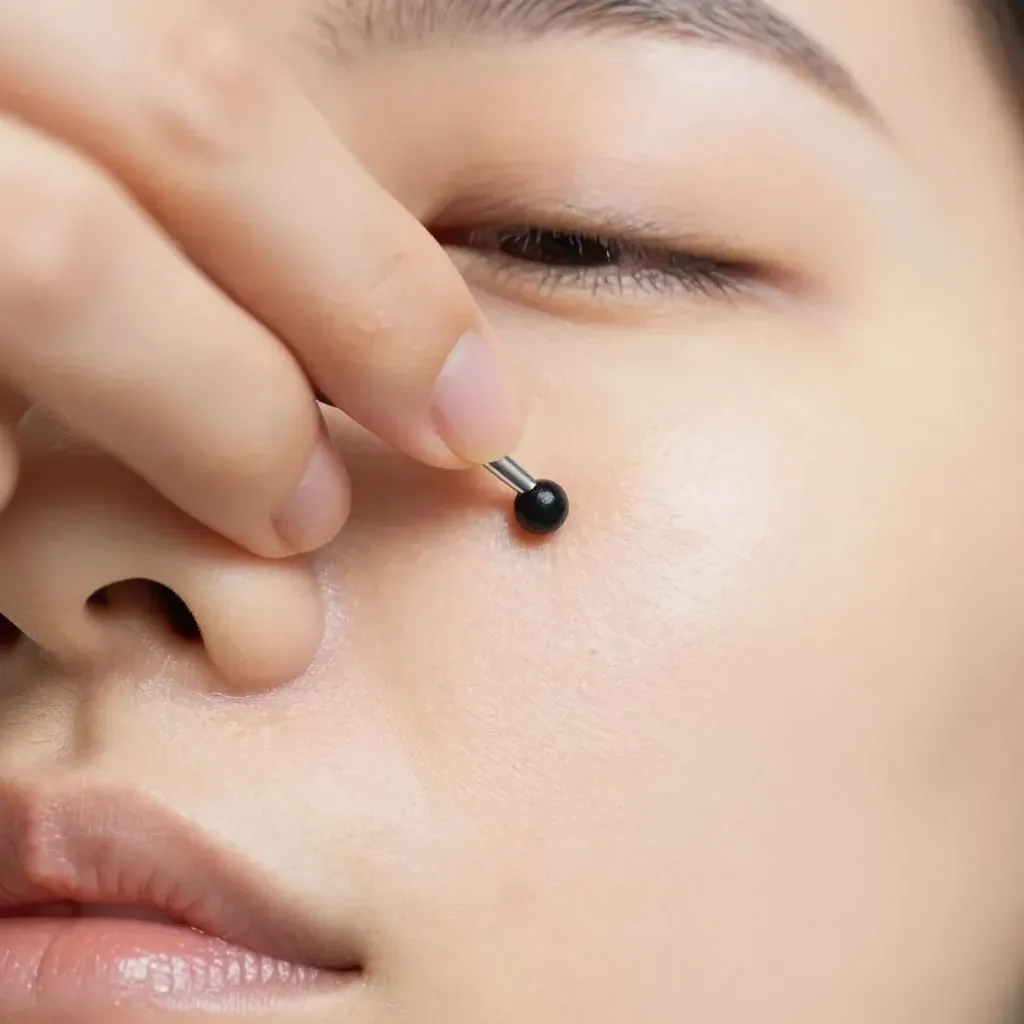
Use extractor tools with gentle pressure for blackheads.
Stop immediately if bleeding occurs.
For ingrown hairs, use warm compress, sterile needle to expose tip, pointed tweezers to pull hair out in growth direction, then antiseptic cream.
Prevent future issues through regular exfoliation.
Chemical exfoliants like salicylic acid dissolve oil and unclog pores.
Use daily for oily skin, 2x/week for dry skin.
Physical exfoliants like soft brushes polish surface without tearing skin.
Avoid over-exfoliation which damages skin barrier.
Choose professional-grade stainless steel tools with smooth edges.
Use extractors for blackheads, precision tweezers for ingrown hairs, sterile single-use lancets for deep ingrowns.
Never use plastic tools, dull tweezers, or fingernails.
Sterilize tools with alcohol after each use.
Replace tools every six months.
Seek professional treatment if at-home methods fail after two weeks.
Also seek help for deep cysts, infection signs, or recurring scarring.
Professional options include extraction, chemical peels, laser hair removal, electrolysis, prescription retinoids.
Professional treatment prevents permanent damage and eliminates infection risk.
Question | Answer |
|---|---|
What causes blackheads? | Open pores clog with dead skin cells and oil that oxidizes and turns dark. |
What causes ingrown hairs? | Shaved or waxed hair grows back into skin causing inflammation. |
How can you safely remove blackheads at home? | Cleanse skin, apply warm compress, use sterilized extractor tool with gentle pressure. |
How can you safely remove ingrown hairs at home? | Apply warm compress, use sterile needle to expose hair tip, pull out with pointed tweezers in growth direction. |
When should you seek professional treatment? | Seek help if at-home methods fail after two weeks, deep cysts form, infection signs appear, or recurring issues cause scarring. |
Learn what causes blackheads and ingrown hairs.
Blackhead formation
Blackheads form when pores clog with dead skin cells and oil.
The clogged pore stays open at the surface.
Air oxidizes the trapped debris.
Oxidation turns the plug dark.
This differs from whiteheads which stay closed.
Dead skin buildup is the primary culprit.
Primary triggers | How it happens |
|---|---|
Excess oil production | Glands make too much oil |
Hormonal fluctuations | Puberty, periods, pregnancy increase activity |
Heavy skin products | Thick creams and makeup block pores |
High humidity and sweat | Moisture mixes with oil and speeds buildup |
Infrequent cleansing | Irregular washing allows debris buildup |
Certain medications | Steroids and some pills increase oil |
Dietary factors | High sugar foods may trigger more oil |
Ingrown hair development
Ingrown hairs occur after hair removal.
Shaved or waxed hair regrows into skin instead of upward.
The body identifies trapped hair as foreign.
This triggers inflammation.
Red bumps and irritation appear.
- Close shaving cuts hair below skin surface
- Dull blades create jagged sharp tips
- Dry shaving irritates follicles and causes swelling
- Curly or coarse hair naturally curls back into follicles
- Tight clothing creates friction and presses hair down
- Waxing removes entire hair; regrowth may misdirect
- Pulling skin taut while shaving causes hair to snap back
- Lack of exfoliation blocks hair exit points
Shared risk factors
Hair removal methods cause both conditions.
Shaving and waxing irritate skin.
Irritation stimulates oil production as protection.
Extra oil clogs pores more easily.
Hair removal creates sharp angled tips.
These tips pierce skin and trap easily.
Frequent removal increases risk greatly.
Remove them safely using proper at-home techniques.
Blackhead extraction steps
Cleanse face with gentle cleanser first.
Apply warm compress for five minutes to open pores.
Disinfect comedone extractor tool with rubbing alcohol.
Place loop directly over blackhead.
Apply gentle even pressure downward.
Rock tool slightly side to side.
Lift upward when debris emerges from pore.
Stop immediately if skin bleeds or resists pressure.
Never force extraction.
Apply toner with salicylic acid afterward.
Step | Action | Purpose |
|---|---|---|
1 | Cleanse | Remove surface bacteria and oil |
2 | Steam | Open pores and soften plugs |
3 | Disinfect | Prevent bacterial infection |
4 | Extract | Apply controlled pressure only |
5 | Soothe | Reduce redness and inflammation |
Ingrown hair removal method
Apply warm compress for ten minutes to soften skin.
Clean area thoroughly with alcohol pad.
Use sterile needle or lancet to expose hair tip.
Gently lift hair tip above skin surface.
Never dig into skin or cut surface.
Use pointed tweezers to grasp exposed hair.
Pull hair out slowly in growth direction.
Apply antiseptic cream immediately after removal.
- Sterile needle or lancet
- Pointed tweezers with fine tips
- Alcohol wipes for disinfection
- Antiseptic cream or gel
- Oil-free moisturizer
- Hydrocortisone cream for inflammation
Critical safety rules
- Stop immediately if severe pain occurs
- Never reuse tools without proper sterilizing
- Limit extractions to five minutes per area maximum
- Skip extraction completely if cyst forms
- Clean hands thoroughly before touching face
- Avoid extraction during active acne breakouts
- Wait three days between extraction sessions
- Never extract same spot twice in one session
Apply benzoyl peroxide spot treatment after blackhead removal.
Use salicylic acid daily to prevent new blackheads forming.
Moisturize with non-comedogenic oil-free products only.
Wait twenty-four hours before applying makeup to extracted areas.
Apply cold compress if redness persists longer than one hour.
Prevent future issues with regular exfoliation.
Exfoliation removes the blockage
Dead skin cells clog pores and trap hairs.
Regular removal stops this buildup.
Clear pathways let oil escape.
Hairs grow upward freely.
Chemical exfoliants penetrate deeper
Salicylic acid dissolves oil and unclogs pores.
Glycolic acid removes surface dead cells.
Lactic acid suits sensitive skin better.
Apply after cleansing.
Start with 0.5% to 2% concentrations.
Physical exfoliants polish surface
Soft brushes loosen debris gently.
Fine scrubs polish without tearing.
Avoid walnut shells and apricot pits.
Konjac sponges work for daily use.
Washcloths suffice for body areas.
Frequency guidelines
Skin type/area | Chemical | Physical |
|---|---|---|
Oily face | Daily | 2x/week |
Dry face | 2x/week | 1x/week |
Body | 3x/week | 3-4x/week |
Bikini line | Alternate days | Alternate days |
Targeted area strategies
Face: Use chemical exfoliants primarily.
Legs: Dry brush before showering daily.
Bikini line: Gentle scrub every other day prevents ingrown hairs.
Underarms: Chemical pad daily reduces bumps.
Back: Long-handled brush reaches easily.
- Apply to clean, dry skin only
- Wait five minutes between products
- Follow with non-comedogenic moisturizer
- Use SPF 30+ every morning
- Stop if stinging or redness occurs
- Never exfoliate over broken skin
Select tools that extract without skin damage.
Comedone extractors
Metal loop extractors apply even pressure around blackheads.
Choose stainless steel with smooth seamless edges.
Flat loops work for surface blackheads.
Angled loops reach nose corners.
Sharp edges tear skin.
Precision tweezers
Pointed tweezers grip exposed ingrown hairs.
Slanted tips handle coarse body hair.
Test alignment on single hair.
Perfect tips close without gaps.
Sterile lancets
Single-use lancets expose buried hair tips.
18-gauge medical-grade offers control.
Never reuse lancets.
Dispose in sharps container.
Tool | Best for | Risk | Quality markers |
|---|---|---|---|
Stainless extractor | Blackheads | Low | Smooth edges |
Precision tweezers | Ingrown hairs | Medium | Aligned tips |
Single-use lancet | Deep ingrowns | Medium | Sterile packaging |
Plastic tools | None | High | Avoid |
Fingernails | Nothing | Very high | Avoid |
Tool avoidance list
- Plastic tools harbor bacteria
- Wooden handles absorb moisture
- Dull tweezers break hairs
- Large loops damage skin
- Fingernails cause scarring
Sterilization steps
Wash tools with soap and hot water.
Soak in 70% isopropyl alcohol ten minutes.
Air dry on clean towel.
Store in sealed container.
Replace every six months.
Seek professional treatment for persistent problems.
Warning signs that require professional care
See a dermatologist when at-home methods fail after two weeks of consistent treatment.
Deep painful cysts need medical extraction to prevent permanent scarring and hyperpigmentation.
Recurring ingrown hairs create dark spots, keloid scars, and post-inflammatory marks.
Infection signs include pus, spreading redness, warmth, fever, and severe tenderness.
Multiple ingrown hairs cluster in one area repeatedly despite prevention efforts.
Blackheads cover large areas and resist topical treatments like salicylic acid.
Ingrown hairs occur under thick scar tissue that blocks normal hair growth.
Professional treatment options
Treatment | Targets | Sessions needed | Downtime | Cost range |
|---|---|---|---|---|
Professional extraction | Blackheads | Single session | None | $75-$150 |
Chemical peels (AHA/BHA) | Clogged pores | 4-6 sessions | 2-3 days peeling | $100-$300 |
Laser hair removal (Nd:YAG) | Ingrown hairs | 6-8 sessions | None | $200-$500 |
Electrolysis | Single stubborn hairs | Multiple sessions | None | $50-$150/hour |
Prescription retinoids | Blackheads | Daily use ongoing | Initial dryness 2 weeks | $50-$200/month |
What happens during professional extraction
Esthetician cleanses skin thoroughly first with medical-grade antibacterial products.
Steam opens pores for five minutes to soften plugs and relax skin.
Medical-grade extractor removes blackheads with controlled, even pressure.
Professional lancet releases deep ingrown hairs without skin trauma or scarring.
High-frequency device kills bacteria and reduces inflammation post-extraction.
Soothing mask with hyaluronic acid reduces redness immediately and hydrates.
SPF 50 application protects vulnerable skin before you leave office.
Cost and frequency guidelines
- Professional extraction: $75-$150 per session, schedule monthly for maintenance
- Chemical peels: $100-$300 per treatment, space every 4-6 weeks for series
- Laser hair removal: $200-$500 per area, requires 6-8 sessions every 4-8 weeks
- Electrolysis: $50-$150 per hour, weekly sessions until hair resolves
- Prescription retinoids: $50-$200 monthly, daily use maintains results
- Package deals reduce per-session costs by 20-30 percent on average
Preparing for professional appointments
Stop using retinoids, acids, and scrubs three days before treatment to avoid over-exfoliation.
Avoid sun exposure and tanning one week prior to prevent irritation and burning.
Do not attempt extraction yourself beforehand as this creates inflammation.
Arrive with clean, makeup-free, product-free skin ready for treatment.
Bring complete list of current skincare products and medications for review.
Inform provider of pregnancy or isotretinoin use within past year as this changes treatment options.