
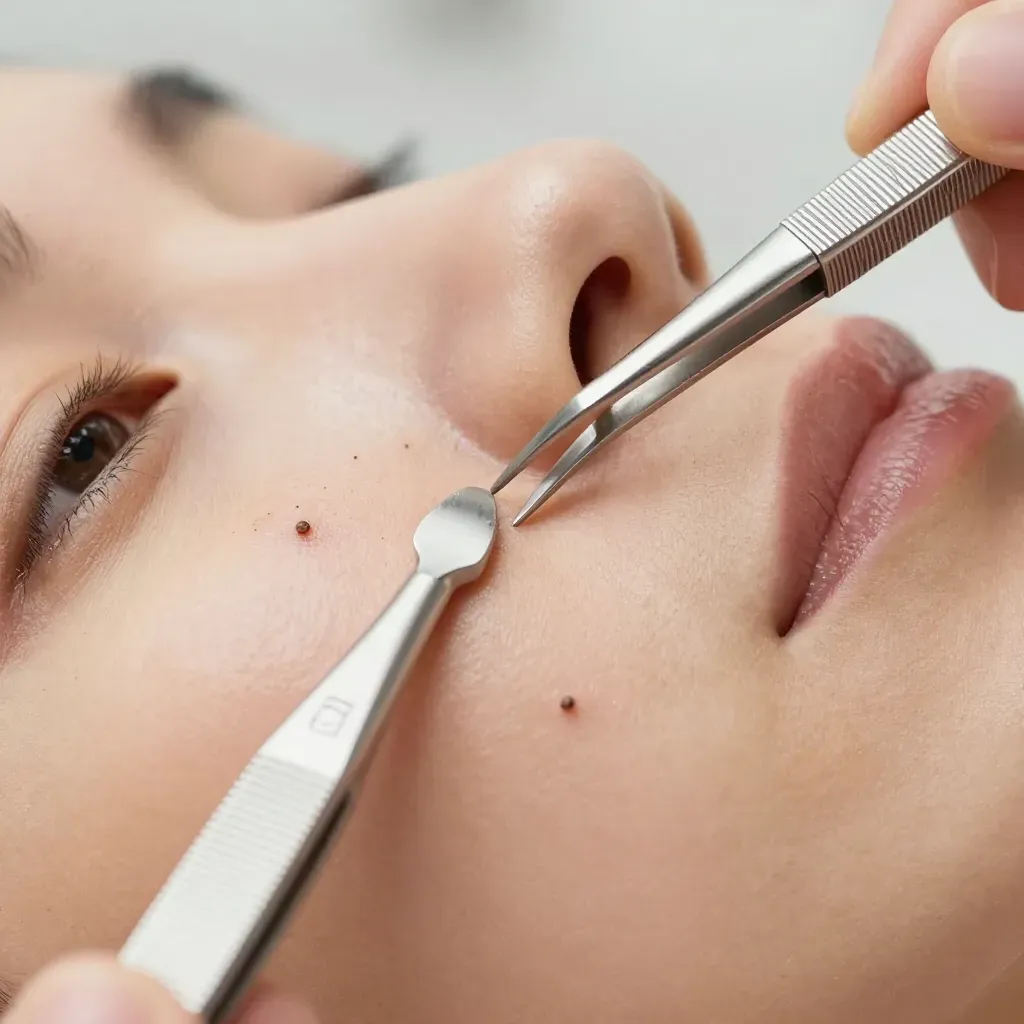
Table of Contents
Identify blackheads vs ingrown hairs first.
Blackheads are flat black dots from oil.
Ingrown hairs are red painful bumps with trapped hair.
Prep skin with warm compresses.
Sterilize tools with alcohol.
Use comedone extractor for blackheads, tweezers for ingrown hairs.
Never force extraction.
Stop if resistance occurs.
Treat stubborn cases with salicylic acid or adapalene.
See dermatologist for spreading redness, severe pain, or no improvement after 14 days.
Correct technique prevents scarring and infection.
Question | Answer |
|---|---|
How to tell blackheads from ingrown hairs? | Blackheads are flat black dots; ingrown hairs are red tender bumps with trapped hair. |
What tools are needed? | Sterilize comedone extractors for blackheads and pointed tweezers for ingrown hairs. |
When to stop extraction? | Stop if you meet resistance, see bleeding, or feel more than mild discomfort. |
What treats stubborn cases? | Salicylic acid 2% or adapalene 0.1% gel work for resistant cases. |
When to seek professional care? | See a dermatologist for spreading redness, severe pain, or no improvement after 14 days. |
Identify the difference between blackheads and ingrown hairs before treatment.
Visual and Physical Differences
Blackheads are open pores clogged with sebum and dead skin cells. The dark tip is oxidized oil, not trapped hair. They sit flat against skin, usually on nose, forehead, and chin.
Ingrown hairs are actual hairs that curl back into skin. They create raised, red bumps that often feel tender. You might see a small hair loop under the surface or a white pus-filled head.
Characteristic | Blackheads | Ingrown Hairs |
|---|---|---|
Appearance | Small black dots, flush with skin | Red bumps, sometimes with visible hair |
Cause | Oil buildup and dead skin | Hair growing sideways into skin |
Common Areas | Face T-zone | Beard, legs, bikini line |
Texture | Smooth, non-inflamed | Rough, inflamed |
Sensation | No pain | Itchy or painful |
Common Confusion Points
Some ingrown hairs develop dark caps that mimic blackheads. The key difference is inflammation. Ingrown hairs irritate surrounding tissue. Blackheads remain dormant.
- Check for tenderness by gently pressing the area
- Look for hair direction patterns in the affected zone
- Consider recent shaving or waxing activities
- Evaluate if the spot is solitary or clustered
When Professional Diagnosis Helps
Dermatologists distinguish between conditions using magnification. They identify underlying causes like folliculitis or acne vulgaris. Professional assessment prevents scarring from incorrect home treatment.
Prepare your skin properly for safe extraction procedures.
Cleanse and Soften Target Area
Wash face with warm water and antibacterial soap. Apply warm compress 3-5 minutes to open pores and soften skin. Use gentle salicylic acid cleanser to remove debris. Pat dry with clean towel. For body ingrown hairs, take warm shower first. Steam loosens follicles and reduces extraction resistance. Avoid harsh scrubs that cause micro-tears.
Sterilize All Tools
Soak comedone extractor, tweezers, or needles in isopropyl alcohol 60 seconds. Wear gloves or wrap fingers in clean tissue. Keep toner-soaked cotton pads nearby for cleanup. Never reuse tools without re-sterilizing. Dispose single-use lancets immediately after use. Store reusable tools in sealed containers.
td>Skin softening
Red Flags: Do Not Extract
Leave certain conditions to professionals. Attempting extraction worsens the problem.
- Active bleeding or open wounds
- Severe redness spreading beyond bump
- Painful cysts deeper than 2mm
- Clusters of bumps in one area
- Recent use of harsh retinoids or isotretinoin
- Any sign of staph infection: yellow crust, fever, rapid swelling
- Diabetes or compromised immune system
Create Clean Workspace
Work under bright lighting. Clean bathroom counter with disinfectant wipes. Lay fresh paper towel as work surface. Keep trash bag within reach for immediate disposal. Turn off running water to avoid splash contamination.
Use sterile tools and proper technique to remove trapped hairs.
Select Right Tool
Match tool to problem type. Comedone extractors work for surface-level plugs. Pointed tweezers grab visible hair loops. Sterile lancets pierce stubborn caps. Choose based on what you see.
Tool | Best For | Technique |
|---|---|---|
Comedone extractor | Blackheads with visible plug | Press loop gently, roll across surface |
Pointed tweezers | Visible ingrown hair loop | Grasp hair, pull in growth direction |
Sterile lancet | Thick skin covering hair | Superficial nick parallel to hair |
Micro-needle | Deep ingrown with no exit | Lift hair tip only, minimal depth |
Step-by-Step Extraction
Position tool at 45-degree angle. Apply gentle pressure around bump, not on top. For ingrown hairs, tease hair upward without digging. Work slowly. Stop if bleeding starts or pain exceeds mild discomfort.
- Anchor skin taut with free hand
- Place tool loop over blackhead center
- Rock tool side-to-side with light pressure
- For ingrown hair: locate loop, lift gently with needle tip
- Extract hair with tweezers once free
- Dab with alcohol-soaked cotton
- Apply thin layer of antibiotic ointment
Critical Safety Rules
Never force extraction. If it resists, abort. Digging creates scars and spreads bacteria. Limit attempts to three per spot. Stop immediately if you hit resistance or draw blood beyond a pinpoint.
- No squeezing with fingernails
- No deep poking or stabbing motions
- No extraction on active acne cysts
- No reusing same cotton swab on multiple spots
- No makeup or products for 24 hours post-extraction
Apply treatments for resistant cases
Chemical exfoliants
Salicylic acid 2% dissolves trapped debris. Apply daily to affected areas. Glycolic acid 5-10% loosens dead skin cells. Use every other night initially. Benzoyl peroxide 5% kills pore bacteria. Combine products cautiously—overuse causes excessive dryness and irritation.
Retinoid therapy
Adapalene 0.1% gel (OTC) normalizes follicle function. Spread thin layer nightly. Expect visible improvement in 4-6 weeks. Tretinoin 0.025% cream (prescription) accelerates cell turnover. Avoid during pregnancy. Always apply sunscreen—retinoids increase sun sensitivity significantly.
Professional dermatology treatments
Microdermabrasion sessions ($75-150) physically remove top layer debris. Chemical peels with 30% salicylic acid clear deep blockages effectively. Laser hair removal eliminates ingrown hairs permanently—requires 6-8 sessions. Dermatologists use sterile tools for safe extraction of persistent lesions without scarring.
Prescription options for severe cases
Clindamycin 1% solution treats bacterial overgrowth. Apply twice daily for 7 days maximum. Oral doxycycline 100mg controls widespread inflammation. Use under strict medical supervision. Intralesional corticosteroid injections shrink painful cystic lesions within 48 hours.
- Product type: Chemical exfoliant
- Concentration: 2% salicylic acid or 5-10% glycolic acid
- Frequency: Daily to alternate days
- Timeline: Clearer pores in 2-4 weeks
Treatment | Timeline | Cost |
|---|---|---|
OTC retinoids | 4-6 weeks | $10-20 |
Professional peel | 1-3 sessions | $100-300 |
Laser hair removal | 6-8 sessions | $200-500 per area |
Recognize when professional care is needed
Infection warning signs
Spreading redness beyond the lesion indicates infection. Warmth and swelling signal active inflammation. Pus formation requires medical attention. Fever or chills mean systemic infection. Dark streaks from the site indicate blood poisoning. Pain that worsens after 3 days needs evaluation.
Home treatment failure
No improvement after 14 days of consistent care means professional help needed. Recurring lesions in same spot indicate underlying follicle damage. Multiple ingrown hairs forming a cluster require expert extraction. Scarring or hyperpigmentation developing needs early intervention. Large painful nodules deeper than 5mm need medical assessment.
Professional treatment options
Treatment | Cost | Recovery | Sessions |
|---|---|---|---|
Sterile extraction | $50-150 | 1-2 days | Single |
Chemical peel | $100-300 | 3-7 days | 1-3 |
Laser hair removal | $200-500 | Immediate | 6-8 |
Dermatologists prescribe oral antibiotics for severe cases. Check insurance coverage—medical necessity often covers dermatology visits for infected lesions. Bad ingrown hair removal techniques cause complications. Laser hair removal works even with active lesions. Stubborn cases need combined therapies.
Choose the right provider
- Primary care doctor: Basic infections and prescriptions
- Dermatologist: Chronic or severe cases, scarring
- Med spa: Cosmetic treatments and prevention