
Table of Contents
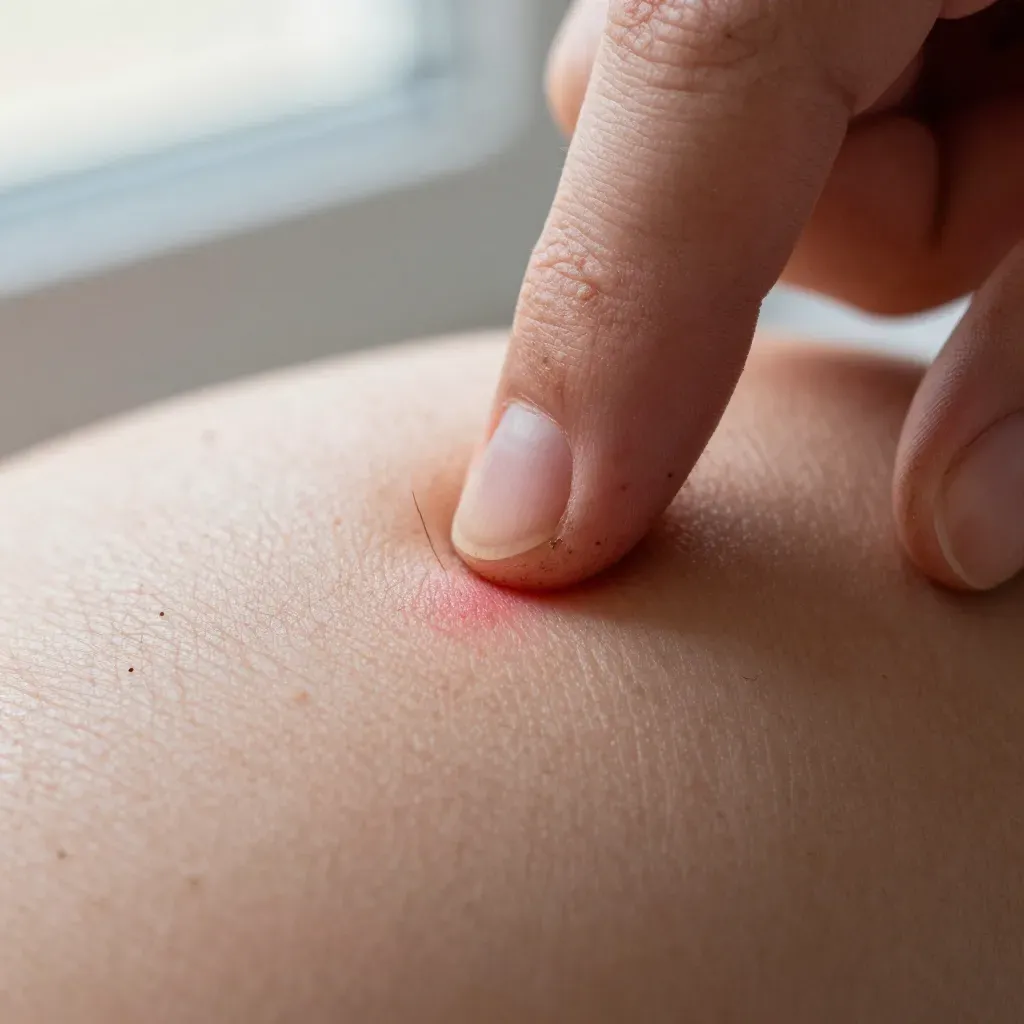
Using your fingernail to remove an ingrown hair is a dangerous practice that can lead to serious skin problems. Fingernails carry bacteria like Staphylococcus aureus and Streptococcus, which enter the skin when you break it, causing infections, painful bumps, and potentially cellulitis. Beyond infection, digging with nails tears the skin, leading to scarring, hyperpigmentation, and inflammation that makes the original problem worse. Instead, use sterile pointed tweezers or needles, following proper techniques to lift and remove the hair safely. Prevent future ingrown hairs through regular exfoliation and proper hair removal methods like shaving in the direction of hair growth with sharp razors.
Question | Answer |
|---|---|
Why is using a fingernail to remove an ingrown hair dangerous? | Fingernails carry bacteria that cause infection when you break the skin, and they tear surrounding tissue leading to scars. |
What bacteria are commonly found under fingernails? | Harmful bacteria include Staphylococcus aureus, Streptococcus species, Enterobacteriaceae, and yeast or fungi. |
What damage can digging at an ingrown hair cause? | It can cause scarring, post-inflammatory hyperpigmentation, increased inflammation, and push the hair deeper. |
What tools should you use instead of your fingernail? | Use sterile pointed tweezers or a small sterile needle to gently lift and remove the hair without tearing skin. |
How can you prevent future ingrown hairs? | Exfoliate regularly to remove dead skin cells and shave in the direction of hair growth with a sharp, clean razor. |
Using your fingernail to remove an ingrown hair is risky.
You ask, can using a fingernail remove ingrown hair?
You can try, but it is a very bad idea.
Using your nail to dig out a trapped hair creates more problems.
Your fingernails are not clean.
They carry large amounts of bacteria and dirt.
When you break the skin with your nail, you push these germs inside.
This directly causes infection.
An infected hair follicle becomes a painful, pus-filled bump.
Why Fingernails Cause Damage
Fingernails are blunt and imprecise.
You cannot use them to gently lift the hair.
Instead, you tear and rip the surrounding skin.
This physical trauma leads to several negative outcomes.
- Infection: Germs from under your nail enter the broken skin, causing painful bumps or pustules.
- Scarring: Tearing the skin creates permanent scars. Your body may produce thick or raised scar tissue.
- Hyperpigmentation: The injury and inflammation can leave a dark spot that lasts for months or years.
- Worsening the problem: You might push the hair deeper or break it, making it harder to remove later.
The temptation to pick is strong.
You see the hair just under the surface.
But digging at it only makes the inflammation worse.
You damage the hair follicle and the skin barrier.
This increases redness, swelling, and pain.
A minor irritation can become a serious skin infection, like cellulitis.
You should not try to remove ingrown hairs this way.
A better option is using a sterile tool like fine-tipped tweezers.
For persistent issues, laser to remove ingrown hair is an effective, long-term solution.
Your nails carry bacteria that can cause infection.
Your fingernails are a perfect home for bacteria.
Even if they look clean, they are not sterile.
Underneath and around your nails, countless microbes live.
These include harmful bacteria like Staphylococcus aureus and Streptococcus species.
They are common causes of skin infections.
When you use your nail to break the skin, you introduce these germs directly into your body.
Common Bacteria Found Under Nails
Studies show fingernails harbor a wide range of bacteria.
These organisms thrive in the warm, moist environment under the nail.
They are easily transferred to your skin.
Bacteria Type | Risk |
|---|---|
Staphylococcus aureus | Causes boils, abscesses, and serious skin infections. |
Streptococcus species | Leads to cellulitis and other soft tissue infections. |
Enterobacteriaceae | Can cause pus-filled infections and worsen inflammation. |
Yeast and Fungi | May cause secondary infections, especially if skin is broken. |
Using your nail to remove an ingrown hair is like using a dirty needle.
You are creating a direct pathway for infection.
The bacteria under your nail multiply rapidly.
They can cause a localized infection, such as folliculitis.
This is a red, tender bump around the hair follicle.
It can quickly progress to a larger, more painful boil.
In severe cases, the infection can spread into deeper layers of skin.
This is called cellulitis and requires medical treatment.
Instead of risking infection, use sterile tools.
Fine-tipped, sanitized tweezers are a much safer choice.
They allow you to lift the hair without introducing harmful bacteria.
If you have frequent ingrown hairs, consider a more permanent solution.
Professional YAG laser hair removal machine for sale treatments can reduce hair growth and prevent future problems.
Digging at your skin leads to scars and more inflammation.
Digging at an ingrown hair with your nail causes direct trauma.
Your skin reacts to this injury with inflammation.
This means more redness, swelling, and pain around the follicle.
You turn a minor irritation into a significant wound.
Your fingernail is a blunt instrument.
It cannot precisely target the hair.
Instead, it tears and damages the healthy skin nearby.
When your skin tries to heal this self-inflicted wound, it can form scars.
Types of Damage from Picking
The urge to pick can lead to long-term skin problems.
These issues are often more noticeable than the original ingrown hair.
- Scarring: Tearing the skin can result in permanent scars. These can be pitted (atrophic) or raised and thick (hypertrophic).
- Post-Inflammatory Hyperpigmentation (PIH): The trauma triggers an overproduction of melanin. This leaves a dark spot on your skin that can take months or years to fade.
- Increased Inflammation: The physical stress makes the bump larger, redder, and more painful. You are aggravating the problem.
- Worsening the Ingrown Hair: You might break the hair below the skin's surface. This can cause it to become a deep ingrown hair that is much harder to treat.
A small, temporary bump can become a permanent scar or dark mark.
The damage from digging is often worse than the ingrown hair itself.
Avoid the temptation to use your nails.
Focus on methods that do not harm your skin.
Use sterile tools like tweezers for safe removal.
Do not use your fingers to remove an ingrown hair.
Use a sterile tool for a safe and clean removal.
Pointed tweezers or a small, sterile needle are the best options.
These tools allow for precision without tearing the skin.
Before you touch your skin, you must sterilize your tool.
Wipe the tip of the tweezers or needle thoroughly with rubbing alcohol.
You can also boil the tool in water for five minutes to kill germs.
How to Safely Remove an Ingrown Hair
Follow these steps to minimize damage and infection risk.
- Prepare the area: Apply a warm, wet cloth to the ingrown hair for 10-15 minutes. This softens the skin and helps bring the hair to the surface.
- Expose the hair: Use your sterile needle or tweezer tip to gently break the skin over the visible hair loop. Do not dig deep. Just release the trapped tip.
- Lift the hair: Guide the ingrown end of the hair out from under the skin.
- Pluck the hair: Grasp the hair firmly at the base with the sterile tweezers. Pull it out in one smooth motion.
- Clean the site: Wash the area with mild soap and water. You can apply an antiseptic ointment to prevent infection.
This method is much safer than using your fingernail.
It is precise and reduces the risk of scarring and hyperpigmentation.
If you cannot easily see or reach the hair, do not force it.
Digging for a deep hair will only cause a wound.
For more detailed instructions, learn how to remove ingrown hair correctly.
Prevent future ingrown hairs with exfoliation and proper hair removal.
Stopping ingrown hairs before they start is the best approach.
Two habits make the biggest difference: regular exfoliation and proper hair removal techniques.
Dead skin cells clog hair follicles.
When these cells build up, they trap growing hairs inside the skin.
Exfoliation removes this layer of dead skin.
It keeps follicles open so hair can grow outward without obstruction.
Exfoliation Methods That Work
You have two main options for exfoliation.
- Physical exfoliation: Use a gentle scrub or brush. Look for products with fine particles like sugar, salt, or jojoba beads. Rub in circular motions for 30 seconds, then rinse. Do this 2-3 times per week.
- Chemical exfoliation: Use products with salicylic acid or glycolic acid. These acids dissolve the dead skin cells that clog follicles. Apply after shaving or waxing to prevent trapped hairs.
Proper Hair Removal Techniques
How you remove hair matters as much as how often.
Shaving causes many ingrown hairs because it cuts hair at an angle.
The sharp tip then grows back into the skin.
Follow these shaving tips to prevent problems.
Tip | Why It Helps |
|---|---|
Use a sharp, clean razor | Dull blades tug and tear at hair, leaving rough edges. |
Shave in the direction of hair growth | This leaves a tip that points outward, not back into the skin. |
Do not shave too closely | Leaving a small amount of hair above the skin reduces the chance of it curling back in. |
Stretch the skin taut | This allows for a smoother, more even shave with less irritation. |
Consider switching to laser hair removal for a permanent solution.
It reduces hair thickness and growth over time.
With fewer hairs, you have fewer chances for ingrown hairs to form.
Explore best home laser hair removal options for convenient treatment.
Moisturize daily to keep skin soft and supple.
Dry, tight skin is more likely to trap hairs.
A combination of exfoliation and smart hair removal habits keeps your skin smooth and bump-free.