
Table of Contents
Dermatologists extract ingrown hairs with sterile tools in 10-20 minutes
Professional infection risk under 1% versus 35% for DIY attempts
Aftercare uses antibiotic ointments retinoids and chemical exfoliants
Laser removal gives permanent prevention after 6-8 sessions
Total laser cost $1800 saves money long-term versus waxing
Prevention requires proper shaving daily exfoliation and loose clothing
Question | Answer |
|---|---|
How do dermatologists remove ingrown hairs? | They use sterile needles or blades to lift and extract trapped hairs under local anesthesia |
What is the infection risk comparison? | Professional extraction has less than 1% infection rate while DIY methods carry 35% risk |
How many laser sessions are needed? | 6-8 sessions achieve 80-90% permanent reduction |
What are key aftercare steps? | Clean area apply antibiotic ointment 2-3 times daily avoid swimming and tight clothing for 48 hours |
What prevention methods work best? | Use single-blade razors apply chemical exfoliants daily wear loose cotton clothing and consider laser for chronic cases |
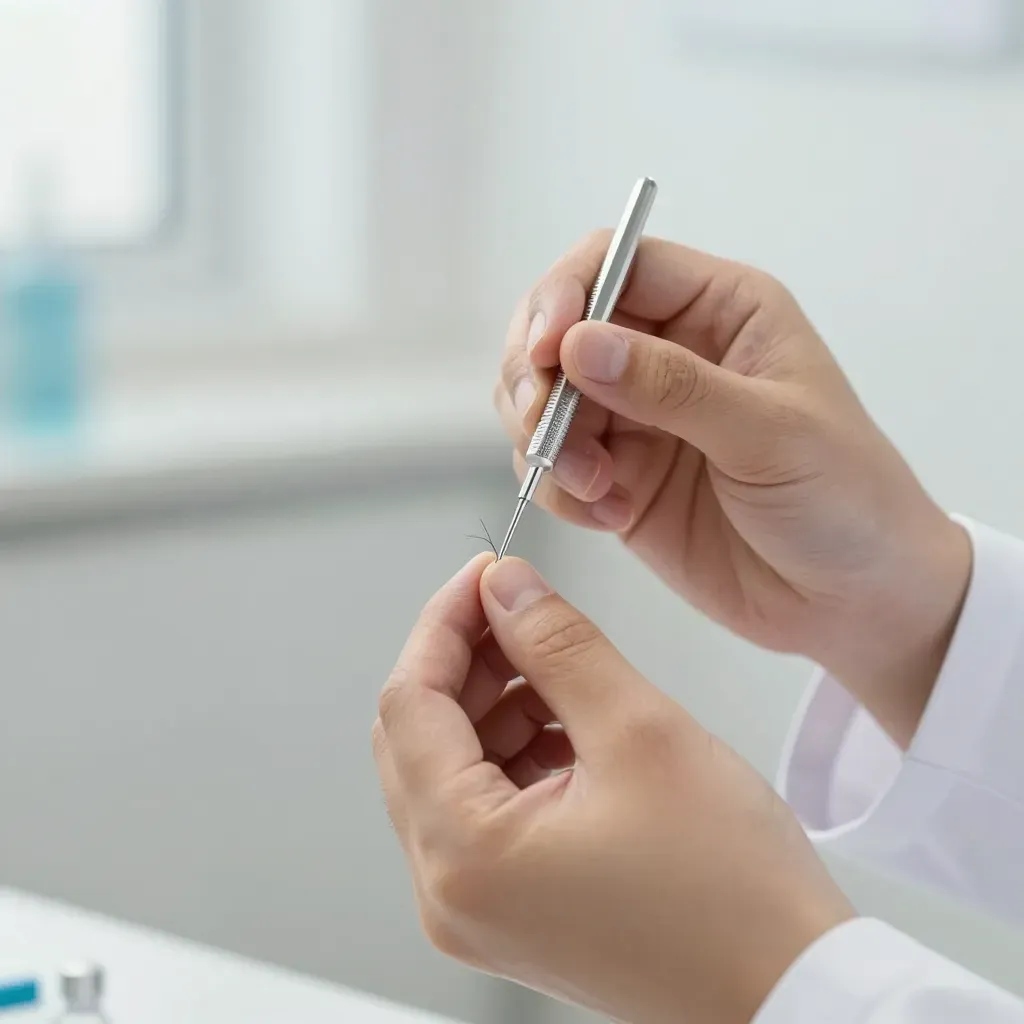
Dermatologists use sterile tools to safely extract trapped hairs.
Professional extraction procedure
Dermatologists use sterile needles or surgical blades to release trapped hairs. They first cleanse the area with antiseptic solution. Local anesthesia numbs painful spots. The tool lifts the hair loop from under the skin without damaging surrounding tissue. Procedure duration: 10-20 minutes per area. Sterile technique prevents staph infections and scarring.
Tools dermatologists use
- 18-gauge sterile needles
- Surgical lancets
- Fine-tipped forceps
- Magnification loops for precision
- Antiseptic skin prep solutions
Aftercare medications
Post-procedure treatments prevent recurrence and calm irritation:
- Retinoid creams normalize follicle growth
- Topical steroids reduce redness and swelling
- Antibiotic lotions treat active infections
- Chemical exfoliants keep pores clear
DIY vs professional risks
Risk factor | Home removal | Dermatologist |
|---|---|---|
Infection rate | 35% | Less than 1% |
Scarring probability | Common | Rare |
Recurrence rate | High | Low with proper aftercare |
Cost of complications | High | Minimal |
For chronic ingrown hairs, laser hair removal provides permanent relief. Laser reduces ingrown hairs by destroying follicles. Multiple sessions target all growth phases. Most patients see 80-90% reduction after 6-8 treatments. Best laser for bikini area uses diode technology for safe results on sensitive skin.
Laser hair removal prevents recurring ingrown hairs permanently.
How laser eliminates ingrown hair follicles
Laser energy targets melanin in hair shafts. Heat travels down to the follicle root. This process destroys the follicle's ability to produce new hair. No hair growth means no ingrown hairs. Diode lasers work best for dark hair and light skin. Nd:YAG lasers safely treat darker skin tones.
Treatment schedule and results
Most patients need 6-8 sessions spaced 4-6 weeks apart. Each session treats hairs in active growth phase. Results: 80-90% permanent hair reduction. Occasional maintenance touch-ups once or twice yearly. Sessions last 15-60 minutes depending on area size.
Long-term cost savings
Method | Annual cost | 5-year total |
|---|---|---|
Shaving | $120 | $600 |
Waxing | $720 | $3,600 |
Laser (full treatment) | $1,800 | $1,800 |
- Stops razor burn and bumps permanently
- Saves time on daily hair removal
- Reduces hyperpigmentation from old ingrowns
- Improves skin texture and smoothness
Laser hair removal on ingrown hairs works best when hairs are visible. Avoid plucking or waxing 4 weeks before treatment. Shaving is fine and actually recommended. Brazilian laser costs range $150-300 per session. Most clinics offer package discounts for multiple sessions. Best bikini lasers combine diode technology with cooling systems for comfort.
What happens during your dermatologist appointment
Initial assessment
Your dermatologist examines the ingrown hair bump under bright light. They press gently to check for pus pockets. You answer questions about shaving frequency, razor type, and previous removal attempts. The doctor identifies underlying causes like folliculitis. They rule out other skin conditions. You receive diagnosis and treatment plan. The dermatologist marks the exact location for removal.
Removal procedure
The dermatologist cleans the area with antiseptic solution. They apply sterile technique throughout. For superficial ingrown hairs, sterile needle extraction takes 5-10 minutes. Deeper cases require small incision with scalpel. The doctor removes trapped hair and any pus buildup. They express contents with gentle pressure. Sterile forceps grasp and pull out the hair shaft completely. The doctor may send samples for bacterial culture. They flush the follicle with saline solution. All instruments are single-use or autoclaved.
Pain management
Topical anesthetic cream numbs the area for 10-15 minutes before procedure. Local injection anesthetic available for sensitive areas. You feel pressure, not sharp pain. Discomfort level: mild to moderate. Doctors use cooling devices to minimize sensation. They check your pain tolerance throughout.
Post-treatment immediate care
Doctor applies antibiotic ointment directly to treated spot. Sterile dressing covers the area. You receive written aftercare instructions. Prescription for topical antibiotic if infection present. Oral antibiotics for severe cases. Next appointment scheduled for follow-up if needed. They discuss prevention strategies before you leave. You can ask questions about healing timeline.
Stage | Time | Experience |
|---|---|---|
Consultation | 5-10 min | Questions about hair removal methods |
Preparation | 10-15 min | Cleaning and numbing |
Extraction | 5-20 min | Minor pressure sensations |
Aftercare briefing | 5 min | Healing instructions |
Aftercare steps for proper healing after professional removal
First 24 hours
Keep original dressing dry 4-6 hours. Remove bandage gently. Wash area with mild soap and water. Pat dry with clean towel. Apply thin antibiotic ointment layer. Cover with fresh sterile bandage only if area rubs clothing.
Days 2-7
Cleanse treated area twice daily with fragrance-free soap. Apply antibiotic ointment 2-3 times daily. Switch to petroleum jelly after day 3. Don't pick scabs. Let crust fall naturally. Wear loose breathable clothing. Keep site clean and dry between applications.
Activity restrictions
No swimming or hot tubs 48 hours. Skip workouts 24-48 hours. Don't shave treated spot until healed. Avoid touching with unwashed hands. Stay out of sun. No tanning beds. Wait 2 weeks for other hair removal methods.
Warning signs
Call doctor for spreading redness. Increasing pain or swelling needs attention. Yellow/green discharge signals infection. Fever over 100.4°F requires care. Bleeding past 10 minutes pressure is concerning. Hard lumps need evaluation. Watch for scarring or dark spots.
Timeframe | Do | Don't |
|---|---|---|
Day 1 | Keep dry, apply ointment 3x | Water, sweat, touching |
Days 2-3 | Cleanse twice, reapply | Swim, tight clothes |
Days 4-7 | Petroleum jelly, gentle wash | Pick, scrub |
Week 2 | Moisturize healed skin | Shave, wax, sun |
Prevention strategies to avoid future ingrown hairs
Shave smarter
Use single-blade safety razors only. Replace blades every 5-7 shaves. Shave with hair growth direction, not against. Apply thick shaving cream or gel. Soak skin in warm water 3-5 minutes before shaving. Rinse razor after each stroke. Don't pull skin taut while shaving. Limit strokes to one pass per area.
Exfoliate regularly
Use chemical exfoliants daily. Salicylic acid 2% lotion prevents dead skin buildup. Glycolic acid pads work on sensitive areas. Physical scrubs work 2-3 times weekly maximum. Choose round bead scrubs, not sharp particles. Exfoliate 12-24 hours before hair removal. Stop exfoliation if irritation occurs.
Switch removal methods
Depilatory creams dissolve hair above skin. Test patch first. Waxing removes entire follicle but causes ingrowns too. Threading works for facial hair. Consider laser hair removal for permanent reduction. Laser stops hair growth at root. Professional treatments target dark hair best.
Clothing and skincare
Moisturize with non-comedogenic lotion twice daily. Wear loose cotton underwear and clothing. Avoid tight leggings or synthetic fabrics. Shower immediately after sweating. Change out of damp clothes quickly. Don't touch or pick at bumps.
Method | Frequency | Effectiveness |
|---|---|---|
Proper shaving | Daily | 60% reduction |
Chemical exfoliants | Daily | 75% reduction |
Moisturizing | Twice daily | 50% reduction |
Laser removal | 6-8 sessions | 90% reduction |
When to seek permanent solutions
See dermatologist for chronic ingrown hairs. Professional removal prevents scarring. Consider laser if you get 3+ ingrowns monthly. Dermatologists prescribe retinoids for prevention. They treat underlying folliculitis. Medical-grade solutions work when home methods fail.