
Table of Contents
Dermatologist ingrown hair removal costs $50-$400+ per lesion.
Major cities charge $150-$350 while rural areas cost $50-$100.
Simple extraction runs $75-$150, surgical removal $150-$300, infected lesions $200-$400.
Board-certified dermatologists cost $150-$300, nurse practitioners $100-$200, training clinics $50-$100.
Insurance covers 60-80% when medically necessary.
Professional treatment achieves 95% success with 1-2% infection risk versus DIY at 45% success and 20-25% infection risk.
Most procedures finish in under 30 minutes.
Healing completes in 1-2 weeks.
Question | Answer |
|---|---|
What is the typical cost range for dermatologist ingrown hair removal? | Costs range from $50 to $400+ per lesion depending on location and treatment complexity. |
Does insurance cover ingrown hair removal? | Insurance covers 60-80% of costs when treatment is medically necessary due to infection or scarring risk. |
How does professional removal compare to DIY methods? | Professional treatment offers 95% success rate with 1-2% infection risk versus DIY at 45% success and 20-25% infection risk. |
How long does the procedure take? | Most procedures take 10-30 minutes and patients return to work the same day. |
What factors affect the cost most? | Geographic location, provider expertise, treatment type, and number of lesions drive cost variations. |
Factors that change dermatologist ingrown hair removal cost
Geographic location creates major price swings. Manhattan dermatologists charge $200-$350 per lesion. Los Angeles clinics range $150-$300. Midwest cities like Cleveland run $75-$150. Rural areas drop to $50-$100. International differences matter too. UK private dermatologists charge £100-£200. Canadian clinics range CAD $100-$250.
Treatment type and complexity
Simple extractions with sterile needle cost $75-$150. Deep ingrown hairs requiring minor surgical excision run $150-$300. Infected lesions needing incision and drainage cost $200-$400. Laser hair removal prevents recurrence at $250-$500 per session. Chemical peels for chronic cases cost $150-$300.
Provider expertise level
Board-certified dermatologists command $150-$300 per treatment. Dermatology nurse practitioners charge $100-$200. Medical assistants in dermatology offices cost $75-$125. Academic medical centers with residents charge $50-$100. Private luxury clinics charge premium rates up to $400.
Provider Type | Typical Cost | Wait Time |
|---|---|---|
Private practice dermatologist | $150-$300 | 1-2 weeks |
Hospital clinic | $100-$200 | 2-4 weeks |
Training clinic | $50-$100 | 4-8 weeks |
Number and location of lesions
Single facial lesion costs $75-$150. Multiple lesions in one visit cost $150-$250. Beard area treatment runs $200-$350. Bikini line lesions cost $150-$300. Leg or arm clusters run $100-$200 per area.
Additional required services
Initial consultation adds $50-$150. Digital imaging costs $25-$75. Bacterial culture tests add $30-$80. Antibiotic prescriptions run $20-$80. Follow-up visits cost $75-$125. Steroid injections for inflammation add $50-$100.
Insurance status affects out-of-pocket cost. In-network providers reduce cost by 40-60%. Out-of-network charges full price. HSA/FSA accounts cover treatment. Payment plans split costs over 3-6 months.
Typical price range for professional treatment
National cost averages
Single lesion extraction costs $75-$150. Multiple lesions in one visit run $150-$250. Infected lesions requiring incision and drainage cost $200-$400. Laser hair removal for prevention costs $250-$500 per session. Full treatment courses average $500-$1,200 for 4-6 sessions.
Regional price differences
Region | Cost Range | Average |
|---|---|---|
New York City | $150-$350 | $250 |
Los Angeles | $150-$300 | $225 |
Chicago | $100-$250 | $175 |
Miami | $125-$275 | $200 |
Phoenix | $75-$175 | $125 |
Treatment type costs
- Manual extraction: $75-$150
- Minor surgical excision: $150-$300
- Incision and drainage: $200-$400
- Chemical peel: $100-$200
- Electrolysis: $50-$150 per hair
- Laser hair removal: $250-$500 per session
Additional fees
Consultation costs $50-$150, often applied to treatment. Follow-up visits run $75-$125. Same-day emergency appointments add $50-$100. After-hours treatment costs 25-50% more.
Package deals
Three-session packages cost $400-$700. Six-session laser packages run $1,200-$2,000. Annual maintenance plans cost $300-$600. Multi-area discounts save 15-25%.
What happens during the procedure
Initial examination
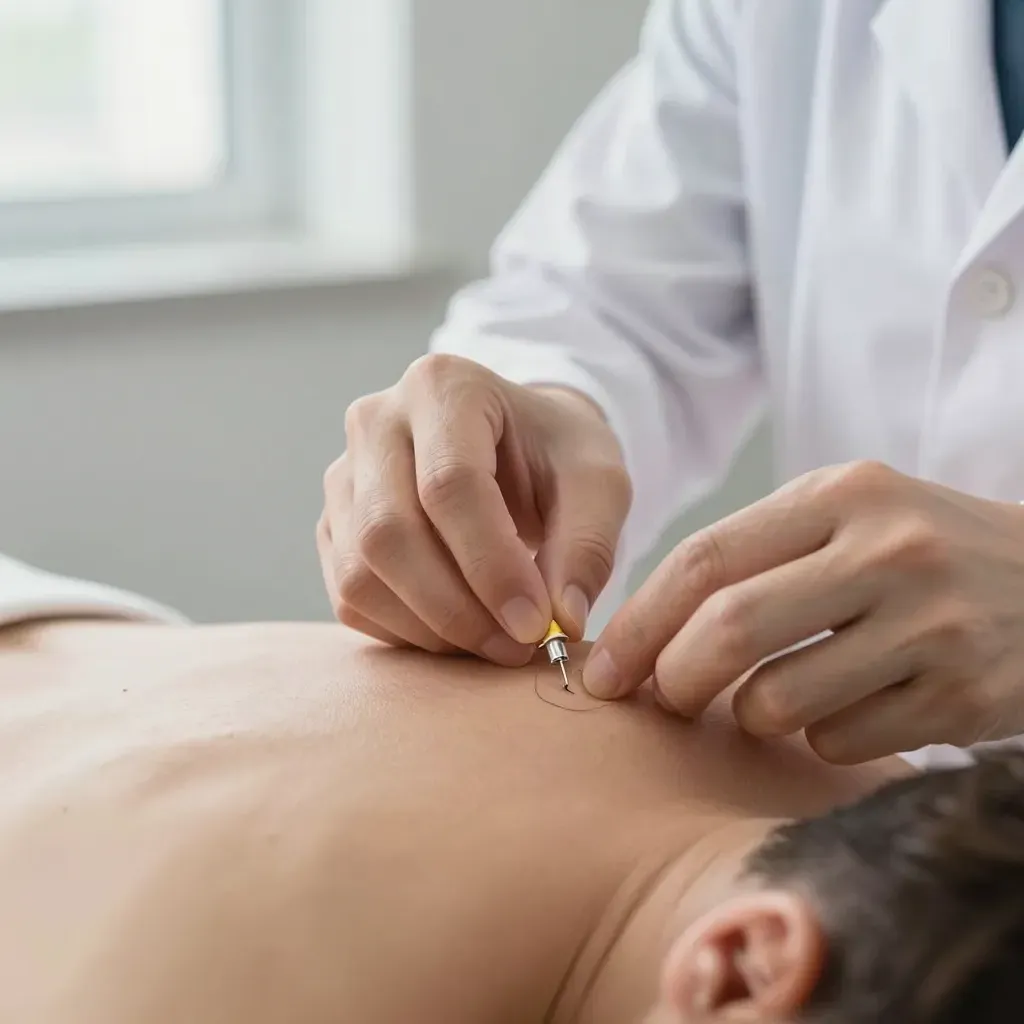
Doctor examines the lesion with magnification. They assess infection depth and hair location. Digital photos document the condition. Local anesthesia gets injected with tiny needle. Numbing takes 5-10 minutes.
Removal techniques
Method | Duration | Tools Used |
|---|---|---|
Simple extraction | 10-15 min | Sterile needle, tweezers |
Surgical excision | 20-30 min | Scalpel, forceps, sutures |
Incision & drainage | 15-25 min | Scalpel, packing material |
Laser treatment | 30-45 min | Diode or Nd:YAG laser |
During the procedure
Patient lies on exam table with area exposed. Doctor cleans skin with antiseptic solution. Sterile drape covers surrounding tissue. For extractions, needle lifts hair loop above skin. Tweezers pull hair gently from base. Surgical cases involve small incision along hair direction. Doctor removes hair bulb and surrounding tissue. They place sutures if needed. For infected lesions, incision drains pus. Packing material stays for 24-48 hours. Laser targets hair follicles with light pulses. Patient wears protective eyewear. Each pulse feels like rubber band snap.
Immediate aftercare
Doctor applies antibiotic ointment. Sterile bandage covers the site. Ice pack reduces swelling. Patient receives wound care instructions. Prescription for antibiotics if infection present. Pain medication rarely needed. Most patients drive themselves home.
Healing timeline
- Day 1-2: Mild redness and tenderness
- Day 3-5: Scab formation, swelling subsides
- Day 7-10: Sutures removed if present
- Day 14: Skin heals completely
- Month 1-3: Hair regrowth may occur
Dermatologist cost vs at-home removal methods
Direct cost comparison
Method | Upfront Cost | Success Rate | Infection Risk |
|---|---|---|---|
Dermatologist extraction | $75-$250 | 95% | 1-2% |
Tweezers/needles | $5-$15 | 45% | 20-25% |
Chemical exfoliants | $10-$30 | 50% | 5-10% |
Ingrown hair serums | $15-$40 | 40% | 5-8% |
Home laser device | $200-$500 | 60% | 2-5% |
Hidden costs of DIY failure
Infection requires antibiotics costing $20-$80. Scarring needs laser resurfacing at $500-$1,500. Emergency room visits for severe infections run $500-$1,500. Missed work costs $100-$300 per day. These complications hit 15-30% of at-home attempts.
Time investment analysis
Dermatologist appointment takes 30 minutes plus travel. At-home methods take 15-30 minutes per attempt. Stubborn hairs need 5-10 attempts over 2-4 weeks. Break-even point: three home attempts equal one doctor visit in total time spent.
Best use cases for each method
- Home methods work for: Single superficial hairs; no infection signs; easy access areas like legs
- Dermatologist needed for: Deep or recurrent lesions; active infection; facial locations; high scarring risk; diabetes or immune issues
Cost-effectiveness threshold
Two failed home attempts cost $20-$60 plus infection risk. Professional treatment at $75-$250 becomes cheaper after factoring complication costs. Patients with three or more ingrown hairs per month save money with professional prevention.
Insurance coverage and payment plans
Medical vs cosmetic classification
Insurance covers ingrown hair removal when medically necessary. Infection, abscess formation, severe pain, or scarring qualify. Chronic inflammation with bacterial infection meets criteria. Recurrent lesions in diabetic patients get automatic coverage. Cosmetic removal of single hairs without complications gets denied.
Insurance coverage details
Most plans cover 60-80% after deductible. Medicare covers 80% of approved amount. Medicaid covers 100% in most states. Prior authorization often required. Documentation needs photos and physician notes. Waiting periods typically 30-90 days for new insurance.
Insurance Type | Coverage | Typical Out-of-Pocket |
|---|---|---|
PPO | 70-80% | $30-$75 |
HMO | 80-90% | $20-$50 |
High Deductible | 0% until met | $75-$250 |
Medicare | 80% | $15-$50 |
Payment plan options
Many clinics offer in-house payment plans. Three-month plans split cost equally. Six-month plans add 5-10% administrative fee. CareCredit offers 0% APR for 6-12 months. Afterpay available at some clinics. Minimum purchase $200 typically required. Approval takes 5-10 minutes.
Alternative payment methods
HSA accounts cover full cost with pre-tax dollars. FSA accounts reimburse treatment expenses. Health incentive accounts may qualify. Medical expense tax deduction applies for costs over 7.5% of income. Cash discounts of 10-20% at some clinics. Package deals reduce per-session cost by 15-25%.
Cost reduction strategies
- Choose training clinics for 50-70% savings
- Ask about cash pay discounts
- Bundle multiple lesions in one visit
- Use manufacturer coupons for prescriptions
- Request generic antibiotics
- Schedule during promotional periods