
Table of Contents
Ingrown hairs occur when hair curls back into skin, typically from shaving too close.
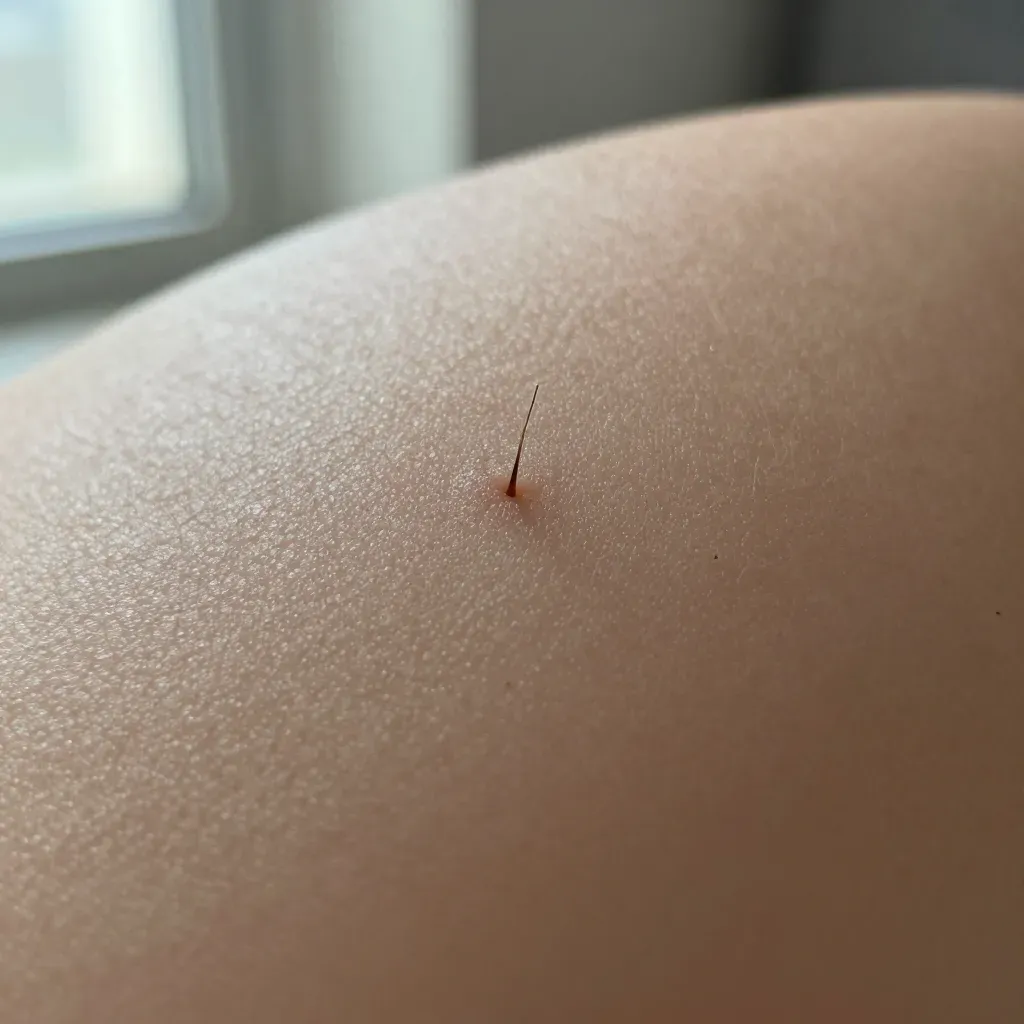
Identify by red bumps with trapped hair loops visible under surface.
Before removal, wash area with antibacterial soap and apply warm compress.
Sterilize tools by boiling 10 minutes or alcohol soak.
Gently lift hair loop with sterile needle, then extract with tweezers along growth direction.
Apply antiseptic immediately after.
Watch for infection signs like pus or spreading redness.
Prevent by shaving with grain, exfoliating 2-3 times weekly, wearing loose cotton.
Moisturize daily with non-comedogenic lotion.
Chronic cases need laser hair removal.
Question | Answer |
|---|---|
What causes ingrown hairs? | Close shaving, waxing, tight clothing, and curly hair texture trap hairs under skin. |
How do I identify an ingrown hair? | Look for red bumps with visible trapped hair loops just under the surface. |
What tools do I need for safe removal? | Gather sterilized tweezers, needle, rubbing alcohol, and antiseptic cream. |
How do I prevent infection after removal? | Apply antiseptic within 60 seconds and monitor for pus or spreading redness. |
How can I prevent future ingrown hairs? | Shave with grain, exfoliate 2-3 times weekly, wear breathable cotton clothing, and moisturize daily. |
Understand what causes ingrown hairs and how to identify them properly
What triggers ingrown hairs
Ingrown hairs occur when hair grows sideways or curls back into skin. Dead skin cells clog follicles and trap hairs beneath the surface.
Primary causes:
- Shaving too close with multi-blade razors
- Waxing that breaks hair below skin instead of pulling from root
- Tight clothing creating constant friction on shaved areas
- Curly or coarse hair texture that naturally bends back
- Infrequent exfoliation allowing dead skin buildup
Your hair removal method directly impacts ingrown hair frequency.
How to spot an ingrown hair
Identify ingrown hairs by looking for small red or dark bumps. You will often see a hair loop trapped just under the skin surface.
Sign | What to look for |
|---|---|
Visual | Red inflamed bump with possible pus |
Sensation | Itching, tenderness, or mild pain |
Hair visibility | Dark spot or hair under thin skin layer |
Deep cases | Painful lump without visible surface hair |
Deep ingrown hairs create painful lumps under skin. Recognize deep ingrown hairs early before they become infected.
Distinguish ingrown hairs from acne or folliculitis. Ingrown hairs always contain a trapped hair at the center. Acne lacks this central hair. Folliculitis shows multiple uniform bumps across larger areas.
Facial skin requires special handling. Treat facial ingrown hairs with extra caution to avoid scarring.
Prepare your skin and sterilize tools before any removal attempt
Clean and soften the skin
Wash area with antibacterial soap and warm water. Apply warm compress 5-10 minutes to open pores and soften skin. Gently exfoliate with soft washcloth to remove dead skin cells blocking hair. Pat dry with clean towel. Never remove on dirty skin. Wait 24 hours after shaving before attempting removal. Freshly shaved skin tears easily.
Sterilize all tools properly
Boil metal tools 10 minutes for complete sterilization. Or soak in 70% isopropyl alcohol 5 minutes. Flame sterilization works: pass tweezers through lighter flame until red hot, then cool. Wash hands before and after. Use disposable gloves when available. Store sterilized tools in clean container until use. Re-sterilize if tools touch any non-sterile surface.
Gather necessary supplies
Tool | Purpose | Sterilization |
|---|---|---|
Pointed-tip tweezers | Grip and pull hair | Alcohol soak or boiling |
Sterile needle | Lift hair loop | Single-use recommended |
Rubbing alcohol | Disinfect tools and skin | 70% solution minimum |
Cotton pads | Apply products cleanly | Use new pad each time |
Antiseptic cream | Prevent infection after | Apply with clean swab |
Magnifying mirror | See hair clearly | Wipe with alcohol |
Consider professional help for deep or facial ingrown hairs. Facial skin scars easily. Deep ingrown hairs need extra caution.
Create sterile workspace. Lay clean paper towel. Keep tools on this surface only. Work in front of mirror with bright light. Skip removal if you have active skin infection, fever, or compromised immune system. Stop immediately if bleeding becomes heavy.
Use proper extraction technique with tweezers to free trapped hair safely
Expose the trapped hair
Pull skin taut around bump. Use magnifying mirror to see hair clearly. Press gently to raise hair closer to surface. Insert sterile needle under hair loop at shallow angle. Gently tease hair upward until tip emerges above skin. Never dig or stab into skin. This causes scarring. Facial skin needs extra caution. Treat facial ingrown hairs with minimal needle use.
Extract with tweezers
Grasp hair firmly with sterilized tweezers. Position tweezers close to skin to grab entire hair loop. Pull in direction of hair growth. Apply steady gentle pressure. Avoid twisting, yanking, or pulling against growth direction. Hair should slide out completely. If hair breaks mid-extraction, stop. Broken hair creates new ingrown. Thick ingrown hairs need stronger grip but same technique.
Handle deep ingrown hairs
Deep ingrown hairs resist simple extraction. Deep ingrown hair removal requires different approach. Apply warm compress 15 minutes, 3 times daily for 2-3 days. This softens skin and brings hair to surface naturally. Never force extraction of deep hair. Forcing creates wounds, bleeding, and infection risk.
After successful extraction, apply antiseptic cream directly to site. Cover with sterile bandage if area rubs against clothing. Change dressing daily. Dispose needle in sharps container. Never reuse needles. Single-use prevents infection transmission.
Step | Correct action | Common mistake |
|---|---|---|
1 | Lift hair loop gently with needle tip | Digging too deep into skin |
2 | Grasp entire hair loop with tweezers | Pulling only partial hair |
3 | Pull with growth direction | Pulling against growth or sideways |
4 | Apply antiseptic immediately | Touching with dirty fingers |
DIY extraction works for surface-level ingrown only. Deep, infected, or facial cases need professional treatment. See dermatologist if hair remains trapped after 3 days.
Apply antiseptic aftercare to prevent infection and reduce inflammation
Immediate post-extraction care
Apply antiseptic within 60 seconds. Use benzalkonium chloride or povidone-iodine. Dab gently with sterile cotton pad. Do not rub. Let air dry 30 seconds. Cover with thin layer of antibiotic ointment like bacitracin. Facial skin needs lighter touch. Facial ingrown aftercare requires non-comedogenic products only.
Daily aftercare routine
Clean area twice daily with mild soap. Reapply antiseptic morning and night for 3 days. Use clean cotton pad each time. Keep area dry and exposed to air. Wear loose clothing. Change bedding daily for first 2 nights. Bacteria from sheets cause reinfection.
Day | Action | Product |
|---|---|---|
1-3 | Antiseptic 2x daily | Povidone-iodine |
4-7 | Gentle cleansing | Mild soap |
8+ | Moisturize | Non-comedogenic lotion |
Reduce inflammation naturally
Apply cold compress 10 minutes for swelling. Use hydrocortisone 1% cream for redness and itching. Apply thin layer once daily max 3 days. Overuse thins skin. Aloe vera gel soothes irritation. Choose pure gel without alcohol. Tea tree oil diluted 1:10 with carrier oil works as natural antiseptic. Test patch first. Some develop allergic reaction.
Warning signs of infection
Watch for increasing redness after 48 hours. Normal inflammation peaks at 24 hours then improves. Monitor for warmth and swelling. Small amount of clear fluid normal. Thick yellow or green pus signals infection. Deep ingrown sites infect more easily. Check temperature daily. Fever over 100.4°F requires doctor.
What to avoid during healing
Do not pick scabs. Scabs protect healing skin. Avoid makeup or heavy lotions on facial sites for 48 hours. Skip swimming pools and hot tubs for 7 days. Chlorine and bacteria infect open follicles. No sun exposure for 2 weeks. UV rays darken healing skin and cause permanent marks. Stop all hair removal in area until fully healed. Re-shaving over healing site creates new ingrown.
Implement prevention strategies like proper shaving technique and exfoliation
Shave with proper technique
Shave with hair growth direction only. Multi-blade razors cut below skin surface. Switch to single-blade safety razor. Replace blade after 5-7 uses. Apply thick shaving cream, never soap. Rinse blade after each stroke. Never stretch skin taut while shaving.
- Shave with grain, not against
- Use single-blade razor
- Replace dull blades
- Apply shaving cream
- Rinse blade often
Exfoliate 2-3x weekly
Exfoliate 2-3 times weekly to prevent dead skin buildup. Physical scrubs remove surface cells. Chemical exfoliants dissolve pore debris. Use soft brush in circles. Focus on problem zones. Daily exfoliation damages skin barrier.
Method | Product type | Frequency |
|---|---|---|
Physical | Sugar scrub, brush | 2x/week |
Chemical | Salicylic acid pads | 3x/week |
Choose alternative hair removal
Some methods reduce ingrown risk dramatically. Laser hair removal eliminates hair permanently. Home IPL devices work for mild cases. Depilatory creams dissolve hair at surface.
Wear breathable clothing
Tight jeans and leggings trap sweat and create friction. Choose 100% cotton underwear. Avoid synthetic fabrics on shaved areas. Change sweaty workout clothes immediately. Friction pushes growing hair back into follicle.
Moisturize daily with right products
Dry skin traps hairs underneath. Apply non-comedogenic lotion within 3 minutes after shower. Look for urea or lactic acid ingredients. These soften skin and free trapped hairs. Avoid heavy oils on acne-prone areas.
Seek professional help for chronic cases
Chronic ingrown hairs need permanent solutions. Laser hair removal stops ingrown permanently. Dermatologist prescribes retinoid creams. Deep ingrown hairs risk scarring if handled improperly.