
Table of Contents
Laser hair removal for ingrown hairs is a permanent solution.
The treatment uses light to destroy hair follicles.
Destroyed follicles cannot grow hair.
This stops new ingrown hairs from forming.
Laser treatment reduces bumps redness and irritation.
It leaves skin smooth and clear.
You need multiple sessions for full results.
Question | Answer |
|---|---|
How does laser hair removal stop ingrown hairs? | It permanently destroys the hair follicle so hair cannot grow back. |
Is the treatment effective for ingrowns? | Yes it reduces ingrown hairs by 70-90% after a full course. |
How many sessions do I need? | Most people need 6-8 treatments for optimal results. |
Can I get laser treatment if I have ingrown hairs now? | Yes the procedure is safe and effective on skin with existing ingrown hairs. |
What Are Ingrown Hairs and Why They Form
Ingrown hairs occur when hair grows back into the skin instead of rising up from the follicle. This causes inflammation, redness, painful bumps, and sometimes infection. The trapped hair creates a foreign body reaction as the skin attempts to deal with the embedded strand.
Common Causes of Ingrown Hairs
- Shaving: Cutting hair at an angle or too close to the skin allows the sharp tip to re-enter the follicle
- Waxing: Removes hair from the root but can leave broken strands that grow back improperly
- Tweezing: Can break hair below the skin surface, causing it to grow sideways
- Tight clothing: Creates friction that pushes hair back into the skin
- Dead skin buildup: Clogged pores trap emerging hair beneath the surface
Who Is Most Prone to Ingrown Hairs
Certain factors increase susceptibility to ingrown hairs:
Hair type | Curly or coarse hair curves more easily back into the skin |
|---|---|
Ethnicity | People of African, Mediterranean, and Middle Eastern descent have higher rates |
Skin type | Darker skin types produce more melanin, making inflammation more visible |
Treatment area | Bikini line, legs, face, and underarms are most commonly affected |
Unlike normal hair growth where strands emerge straight from the follicle, ingrown hairs curl or fold back into the skin's surface. The body's immune response treats the embedded hair as an invader, triggering redness, swelling, and sometimes infection. This cycle continues until the hair is removed or the follicle is destroyed entirely.
How Laser Hair Removal Works on Ingrown Hairs
Laser hair removal uses concentrated light energy to target the pigment in hair follicles. The laser emits wavelengths that penetrate the skin and convert to heat, destroying the follicle and its ability to produce new hair. Without a functioning follicle, no hair can grow—and no hair can become ingrown.
The Science Behind the Treatment
Step | What Happens |
|---|---|
1. Targeting | Laser light is absorbed by melanin in the hair shaft |
2. Heating | Light energy transforms into heat, reaching the follicle root |
3. Destroying | Heat damages the follicle and hair bulb permanently |
4. Shedding | Treated hair falls out over 1-3 weeks post-treatment |
Effect on Existing Ingrown Hairs
- Heat expulsion: The laser's thermal energy can force trapped hairs upward through the skin surface
- Follicle destruction: As the follicle is damaged, it stops producing hair that could become ingrown
- Gradual clearing: Over multiple sessions, existing ingrown hairs work their way out as new growth stops
- Reduced inflammation: With fewer trapped hairs, skin irritation decreases significantly
Treatment Timeline
Hair grows in cycles, and laser only affects actively growing follicles. This is why multiple sessions are required:
- 6-8 treatments needed for significant results
- Sessions spaced 6-8 weeks apart
- Each session catches hairs in different growth phases
- 70-90% reduction in ingrown hairs after full course
Effectiveness Rates and Expected Results
Laser hair removal is highly effective for ingrown hairs.
The American Academy of Dermatology reports a 70-90% reduction in ingrown hairs after a full course of treatment.
Many patients see significant improvement after just a few sessions.
Timeline for Visible Improvement
You can expect to see initial results within one to two weeks of your first treatment.
During this time, treated hairs will begin to shed from the follicles.
Your skin becomes noticeably clearer as treatments progress.
Full results and the biggest reduction in ingrown hairs appear after you complete your final session.
What to Expect During the Process
A complete treatment plan typically requires 6-8 sessions.
Sessions are scheduled 6-8 weeks apart to target hair in various growth cycles.
- Initial Stages: You might still experience some ingrown hairs as the shedding process begins.
- Mid-Treatment: You will notice a major decrease in hair growth and ingrown hair formation.
- Final Result: Your skin will be smoother, with a dramatic reduction in bumps and redness.
You can get laser hair removal even if you have existing ingrown hairs.
The procedure is safe and targets the follicle to prevent future growth and inflammation.
Key Benefits of Laser Treatment for Ingrown Hairs
Laser hair removal offers significant advantages over temporary hair removal methods that often worsen ingrown hairs.
Permanent Hair Reduction
Laser treatment destroys hair follicles at the root, eliminating the source of the problem entirely.
Once a follicle is destroyed, it cannot produce hair again.
This means no more hair to become trapped or grow back ingrown.
Prevents Future Ingrown Hairs
Without active follicles, there is zero chance of new ingrown hairs forming.
This breaks the painful cycle of shaving and waxing that typically causes ingrown hairs.
Your skin stays clear and smooth without constant maintenance.
Reduces Skin Irritation
Before Laser | After Laser |
|---|---|
Red bumps from shaving | Smooth, clear skin |
Razor burn and inflammation | Reduced redness and swelling |
Painful ingrown spots | Comfortable, healthy skin |
Improves Skin Texture
Laser treatment results in softer, more even-toned skin.
You will notice fewer bumps, less discoloration, and a more radiant appearance.
Skin feels smoother to the touch as the cycle of irritation stops.
- Long-term savings: No more razors, waxing appointments, or ingrown hair treatments
- Time savings: Skip daily shaving and the recovery time from ingrown hairs
- Ideal for curly hair: Particularly effective for those with coarse or curly hair prone to curling back into the skin
- Safe for sensitive areas: Works well on bikini lines, underarms, and other prone areas
Treatment Process and What to Expect
Understanding the treatment process helps you prepare properly and achieve the best results for your ingrown hairs.
Before Your First Session
- Avoid sun exposure for 2-4 weeks before treatment
- Stop using retinoids or exfoliating products one week prior
- Shave the area 24-48 hours before your appointment
- Avoid waxing, tweezing, or threading for at least 4 weeks
- Remove makeup, lotions, and deodorants from the treatment area
During the Treatment
The procedure typically takes 15-60 minutes depending on the treatment area.
Step | Description |
|---|---|
Consultation | Skin and hair assessment to customize settings |
Preparation | Cleaning the skin and applying cooling gel |
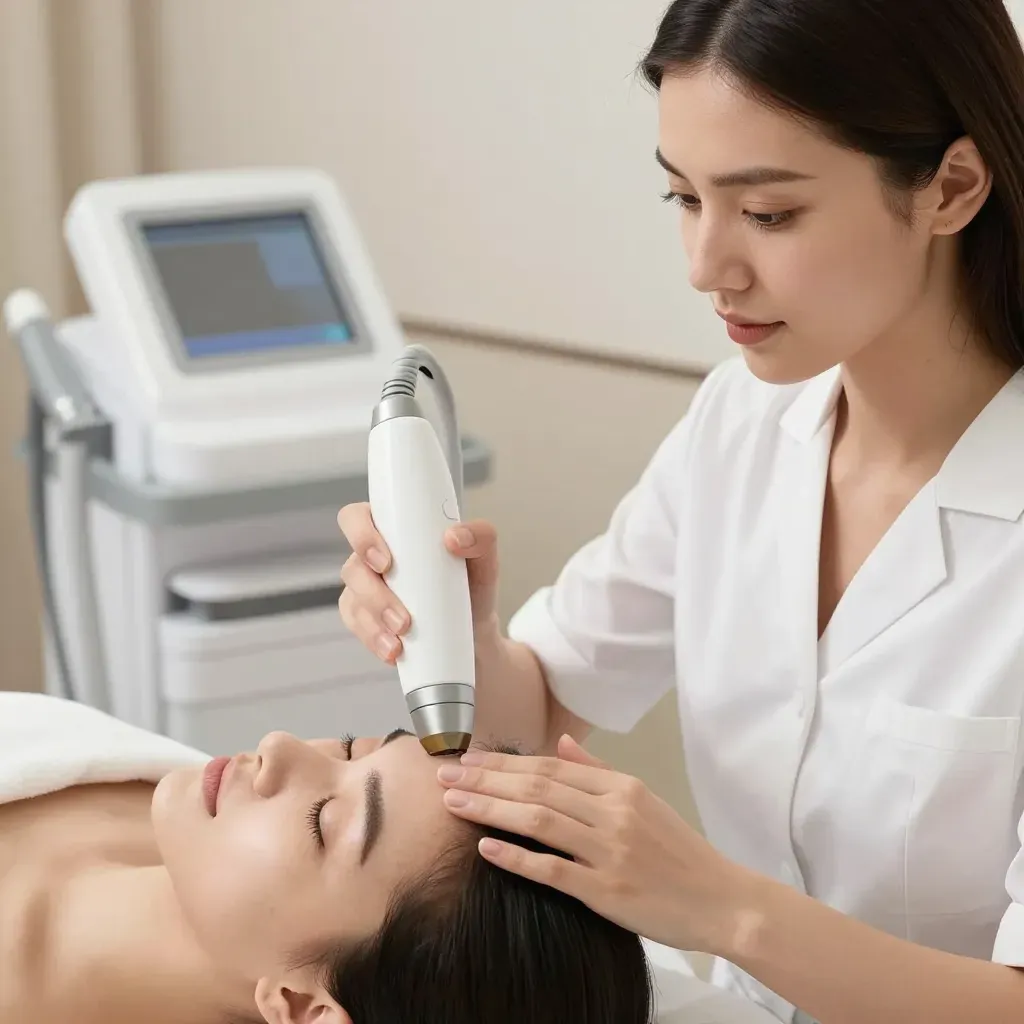
Laser Application | Handheld device delivers pulses to targeted areas |
Soothing | Cool compress applied to reduce any discomfort |
After Treatment Care
- Apply SPF 30+ daily to protect treated skin
- Use gentle, non-comedogenic moisturizers
- Avoid hot showers, saunas, and swimming for 24-48 hours
- Skip exfoliation for one week after treatment
- Wear loose clothing to reduce friction
Timeline for Results
Expect to need 6-8 sessions spaced 6-8 weeks apart for optimal results.
You may notice some ingrown hairs surfacing during the first few weeks—this is normal as treated hairs are expelled.
Results gradually improve with each session as fewer follicles remain active.