
Table of Contents
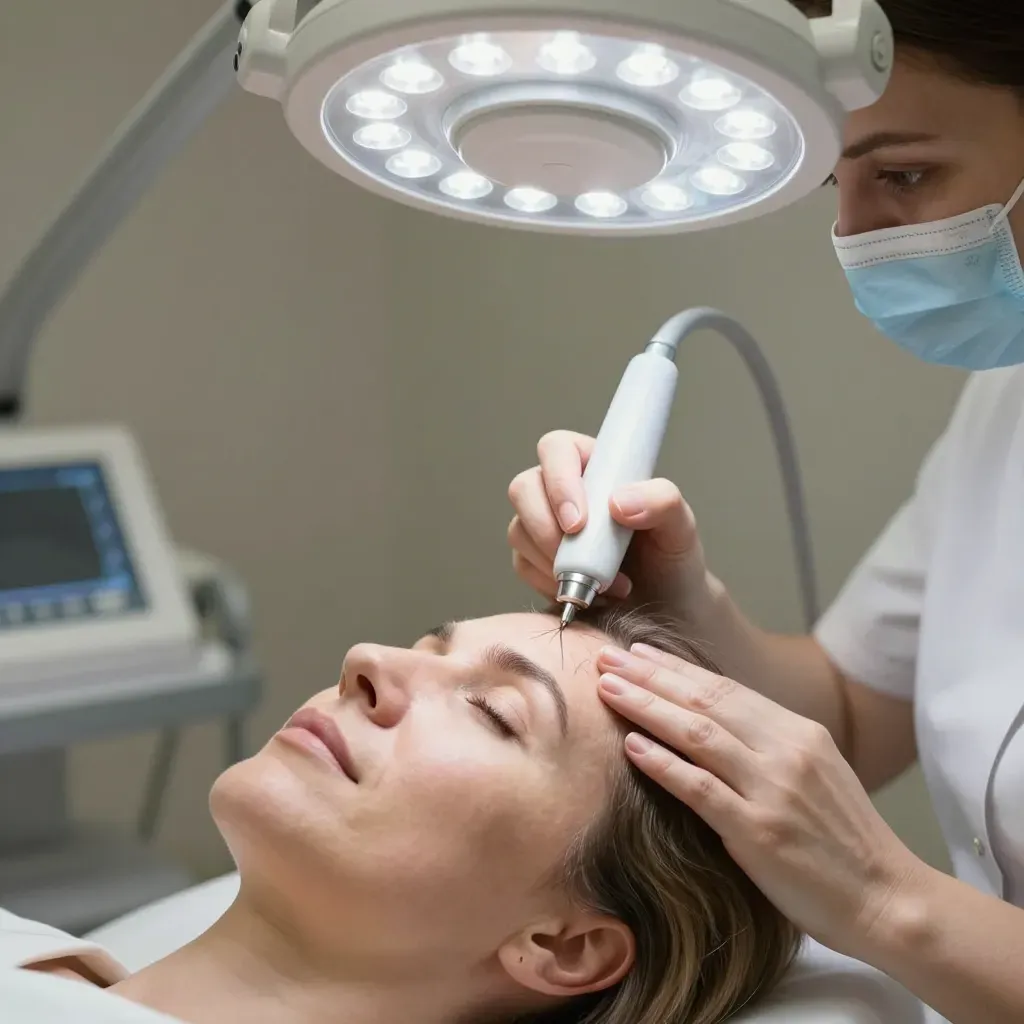
Electrolysis permanently destroys ingrown hair follicles with electric current through a fine probe inserted into each follicle.
Galvanic method uses chemical reaction, thermolysis uses heat, blend combines both.
FDA recognizes electrolysis as the only permanent hair removal method.
Works on all skin tones and hair types because it targets follicles directly not pigment.
Sessions cost $30-$100, most areas need 8-12 treatments.
Total cost runs $300-$2000, saving thousands versus lifelong waxing or shaving.
Proper aftercare prevents infection and scarring.
Redness fades within hours, scabs heal in one week.
Results last a lifetime with zero maintenance.
Question | Answer |
|---|---|
Is electrolysis permanent for ingrown hairs? | Yes, electrolysis permanently destroys follicles so they never grow hair again. |
How many sessions needed? | Most areas need 8-12 sessions to catch all growth cycles. |
Works on all skin and hair types? | Yes, electrolysis works on all skin tones and hair colors because it targets follicles not pigment. |
Total cost? | Total cost runs $300-$2000, saving thousands versus lifelong waxing or shaving. |
Aftercare requirements? | Keep area clean, apply antibiotic ointment, avoid sun, makeup, and swimming for 24-48 hours. |
Electrolysis destroys ingrown hair follicles permanently
Electrolysis destroys ingrown hair follicles permanently.
A trained electrologist inserts a fine probe into each follicle alongside the hair shaft.
Electric current flows through this probe directly into the follicle root.
The current destroys the follicle's growth center completely.
Once destroyed, that follicle can never produce hair again.
No new hair growth means no new ingrown hairs form.
The existing ingrown hair releases easily during treatment.
Three methods destroy follicles differently
Galvanic uses direct current to create a chemical reaction.
Reaction produces sodium hydroxide inside the follicle.
This lye destroys follicle tissue completely.
This method works slowly but thoroughly.
Thermolysis uses high-frequency alternating current.
Current generates heat through vibration of water molecules.
This heat coagulates and destroys follicle tissue.
Thermolysis works faster than galvanic.
Blend combines both approaches.
It uses chemical reaction plus heat simultaneously.
This combination proves most effective for stubborn or coarse ingrown hairs.
Each hair requires individual treatment.
Sessions last 15 minutes to one hour depending on area size.
Multiple sessions catch hairs in different growth cycles.
Most people need 8-12 treatments for complete results.
FDA recognizes electrolysis as the only permanent hair removal method.
Clinical studies show 100% permanent follicle destruction when performed correctly.
Ingrown hairs disappear completely and never return.
Comparison with other hair removal methods
Method | Permanent? | Ingrown Hair Prevention | Cost Over Lifetime |
|---|---|---|---|
Electrolysis | Yes | Eliminates completely | $300-$1000 total |
Laser Hair Removal | No | Temporary reduction | $2000+ ongoing |
Waxing | No | Can worsen problem | $5000+ lifetime |
Shaving | No | Primary cause | $3000+ lifetime |
Side effects remain minimal and temporary.
Redness and slight swelling occur immediately after treatment.
These effects resolve within hours.
Small scabs may form but heal within one week.
Proper aftercare prevents infection and scarring.
Works on all skin tones and hair types
Electrolysis ingrown hair removal works on every skin tone and hair type.
Laser hair removal fails many people.
Laser targets melanin pigment in hair.
Blonde, gray, red, or fine hair lacks enough pigment.
Dark skin contains too much pigment and burns.
Electrolysis solves this completely.
Universal effectiveness explained
Electrolysis targets the follicle itself.
Electric current destroys follicle tissue directly.
Pigment plays no role.
This makes electrolysis truly universal.
The process works the same on every person.
Hair type compatibility
- Blonde hair: Laser fails, electrolysis works perfectly
- Gray/white hair: No pigment for laser, electrolysis effective
- Red hair: Laser struggles, electrolysis handles easily
- Fine/peach fuzz: Too thin for laser, electrolysis destroys follicle
- Coarse hair: Both work, electrolysis guarantees permanent removal
- Curly/coiled hair: Laser misses, electrolysis treats each follicle
Skin tone safety
Dark skin risks hyperpigmentation with laser.
Electrolysis carries zero pigment-related risk.
FDA approved electrolysis for all Fitzpatrick skin types I-VI.
Clinical studies show equal safety across all tones.
Light skin responds excellently too.
Medium tones see perfect results.
Electrolysis vs Laser comparison
Skin/Hair Type | Electrolysis | Laser |
|---|---|---|
Dark skin (V-VI) | Safe, effective | Risk of burns |
Light skin (I-II) | Safe, effective | Safe, effective |
Blonde hair | Works perfectly | Does not work |
Gray/white hair | Works perfectly | Does not work |
Red hair | Works perfectly | Poor results |
Curly/coiled hair | Works perfectly | Variable results |
Electrolysis remains the only FDA-approved permanent method for all combinations.
Ingrown hair removal requires treating every follicle individually.
Electrolysis excels at this precision work.
No hair type or skin tone gets left behind.
Fine probe enters each follicle per session
The electrologist inserts a fine probe into each follicle opening individually.
This probe measures 0.05 to 0.15 millimeters in diameter.
It slides alongside the hair shaft, not through skin.
The probe follows the natural angle of hair growth precisely.
Current flows only into the targeted follicle.
Surrounding tissue remains completely untouched and unharmed.
Precision targeting process
The electrologist identifies each ingrown hair individually under magnification.
They use 10-20x magnification for perfect visibility of follicle openings.
The probe enters the follicle opening at the correct depth.
Depth varies by body area and hair type.
Facial hairs need 1-3 millimeters insertion depth.
Bikini area requires 2-4 millimeters depth for complete treatment.
Current passes for 1-10 seconds per hair depending on method used.
The treated hair releases easily with tweezers afterward.
No pulling or tugging occurs.
Session duration by treatment area
Body Area | Time Needed | Hairs Treated |
|---|---|---|
Upper lip | 15-30 minutes | 50-100 hairs |
Chin | 20-40 minutes | 75-150 hairs |
Underarms | 30-45 minutes | 100-200 hairs |
Bikini line | 30-60 minutes | 150-300 hairs |
Full Brazilian | 60-90 minutes | 300-500 hairs |
Sterile single-use probes ensure safety
Each probe gets used once then discarded immediately.
This eliminates any infection risk completely.
Probes come pre-sterilized in sealed packaging.
The electrologist opens a new probe for every client.
Never accept treatment with reusable probes.
Ingrown hairs require extra precision during insertion.
The probe must reach the distorted follicle base completely.
Skilled electrolysis practitioners navigate curved follicles easily.
Comfort during treatment
Most clients describe sensation as brief stinging or heat.
Pain level ranks 2-4 out of 10.
Topical numbing cream reduces discomfort.
Ice applied before treatment helps.
Treatment becomes less painful as hair thins.
$30-$100 per session, 8-12 treatments needed
Electrolysis costs $30-$100 per session.
Most people need 8-12 treatments for complete results.
Cost factors per session
Factor | Impact on Price |
|---|---|
Geographic location | Urban areas charge $60-$100 |
Practitioner experience | Certified electrologists charge $50-$80 |
Treatment area size | Small areas $30-$50, large $60-$100 |
Session duration | 15 min $30, 60 min $100 |
Method used | Blend method costs $10-$20 more |
Why multiple sessions required
Hair grows in three cycles: anagen, catagen, telogen.
Electrolysis only works on active anagen phase hairs.
Only 20-30% of hairs sit in anagen at any time.
Each session catches new hairs entering anagen phase.
Ingrown hairs often need extra sessions due to follicle damage.
Damaged follicles produce weaker hairs requiring retreatment.
Hormonal areas like chin need 12-15 sessions typically.
Total treatment cost breakdown
Area | Sessions Needed | Total Cost Range |
|---|---|---|
Upper lip | 8-10 | $240-$800 |
Chin | 10-12 | $300-$960 |
Underarms | 10-12 | $300-$960 |
Bikini line | 10-12 | $300-$960 |
Full Brazilian | 12-15 | $720-$1500 |
Lower legs | 15-20 | $900-$2000 |
Bikini area costs compare favorably to laser hair removal pricing.
Payment options
- Pay per session with no commitment
- Package deals save 10-20% on total cost
- Financing available through CareCredit at 0% APR
- FSA/HSA eligible medical expense with doctor's note
- Some insurance covers ingrown hair treatment
Cost comparison over 10 years
Method | Total Cost | Ingrown Hair Status |
|---|---|---|
Electrolysis | $300-$2000 | Eliminated permanently |
Laser | $2000-$4000 | May persist |
Waxing | $5000-$8000 | Ongoing problem |
Shaving | $3000-$5000 | Primary cause |
See whole body laser costs for larger area comparisons.
Electrolysis costs more upfront but saves thousands long-term.
Permanent results eliminate ongoing ingrown hair treatment costs.
No more spending on creams, exfoliants, or antibiotics.
Most clients report complete satisfaction after final session.
Results last a lifetime with zero maintenance required.
Aftercare prevents infection and scarring
Proper aftercare prevents infection and scarring after electrolysis ingrown hair removal.
Follow these steps immediately after treatment.
First 24 hours critical
Apply ice packs for 10 minutes every hour to reduce swelling.
Use a clean cold compress wrapped in sterile gauze.
Do not touch treated area with unwashed hands.
Keep area clean and dry except for prescribed ointments.
Daily care routine
Wash gently with mild soap twice daily.
Pat dry with clean towel, never rub.
Apply thin layer of antibiotic ointment like Bacitracin.
Use fragrance-free moisturizer to prevent drying.
Wear loose cotton clothing to avoid friction.
What to avoid
- No makeup for 24 hours on facial areas
- No swimming pools, hot tubs, or saunas for 48 hours
- No sun exposure or tanning beds for one week
- No picking, scratching, or squeezing treated spots
- No strenuous exercise causing sweat for 24 hours
- No harsh skincare products with acids or retinoids for one week
Infection warning signs
Watch for increasing redness spreading beyond treated spots.
Yellow or green discharge indicates infection.
Severe pain, warmth, or fever requires immediate medical attention.
Mild redness and tiny scabs are normal and resolve within 5-7 days.
Scar prevention
Do not pick scabs that form.
Let them fall off naturally after 5-7 days.
Apply silicone gel sheets after healing begins.
Use SPF 30+ sunscreen once skin heals to prevent hyperpigmentation.
Continue moisturizing daily for smooth healing.
Proper vs improper aftercare results
Aftercare Type | Infection Risk | Scarring Risk | Healing Time |
|---|---|---|---|
Proper | Less than 1% | Minimal | 5-7 days |
Improper | 15-20% | High | 2-4 weeks |
Most side effects resolve within one week.
Complete healing takes 2-3 weeks.
Schedule next session only after complete healing.
Ingrown hairs treated with electrolysis will not return.
Follow aftercare strictly for best permanent results.