
Table of Contents
Groin ingrown hairs form when pubic hair grows sideways into skin instead of upward.
They cause painful red bumps, intense itching, and pus-filled lesions in the bikini area.
Shaving stands as the main culprit, cutting hair at sharp angles that promote inward growth.
Tight clothing and curly hair texture increase risk significantly.
Safe removal requires warm compresses to soften skin and draw hair out.
Gently exfoliate with salicylic acid 1-2 days later to lift trapped hair.
Only extract visible hairs using sterilized tweezers, pulling in hair growth direction.
Apply antibiotic ointment immediately after extraction.
Infected bumps appear red, swollen, with yellow pus and increasing pain.
Treat infections with warm compresses, antibacterial soap, and OTC antibiotic ointment.
See a doctor for fever, spreading redness, severe pain, or symptoms lasting over two weeks.
Prevent future issues by shaving in hair growth direction with sharp razors.
Exfoliate 2-3 times weekly and wear loose cotton underwear.
Laser hair removal offers permanent prevention by destroying follicles.
Recurring painful lumps may indicate hidradenitis suppurativa, requiring specialist care.
Question | Answer |
|---|---|
What causes groin ingrown hairs? | Shaving cuts hair at sharp angles that make it grow sideways into skin. |
How do I safely remove an ingrown hair? | Apply warm compresses, exfoliate gently, then extract visible hairs with sterilized tweezers in hair growth direction. |
When should I see a doctor? | Seek medical care for fever, spreading redness, severe pain, or symptoms lasting more than two weeks. |
Can I prevent ingrown hairs permanently? | Laser hair removal destroys follicles and prevents future ingrown hairs. |
What does an infected ingrown hair look like? | Infected bumps appear red, swollen with yellow pus centers and increasing pain. |
Identify groin ingrown hair symptoms and causes
Groin ingrown hairs happen when pubic hair grows sideways into skin instead of upward.
They create painful red bumps that can become infected cysts.
Common symptoms include tender red bumps, itching, and pus-filled lesions in the bikini area.
You might see dark spots or feel small, firm cysts under the skin where hair was removed.
The area often feels irritated, especially when wearing tight clothing.
Some people experience a burning sensation during urination if bumps are near sensitive areas.
Symptoms to recognize
Look for these specific signs:
- Red or pink raised bumps that look like pimples
- Intense itching and tenderness around hair follicles
- Pus or whitehead formation at the bump center
- Darkening or hyperpigmentation of the skin
- Painful cysts that feel like lumps under the surface
- Burning sensation when the area is touched
- Multiple bumps clustered together in shaved areas
Root causes in the groin area
Shaving is the biggest culprit—cuts hair at a sharp angle.
Waxing and tweezing can leave broken hair shafts that grow inward.
Tight underwear and pants create friction that pushes hair back into skin.
Curly or coarse pubic hair naturally curls back toward the skin.
Dry skin blocks hair follicles, trapping new growth underneath.
Sweat and bacteria irritate follicles, making inflammation worse.
Risk factors that increase likelihood
Risk Factor | How it causes ingrown hairs |
|---|---|
Shaving technique | Multi-blade razors cut too close, hair retracts below skin |
Clothing choice | Synthetic fabrics trap moisture and compress hair |
Skin preparation | No exfoliation lets dead skin block follicles |
Hair texture | Coarse, curly hair has natural curl pattern |
Frequency of removal | Daily shaving irritates skin and follicles |
Sweat buildup | Hot, moist environment softens skin, traps hair |
Sometimes what looks like severe ingrown hairs is actually hidradenitis suppurativa.
This chronic condition causes painful lumps in groin and armpit sweat glands.
See a doctor if you notice deep tunnels, recurring abscesses, or scarring.
Safe removal techniques for groin ingrown hairs
Apply warm compress for 10-15 minutes three times daily to soften skin and draw hair out.
Use a clean washcloth soaked in hot water, not scalding.
This reduces inflammation and makes hair easier to access.
Repeat for 2-3 days before attempting extraction.
Gentle exfoliation methods
Exfoliate 1-2 days after warm compress treatment.
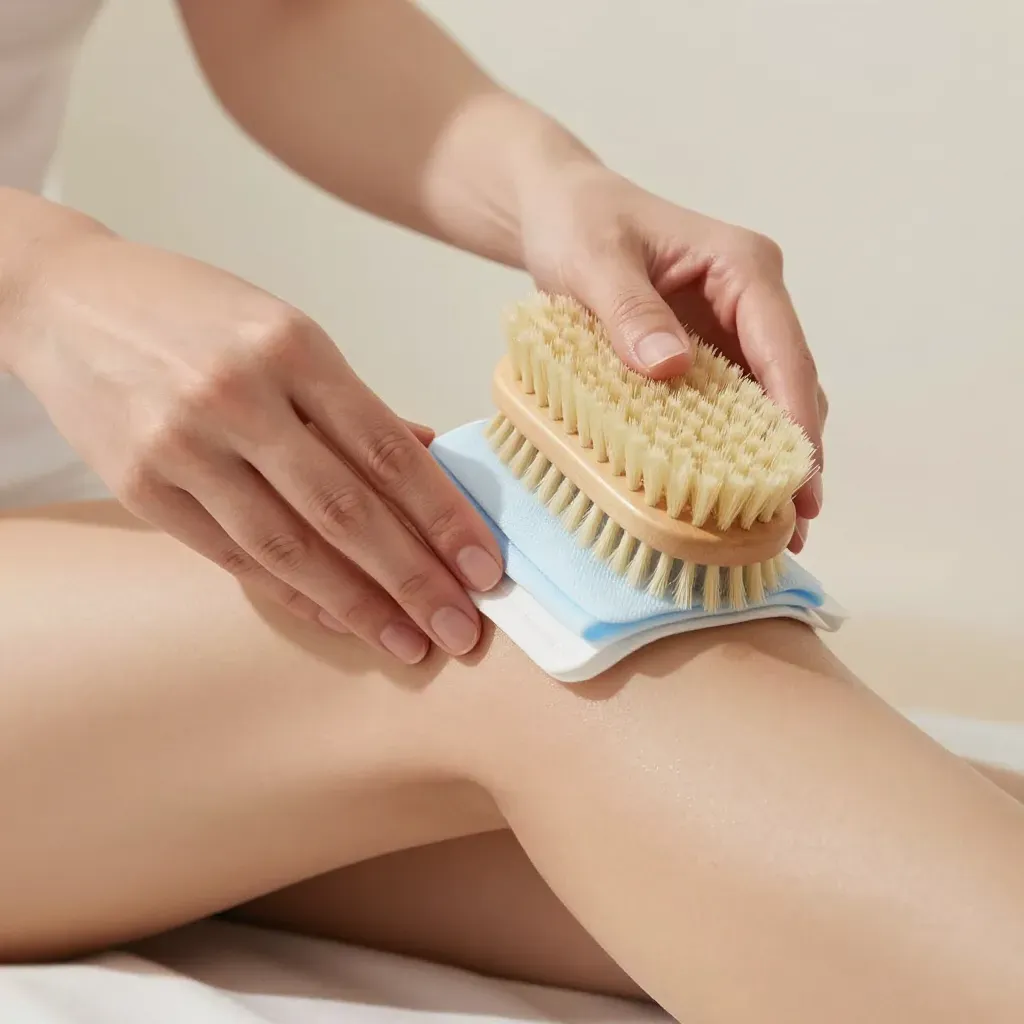
Use a soft-bristled brush or chemical exfoliant with salicylic acid.
Circular motions help lift trapped hair without damaging skin.
Avoid harsh scrubs that cause micro-tears in sensitive groin skin.
Exfoliate every other day, not daily, to prevent irritation.
Safe extraction process
Only extract hairs visible at the surface.
Cleanse area with antibacterial soap first.
Sterilize tweezers with alcohol for 30 seconds.
Gently pull hair out in its growth direction, never dig.
Stop if bleeding occurs or hair sits deep below surface.
Apply gentle pressure around bump, not directly on it.
If hair does not release easily, wait another day and reapply compress.
What to avoid completely
- Picking or squeezing bumps with dirty fingers
- Using needles or pins from sewing kits
- Forceful digging that breaks skin barrier
- Shaving over active ingrown hairs
- Applying toothpaste, baking soda, or vinegar
- Using acne spot treatments with benzoyl peroxide
- Waxing or tweezing the area until healed
Post-removal care
Apply antibiotic ointment immediately after extraction.
Wear loose cotton underwear to reduce friction.
Avoid sexual activity for 24-48 hours.
Keep area clean and dry for 3-5 days.
Consider laser hair removal for pubic area to prevent future issues.
At-home devices offer long-term reduction of ingrown hairs.
Professional Brazilian laser hair removal eliminates shaving entirely.
Both methods destroy follicle so hair cannot grow inward.
For severe cases, specialized ingrown hair removal techniques may be needed.
Consult dermatologist if you experience recurring painful cysts.
Treat infected ingrown hairs in the pubic area
Infected ingrown hairs in the groin appear as red, swollen bumps with yellow pus centers.
The area becomes tender, warm to touch, and increasingly painful.
You may notice fever, spreading redness, or red streaks radiating from the bump.
Immediate home treatment
Apply warm compresses for 15 minutes, 4 times daily to encourage drainage.
Cleanse gently with mild antibacterial soap twice a day.
Pat dry completely—moisture worsens infection.
Apply over-the-counter antibiotic ointment after each compress.
Keep the area uncovered and wear loose cotton underwear only.
Effective topical treatments
- Neosporin or Bacitracin for bacterial infection
- Hydrocortisone cream 1% for inflammation
- Tea tree oil diluted with water as natural antiseptic
- Drawing salve to pull infection to surface
When antibiotics become necessary
See a doctor if infection worsens after 3 days of home treatment.
Prescription antibiotics treat deeper bacterial infections.
Signs you need medical care:
Symptom | Action required |
|---|---|
Fever over 100.4°F | Same-day doctor visit |
Rapidly spreading redness | Urgent care needed |
Severe pain limiting movement | Medical evaluation |
Multiple draining lesions | Antibiotics prescribed |
Recurrent infections | Dermatologist referral |
Critical warning signs
Deep, painful lumps that tunnel under skin may indicate hidradenitis suppurativa.
This chronic condition requires specialist treatment, not just infection care.
Hard, immobile lumps lasting weeks need professional evaluation.
What never to do
Never squeeze or pop infected bumps—this spreads bacteria deeper.
Avoid shaving, waxing, or any hair removal until fully healed.
Do not use harsh acne treatments on groin skin.
Skip home remedies like toothpaste or vinegar—they burn sensitive tissue.
Prevention after healing
Once infection clears, consider laser hair removal to prevent future ingrown hairs.
Laser destroys follicles so hairs cannot grow inward.
Professional treatments work faster than at-home devices for stubborn cases.
Continue daily exfoliation and wear breathable fabrics to maintain results.
Prevent future ingrown hairs in the groin
Exfoliate groin area 2-3 times weekly with gentle scrub or salicylic acid wash.
Always shave with sharp, clean razor—never dull blades.
Shave in direction of hair growth, not against it.
Use shaving cream or gel designed for sensitive skin.
Rinse razor after every stroke to prevent clogging.
Proper shaving technique
Trim long hair with scissors before shaving.
Take warm shower first to soften hair and open pores.
Apply thick layer of shaving cream and let sit 2 minutes.
Use single-blade razor or electric trimmer for groin area.
Make single, light passes—never go over same spot twice.
Rinse with cool water and pat dry gently.
Alternative hair removal methods
Switch to laser hair removal for pubic area for permanent prevention.
Laser destroys follicle so hair cannot grow inward.
Professional Brazilian laser treatments eliminate shaving entirely.
At-home devices work for maintenance between sessions.
Consider professional vs at-home options based on budget and hair type.
Waxing pulls hair from root but can still cause ingrowns if hair breaks.
Depilatory creams dissolve hair but may irritate sensitive groin skin.
Daily skin care routine
Wash groin daily with gentle, fragrance-free cleanser.
Apply non-comedogenic moisturizer to keep skin supple.
Use tea tree oil toner as natural antibacterial barrier.
Wear loose, breathable cotton underwear only.
Change out of sweaty clothes immediately after workouts.
Clothing and lifestyle adjustments
Do | Avoid |
|---|---|
Wear 100% cotton underwear | Synthetic fabrics like polyester |
Loose-fitting pants and shorts | Tight leggings or compression wear |
Change damp clothes promptly | Sitting in sweaty workout gear |
Let area breathe at night | Wearing underwear 24/7 |
Use fragrance-free detergents | Harsh soaps and scented products |
Sleep without underwear to reduce friction and moisture buildup.
Keep pubic hair trimmed short if not removing completely.
Avoid touching or picking at bumps to prevent bacteria transfer.
Recognize when medical treatment is necessary
Warning signs that need a doctor
Seek medical care immediately for these symptoms.
- Fever or chills
- Red streaks spreading from bump
- Severe pain that worsens
- Pus or foul-smelling drainage
- Bump larger than pea and growing
- Multiple painful lumps in groin area
- Symptoms lasting more than two weeks
- Difficulty walking or sitting
- Swollen lymph nodes in groin
Potential complications
Infected ingrown hairs cause serious problems.
Complication | What happens |
|---|---|
Abscess | Pocket of pus needs medical drainage |
Cellulitis | Infection spreads to surrounding tissue |
Sepsis | Life-threatening bloodstream infection |
Scarring | Permanent skin damage and dark marks |
Recurrent infections | Same area keeps getting infected |
When it might be hidradenitis suppurativa
Recurring groin bumps could signal HS, a chronic skin condition.
HS causes painful lumps in skin folds, not just single ingrown hairs. It appears in armpits, groin, inner thighs, under breasts. Frequent painful lumps that leave scars need HS screening. HS requires different treatment than simple ingrown hairs.
Medical treatments available
Doctors provide effective treatments.
Antibiotics treat bacterial infections. Steroid injections reduce inflammation. Professional extraction with sterile needles removes deep hairs safely. For recurring issues, doctors recommend laser hair removal or electrolysis as permanent solutions. These destroy hair follicles and prevent future ingrown hairs.
Never lance or drain infected bumps at home. This spreads infection and causes scarring. Doctors use sterile tools and proper technique to drain abscesses safely.