
Table of Contents
Ingrown hairs occur when hair grows back into skin.
Shaving, waxing, tight clothes, and dead skin cells cause them.
Spot early signs like red bumps, pain, and visible hair loops within two days.
Remove safely by sterilizing tools, using warm compress, lifting hair gently, and applying antiseptic.
See doctor for pus, spreading redness, fever, or no improvement after one week.
Prevent with daily exfoliation, shaving with grain, loose clothing, and moisturizing.
Laser removal provides permanent solution after six to eight sessions.
Question | Answer |
|---|---|
What causes ingrown hairs? | Shaving, waxing, tight clothing, and dead skin block hair from exiting the skin. |
How do I remove ingrown hairs safely at home? | Sterilize tools, apply warm compress, lift the hair loop gently, pull in growth direction, and apply antiseptic after. |
When should I see a doctor? | See a doctor if you notice pus, spreading redness, fever, or no improvement after one week. |
How can I prevent ingrown hairs permanently? | Exfoliate daily, shave with the grain, wear loose cotton clothing, and moisturize twice daily. |
Does laser hair removal help? | Yes, laser destroys follicles permanently and stops ingrown hairs after six to eight sessions. |
Identify what causes ingrown hairs and how to spot them early.
Ingrown hairs occur when hair grows back into skin. Shaving, waxing, and plucking create sharp tips that pierce surrounding skin. Curly and coarse hair types experience this more frequently due to natural growth patterns. Tight clothing pushes hairs back into follicles through constant friction. Dead skin cells block hair from exiting the surface and trap it underneath.
Common Causes
Cause | Mechanism | Risk Level |
|---|---|---|
Close shaving | Cuts hair below skin level | High |
Improper waxing | Breaks hair instead of removing root | Medium |
Tight clothing | Presses hair into skin continuously | Medium |
Dead skin buildup | Clogs follicle openings completely | High |
Curly hair texture | Natural curl turns inward automatically | High |
Early Warning Signs
Detect ingrown hairs within 24-48 hours after removal. Check these symptoms:
- Small red bumps form in treated areas quickly
- Itchy, tender spots feel slightly raised to touch
- Dark spots visible beneath thin skin layer
- Pus-filled lesions resembling pimples
- Pain increases even with light pressure
- Hair loop visible under skin surface
Use safe at-home removal methods that prevent infection and scarring.
Never dig or squeeze ingrown hairs. This drives bacteria deeper and creates scars. Only attempt removal when you see the hair loop clearly under skin.
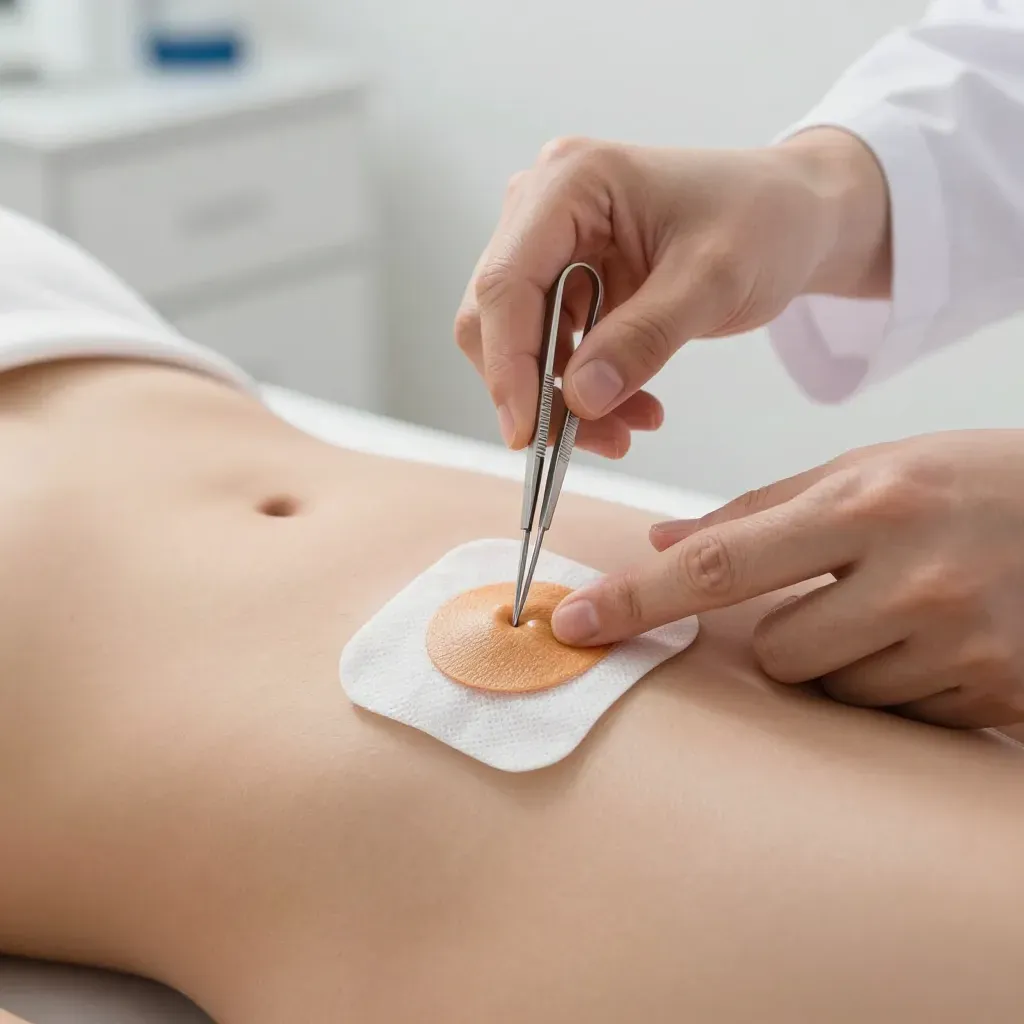
Safe Extraction Steps
- Wash hands thoroughly with antibacterial soap
- Sterilize needle and tweezers with alcohol for 60 seconds
- Apply warm compress for 5 minutes to soften skin
- Gently lift hair loop with sterile needle tip only
- Grasp exposed hair with tweezers and pull in growth direction
- Stop immediately if hair does not release easily
- Apply antiseptic like tea tree oil or benzoyl peroxide
- Cover with breathable bandage for 24 hours
Recommended Tools
Tool | Purpose | Sterilization Method |
|---|---|---|
Sharp-tipped tweezers | Grasp visible hair | Alcohol wipe, 60 sec |
Hypodermic needle | Lift hair loop | Boil 10 min or alcohol |
Warm compress | Soften skin/open pores | N/A (use clean cloth) |
Exfoliating brush | Prevent future ingrowns | Wash with soap weekly |
Aftercare Treatment
Apply salicylic acid daily to keep follicles clear. Use gentle exfoliation every other day. Wear loose cotton clothing to reduce friction. Avoid shaving the area for 2 weeks minimum. Moisturize with non-comedogenic lotion to prevent dryness.
Get professional treatments for stubborn or recurrent ingrown hairs.
Seek professional help when ingrown hairs appear repeatedly in same spots or cause severe inflammation. Dermatologists and licensed aestheticians offer treatments that home methods cannot match. These solutions target underlying causes and prevent future occurrences.
Laser Hair Removal
Laser treatment destroys hair follicles permanently and stops ingrown hairs at the source. Most patients see 80-90% reduction after 6-8 sessions. This method works best for dark hair on light skin but newer lasers treat all skin types. laser ingrown hair removal prevents future ingrowns completely. Results last years and eliminate need for shaving or waxing. Expect to pay $200-500 per session depending on treatment area size.
Professional Extraction and Chemical Treatments
Medical-grade chemical peels dissolve dead skin blocking follicles. Salicylic acid peels at 20-30% concentration clear debris effectively. Dermatologists perform sterile extractions using surgical tools and local anesthesia. They also prescribe topical retinoids that increase cell turnover and prevent clogging. professional-grade products contain higher active ingredient concentrations than OTC options.
Treatment Type | Best For | Session Frequency | Cost Range |
|---|---|---|---|
Laser hair removal | Chronic ingrowns | 6-8 sessions, 4-6 weeks apart | $200-500/session |
Chemical peels | Dead skin buildup | Every 2-4 weeks initially | $100-300/session |
Professional extraction | Single deep ingrowns | As needed | $50-150/session |
Prescription retinoids | Prevention | Daily application | $30-80/month |
Apply daily prevention strategies to stop ingrown hairs permanently.
Prevention stops ingrown hairs before they start. Consistent daily habits work better than occasional treatments. Build these routines into your regular skin care for permanent results without medical intervention.
Exfoliation Schedule
Remove dead skin cells daily to keep follicles clear and allow hair to exit properly. Use chemical exfoliants every day and physical scrubs 2-3 times weekly. Chemical exfoliants dissolve debris while physical scrubs manually remove buildup. Over-exfoliation damages skin barrier and increases inflammation, so monitor skin response closely and reduce frequency if irritation occurs.
Skin Type | Daily Chemical Exfoliant | Weekly Physical Scrub Frequency | Best Time of Day | Product Example |
|---|---|---|---|---|
Normal/oily | 2% salicylic acid | 3 times | Morning | Paula's Choice BHA |
Dry/sensitive | 5% glycolic acid | 1-2 times | Evening | The Ordinary 7% Toner |
Curly hair prone | 10% AHA lotion | 2 times | Evening | Amlactin Body Lotion |
Acne-prone | BHA serum | 1 time | Morning | CeraVe SA Cream |
Proper Hair Removal Techniques
Change how you remove hair to prevent sharp tips from piercing skin. Shave with the grain in direction of hair growth, never against it. Use single-blade safety razors instead of multi-blade cartridges that cut too close. Replace blades every 3-4 uses maximum to ensure sharpness. Apply thick shaving cream and never dry shave. Rinse blade after each stroke to remove buildup and prevent bacteria transfer.
Daily Skin Care Routine
Apply non-comedogenic moisturizer twice daily to maintain healthy skin barrier and reduce inflammation. Use products with tea tree oil or witch hazel for natural antibacterial protection. Wear loose cotton underwear and clothing in high-friction areas like bikini line and underarms. Avoid tight leggings or synthetic fabrics that trap sweat and create friction against hair follicles.
Know when to see a doctor about ingrown hair complications.
Infection Warning Signs
Normal ingrown hairs show minor redness. Infection symptoms appear within 3-5 days and worsen fast. Look for pus-filled bumps that grow, spreading redness beyond the immediate area, and severe throbbing pain. Fever, chills, and swollen lymph nodes signal systemic infection needing immediate medical care.
High-Risk Complications
Certain areas and conditions increase risk. The bikini area, inner thighs, and underarms develop abscesses more often due to moisture and friction. People with diabetes, weak immune systems, or poor circulation face higher infection risks. Darker skin tones get keloid scars and permanent dark spots more easily. Recurrent infections in the same spot may indicate MRSA.
When Home Treatment Fails
Get medical care if ingrown hair does not improve after 7 days of proper home treatment. Persistent lumps after 2 weeks indicate trapped hair or cyst formation. Multiple ingrown hairs clustering together suggest underlying skin conditions. Any sign of scarring or dark spots needs professional evaluation to prevent permanence.
Medical Treatment Options
Doctors treat infected ingrown hairs with oral antibiotics for 7-10 days. They perform incision and drainage for large abscesses under local anesthesia. For recurrent cases, they prescribe topical retinoids or antibiotic creams. Severe scarring may require steroid injections or laser therapy. They can also test for MRSA if infections repeat.
Symptom | Risk Level | Action Required |
|---|---|---|
Small red bump | Low | Home treatment OK |
Pus present | Medium | Monitor closely |
Spreading redness >1 inch | High | See doctor within 24 hours |
Fever/chills | Critical | Emergency care immediately |
Severe pain | High | See doctor same day |
- Fever over 100.4°F (38°C)
- Red streaks radiating from bump
- Swollen lymph nodes in groin or armpit
- Difficulty walking or moving due to pain
- Lesion larger than 1 cm diameter
- Recurrence in same location 3+ times
- Signs of MRSA: fast-spreading, painful boils