
Table of Contents
See a doctor for ingrown hairs with spreading redness, pus, fever, or severe pain.
Medical extractions use sterile tools with less than 1% infection risk versus 15-25% at home.
Doctors prescribe antibiotics and perform precise extractions.
DIY removal causes scarring and pushes hair deeper.
Laser hair removal permanently prevents ingrowns with 90-95% success after 6-8 sessions.
Professional treatment costs $75-$600 but prevents $500-$2,000 scar revision costs.
Insurance covers infected cases.
Recovery takes 2-3 days versus 1-2 weeks for DIY.
Prevention includes proper shaving and laser treatment.
Medical intervention saves money long-term.
Question | Answer |
|---|---|
When should I see a doctor for an ingrown hair? | See a doctor for spreading redness, pus, fever, severe pain, or no improvement after 72 hours. |
What treatments do doctors provide? | Doctors perform sterile extractions, prescribe antibiotics, give steroid injections, and offer laser hair removal. |
How much does professional extraction cost? | Professional extraction costs $75-$600 based on severity and body area. |
Does insurance cover ingrown hair treatment? | Insurance covers infected cases and underlying conditions but not cosmetic extractions. |
Is laser hair removal effective for prevention? | Laser hair removal prevents 90-95% of ingrown hairs permanently after 6-8 sessions. |
See a doctor for infected or painful ingrown hairs that won't heal.
Warning Signs Requiring Medical Care
See a hair ingrown removal doctor immediately if redness spreads beyond bump borders. Severe pain or swelling that limits movement needs urgent evaluation. Pus, yellow drainage, or foul odor indicates bacterial infection requiring antibiotics. Fever over 100°F, chills, or feeling systemically unwell demand same-day medical attention. Large cysts bigger than a pea or deep nodules need professional drainage. Visit a doctor if home treatments show no improvement after 72 hours. Recurring ingrowns in identical spots monthly signal follicle damage needing medical intervention. Dark streaks from the bump suggest infection spreading through lymphatic system.
Symptom | Home Care | Doctor Visit |
|---|---|---|
Small red bump, mild itch | Yes | No |
Tender but no drainage | Yes | No |
Redness >1 inch diameter | No | Yes |
Any pus or yellow fluid | No | Yes |
Pain worsening daily | No | Yes |
Fever or warm skin | No | Urgent |
Cyst >1 cm size | No | Yes |
Recurs same location | No | Yes |
Doctor Treatments
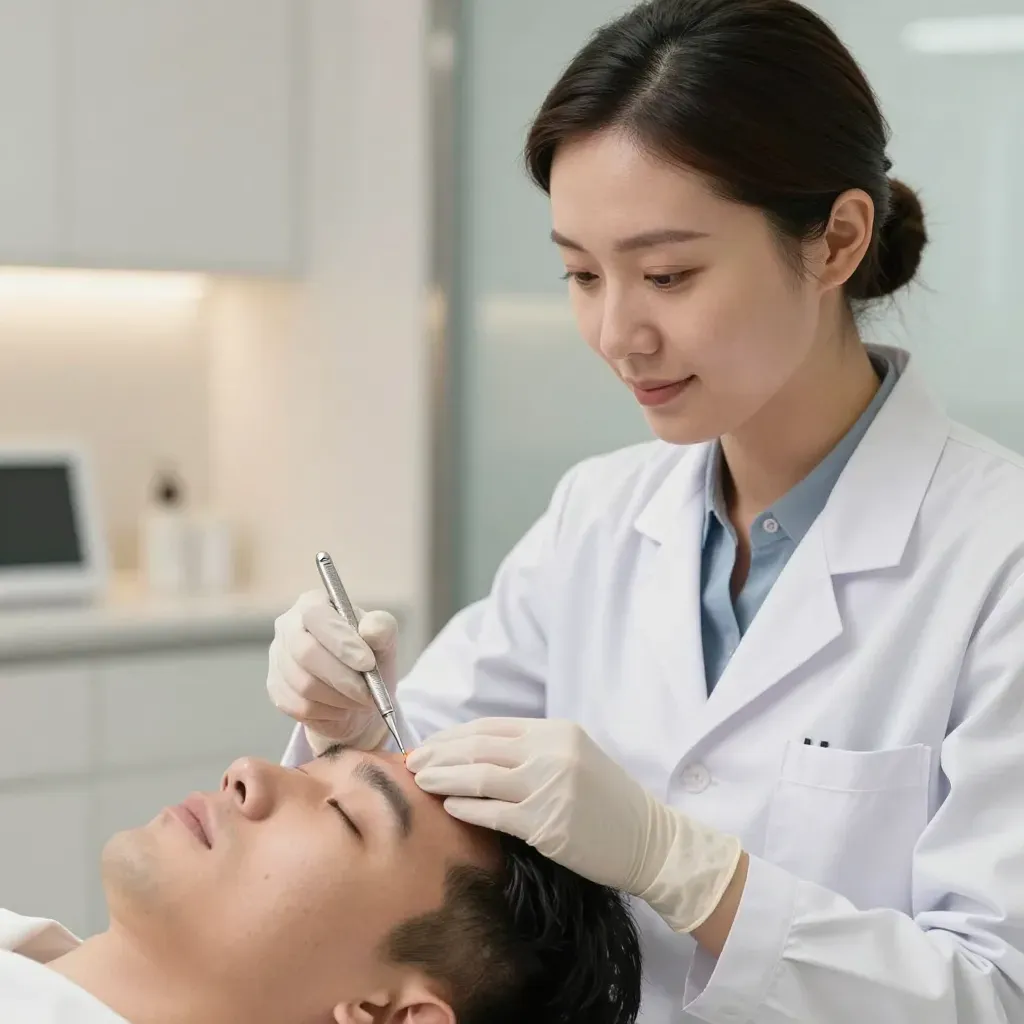
Dermatologists perform sterile extractions using medical-grade needles and scalpels. They make tiny precise incisions less than 2mm to release trapped hair without causing trauma. Doctors prescribe oral antibiotics like doxycycline for bacterial infections. Steroid injections directly into cyst reduce inflammation within 24-48 hours. Laser hair removal doctors permanently destroy follicles using medical-grade devices preventing future ingrowns. Medical extractions take 15-30 minutes with optional local anesthesia. Doctors send severe infections for culture testing to identify resistant bacteria like MRSA. They treat underlying conditions like folliculitis or pseudofolliculitis barbae with specialized protocols.
DIY Removal Dangers
Home needle use introduces staph, strep, and MRSA bacteria deep into skin. Tweezing leaves broken hair tips beneath surface creating more ingrowns. Picking and digging causes post-inflammatory hyperpigmentation and permanent keloid scars. You cannot achieve medical-grade sterility using alcohol or flame at home. Improper technique damages dermal layers requiring expensive scar revision later. DIY extractions often push hair deeper causing cyst formation. Doctor removal prevents these complications and costs less than fixing DIY mistakes long-term. Medical insurance often covers infected ingrown hair treatment but not cosmetic scar repair.
Dermatologists perform sterile extractions and treat underlying infections.
Sterile Extraction Procedure
Doctors use surgical-grade stainless steel needles sterilized in autoclaves. They apply topical numbing cream for 20 minutes before extraction. Medical lancets create 1-2mm micro-incisions at precise angles. Dermatologists use sterile cotton swabs and tweezers to lift hair without breaking follicles. Each tool gets discarded after single use eliminating cross-contamination. Procedure takes 10-15 minutes per lesion. Doctors examine surrounding skin for early infection signs. They cleanse area with chlorhexidine solution stronger than drugstore alcohol. Medical extractions remove entire hair shaft including root bulb preventing regrowth under skin.
Infection Treatment Protocols
Dermatologists culture pus to identify staph, strep, or MRSA bacteria. Oral antibiotics prescribed for 7-14 days based on culture results. Topical antibiotic ointments like mupirocin applied directly to extraction site. Steroid injections reduce inflammation within 48 hours. Doctors treat underlying folliculitis with antibacterial washes. They diagnose pseudofolliculitis barbae using magnified dermoscopy. Medical professionals drain abscesses under sterile conditions. They prescribe oral tetracyclines for chronic recurring cases. Doctors monitor treatment response through follow-up appointments. They adjust medications based on bacterial resistance patterns.
Aspect | Doctor Extraction | Home Removal |
|---|---|---|
Tool Sterility | Autoclave sterilized | Alcohol wipe only |
Infection Risk | Less than 1% | 15-25% |
Scarring Likelihood | Minimal | High |
Complete Hair Removal | Yes | Often partial |
Anesthesia | Topical numbing | None |
Cost Per Lesion | $75-$150 | $0 but risk high |
Recovery Time | 2-3 days | 1-2 weeks |
Medical Tools vs Home Methods
Doctors use surgical loupes magnifying 6x for precision. Home tweezers damage hair shafts causing more ingrowns. Medical scalpels create clean incisions minimizing tissue trauma. DIY needles push bacteria deeper into dermal layers. Dermatologists employ electrocautery to seal blood vessels reducing bleeding. Home methods cause post-inflammatory hyperpigmentation lasting months. Medical-grade comedone extractors have looped ends preventing skin puncture. Drugstore tools lack proper angulation for hair release. Doctors apply post-procedure antibiotics preventing secondary infection. Home remedies like toothpaste or baking soda irritate follicles further.
Recovery Timeline
Day 1: Redness and mild swelling normal. Day 2-3: Lesion flattens, pain subsides. Day 4-7: Skin heals completely with minimal marks. Doctors recommend avoiding shaving for 5-7 days post-extraction. Apply prescribed antibiotic ointment twice daily for 3 days. Keep area clean with gentle soap, no scrubbing. Avoid tight clothing friction on treated spots. Return for follow-up if redness spreads beyond original bump size. Complete full antibiotic course even if lesion looks healed. Medical extractions heal 3x faster than DIY attempts. Insurance covers medically necessary extractions but not cosmetic procedures.
Laser hair removal prevents future ingrown hairs permanently.
How It Works
Medical lasers destroy follicles permanently with heat energy. Light targets melanin disabling growth at root. No follicle means no hair and no ingrowns. Professional devices reach 2-3mm depth ensuring complete destruction. At-home units lack power requiring endless maintenance. Dermatologists select laser type based on skin tone. Each pulse treats multiple hairs covering large areas fast. Six to eight sessions spaced 4-6 weeks achieve permanent reduction. Treatment only works on actively growing hairs requiring multiple visits.
Success by Body Area
Area | Success | Sessions | Ingrown Reduction |
|---|---|---|---|
Bikini | 90-95% | 6-8 | 95% |
Underarms | 85-90% | 6-7 | 90% |
Legs | 80-85% | 8-10 | 85% |
Face/Beard | 75-80% | 8-10 | 80% |
Chest/Back | 85-90% | 6-8 | 90% |
Cost Analysis
Professional package costs $1,200-$3,000 total. Single sessions run $150-$500 per area. Lifetime shaving costs $5,000-$7,000 over 20 years. Waxing totals $3,000-$5,000 in same period. Annual ingrown treatment averages $200-$400. Laser eliminates ongoing expenses breaking even in 2-3 years. Insurance covers medically necessary cases like pseudofolliculitis barbae. Payment plans spread cost over 12 months. Prevents scar revision costs of $500-$2,000 per lesion.
Professional vs At-Home
Feature | Professional | At-Home |
|---|---|---|
Power | 20-50 J/cm² | 3-6 J/cm² |
Permanent | Yes | No |
Ingrown Prevention | 95% | 40% |
Sessions | 6-8 | 12+ ongoing |
Safety | Medical supervision | User risk |
Total Cost | $1,200-$3,000 | $300-$600 |
Results Time | 6 months | 2+ years |
Best Candidates
Curly and coarse hair types respond best. Razor bump sufferers need this treatment. Recurring cyst patients achieve permanent prevention. Dark skin requires Nd:YAG laser for safety. PCOS hirsutism cases see dramatic improvement. Athletes benefit from irritation-free skin. Scarred areas stop accumulating new damage. Consultation determines candidacy based on hair-skin contrast.
Professional treatment costs vary by severity and body area.
Extraction Costs by Body Area
Area | Simple | Complex | Multiple |
|---|---|---|---|
Face | $75-$125 | $150-$250 | $200-$350 |
Bikini | $100-$150 | $200-$300 | $250-$400 |
Underarms | $75-$100 | $125-$200 | $150-$250 |
Legs | $150-$200 | $250-$400 | $300-$500 |
Back/Chest | $200-$300 | $350-$500 | $400-$600 |
Severity-Based Pricing
Severity | Description | Cost | Duration |
|---|---|---|---|
Mild | Single visible hair, no infection | $75-$150 | 15 min |
Moderate | Small cyst, mild inflammation | $150-$300 | 30 min |
Severe | Large abscess, multiple lesions | $300-$600 | 45-60 min |
Chronic | Recurring clusters, scar tissue | $400-$800 | 60+ min |
Insurance Coverage
- Covers infected cysts and abscesses
- Requires medical necessity documentation
- Covers underlying conditions like folliculitis
- Excludes cosmetic extractions
- Pseudofolliculitis barbae qualifies
- Pre-authorization needed for laser
- Deductibles apply: $50-$500 typical
- Copays: $25-$75 per visit
Payment Options
- FSA/HSA accepted
- CareCredit financing 12-24 months
- Package discounts 10-20% off
- Membership plans $50-$100/month
- Student discounts 15% off
- Military discounts available
- Payment plans split cost 3-6 months
- Cash pay discounts 5-10% off
Cost vs DIY
Professional extraction costs $75-$600 per session. DIY risks $500-$2,000 scar revision surgery. Infected cysts from home removal require $200-$400 ER visits. Lost work days from complications cost $200-$500. Permanent scarring reduces lifetime earnings in appearance-based jobs. Insurance covers doctor visits but not cosmetic scar repair. Professional laser costs $1,200-$3,000 total. Lifetime shaving supplies cost $5,000-$7,000. Waxing over 20 years totals $3,000-$5,000. Annual ingrown treatments average $200-$400. Laser breaks even in 2-3 years then saves money permanently.
Prevent recurrence with proper aftercare and alternative hair removal methods.
Post-Extraction Aftercare
Apply antibiotic ointment twice daily for 3 days. Keep area clean with gentle soap. Avoid shaving for 5-7 days minimum. Wear loose clothing to reduce friction. Skip pools and hot tubs for 48 hours. Use cold compress for swelling. Don't pick or squeeze treated spots. Apply SPF 30+ sunscreen on exposed areas. Return for follow-up if redness spreads beyond original bump.
Alternative Hair Removal Comparison
Method | Ingrown Risk | Cost | Duration |
|---|---|---|---|
Shaving | High (25-30%) | $5-$10 | 1-3 days |
Waxing | Medium (15-20%) | $40-$100 | 3-6 weeks |
Depilatory Cream | Low (5-10%) | $8-$15 | 1 week |
Professional Laser | Minimal (1-2%) | $150-$500 | Permanent |
Prevention Best Practices
- Exfoliate 2-3 times weekly with chemical exfoliants
- Shave with grain using sharp single-blade razors
- Apply shaving cream, never dry shave
- Moisturize daily to soften skin barrier
- Wear breathable cotton underwear
- Use salicylic acid pads on prone areas
- Consider Brazilian laser hair removal for bikini line
- Switch to at-home laser devices for maintenance
Long-Term Prevention Strategy
Consult dermatologist about underlying folliculitis. Treat with antibacterial washes. Complete 6-8 laser sessions for permanent prevention. Professional machines deliver permanent results. At-home professional devices work for small areas. Curly hair benefits most from laser prevention. Recurring leg ingrowns? Try full leg laser. Prevention saves thousands in extraction costs long-term.