
Table of Contents
Hair removal creams dissolve hair below skin, leaving sharp tips that curl back and cause ingrown hairs.
Depilatory chemicals like calcium thioglycolate break down keratin, creating pointed ends that pierce follicle walls during regrowth.
Curly and coarse hair face highest risk, especially with thick application or leaving product on too long.
Exfoliate 24 hours before, use minimum time, apply lightweight moisturizer, wear loose clothing for 24 hours after to prevent.
Treat with warm compresses, gentle exfoliation, salicylic acid or retinoids.
See a dermatologist for deep, infected, or painful ingrown hairs.
Question | Answer |
|---|---|
Why do hair removal creams cause ingrown hairs? | Chemicals dissolve hair below skin, leaving sharp tips that curl inward during regrowth. |
Who faces highest risk? | People with curly or coarse hair face highest risk. |
How can you prevent ingrown hairs? | Exfoliate 24h before, use minimum time, moisturize after, and wear loose clothing. |
What treats existing ingrown hairs? | Warm compresses, gentle exfoliation, and salicylic acid or retinoids treat them. |
When should you see a doctor? | See a doctor for deep hairs, pus, severe pain, or spreading redness. |
Hair removal creams dissolve hair at the skin surface, leaving sharp tips that curl back and cause ingrown hairs.
Depilatory creams use chemicals like calcium thioglycolate to break down keratin structures. This dissolves hair just below the skin surface, creating a blunt or sharp tip that easily curls inward as it regrows. Curly and coarse hair types face higher risk. The chemicals can be harsh and cause skin irritation, making inflammation worse.
How hair removal creams trigger ingrown hairs
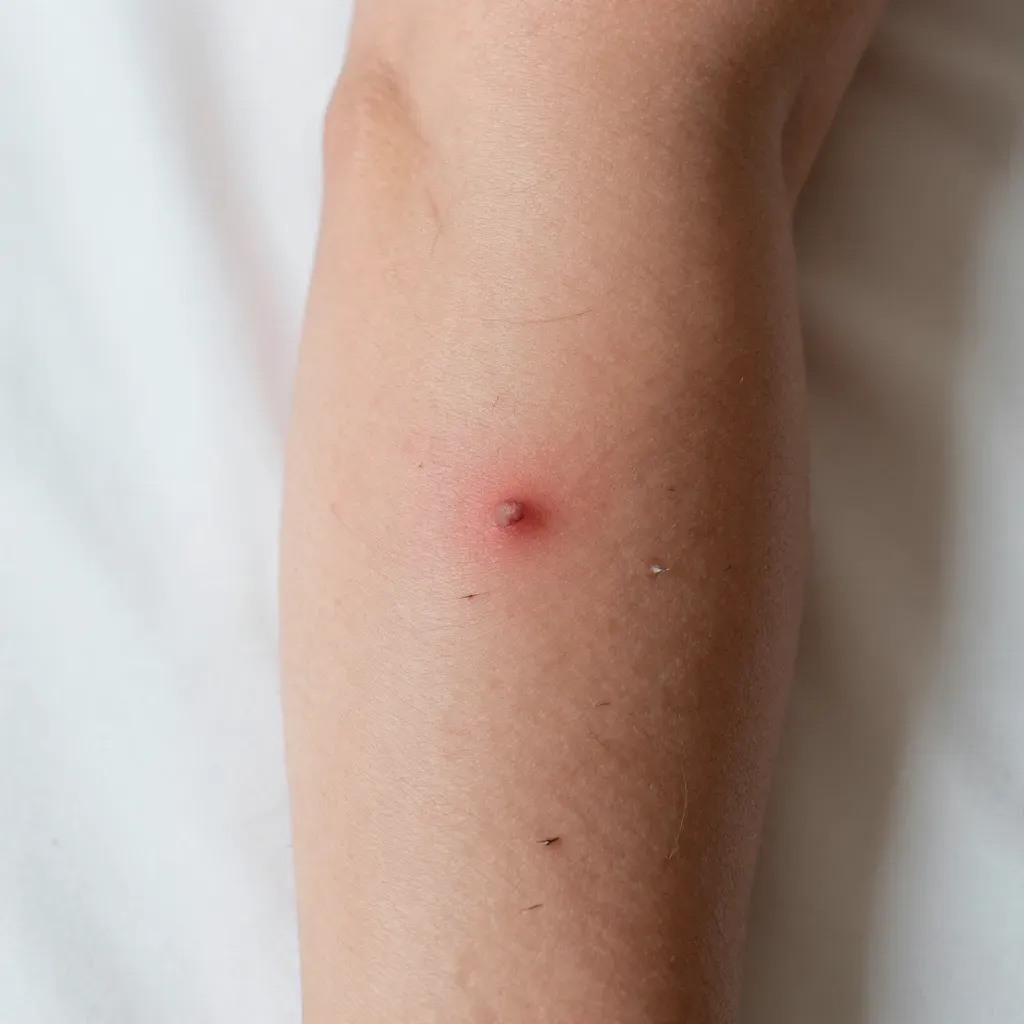
The chemical action leaves hair shafts with pointed ends. These sharp tips cannot push straight through the follicle opening. Instead they pierce the follicle wall and grow sideways under the skin. This creates painful red bumps and inflammation. Heavy creams and thick oils clog pores, exacerbating the problem. Dry skin blocks follicle openings, forcing hair to grow underneath.
Risk factors
- Curly or coarse hair texture
- Thick hair removal cream application
- Leaving product on too long
- Skipping exfoliation before treatment
- Tight clothing that creates friction
- Dry skin that blocks follicle openings
- Using alcohol-based products that dry out skin
Method | Ingrown Hair Risk | Mechanism |
|---|---|---|
Depilatory creams | Moderate to High | Dissolves hair below surface, leaves sharp tips |
Shaving | High | Cuts hair at sharp angle, regrowth is pointed |
Waxing | Moderate | Removes entire follicle, but can damage follicle |
Laser removal | Low | Destroys follicle, prevents regrowth entirely |
Prevention strategies
Exfoliate with a washcloth or gentle scrub 24 hours before application. This removes dead skin cells that block follicles. Use creams for the minimum effective time listed on instructions. Apply lightweight, breathable moisturizers after treatment. Avoid alcohol-based products that dry skin and trap hair. Wear loose clothing for 24 hours after treatment to reduce friction.
Treatment methods
Apply warm compresses for 10 minutes to soften skin and open pores. Gently exfoliate with a washcloth using circular motions to release trapped hairs. Use topical treatments with salicylic acid or retinoids to unclog pores and remove dead skin cells. For deep ingrown hairs that won't budge, see a dermatologist. For infected bumps with pus, severe pain, or spreading redness, get medical treatment immediately. Doctors can prescribe antibiotics or perform sterile removal. Learn more about how to remove ingrown hairs safely and laser options for permanent prevention.