
Table of Contents
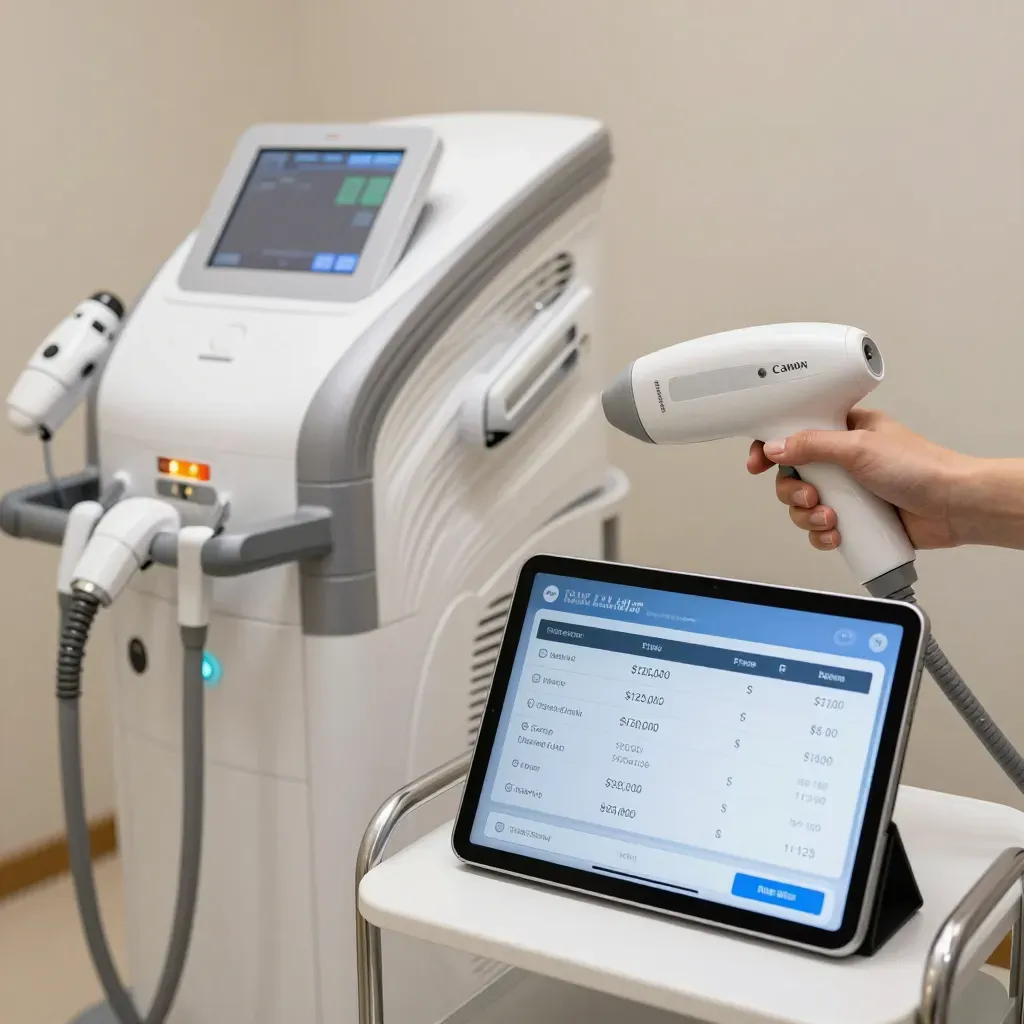
Laser hair removal machine prices range from $5,000 to $120,000+ for professional equipment and $80 to $600 for home devices, with costs driven by optical power output, technology type (diode vs. Alexandrite), and maintenance requirements.
Question | Answer |
|---|---|
What is the price range for professional laser hair removal machines? | Professional machines cost between $5,000 and $120,000+, with prices varying based on power output and technology type. |
How do home laser hair removal devices compare in price to professional machines? | Home devices range from $80 to $600, making them significantly more affordable than professional equipment. |
What factors influence the price of laser hair removal machines? | Key factors include optical power output, cooling systems, technology type (diode vs. Alexandrite), and maintenance requirements. |
Professional salon equipment prices range significantly based on power.
Commercial laser hair removal machines typically cost between $5,000 and $120,000. This massive price variance largely depends on the optical power output, FDA clearance status, and the manufacturer's reputation. High-power systems treat patients faster and more effectively, justifying their steeper price tags for busy clinics.
Power Output vs. Price
The machine's wattage determines how quickly and permanently it destroys hair follicles. Entry-level diode lasers often operate between 600W and 1000W. These units are affordable but require more sessions per client to achieve results. Medical-grade systems push 2000W to 5000W, allowing for rapid full-body treatments and better efficacy on stubborn hair.
Machine Tier | Estimated Cost | Typical Optical Power | Target Business |
|---|---|---|---|
Entry-Level Import | $5,000 - $15,000 | 600W - 1200W | Small spas, low volume |
Mid-Range Professional | $20,000 - $45,000 | 1600W - 2400W | Med-spas, growing clinics |
Premium Medical Grade | $60,000 - $120,000+ | 3000W - 5000W | Dermatologists, high volume |
Key Technical Cost Drivers
Beyond raw wattage, several technical specifications influence the final invoice:
- Cooling Systems: Advanced sapphire contact cooling or cryogen spray allows higher energy use without burning skin. This technology significantly adds to the manufacturing cost.
- Pulse Duration: Premium machines offer adjustable pulse widths (milliseconds) to target specific hair thicknesses safely. Cheaper machines often have fixed settings.
- Spot Size: Larger spot sizes (e.g., 24mm) cover areas like backs or legs faster. High-power generators are required to maintain energy density across these large spots, driving up the price.
At-home laser hair removal handsets are affordable alternatives.
Consumer-grade devices typically range from $80 to $600. This one-time purchase eliminates the recurring per-session fees charged by professional clinics. While less powerful than commercial machines, these handsets offer significant long-term savings for maintenance and touch-ups.
Most home devices use IPL (Intense Pulsed Light) technology, though some compact diode lasers exist. Laser hair removal at home best suits individuals with lighter skin and darker hair due to lower energy outputs compared to salon equipment.
Price Tiers for Personal Devices
- Budget ($80 - $150): Generic IPL brands. Often lack advanced safety sensors or cooling features. Limited flash lifespan (e.g., 300,000 flashes).
- Mid-Range ($200 - $399): Reputable brands like Braun or Philips. Includes skin tone sensors and ergonomic designs.
- Premium ($400 - $600): High-power IPL or diode lasers. Features sapphire cooling, unlimited flashes, and faster repetition rates. Check out the top 5 best laser hair removal at home devices for specific model comparisons.
Cost Analysis: Salon vs. Home
Treatment Area | Avg. Salon Cost (6 Sessions) | Home Device Cost (One-Time) |
|---|---|---|
Full Legs | $1,500 - $2,500 | $200 - $500 |
Underarms | $400 - $600 | $0 (Included with device) |
Bikini/Brazilian | $600 - $1,200 | $0 (Included with device) |
Premium devices often include unlimited flashes, meaning the device lasts for years. Cheaper models may require replacement cartridges, adding to the hidden cost. Always check the "flash count" specification before buying best laser hair removal devices to ensure longevity.
Diode and Alexandrite technologies impact the machine price tag.
The core technology generating the laser beam is the primary driver of equipment manufacturing costs. Crystal-based solid-state lasers (Alexandrite) differ significantly in price and maintenance from semiconductor-based lasers (Diode).
Diode Lasers: The Cost-Effective Standard
Diode lasers (810nm) utilize semiconductor technology to generate light. This makes them more durable and cheaper to mass-produce than crystal lasers. A professional diode machine typically ranges from $20,000 to $65,000. They are favored by new clinics because the handpieces are robust, often lasting 10-20 million shots before replacement is necessary.
Alexandrite Lasers: Premium Precision
Alexandrite lasers (755nm) use a rare chrysoberyl crystal as the laser medium. This solid-state technology provides exceptional melanin absorption, making it the most effective option for light skin types. However, the complexity of the optical bench and the cost of the crystal drive prices up to $80,000 - $150,000+. These systems often require more delicate fiber optic delivery systems, which increases ongoing maintenance costs.
Feature | Diode Laser (810nm) | Alexandrite Laser (755nm) |
|---|---|---|
Average Price | $$ ($25k - $60k) | $$$$ ($85k - $150k) |
Technology | Semiconductor chips | Solid-state Crystal |
Maintenance | Low (Durable handpiece) | High (Flashlamps, fibers, crystals) |
Best For | High volume, mixed skin types | Fine hair, light skin types |
Choosing between these technologies depends on your client demographic. While Diode lasers offer a lower barrier to entry and lower running costs, Alexandrite systems command higher per-session prices due to their reputation for speed and efficacy on lighter skin tones.
Buying used or refurbished lasers reduces initial investment costs.
Purchasing pre-owned equipment significantly lowers the barrier to entry for new clinics. A refurbished professional system typically costs 40% to 60% less than a brand-new unit. This allows business owners to acquire top-tier technology like the Candela GentleMax Pro or Alma Soprano without the six-figure price tag.
Market Price Comparison
The secondary market fluctuates based on machine age and condition. Below is a typical price breakdown for popular models in 2026:
Machine Model | New List Price (Approx.) | Refurbished Price |
|---|---|---|
Candela GentleMax Pro | $110,000+ | $45,000 - $65,000 |
Alma Soprano Ice Platinum | $75,000+ | $25,000 - $35,000 |
Lumenis LightSheer Duet | $60,000+ | $15,000 - $25,000 |
Hidden Costs: Recertification Fees
The sticker price on a used laser is not the final cost. Major manufacturers often charge a recertification fee to register the device to a new owner. This fee ranges from $5,000 to $30,000. Paying this is often mandatory to access official service technicians, software updates, and consumable parts. Always verify the recertification status before buying.
Critical Inspection Points
Treat a used laser purchase like buying a used car. Verify these specific metrics to ensure the machine is worth the investment:
- Shot Count: This is the "mileage" of the machine. High shot counts on the handpiece mean the diode or flashlamp is near the end of its life. Replacement handpieces cost between $2,000 and $8,000.
- Service History: Ensure the machine received regular preventative maintenance. Lack of water system maintenance leads to internal corrosion.
- Blue Dot/Gold Standard: Some third-party resellers offer their own warranties. These are often cheaper than manufacturer contracts but check their reputation for parts availability.
Factor in maintenance and warranty fees for total cost.
The initial purchase price is only part of the investment. Ongoing maintenance and warranty coverage can add thousands of dollars per year to the total cost of ownership. These fees are critical to budget for when calculating your return on investment.
Annual Maintenance Contracts
Professional laser hair removal machines require regular preventative maintenance to operate safely and effectively. Most clinics budget between $5,000 and $20,000 per year for a maintenance contract. This typically covers:
- Quarterly or bi-annual service visits
- Calibration and alignment checks
- Replacement of consumable parts (filters, flashlamps, etc.)
- Software updates
Skipping maintenance to save money is a false economy. A poorly maintained laser can lead to inconsistent results, increased downtime, and costly emergency repairs that far exceed the cost of a contract.
Warranty Coverage Options
Manufacturer warranties on new machines typically last 1-2 years. After this period, you must choose between a service contract or pay-as-you-go repairs. Third-party warranty providers offer competitive rates but may have limitations on parts coverage. Always read the fine print.
Coverage Type | Annual Cost Range | What's Covered |
|---|---|---|
Manufacturer Service Contract | $8,000 - $20,000 | All parts, labor, travel, software |
Third-Party Extended Warranty | $4,000 - $12,000 | Major components only, limited travel |
Pay-As-You-Go Repairs | $0 (but unpredictable) | Only what you pay for per incident |
Hidden Costs to Consider
Beyond the service contract, factor in these often-overlooked expenses:
- Consumables: Cooling gel, disposable tips, and protective eyewear need regular replacement.
- Electricity: High-power lasers draw significant current. Budget an extra $50-$200 per month for utility costs.
- Training: New staff require certification on the specific machine model. This can cost $500-$2,000 per technician.