
Table of Contents
Ingrown hairs happen when removed hair regrows into skin.
Curly hair and clogged follicles cause red bumps.
Stop hair removal and apply warm compresses 3-4 times daily.
Exfoliate weekly and moisturize twice daily.
Tweeze only visible hairs with sterile tools.
Shave with the grain using fresh blades every 5-7 uses.
Switch to depilatory creams or laser removal for permanent prevention.
See a doctor for yellow pus, spreading redness, fever, or no improvement after four weeks.
Professional treatments fix persistent cases.
High-risk individuals need immediate care.
Question | Answer |
|---|---|
What causes ingrown hairs? | Hair removal, curly hair, clogged follicles, and improper shaving. |
How can I treat ingrown hairs at home? | Use warm compresses, exfoliate weekly, moisturize daily, and stop hair removal. |
When should I see a doctor? | See a doctor for yellow pus, spreading redness, fever, or no improvement after four weeks. |
How do I prevent ingrown hairs? | Shave with the grain using fresh blades, exfoliate weekly, or switch to laser removal. |
What are permanent solutions? | Laser hair removal and electrolysis destroy follicles permanently. |
What causes ingrown hairs
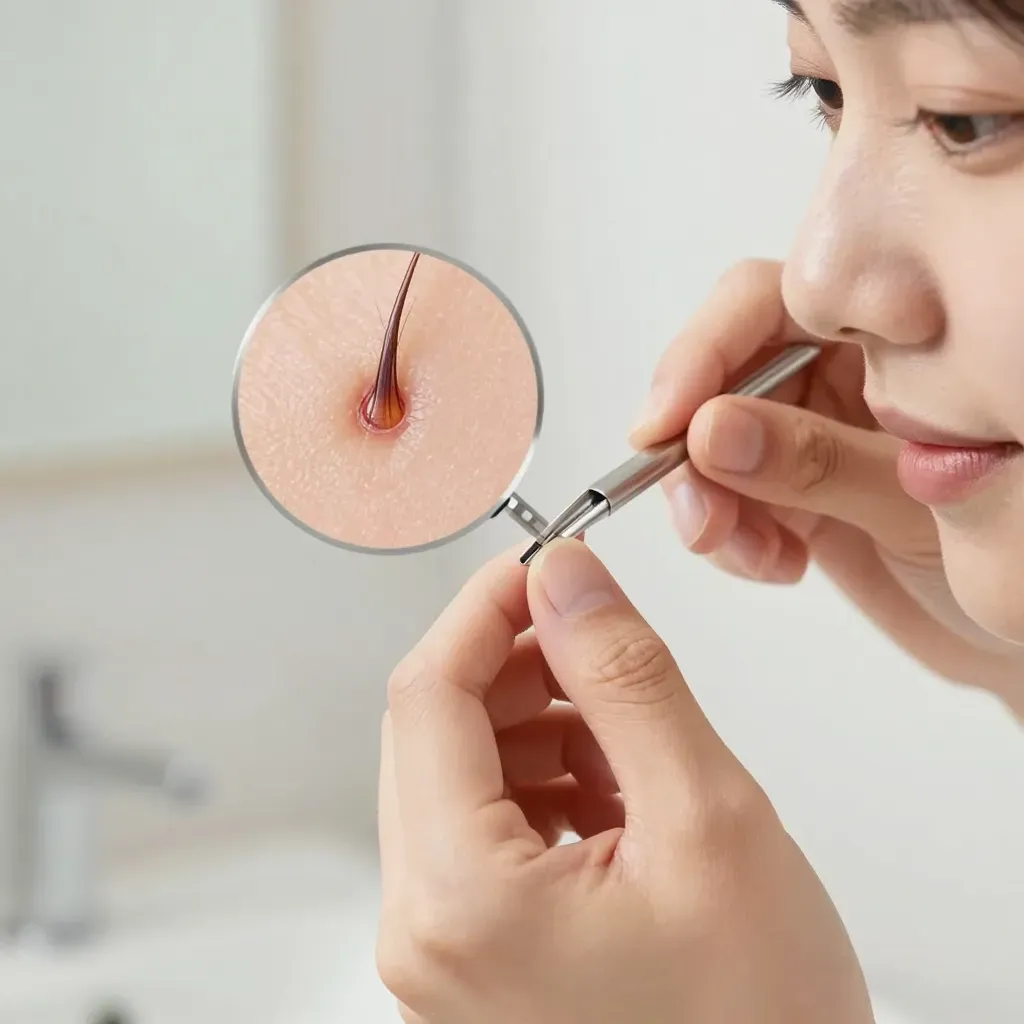
Ingrown hairs happen when shaved, tweezed, or waxed hair grows back into skin instead of out. This creates red bumps, sometimes with trapped hair visible under surface or white pus-filled heads.
You see them most on face, legs, armpits, pubic area. Doctors call them razor bumps, barber's itch, shave bumps.
What triggers them
- Any hair removal method forces hair to regrow through skin
- Curly/coarse hair grows in circles, naturally turns inward
- Dead skin cells clog follicles, block exit path
- Dull blades cut hair below skin surface
- Shaving against hair growth direction pulls hair back
- Dry skin lacks moisture, lets hair curl under easily
How it develops
When hair gets cut too short or follicle clogs, new hair can't push out properly. It grows sideways or curls back inward. This irritates skin, causes inflammation and redness. Sometimes leads to infection or cysts. Left untreated, can cause dark spots or scarring.
Risk factors
Factor | Why risk increases |
|---|---|
Tight clothing | Friction pushes hair into skin |
Close shaves | Leaves no exit path for regrowth |
No exfoliation | Dead cells clog pores |
Skipping moisturizer | Dry skin lets hair curl under |
Touching/picking | Introduces bacteria, worsens infection |
Safe at-home removal methods
Stop all hair removal in affected area for 1-6 months. This eliminates new irritation and lets trapped hairs grow out naturally.
Apply warm compresses
Soak clean washcloth in warm water. Apply to ingrown hair for 10-15 minutes, 3-4 times daily. Heat relaxes follicles, opens pores, softens skin, reduces swelling. Makes hair easier to surface without force.
Gentle exfoliation
Slough off dead skin cells blocking hair exit path. Exfoliate 1-2 times weekly max to avoid irritation.
- Physical: Fine sugar scrubs, coffee grounds, dry brushing, exfoliating gloves
- Chemical: Salicylic acid, glycolic acid, lactic acid serums
Moisturize daily
Use non-greasy, fragrance-free moisturizer twice daily. Hydrated skin stays supple, making it easier for hairs to break through surface instead of curling under. Apply after showers and before bed.
Safe tweezing technique
Only attempt when hair loop is visible at skin surface:
- Wash hands and area with antibacterial soap
- Sterilize tweezers with rubbing alcohol
- Place warm compress first to soften skin
- Grasp hair in center, gently twist both directions
- Guide hair out—never dig under skin or fully pluck
Over-the-counter treatments
Product | Function | Application |
|---|---|---|
Ingrown hair serums | Reduce inflammation, exfoliate | Twice daily after cleansing |
Depilatory creams | Dissolve hair protein structure | Use instead of shaving |
Antibiotic ointment | Treat infection | On infected bumps only |
Retinoid creams | Increase cell turnover | Nightly, pea-sized amount |
Warning: Never squeeze, pop, or use needles to dig. This drives bacteria deeper, causes infection, scarring, and hyperpigmentation.
Prevent ingrown hairs from returning
Stop shaving is the only guaranteed prevention. If you must shave, technique determines everything.
Perfect your shave technique
- Replace blades after 5-7 uses—dull blades cut hair below skin
- Shave in direction of hair growth only
- Use shaving gel or cream every time
- Rinse blade after each stroke
- Never press down—let blade glide with its own weight
Prep and post-shave care
Prep opens pores and softens hair. Post-shave soothes skin and closes follicles.
Before shaving | After shaving |
|---|---|
Wet skin with warm water 3-5 min | Rinse with cold water to close pores |
Exfoliate gently to remove dead cells | Apply non-greasy moisturizer immediately |
Apply thick layer of shaving cream | Use cool wet cloth for 5 minutes if irritated |
Long-term skin maintenance
- Exfoliate 1-2 times weekly—removes dead skin blocking follicles
- Moisturize twice daily—keeps skin supple and soft
- Wear loose breathable clothing in pubic area—reduces friction
- Never pick or squeeze bumps—causes infection and scarring
Alternative hair removal methods
If ingrown hairs persist despite perfect technique, switch methods.
- Depilatory creams: Dissolve hair at skin surface—no sharp tip to regrow inward
- IPL devices: Nearly painless, no ingrown risk, weakens follicles over time
- Laser hair removal: Destroys follicle permanently—eliminates problem forever
- Electric rotary shaver: Cuts hair above skin level, ideal for curly/coarse hair
Professional treatment options
Medical extraction
Dermatologist uses sterile needle or blade to lift trapped hair to surface. Quick office procedure, minimal discomfort. Never attempt with non-sterile tools at home—causes infection and scarring.
Prescription medications
Medication type | Purpose | Application |
|---|---|---|
Topical retinoids | Increase cell turnover, prevent clogged follicles | Pea-sized amount daily |
Steroid creams | Reduce inflammation and swelling | Thin layer, short-term |
Antibiotic ointments/pills | Treat bacterial infection | 7-10 day course |
Permanent hair removal solutions
- Laser hair removal: Concentrated light destroys follicle. Requires 6-8 sessions for optimal results. Best for dark hair on light skin. Eliminates future ingrown hairs permanently.
- Electrolysis: Electric current destroys individual follicles. Works on all hair colors and skin types. More time-intensive but permanently stops hair growth.
Chemical peels
Professional-strength acids remove dead skin layers blocking follicles. Promotes healthy hair growth outward. Typically series of 3-6 treatments spaced 2-4 weeks apart.
When to book appointment
- Ingrown hairs persist after 1-2 months of proper home treatment
- Signs of infection: increasing pain, yellow pus, spreading redness, warmth
- Multiple ingrown hairs recurring in same area repeatedly
- Development of painful cysts or permanent scarring/hyperpigmentation
When you need a doctor
Warning signs of infection
- Pus changes from white to yellow/green
- Pain increases instead of improves after 3 days
- Redness spreads beyond bump edges, larger than a dime
- Skin feels hot to touch or throbs constantly
- Fever, chills, or swollen lymph nodes develop
- Multiple bumps merge into larger swollen area
When home treatment fails
Book appointment if:
- No improvement after 4 weeks of proper warm compresses and exfoliation
- Ingrown hairs keep returning in same exact spot monthly
- Scars or dark marks start appearing and don't fade
- Large, painful cysts form under skin, bigger than pea-sized
- Condition affects work, sleep, or daily activities
Medical procedures available
Procedure | How it works | Best for | Recovery |
|---|---|---|---|
Sterile extraction | Needle/blade lifts hair to surface in seconds | Visible trapped hairs | 1-2 days |
Steroid injection | Reduces inflammation within 24 hours | Painful swollen bumps | Immediate relief |
Prescription retinoids | Clears clogged follicles over time | Recurring ingrown hairs | 4-6 weeks |
Antibiotic treatment | Oral/topical kills bacterial infection | Infected follicles | 7-10 days |
Laser hair removal | Destroys follicle permanently | Chronic sufferers | 6-8 sessions |
Don't wait if you have high-risk conditions
- Diabetes—skin infections spread quickly and can become serious
- Immune system disorders—harder to fight infection naturally
- Keloid or hypertrophic scar history—early treatment prevents permanent marks
- Ingrown hairs on face causing significant distress or affecting appearance
- Hair removal required for medical reasons but causing chronic issues
What happens if you delay
Untreated infected ingrown hairs can develop into abscesses requiring drainage. Chronic inflammation leads to permanent hyperpigmentation or raised scars. Recurring infections may cause follicle damage and permanent hair loss in that area.