
Table of Contents
Deep ingrown hairs grow back into skin instead of outward.
Hair removal causes this—shaving cuts hair sharply, waxing forces regrowth through blocked pores, and tweezing traps hairs under the surface.
Dead skin buildup and tight clothing make it worse.
Identify them by red, painful bumps with dark centers or pus-filled cysts.
Curly hair increases risk significantly.
Treat at home with warm compresses 10-15 minutes, 3-4 times daily.
Exfoliate with salicylic acid daily or gentle scrubs 2-3 times weekly.
Apply ichthammol ointment overnight to draw hairs out.
Only extract hairs when visible—cleanse, sanitize tools, lift hair gently, pull slowly, disinfect after.
See a doctor when redness spreads, pain becomes severe, pus appears, or fever develops.
Hard lumps indicate cysts needing drainage.
Stop home treatment after 7-10 days without improvement or when hairs remain completely submerged.
Never squeeze cysts or dig with tweezers.
Prevent future ingrown hairs by shaving with sharp single-blade razors in the direction of hair growth.
Limit passes to one or two strokes.
Exfoliate daily with chemical exfoliants on sensitive areas and 2-3 times weekly with physical scrubs on legs and arms.
Use depilatory creams or electric trimmers instead of shaving.
Wear loose clothing and take 3-5 day breaks between hair removal sessions.
Laser hair removal offers permanent prevention by destroying follicles.
It requires 6-12 sessions costing $1,000-3,000 total.
Each session reduces hair density by 80-90%.
Electrolysis works for small areas but needs more sessions.
At-home devices provide moderate results but lack professional effectiveness.
Question | Answer |
|---|---|
What causes deep ingrown hairs? | Shaving, waxing, and tweezing force hairs to grow back into skin. |
How can I treat ingrown hairs at home safely? | Apply warm compresses, exfoliate, and only extract visible hairs. |
When should I see a doctor for an ingrown hair? | Seek medical care for spreading redness, severe pain, pus, fever, or hard lumps. |
How do I prevent ingrown hairs from returning? | Shave with sharp razors in hair growth direction, exfoliate consistently, and wear loose clothing. |
What is the best long-term solution for chronic ingrown hairs? | Laser hair removal permanently destroys follicles and eliminates ingrown hairs after 6-12 sessions. |
What causes deep ingrown hairs and how to spot them
Primary Causes
Deep ingrown hairs occur when hair curls back and grows into the skin instead of upward.
Hair removal practices force this condition:
- Shaving cuts hair at the surface, creating sharp edges that curl back into skin
- Waxing removes hair from the follicle deep underneath, forcing regrowth through blocked pores
- Tweezing/threading creates similar regrowth trauma that traps hairs beneath the surface
Dead skin cell buildup blocks follicle openings, preventing normal hair emergence and creating a barrier.
Tight clothing traps hair against skin, encouraging sideways growth and follicle irritation.
Improper technique—shaving against grain, using dull blades, stretching skin—dramatically increases risk.
Visual Identification Guide
Spot deep ingrown hairs by these characteristics:
- Red, raised bumps that itch, burn, or feel painful to touch
- Swollen areas tender and warm, indicating inflammation
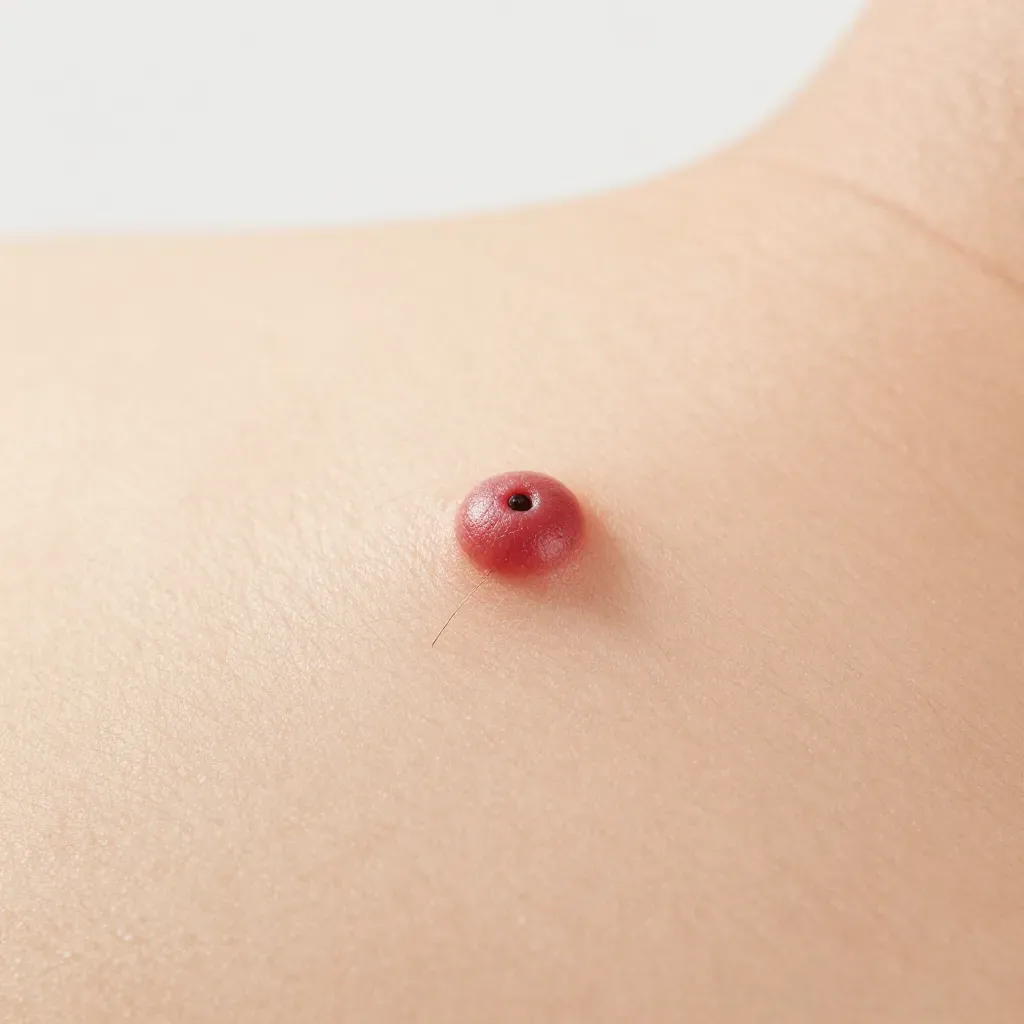
- Small pimples with visible dark center showing trapped hair beneath
- Large, pus-filled cysts in severe cases that may rupture
Body Area | Typical Appearance | Risk Factors |
|---|---|---|
Face & neck | Small red pimples, sometimes with visible hair loop | Coarse hair, daily shaving |
Pubic region | Painful bumps, often cystic and filled with pus | Curly hair, tight underwear |
Legs & armpits | Skin-colored bumps with dark centers | Frequent shaving, friction |
Back & chest | Raised welts that may scar | Thick hair, athletic wear |
People with curly or coarse hair face higher risk. The hair's natural curve makes re-entry into skin easier during regrowth.
Deep ingrown hairs can develop into cysts if left untreated. These appear as larger, more painful lumps under skin that may require professional drainage.
Infection signs include spreading redness, increasing pain, pus formation, and fever. Seek medical attention if these appear.
Safe at-home removal with warm compresses and exfoliation
Warm Compress Method
Apply warm compress for 10-15 minutes. Softens skin, opens pores, reduces swelling.
- Soak washcloth in hot water, wring out excess
- Place directly on bump 3-4 times daily
- Repeat until hair surfaces for easier extraction
Exfoliation Techniques
Chemical and physical methods remove dead skin blocking hair growth.
Type | Key Ingredients | How It Works |
|---|---|---|
Chemical | Salicylic acid, glycolic acid, AHAs/BHAs | Penetrates pores, dissolves hardened proteins blocking follicles |
Physical | Gentle scrubs, dry brush, washcloth | Sloughs dead skin cells, prevents hair trapping |
Use chemical exfoliants daily for prevention. Apply physical exfoliation 2-3 times weekly.
Baking soda paste acts as gentle DIY exfoliator. Mix with water to form scrub.
Safe Extraction Process
Extract only when hair is visible at surface.
- Cleanse area with warm water and gentle cleanser
- Sanitize tweezers and needle with rubbing alcohol
- Gently lift hair loop with needle tip
- Grasp hair center with tweezers, pull slowly
- Disinfect area again after removal
Drawing Ointment Option
Ichthammol ointment brings deep ingrown hairs to surface overnight.
- Apply thin layer to bandage
- Place over affected area for 8-12 hours
- Strong tar smell but effectively draws out hair
Anti-Inflammatory Treatments
Reduce redness and prevent infection after removal.
- 1% hydrocortisone cream for swelling and irritation
- Benzoyl peroxide for infected bumps
- Adapalene gel (OTC retinoid) for ongoing exfoliation
- Oatmeal compresses soothe painful areas
When to see a doctor for infected ingrown hairs
Infection Warning Signs
Seek medical attention immediately for these symptoms:
Symptom | What It Indicates | Required Treatment |
|---|---|---|
Spreading redness | Infection moving beyond bump | Antibiotic cream or pills |
Severe pain/swelling | Abscess formation | Professional drainage |
Pus or yellow fluid | Bacterial infection active | Antibiotics + possible drainage |
Fever or chills | Systemic infection | Emergency medical care |
Hard lump under skin | Cyst development | Surgical removal |
Medical Treatment Options
Healthcare professionals provide these interventions:
- Sterile needle or scalpel extraction: Lifts deeply embedded hairs without tissue damage
- Prescription steroid creams: Rapidly reduces swelling and irritation
- Topical or oral antibiotics: Treats bacterial infections at source
- Surgical drainage and removal: Excises cysts and cleans infected area
- Culture testing: Identifies specific bacteria for targeted treatment
Stop Home Treatment When
DIY methods fail and professional care becomes mandatory:
- No visible improvement after 7-10 days of proper home care
- Hair loop completely submerged with no access point
- Same area develops repeated ingrown hairs
- Hyperpigmentation or scarring begins forming
- Bump grows larger despite treatment
- Area becomes hot, extremely tender, or restricts movement
Chronic ingrown hairs may signal underlying follicular disorders. A dermatologist can diagnose conditions like folliculitis or pseudofolliculitis barbae.
Doctors may recommend laser hair removal as permanent prevention for chronic sufferers. This destroys follicles, eliminating regrowth and ingrown risk entirely.
Prevention tips to stop future ingrown hairs
Shaving Technique Modifications
Change your shaving routine to minimize ingrown risk:
- Use sharp, single-blade razors only. Replace blades every 5-7 shaves
- Shave in direction of hair growth, never against grain
- Apply warm water and quality shaving cream to soften hair
- Avoid stretching skin while shaving—this causes hairs to snap back beneath surface
- Limit passes to one or two strokes maximum
- Leave slight stubble rather than close shave to prevent retraction
Exfoliation Schedule
Consistent exfoliation prevents dead skin buildup that blocks follicles.
Frequency | Method | Body Area |
|---|---|---|
Daily | Chemical exfoliant (salicylic acid) | Face, neck, pubic area |
2-3x weekly | Physical scrub or dry brush | Legs, arms, chest |
Weekly | Deep exfoliation (glycolic acid) | Back, thighs |
Alternative Hair Removal Methods
Consider switching methods to eliminate cutting action:
- Depilatory creams dissolve hair below surface without sharp edges
- Electric trimmers leave slightly longer hair, reducing curl-back
- Laser hair removal permanently destroys follicles (6-8 sessions)
- Electrolysis treats individual follicles for permanent removal
Skin Care Between Sessions
Proper maintenance reduces inflammation and blockage:
- Cleanse area daily with gentle, non-comedogenic cleanser
- Apply lightweight moisturizer to keep skin supple
- Use warm water before hair removal, cool water after to close pores
- Take 3-5 day breaks from any removal method to allow skin recovery
- Wear loose cotton underwear/clothing to reduce friction and trapping
Post-shave products with tea tree oil or witch hazel reduce bacterial growth.
Curly hair types benefit from chemical exfoliants that penetrate deeper into follicles.
Long-term solutions like laser hair removal
How Laser Prevents Ingrown Hairs
Laser penetrates deep into hair follicle and destroys growth cells. This stops hair from regrowing and eliminates curling back into skin.
- Targets follicle beneath surface where ingrowns originate
- Reduces hair density by 80-90% after full treatment series
- Modern lasers work on all skin types and tones
- Most effective for dark, coarse hair types
- Permanent solution eliminates need for shaving or waxing
Treatment Protocol and Results
Body Area | Sessions Needed | Session Interval | Success Rate |
|---|---|---|---|
Face | 6-8 | 4-6 weeks | 85-95% |
Bikini/Brazilian | 6-10 | 4-6 weeks | 80-90% |
Legs | 8-10 | 6-8 weeks | 75-85% |
Back/Chest | 8-12 | 6-8 weeks | 70-80% |
Each session lasts 15-60 minutes depending on area size. Mild discomfort feels like rubber band snap.
Cost Considerations
- Small areas: $65-150 per session
- Medium areas: $150-300 per session
- Large areas: $300-500 per session
- Full treatment series costs $1,000-3,000 total
- Long-term savings vs. years of waxing/shaving products
Electrolysis Alternative
Electrolysis uses electric current to destroy individual follicles permanently.
- Best for small areas like eyebrows or upper lip
- Works on all hair colors including blonde and gray
- Requires more sessions than laser (15-30 per area)
- More time-consuming but truly permanent
- Costs $30-100 per session depending on time
At-Home Laser Devices
Consumer devices offer lower-cost option with reduced power.
Device Type | Effectiveness | Safety Level | Best For |
|---|---|---|---|
IPL | Moderate (60-70% reduction) | Safe for light skin | Small areas, maintenance |
Diode laser | High (70-80% reduction) | Safe for most skin types | Face, underarms, bikini |
Requires consistent use every 2-4 weeks for 3 months, then monthly maintenance.
Insurance rarely covers laser hair removal for ingrown prevention. Some clinics offer payment plans for treatment series.