
Table of Contents
Ingrown hairs happen when hair removal forces hair back into skin.
Shaving waxing and plucking cut hair at sharp angles that pierce skin.
Treat with warm compresses to soften skin then extract visible hairs with sterile tweezers.
Prevent by exfoliating weekly and shaving with hair growth direction.
See doctor for pus severe pain or persistent bumps over two weeks.
Laser removal permanently stops ingrown hairs by destroying follicles.
Question | Answer |
|---|---|
What causes ingrown hairs | Shaving waxing and plucking cut hair at sharp angles that grow back into skin. |
How do you treat ingrown hairs | Apply warm compresses then extract visible hairs with sterile tweezers. |
How can you prevent ingrown hairs | Exfoliate weekly and shave with hair growth direction. |
When should you see a doctor | See doctor for pus severe pain or bumps lasting over two weeks. |
Does laser removal stop ingrown hairs | Yes laser permanently prevents ingrown hairs by destroying follicles. |
Ingrown hairs occur when removed hair grows back into skin
Ingrown hairs happen when removed hair curls and grows back into the skin or when dead skin blocks the follicle forcing sideways growth. This common condition is also called razor bumps barber's itch or pseudofolliculitis barbae. Ingrown hairs cause red painful bumps that may itch become infected or leave dark spots.
Primary causes
Hair removal causes ingrown hairs. Shaving waxing plucking force hair back into follicles where it grows inward instead of outward.
Method | Mechanism |
|---|---|
Shaving | Blade cuts hair at sharp angle forcing it back into follicle |
Waxing | Removes hair from root damages follicle traps new growth |
Plucking | Creates trauma and inflammation around follicle |
Common problem areas
Ingrown hairs appear anywhere hair is removed frequently. Most common locations include:
- Face and neck especially beard area
- Scalp
- Legs and armpits
- Pubic area and bikini line
Why it happens
The sharp tip of recently cut hair pierces surrounding skin instead of exiting the follicle opening. This triggers inflammation small red bumps and sometimes pus-filled lesions. Curly hair types experience this more frequently but it affects anyone who removes hair. Dead skin cells clogging the follicle make the problem worse by blocking normal growth path. Tight clothing rubbing against freshly shaved skin increases irritation and pushes hair tips back into pores. The body reacts to trapped hair as foreign object creating tender bump that can become infected if bacteria enters the broken skin. Most ingrown hairs heal on their own within one to two weeks.
Apply warm compress then extract visible hair with sterile tweezers
Apply warm compress for 10-15 minutes to open pores soften skin and bring trapped hair closer to surface. Use clean cloth soaked in warm water or take warm bath. Repeat 3-4 times daily for stubborn cases. Heat reduces inflammation and makes extraction easier.
Step-by-step extraction process
Only remove hair that is visible at skin surface. Use sterilized pointy-tipped tweezers for precision.
- Wash hands and cleanse area with antiseptic
- Gently coax hair loop out from under skin
- Lift hair up and out of follicle slowly
- Never yank pull hard or dig into skin
- Stop if hair breaks bleeding occurs or causes pain
Heat method alternatives
Method | How it works | Duration |
|---|---|---|
Tea bag compress | Moist heat softens skin | 2-3 minutes per application |
Warm bath | Full body pore opening | 15-20 minutes soak |
Heating pad | Consistent low heat | 10-15 minutes |
OTC treatments to aid removal
These products help release trapped hair by exfoliating and reducing inflammation.
- Adapalene gel - over-the-counter retinoid gently exfoliates until hair surfaces
- Salicylic acid - removes dead skin cells and reduces swelling
- Drawing salves - contain sulfur silicea arnica to draw out trapped hair
See doctor if ingrown hair persists after several days of home treatment or shows infection signs including increased redness warmth pain or pus. Medical professionals can safely extract using sterile needle and prescribe antibiotics if needed.
Exfoliate weekly and shave in direction of hair growth
Exfoliate weekly to remove dead skin cells that trap hairs beneath the surface. Use gentle scrubs with fine non-abrasive particles or exfoliating gloves during shower. Both physical and chemical exfoliation keep skin smooth and prevent ingrown hairs. Physical methods include sugar scrubs coffee grounds and dry brushing. Chemical options like salicylic acid lactic acid and glycolic acid dissolve dead skin bonds. Keratolytic agents in moisturizers containing urea lactic acid or salicylic acid facilitate release of trapped ingrown hairs while hydrating skin. Learn more about removal methods for stubborn cases.
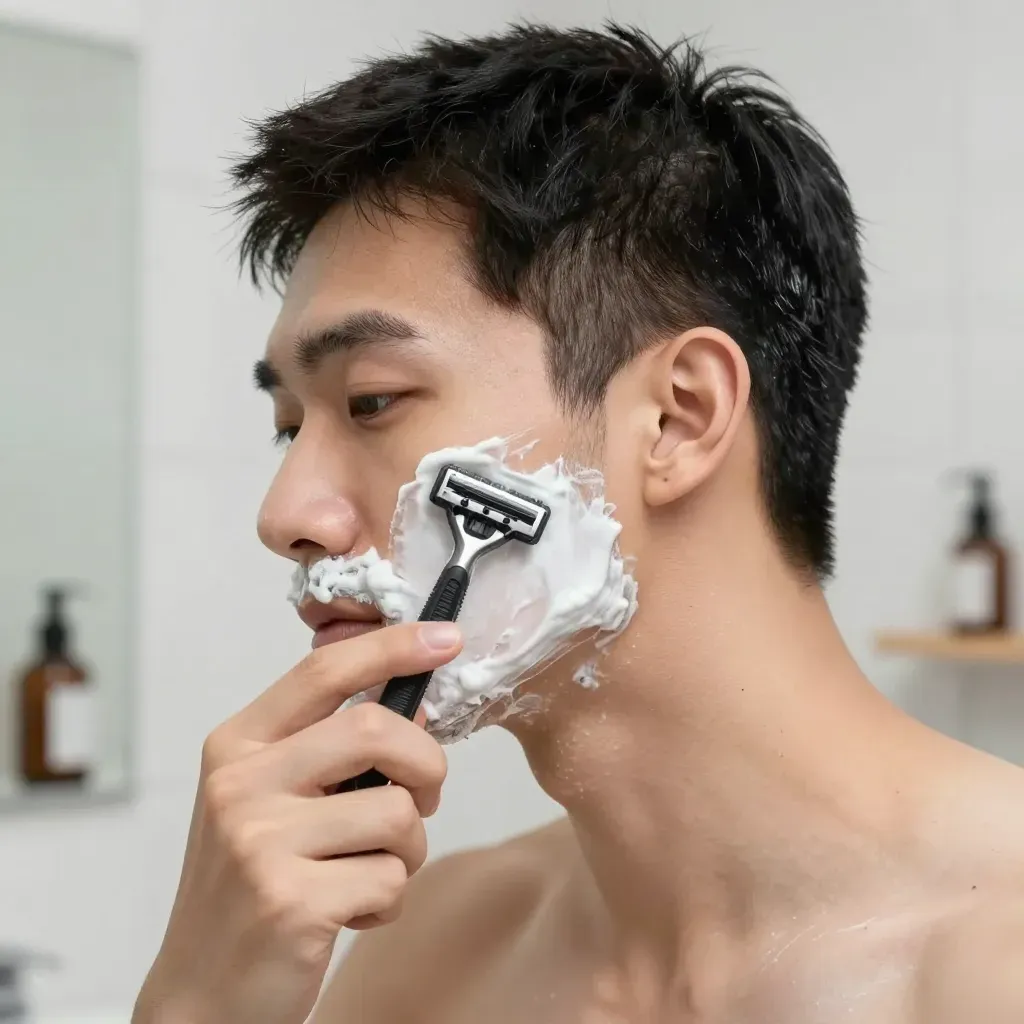
Proper shaving technique
Step | Action | Reason |
|---|---|---|
1. Prep | Wet skin with warm water wash with non-abrasive soap | Opens pores softens hair |
2. Direction | Shave in direction hair grows naturally | Prevents sharp tips from piercing skin |
3. Blade care | Use clean sharp razor rinse after each stroke | Reduces irritation and cuts |
4. Frequency | Replace blades frequently avoid multiple passes | Prevents skin damage |
5. Products | Apply shaving cream with aloe vera or glycerin | Provides lubrication and moisture |
Alternative hair removal methods
- Depilatory creams - dissolve hair protein structures without cutting
- Laser hair removal - permanently reduces growth minimizes ingrown hairs
- Electrolysis - destroys individual follicles permanently
- Trimming - cut hairs close to surface with scissors instead of shaving
Pubic area ingrown hairs need special care. This guide covers safe removal in sensitive areas.
Post-shave prevention routine
Apply non-greasy lightweight moisturizer immediately after hair removal. Use mild antiseptic products to prevent infection. Avoid tight clothing that rubs against freshly shaved skin. Let skin rest between shaving sessions to reduce follicle trauma. Consider using specialized ingrown hair prevention serums containing tea tree oil or other anti-inflammatory ingredients.
Consistent routine matters more than occasional intensive treatment. Make exfoliation and proper shaving technique part of regular grooming habit for best results. Laser treatment offers permanent solution. Learn how laser prevents ingrown hairs permanently.
See doctor if area shows infection or persists
Seek medical attention when ingrown hairs resist home treatment or show infection signs. Persistent bumps lasting more than two weeks need professional evaluation. Chronic ingrown hairs cause scarring hyperpigmentation and permanent skin damage if left untreated.
Infection warning signs
Symptom | Action needed |
|---|---|
Increasing redness warmth | See doctor within 24 hours |
Pus or yellow drainage | Indicates bacterial infection |
Severe pain swelling | May need oral antibiotics |
Fever chills | Seek immediate medical care |
Professional treatment options
- Sterile needle extraction - doctor lifts hair to surface safely
- Prescription retinoids - stronger exfoliation than OTC products
- Oral antibiotics - treat infected follicles
- Cyst drainage - removes fluid buildup
- Intralesional steroids - reduces inflammation
Doctors can also diagnose underlying conditions causing frequent ingrown hairs. Hormonal imbalances folliculitis or pseudofolliculitis barbae require specific medical management. Professional removal prevents complications from DIY attempts.
When home treatment fails
Schedule dermatologist appointment if:
- Multiple ingrown hairs occur regularly
- Bumps remain after 1-2 weeks of proper care
- You develop painful cysts or abscesses
- Hyperpigmentation or scarring begins
- Ingrown hairs appear in same spots repeatedly
Chronic ingrown hairs may signal need for permanent hair removal solutions. Pubic area infections require prompt medical attention due to sensitive location. Insurance sometimes covers treatment if ingrown hairs cause recurrent infections or skin damage.
Laser removal prevents ingrown hairs permanently
Laser hair removal eliminates ingrown hairs permanently by destroying follicles. The laser targets melanin in hair converting light energy to heat that damages the follicle and prevents future growth. No hair growth means no possibility of ingrown hairs. This method works best on dark hair but newer technology treats lighter hair too.
How laser stops ingrown hairs
Mechanism | Result |
|---|---|
Destroys follicle | Permanent hair reduction |
Weakens remaining hair | Hair grows thinner straighter |
Reduces density | Fewer hairs to become trapped |
Multiple sessions target hairs in different growth cycles. Most people need 6-8 treatments for permanent results. Laser treatment actually prevents ingrown hairs rather than causing them.
Professional vs at-home laser
- Professional: Stronger devices FDA-cleared for all skin types medical supervision
- At-home: Lower energy levels convenient cost-effective for maintenance
Professional treatment costs more but delivers faster permanent results. At-home devices like FDA-cleared IPL units work for mild cases and maintenance. Dark skin requires specific laser types to avoid burns.
Cost and time comparison
Method | Lifetime cost | Time investment |
|---|---|---|
Shaving | $1500+ | Daily |
Waxing | $3000+ | Monthly |
Laser (pro) | $1500-3000 | 6-8 sessions |
Brazilian laser treatment offers complete ingrown hair prevention in sensitive areas. Brazilian laser benefits include no razor bumps reduced irritation and permanent results. Results appear after first session with full results in 3-6 months. Maintenance sessions once or twice yearly keep remaining hairs at bay. Choose clinics with multiple laser types for customized treatment based on your skin tone and hair color.