
Table of Contents
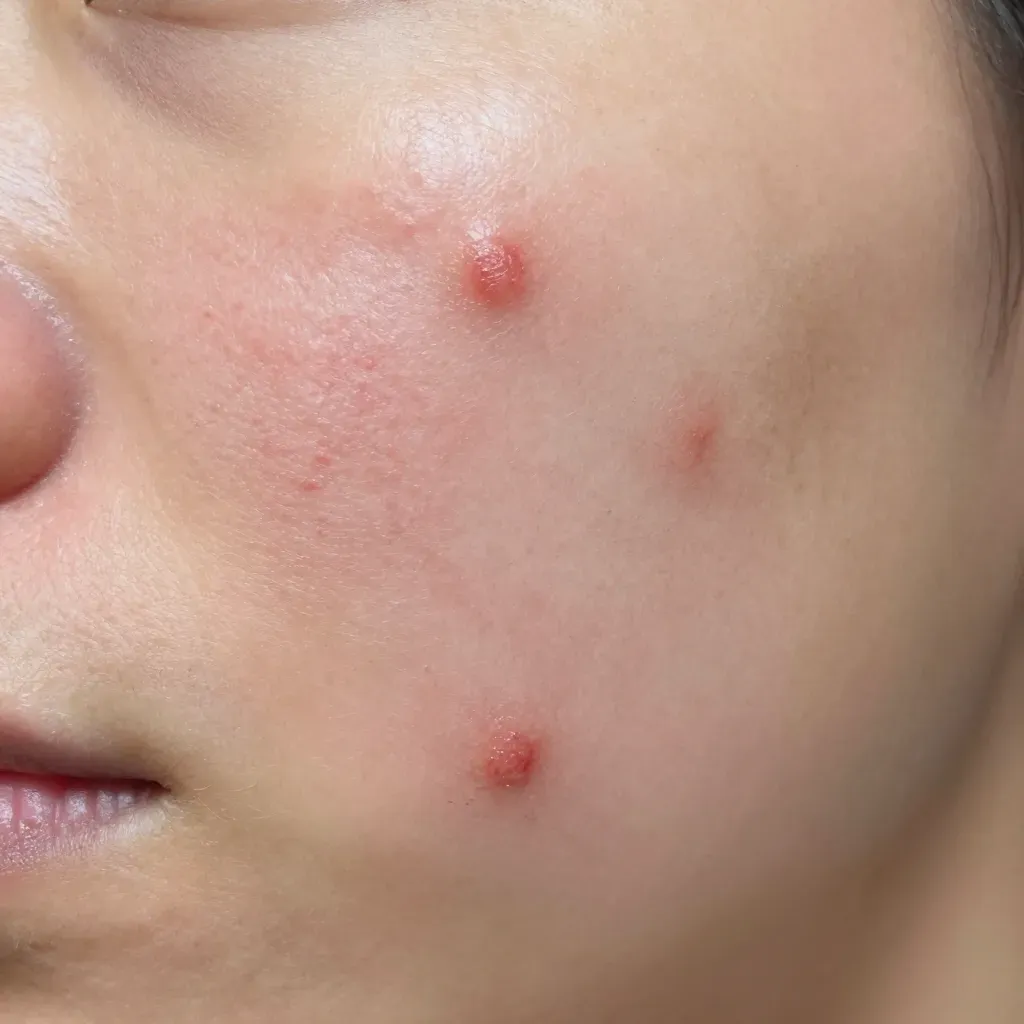
Ingrown hair bumps (pseudofolliculitis barbae) occur when shaved hair grows back into skin causing red painful lesions.
They appear on face, neck, legs, bikini line, armpits.
Curly hair and close shaving increase risk.
Symptoms include red bumps, tenderness, pus, dark spots.
Treat with warm compresses 5-10 minutes 2-3 times daily.
Exfoliate 1-2 times weekly with salicylic acid.
Remove visible hairs with sterilized tweezers only.
Apply benzoyl peroxide or retinoid creams.
Stop shaving until healed.
Doctors prescribe steroid creams, antibiotics, or laser hair removal for severe cases.
See a doctor if bumps persist beyond 2-3 weeks or show infection signs.
Prevent by shaving with the grain using sharp single-blade razors.
Exfoliate before and after hair removal.
Moisturize daily.
Permanent hair removal prevents recurrence.
Question | Answer |
|---|---|
What causes ingrown hair bumps? | Close shaving, dead skin buildup, and curly hair texture cause hair to grow back into skin. |
How do you treat ingrown hair bumps at home? | Apply warm compresses and exfoliate with salicylic acid to release trapped hair. |
When should you see a doctor? | See a doctor if bumps persist beyond 2-3 weeks or show infection signs. |
How can you prevent ingrown hair bumps? | Shave with the grain using sharp single-blade razors and exfoliate regularly. |
What is the medical term for ingrown hair bumps? | The medical term is pseudofolliculitis barbae. |
Ingrown hair bumps occur when hair grows back into the skin causing red, painful lesions.
Definition and Medical Terminology
Ingrown hair bumps are raised, discolored spots where hair grows back into skin after shaving, tweezing, or waxing.
Clinical name: pseudofolliculitis barbae. Also called razor bumps, shave bumps, or barber's itch.
These bumps affect anyone but occur more frequently in people with curly or coarse hair and darker skin tones.
The condition develops when cut hair curls back and pierces surrounding skin, triggering an inflammatory response that can lead to hyperpigmentation and scarring if left untreated.
Most Common Locations
While possible anywhere hair grows, these bumps cluster in frequently shaved or waxed areas where friction occurs:
- Face and neck
- Legs and bikini line
- Armpits
- Pubic region
- Scalp
Primary Causes and Mechanisms
Trigger | How It Creates Bumps |
|---|---|
Close shaving technique | Multi-blade razors cut hair below skin level; hair retracts and curls inward |
Dead skin buildup | Clogged follicles force hair to grow sideways under skin surface |
Hair texture | Curly or coarse hair naturally bends; cut ends easily re-enter skin |
Wrong shaving direction | Shaving against hair growth creates sharp points that penetrate follicle walls |
External friction | Tight clothing presses on shaved skin, redirecting emerging hair growth |
Characteristic Symptoms
- Red, often itchy bumps that may swell and become tender
- Painful areas sensitive to touch or pressure
- Small pus-filled lesions resembling acne pimples
- Inflammation and swelling around individual hair follicles
- Discolored spots or hyperpigmentation after healing
- Hard lumps under skin when cysts develop and become infected
Treat ingrown hair bumps at home with warm compresses and gentle exfoliation.
Apply Warm Compresses
Use a warm, damp cloth for 5-10 minutes, 2-3 times daily. This softens skin, reduces swelling, and draws trapped hair toward the surface. Heat increases blood flow and makes extraction easier.
Exfoliate to Release Trapped Hair
Remove dead skin cells blocking follicles with chemical exfoliants 1-2 times weekly. Avoid harsh physical scrubs that worsen inflammation.
Exfoliant Type | How It Works | Frequency |
|---|---|---|
Salicylic Acid | Penetrates follicles, dissolves oil and dead skin | 1-2x/week |
Glycolic Acid | Loosens surface cells, prevents clogging | 1-2x/week |
Urea | Softens keratin, hydrates while exfoliating | Daily for maintenance |
Sterile Hair Extraction
Only attempt removal when hair is visible at surface. Sterilize tweezers with alcohol. Gently lift hair loop without digging into skin. Never squeeze or pick cysts—this introduces bacteria and causes infection.
Topical Treatments
- Benzoyl Peroxide: Dries up bumps and reduces redness
- Retinoid Creams: Accelerate cell turnover, prevent future blockages
- Antibiotic Ointment: Treats minor infections around follicles
- Hydrocortisone: Reduces inflammation and itching
Natural Anti-Inflammatory Remedies
Remedy | Application | Benefit |
|---|---|---|
Aloe Vera Gel | Apply thin layer, leave on | Soothes irritation, hydrates |
Tea Tree Oil | Dilute 1:10 with carrier oil | Antimicrobial properties |
Honey | Spread on bump, rinse after 15 min | Antibacterial, reduces swelling |
Green Tea Bags | Cool and apply for 2-3 minutes | Tannins reduce inflammation |
Medical treatments include steroid creams and professional hair removal for severe cases.
Prescription Medications
For persistent inflammation, doctors prescribe stronger treatments than OTC options. These target swelling, infection, and excessive skin buildup.
Medication | Purpose | Usage |
|---|---|---|
Steroid Creams | Reduce severe inflammation and itching | Apply thin layer to affected area 1-2x daily |
Retinoid Creams | Accelerate cell turnover, prevent follicle clogging | Nightly application; avoid if pregnant |
Oral Antibiotics | Treat bacterial infection in hair follicles | 7-14 day course for moderate infection |
Topical Antibiotics | Target localized infection | Apply directly to pus-filled lesions |
Professional Hair Removal Procedures
Permanent solutions eliminate the root cause. Multiple sessions required for lasting results.
- Laser Hair Removal: Destroys follicle with light energy. Best for dark hair on lighter skin but newer devices work for all tones.
- Electrolysis: Uses electric current to destroy individual follicles. Effective on all hair colors and skin types.
- Prescription Creams: Eflornithine hydrochloride slows facial hair growth but doesn't remove it permanently.
Clinical Extraction Methods
Healthcare providers perform sterile procedures to release trapped hair without causing further damage or infection.
Procedure | Method | Recovery |
|---|---|---|
Needle Extraction | Sharp sterile needle lifts hair loop to surface | 1-2 days; minimal scarring risk |
Incision and Drainage | Small cut allows cyst drainage and hair removal | 3-5 days; may leave small scar |
Blade Extraction | Scalpel creates tiny opening to free embedded hair | 2-3 days; for deeply embedded cases |
When Medical Intervention Is Necessary
- Bumps persist longer than 2-3 weeks despite home treatment
- Signs of infection: increased redness, warmth, swelling, pus
- Painful cysts larger than pea-size or rapidly enlarging
- Recurrent scarring or hyperpigmentation affecting quality of life
- Chronic condition unresponsive to OTC treatments
- Fever or spreading redness indicating serious infection
Prevent ingrown hair bumps through proper shaving techniques and regular exfoliation.
Shave With The Grain Using Sharp Tools
Always shave in the direction of hair growth. Use a single-blade razor and replace blades after 5-7 uses. Stretch skin taut but do not pull tight. Apply shaving cream and let it soften hair for 2-3 minutes before shaving.
Do This | Not This |
|---|---|
Shave with hair growth | Shave against growth |
Use sharp, clean blades | Use dull or multi-blade razors |
Apply lubricating shave gel | Shave dry skin |
Rinse blade after every stroke | Press razor hard into skin |
Store razors dry, not in shower | Share razors or use old ones |
Exfoliate Before and After Hair Removal
Chemical exfoliants work better than scrubs. They dissolve dead skin without irritating follicles. Exfoliate 1-2 days before hair removal and again 2-3 days after.
Exfoliant | Best For | Frequency |
|---|---|---|
Salicylic Acid | Oily, acne-prone skin | 2-3x/week |
Glycolic Acid | All skin types | 1-2x/week |
Urea 10% | Dry, rough skin | Daily or every other day |
Lactic Acid | Sensitive skin | 2x/week |
Consider Alternative Hair Removal Methods
- Depilatory creams dissolve hair above skin without cutting it below surface
- Laser hair removal destroys follicles permanently, eliminating ingrown risk
- Electrolysis targets individual follicles with electric current
- Trimming with scissors or electric clippers keeps hair long enough to exit skin naturally
Daily Skin Care Routine
- Moisturize daily with non-comedogenic lotion to keep skin flexible
- Wear loose clothing over freshly shaved areas to reduce friction
- Shower immediately after sweating to cleanse follicles
- Use gentle, fragrance-free products to avoid irritation
- Apply sunscreen to prevent post-inflammatory hyperpigmentation
See a doctor if bumps persist, show infection signs, or don't respond to home care.
Warning Signs Requiring Immediate Medical Attention
Normal Ingrown Hair | See Doctor Immediately |
|---|---|
Small red bump, mild tenderness | Large, painful cyst larger than pea-size |
Itch without swelling | Increasing warmth, spreading redness |
No pus or clear fluid only | Thick yellow/green pus, foul odor |
Heals within 1-2 weeks | Persists beyond 2-3 weeks |
No fever | Fever, chills, feeling unwell |
High-Risk Situations
- Diabetes or weakened immune system—any sign of infection needs prompt treatment
- History of keloid scarring—early intervention prevents permanent marks
- Ingrown hairs in sensitive areas (eyebrows, genitals) that affect daily function
- Recurrent outbreaks covering large areas despite proper shaving technique
- Dark skin with post-inflammatory hyperpigmentation that worsens over time
What Doctors Provide
Procedure | When Used | Recovery Time |
|---|---|---|
Steroid injection | Severe inflammation, large cysts | 24-48 hours |
Incision and drainage | Infected cyst with abscess | 3-7 days |
Oral antibiotics | Spreading infection, fever | 7-14 days |
Laser hair removal referral | Chronic, recurrent cases | Multiple sessions |
Complications of Untreated Infected Bumps
- Cellulitis—skin infection spreading to surrounding tissue
- Abscess formation—painful pocket of pus requiring drainage
- Permanent scarring and raised keloids
- Post-inflammatory hyperpigmentation—dark spots lasting months
- Folliculitis decalvans—permanent hair loss from chronic scalp inflammation