
Table of Contents
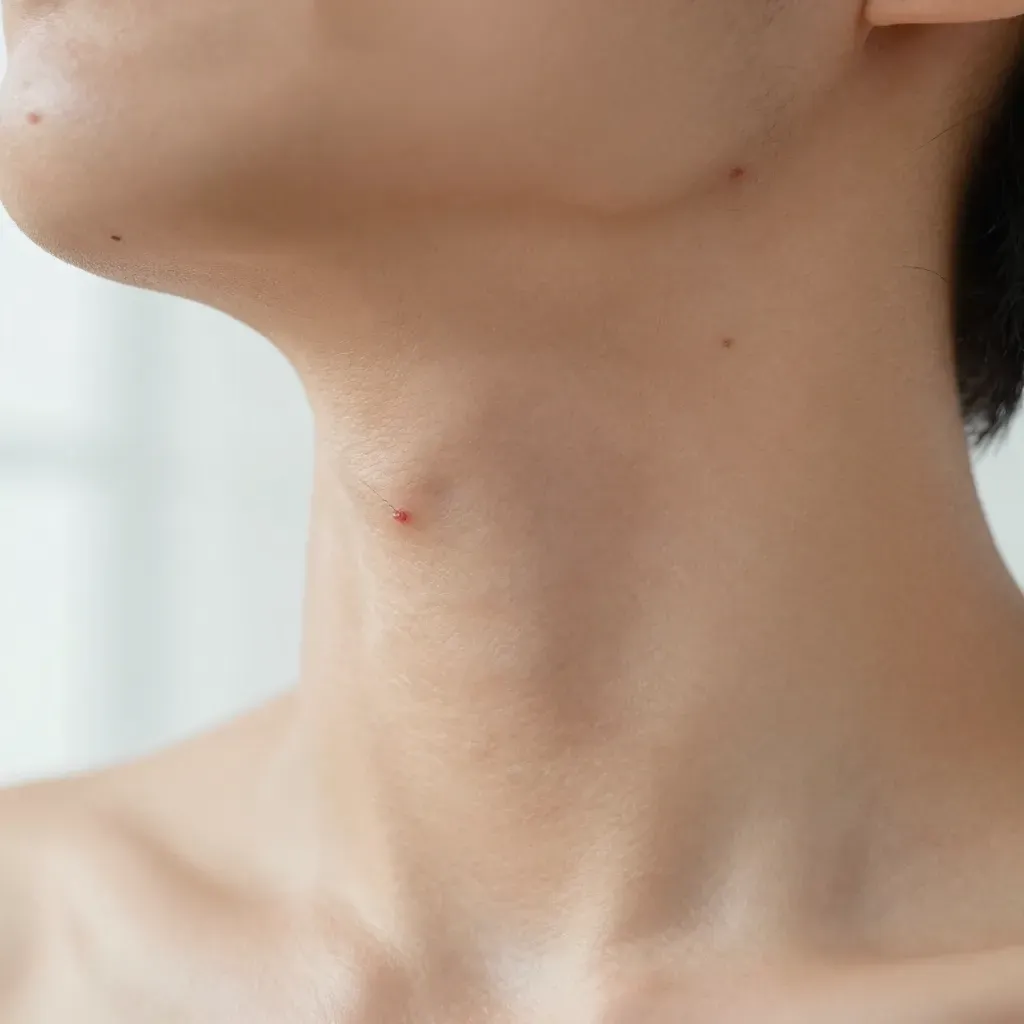
Ingrown hairs on neck cause red bumps when shaved hair curls back into skin.
Bad shaving technique creates sharp hair tips that re-enter follicles.
Curly hair and dead skin cells block normal growth.
Friction from tight clothing makes it worse.
Treat at home with warm compresses and gentle exfoliation.
Stop shaving to let hair grow out naturally.
See a doctor if bumps show infection signs or persist beyond two weeks.
Prevent by shaving with hair growth direction using sharp blades and gel.
Consider laser hair removal for permanent solution.
Alternative methods like trimming or electric razors cut hair less close to skin.
Question | Answer |
|---|---|
What causes neck ingrown hairs? | Shaving against grain creates sharp tips that curl back into skin. |
How to treat at home? | Use warm compresses and stop shaving until hair grows out. |
When to see doctor? | See doctor if bumps show infection or last over two weeks. |
How to prevent them? | Shave with grain using sharp blades and gel. |
What are permanent solutions? | Laser hair removal destroys follicles permanently. |
Understand what causes ingrown hairs on your neck.
Shaving technique errors
Shaving against hair growth direction cuts hair at sharp angle that curls back into skin. Pulling skin taut creates closer cut that allows hair to retract below surface. Using dull blades snags hair instead of cutting cleanly. Dry shaving without gel or cream increases irritation and uneven cuts. Rushing through strokes without rinsing blade builds up debris that interferes with clean cutting.
- Shaving too closely
- Pulling skin taut
- Shaving against grain
- Using dull razors
- Dry shaving without lubrication
- Not rinsing blade between strokes
Hair and skin biology
Curly and coarse hair naturally curls back toward skin. Tightly curved follicles make straight growth difficult. Dead skin cells block follicle openings and force sideways growth. This combination is especially problematic on neck where hair grows at various angles and directions.
External friction and pressure
Tight shirt collars create constant friction that inflames skin and disrupts growth patterns. Heavy neckwear rubs against freshly shaved areas. This mechanical irritation pushes growing hair back into follicle before it can emerge properly.
Ingrown hair appearance
Neck ingrowns show up as small red bumps. Sometimes you can see trapped hair through transparent skin layer. Pus-filled lesions indicate infection. Discoloration may appear as red, brown, or purple marks. Severe cases can develop into painful cysts.
Risk Factor | Mechanism | Prevention |
|---|---|---|
Close shaving | Hair cut below skin surface | Shave with grain |
Dull blades | Uneven cuts cause hair to snag | Replace blades regularly |
No lubrication | Blade drags and irritates | Use shaving gel |
Curly hair | Natural curl pattern turns inward | Alternative removal |
Dead skin buildup | Blocks follicle exit | Exfoliate regularly |
Tight clothing | Friction inflames follicles | Looser fit |
Treat ingrown hairs at home with proven methods.
Warm compress
Soak clean cotton washcloth in warm water.
Apply to affected area for 3-5 minutes.
Repeat 3-4 times daily.
Softens skin and brings trapped hair closer to surface.
Exfoliation
Use soft washcloth or gentle toothbrush.
Scrub with soap and water in circular motions.
Do this 2-3 times weekly.
Salicylic acid products chemically dissolve dead skin.
Retinoids help remove dead skin cells.
Safe extraction
Only attempt when hair is visible through skin.
Clean area and needle with rubbing alcohol.
Gently lift hair out with sterile needle.
Pluck hair once freed if desired.
Never dig for hair you cannot see.
OTC treatments
Apply antibiotic ointment to prevent infection.
Use hydrocortisone cream to reduce inflammation.
Salicylic acid keeps pores clear.
Follow package directions carefully.
Stop hair removal
Stop shaving, waxing, or tweezing the area.
Ingrown hairs resolve on their own within 2 weeks.
Severe cases may take several weeks.
This is the most effective treatment.
What to avoid
Do not squeeze or pop bumps.
Avoid picking at ingrown hairs.
These actions increase infection risk and scarring.
Method | Application | Key Benefit |
|---|---|---|
Warm compress | 3-5 min, 3-4x daily | Softens skin surface |
Physical exfoliation | Soft cloth, circular motions | Mechanically frees hair |
Chemical exfoliation | Salicylic acid products | Unclogs blocked pores |
Needle extraction | Sterile needle, alcohol prep | Removes visible hair |
OTC treatments | Antibiotic/hydrocortisone | Reduces inflammation |
Stop removal | Wait 2+ weeks | Natural resolution |
Recognize when medical treatment is necessary.
Infection warning signs
Watch for increased pain that worsens over time.
Look for yellow or green pus around bumps.
Notice spreading redness beyond original bump area.
Check for swelling that gets larger instead of smaller.
Feel for warmth around affected skin.
Track if symptoms persist beyond 2-3 weeks.
When to see a doctor
- Bumps persist for several weeks without improvement
- You suspect infection based on symptoms above
- Area becomes extremely painful or spreads rapidly
- You notice signs of scarring or dark spots forming
- You cannot distinguish ingrown hair from another condition
- You have frequent recurring ingrown hairs on neck
- Home treatments have not worked after 2 weeks
Medical treatment options
Treatment | Purpose | Form |
|---|---|---|
Antibiotics | Fight bacterial infection | Ointment or oral pills |
Retinoids | Remove dead skin cells | Prescription topical |
Steroid creams | Reduce swelling and irritation | Topical application |
Professional extraction | Remove deeply embedded hair | Clinical procedure |
Laser hair removal | Permanent solution | Multiple sessions |
Professional extraction procedure
Doctor uses sterile needle or blade.
Procedure lifts trapped hair to surface safely.
Minimizes risk of scarring and infection.
Avoids damage from DIY digging attempts.
Chronic condition management
Consider laser hair removal for recurring problems.
Destroys follicle to prevent future ingrowns.
Requires multiple treatment sessions.
Provides permanent solution for persistent cases.
Prevent future ingrown hairs through proper shaving.
Shave direction
Always shave with hair growth. Against-grain creates sharp tips that curl back.
Blade quality
Use sharp multi-blade razor. Replace frequently. Dull blades cause uneven cuts.
Lubrication
Apply shaving gel every time. Never dry shave. Reduces friction.
Skin tension
Keep skin relaxed. Pulling taut cuts hair below surface.
Blade care
Rinse after each stroke. Removes buildup.
Post-shave rinse
Use cool water splash. Not cold. Cold makes hair retract.
Exfoliation
Scrub neck 2-3 times weekly. Removes dead skin blocking follicles. More tips: removing ingrown hairs.
Moisturizing
Apply non-comedogenic lotion. Soothes without clogging pores.
Alternative tools
Electric razors cut less close. Reduces retraction risk. For permanent fix consider laser removal.
Step | Do This | Avoid This |
|---|---|---|
Direction | With grain | Against grain |
Blade | Sharp, new | Dull, old |
Skin | Relaxed | Pulled taut |
Prep | Wet with gel | Dry |
After | Moisturize | Skip care |
Consider alternative hair removal options.
Laser hair removal
Destroys follicle permanently. Requires multiple sessions. Most effective for chronic ingrowns. See best laser options for details.
Chemical depilatories
Dissolve hair at skin surface. No sharp tips to re-enter skin. Apply according to product directions. Patch test first to avoid irritation.
Trimming method
Use cuticle scissors to trim hairs close to surface. Leaves minimal stubble above skin. Eliminates risk of cutting below surface level. Safe daily option.
Electric razors
Cut less close than manual blades. Reduces hair retraction into follicle. Convenient for frequent use. Lower irritation risk overall.
Stop removal completely
Let hair grow naturally. 100% prevention rate. Most effective solution. Not practical for all preferences or professions.
Method | How It Works | Best For |
|---|---|---|
Laser | Destroys follicle with light | Permanent solution |
Chemical | Dissolves hair protein | Temporary smoothness |
Trimming | Snips above skin | Sensitive skin |
Electric | Clips without contact | Daily maintenance |
No removal | Natural growth | Guaranteed prevention |
Cost comparison
- Laser: High upfront, long-term savings
- Chemical: Low cost, recurring expense
- Trimming: One-time tool purchase
- Electric: Medium initial investment
- No removal: Zero cost
Timeline expectations
Laser requires 6-8 sessions spaced weeks apart. Chemical lasts 3-7 days. Trimming needed every 2-3 days. Electric can be used daily. No removal is permanent.