
Table of Contents
Cut hair curls back into delicate skin, causing ingrown pubic hair.
Coarse curly texture increases risk.
Symptoms: red bumps, inflammation, pain, itching.
Shaving creates sharp tips that pierce skin.
Treat with warm compresses, gentle exfoliation, tea tree oil.
Prevent by shaving with the grain, exfoliating 2-3x weekly, moisturizing daily, wearing loose cotton underwear.
Stop all removal until healed.
Seek medical care for pus, spreading redness, severe pain or symptoms beyond 2-3 days.
Doctors prescribe antibiotics, perform sterile extraction or recommend laser removal.
Question | Answer |
|---|---|
What causes ingrown pubic hair? | Shaving, waxing and plucking create sharp tips that curl back into delicate skin. |
How can I treat ingrown pubic hair at home? | Apply warm compresses, gently exfoliate and use tea tree oil. |
How do I prevent ingrown pubic hair? | Shave with the grain, exfoliate 2-3x weekly, moisturize daily, wear loose cotton underwear. |
When should I see a doctor? | Seek care for pus, spreading redness, severe pain or no improvement after 2-3 days. |
What are the symptoms? | Red bumps, inflammation, pain, itching and sometimes pus-filled lesions develop. |
Understand what ingrown pubic hair is
Definition and mechanism
An ingrown pubic hair happens when a hair strand grows back into the skin instead of rising up from the follicle.
The hair curls back or grows sideways into the skin rather than emerging properly.
This occurs when the sharp tip of a recently cut hair re-enters the skin surface and triggers inflammation.
Why the pubic area is particularly vulnerable
The pubic region faces unique challenges.
The combination of delicate skin and coarse, curly hair creates perfect conditions for hairs to curl back into the follicle after removal.
Learn more about removing ingrown hair in the pubic area with detailed treatment steps.
Pubic Area Characteristics | Impact on Ingrown Hair Risk |
|---|---|
Coarse, curly hair texture | Hair naturally curls back toward skin |
Delicate, sensitive skin | More prone to inflammation |
Frequent hair removal | Increases regrowth issues |
Tight clothing friction | Pushes hair tips back into skin |
Dead skin cell buildup | Blocks proper hair emergence |
- Hair texture: Coarse and curly nature makes pubic hair 3x more likely to become ingrown
- Skin sensitivity: The genital area has thinner epidermis with more nerve endings
- Removal methods: Shaving cuts hair at an angle, creating sharp points that pierce surrounding skin
- Environmental factors: Moisture, friction from underwear, and sweat create ideal conditions for hair re-entry
Identify symptoms and common causes
Recognize the symptoms
Ingrown pubic hairs create distinct visible and physical signs that worsen without treatment.
The condition often starts as small red bumps that can develop into painful lesions within days.
- Red bumps or small pimple-like spots (pustules) that may contain pus
- Inflammation and swelling around affected follicles
- Redness and irritation on the skin surface
- Pain or discomfort when touched, rubbed, or during movement
- Itching sensation that intensifies as hair continues to grow under skin
- Dark spots or hyperpigmentation after healing
- Small visible hair loop curled beneath the skin surface
Understand the causes
Multiple factors trigger ingrown hairs in the pubic region, with hair removal methods leading the list.
The combination of coarse hair texture and sensitive skin creates perfect conditions for this condition.
Primary Cause | How It Creates Ingrown Hairs | Risk Level |
|---|---|---|
Shaving, waxing, plucking | Creates sharp hair tips that pierce surrounding skin | Very High |
Incorrect shaving technique | Cutting too close or against hair growth direction | High |
Coarse, curly hair texture | Natural curl pattern forces hair back into follicle | High |
Tight clothing friction | Pushes growing hair tips back into skin | Medium |
Dead skin cell buildup | Blocks hair from emerging straight out | Medium |
Shaving incorrectly remains the most preventable cause. Using warm water and shaving gel, shaving in the direction of hair growth, and using minimal strokes drastically reduces risk. Waxing pulls hair from the root, but regrowth can also curl inward if the hair breaks below the skin surface.
Tight synthetic underwear traps moisture and creates friction that pushes emerging hairs back into follicles. Dermatologists recommend loose, breathable cotton underwear to minimize this risk.
Dead skin cells accumulate naturally but can be managed. Gentle exfoliation 2-3 times per week prevents these cells from blocking hair growth paths and causing trapped hairs.
Hormonal changes can increase hair coarseness and growth rate, making some individuals more prone to ingrown hairs during certain life stages.
Explore professional techniques for removing ingrown hair when home methods fail or infection develops.
Apply effective home remedies
Warm compresses
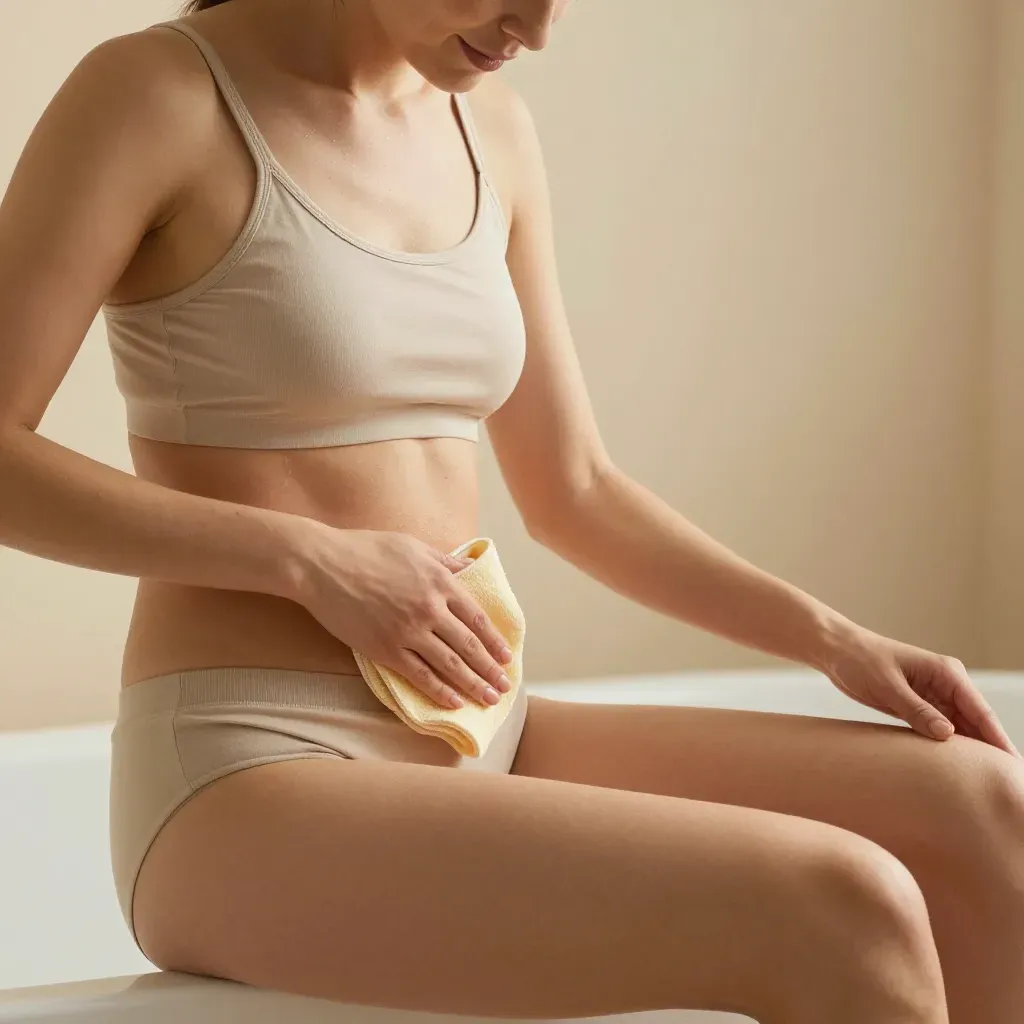
Apply a warm wet washcloth to the affected area for 10 to 15 minutes, up to four times daily. This softens the skin and helps the trapped hair emerge naturally.
Take a hot shower as an alternative method to open pores and prepare the area for treatment.
Gentle exfoliation
Wash the area with a washcloth using small circular motions for several minutes. This releases trapped hairs by removing dead skin cells that block proper hair growth.
Use gentle pressure, especially on sensitive skin, to avoid causing additional irritation.
Natural anti-inflammatory treatments
- Tea tree oil: Dilute with a carrier oil like coconut or jojoba, then apply with a cotton ball to reduce redness and inflammation
- Baking soda paste: Mix one teaspoon with water, apply to irritated area, then rinse with cold water to decrease inflammation
- Sugar scrub: Combine half cup brown or white sugar with olive oil, massage in circular motions, leave for 10 minutes, then wash with warm water
- Aloe vera: Apply directly for cooling relief that soothes irritation and promotes healing
Specialized moisturizing products
Use oils and serums formulated with jojoba oil, coconut oil, grapeseed oil, and tea tree oil. These ingredients moisturize irritated skin while providing antimicrobial benefits that prevent infection.
Home Remedy | Application Method | Frequency |
|---|---|---|
Warm compress | Wet washcloth, 10-15 min | Up to 4x daily |
Exfoliation | Circular motions with washcloth | 2-3x per week |
Tea tree oil | Diluted, apply with cotton ball | 1-2x daily |
Baking soda paste | Apply, leave briefly, rinse | Once daily |
Learn more about removing ingrown hair safely at home.
Discover how laser hair removal helps ingrown hairs permanently.
Use proven prevention strategies
Adopt correct shaving technique
Use warm water and shaving gel to soften hair before removal. Shave in the direction of hair growth with minimal strokes. Rinse the razor frequently and replace it every 5-7 uses. Choose unscented, lubricating shave creams designed for sensitive areas.
Maintain consistent skincare routine
Exfoliate gently 2-3 times per week to remove dead skin cells that block hair growth. Wait 48 hours after hair removal before exfoliating to avoid irritation. Moisturize daily with fragrance-free products to keep skin hydrated and supple. Wear loose, breathable cotton underwear to reduce friction and moisture buildup.
Consider alternative hair removal methods
- Sugaring: Removes hair in natural growth direction, reducing breakage and ingrown risk
- Laser hair removal: Provides permanent reduction while treating existing ingrown hairs
- Depilatory creams: Dissolve hair below skin surface without creating sharp tips
Method | Frequency | Benefit |
|---|---|---|
Exfoliation | 2-3x per week | Removes dead skin blockages |
Razor replacement | Every 5-7 uses | Maintains sharp, clean cuts |
Moisturizing | Daily | Keeps skin flexible |
Breathable underwear | Daily wear | Reduces friction |
Explore best laser machines for permanent hair removal to eliminate ingrown hairs permanently.
Learn how laser treatment helps ingrown hairs while removing unwanted growth.
Recognize when medical care is needed
Infection warning signs
Increased redness, warmth, swelling, and pus indicate infection. These symptoms mean the ingrown hair has developed into folliculitis or a small abscess. Fever, severe pain, and rapidly spreading redness around the bump require immediate medical attention.
When home treatment fails
See a doctor if symptoms persist beyond 2-3 days despite proper home care. Large, painful cysts that don't respond to warm compresses need professional extraction. Recurrent ingrown hairs in the same area signal an underlying issue that requires medical evaluation.
Medical treatment options
- Prescription antibiotics: Treat bacterial infections that develop around ingrown hairs
- Topical steroid creams: Reduce severe inflammation and itching
- Professional extraction: Doctor uses sterile needle to release trapped hair safely
- Incision and drainage: For large abscesses that need surgical opening
- Laser hair removal: Provides permanent prevention by destroying hair follicles
Home Treatment Appropriate | Medical Care Required |
|---|---|
Small, mildly irritated bumps | Large, painful cysts |
Improvement within 2-3 days | No improvement after 3 days |
No pus or spreading redness | Pus, warmth, spreading infection |
Occasional occurrence | Recurrent or persistent issue |
Mild discomfort only | Severe pain limiting daily activities |
Learn more about professional removal techniques when home methods fail.
Discover how laser hair removal provides permanent relief from chronic ingrown hairs.