
Table of Contents
Ingrown hairs form when removed hair regrows into skin instead of outward. Dead skin blocks follicles, forcing sideways growth and creating red itchy bumps that can infect.
Causes: clogged follicles, hair removal methods, curly hair texture, bad shaving, tight clothing. Risk factors: curly/coarse hair, infrequent exfoliation, close shaving, tight leggings, rapid removal cycles.
Treat with warm compresses 2-3 times daily. Exfoliate with physical scrubs or chemical acids like salicylic/glycolic acid. Apply CeraVe, Amlactin, or benzoyl peroxide.
Prevent by wet shaving with gel and sharp two-blade razors. Shave in hair growth direction with minimal pressure. Replace blades after 5-7 uses. Moisturize daily within three minutes post-shave.
Seek professional help when home treatment fails or infection develops. Warning signs: spreading redness, pus, warmth, fever, severe pain, bumps lasting over two weeks.
Professional options: sterile extraction, antibiotics, retinoid creams, steroid creams, laser hair removal. Laser destroys follicles permanently and works best for curly/coarse hair.
Timeline: 1-3 days warm compresses, 4-7 days gentle extraction if hair emerges, 7-14 days see dermatologist if no improvement, 14+ days seek immediate care for infection.
Question | Answer |
|---|---|
What causes ingrown hairs? | Dead skin blocks follicles and removed hair regrows into skin instead of outward. |
How do you treat ingrown hairs at home? | Apply warm compresses 2-3 times daily and exfoliate with salicylic or glycolic acid. |
What prevents ingrown hairs? | Wet shave with sharp two-blade razors in hair growth direction and moisturize daily. |
When should you see a doctor? | Seek help for spreading redness, pus, fever, severe pain, or bumps lasting over two weeks. |
What professional treatments work? | Options include sterile extraction, antibiotics, retinoids, steroids, and laser hair removal. |
Understand what causes ingrown hairs on legs
What happens under your skin
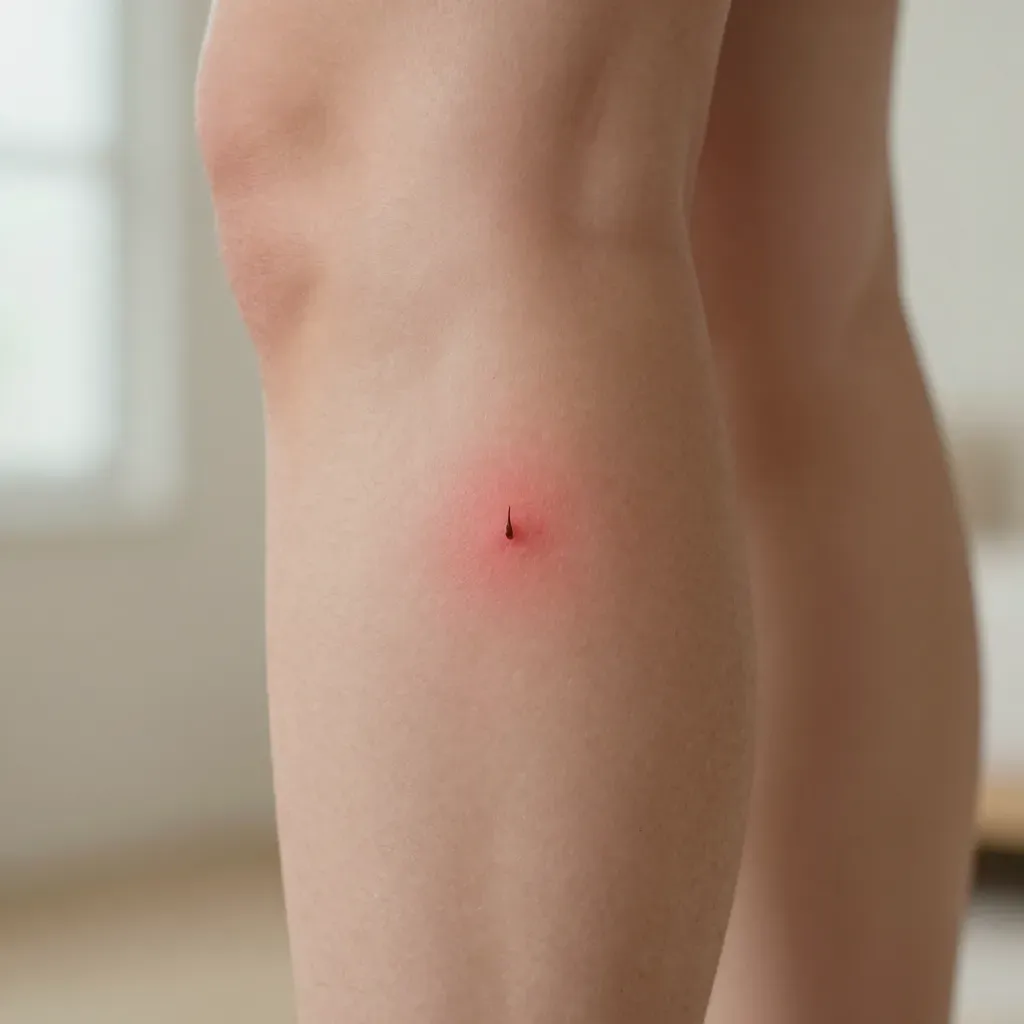
Ingrown hairs form when hair grows back into the skin instead of outward. Dead skin cells clog hair follicles and force hairs to grow sideways under the surface. This creates red, itchy bumps that can become painful or infected. The problem starts when removed hair regrows but cannot break through the skin barrier, causing inflammation and potential bacterial infection.
Primary causes
- Clogged follicles: Dead skin buildup blocks the hair's natural exit path, trapping new growth beneath the surface
- Hair removal methods: Shaving, waxing, and tweezing cut hair at the surface, leaving sharp tips that re-enter skin easily
- Hair texture: Curly or coarse hair naturally curls back into skin after removal due to its spiral structure
- Improper technique: Dry shaving, using dull blades, or applying too much pressure cuts hair unevenly below the skin line
- Tight clothing: Friction and pressure from leggings or jeans push hairs back into follicles before they can grow out
Risk factors that increase likelihood
Factor | Why it matters |
|---|---|
Curly/coarse hair type | Natural curl pattern makes re-entry more likely as hair grows in spirals |
Infrequent exfoliation | Dead skin cells accumulate and block follicles, preventing normal hair emergence |
Close shaving | Hair cut below skin surface creates sharp, inward-growing tips that pierce surrounding tissue |
Tight leggings/stockings | Constant friction interrupts normal hair growth direction and pushes hairs sideways |
Rapid hair removal cycle | Frequent shaving/waxing doesn't allow skin recovery time or proper healing between sessions |
The condition commonly appears where you shave, tweeze, or wax—especially legs, armpits, and pubic areas. Each hair removal session creates opportunity for new ingrowth. People with curly hair face higher risk because their hair's natural structure makes it prone to curling back into the skin rather than growing straight out. Understanding these mechanisms helps target prevention efforts effectively.
Apply warm compresses and exfoliants to release trapped hairs
Warm compress technique
Apply a warm compress to the affected area for several minutes. This softens skin and opens the hair follicle, bringing the trapped hair closer to the surface. Use a clean washcloth soaked in warm water. Repeat this process 2-3 times daily until the hair emerges.
Exfoliation methods
Exfoliation removes dead skin cells that block hair growth. Choose between physical and chemical exfoliators based on your skin sensitivity.
- Physical exfoliators: Use scrubs, exfoliating mitts, or Korean Italy cloths. Massage gently in circular motions after showering when skin is soft.
- Chemical exfoliators: Apply products containing glycolic acid or salicylic acid. These dissolve dead skin cells and unclog follicles without scrubbing.
Recommended products and application
Use salicylic acid creams like CeraVe or Amlactin daily. Apply glycolic acid solutions post-shave to prevent new ingrowth. OTC treatments with benzoyl peroxide reduce infection risk and help coax hairs out.
Product Type | How It Works | Frequency |
|---|---|---|
Salicylic acid cream | Unclogs follicles and reduces inflammation | Daily application |
Glycolic acid toner | Dissolves dead skin cells chemically | 2-3 times per week |
Physical scrub | Manually removes surface debris | 2-3 times per week |
Benzoyl peroxide gel | Kills bacteria and reduces infection | Spot treatment as needed |
Being patient while using treatments is key to preventing infection and scarring later on. Avoid picking or squeezing the bumps, which can push bacteria deeper and worsen inflammation. Continue gentle exfoliation even after the hair releases to prevent recurrence.
Implement proper shaving techniques and daily moisturization
Core shaving rules
Never dry shave. Always apply a quality shaving gel or cream first to create a protective barrier. Use a sharp, clean razor with maximum two blades—multi-blade razors cut hair below skin level and dramatically increase ingrown risk. Shave in the direction of hair growth, applying minimal pressure. Let the razor glide naturally without forcing it. Replace blades after 5-7 uses or immediately if you feel any pulling or dragging.
Moisturization strategy
Daily moisturization maintains skin hydration and prevents dead cell buildup that traps hairs. Apply non-greasy moisturizer within three minutes after shaving and again before bed. Focus on areas prone to ingrown hairs. Well-hydrated skin allows hairs to break through easily and reduces inflammation.
Product Type | Key Ingredients | Application Timing |
|---|---|---|
Lightweight lotion | Glycerin, ceramides | Within 3 minutes post-shave |
Salicylic acid cream | 2% salicylic acid | Alternate days for prevention |
Glycolic acid toner | 5-10% glycolic acid | Post-shave, before moisturizer |
Barrier repair cream | Hyaluronic acid, ceramides | Nighttime application |
Recovery period care
Stop shaving areas with active ingrown hairs until they heal completely. Continue daily moisturization to support skin recovery. Consider switching to waxing every 2-3 weeks to slow hair growth cycle and reduce total shaving sessions. This break allows skin to normalize and prevents new ingrowns from forming while existing ones resolve. Keep skin moisturized even when not shaving to maintain barrier function.
Explore professional treatments for stubborn ingrown hairs
When to seek professional treatment
See a dermatologist when at-home treatments fail, ingrown hairs become infected, or you notice persistent inflammation and scarring. Warning signs include increasing redness, warmth, pus formation, or worsening pain. Chronic cases require medical intervention to prevent permanent skin damage.
Clinical treatment options
Dermatologists provide targeted treatments for stubborn cases. These address infection, inflammation, and underlying causes more effectively than over-the-counter products.
Treatment | How it works | When to use |
|---|---|---|
Sterile extraction | Needle or blade releases trapped hair | Deep, visible ingrown causing acute pain |
Antibiotic therapy | Oral/topical antibiotics clear infection | Pus, spreading redness, infected follicles |
Retinoid creams | Prescription vitamin A removes dead skin | Chronic ingrowns with clogged follicles |
Steroid creams | Anti-inflammatory reduces swelling | Severe irritation and inflammation |
Laser hair removal | Destroys follicles for permanent reduction | Recurrent ingrowns, long-term prevention |
Laser hair removal as permanent solution
Laser treatment targets follicles to prevent future ingrown hairs. Multiple sessions disrupt growth cycles, progressively reducing hair density. This works especially well for curly or coarse hair types prone to re-entry. Visible improvement occurs after 3-4 sessions, with maintenance every 6-12 months.
- Antibiotics: Treat active infections and prevent spreading
- Retinoids: Accelerate cell turnover to keep follicles clear
- Steroids: Reduce inflammation quickly
- Extraction: Safely removes embedded hairs without scarring
Professional treatments work best combined with proper home care. Laser removal paired with daily moisturizing and correct shaving techniques creates a comprehensive approach to eliminate ingrown hairs permanently.
Recognize signs that require medical attention
Warning signs of infection
Infected ingrown hairs require antibiotics to clear bacterial growth. Watch for spreading redness, increasing warmth, pus formation, or worsening pain. Normal ingrown hairs show mild redness that improves within a few days. Infected ones intensify and may develop yellow or green discharge.
When to see a doctor immediately
- Persistent symptoms: Bumps lasting more than two weeks despite proper care
- Infection indicators: Pus, spreading redness, warmth, fever, or severe tenderness
- Chronic recurrence: New ingrown hairs appear daily or in clusters across large areas
- Scarring concerns: Dark marks, keloids, or permanent skin texture changes develop
- Pain limitation: Discomfort interferes with daily activities or sleep
Treatment escalation timeline
Timeline | What to expect | Action needed |
|---|---|---|
1-3 days | Mild redness, slight bump | Continue warm compresses and exfoliation |
4-7 days | Hair visible, redness decreasing | Gentle extraction if hair emerges |
7-14 days | No improvement or worsening | Schedule dermatologist appointment |
14+ days | Pus, spreading infection | Seek immediate medical care |
Untreated infections can lead to folliculitis, permanent scarring, or hyperpigmentation. Darker skin tones face higher risk of post-inflammatory marks. Professional extraction using sterile tools prevents further damage compared to DIY attempts with tweezers or needles. Dermatologists can prescribe targeted treatments that work faster and more effectively than over-the-counter options.