
Table of Contents
Spot chest ingrown hairs as small painful bumps with trapped hairs. Apply warm compresses 10-15 minutes, 3-4 times daily to soften skin and bring hair to surface. Extract only visible tips with sterile tweezers, pulling in hair growth direction. Disinfect immediately with witch hazel or alcohol, then apply soothing gel. Prevent recurrence by exfoliating 2-3 times weekly and wearing loose clothing.
Question | Answer |
|---|---|
How do I spot chest ingrown hairs? | Look for small painful bumps with trapped hairs underneath. |
How long should I apply warm compresses? | Apply 10-15 minutes, 3-4 times daily to soften skin. |
When can I use tweezers for extraction? | Only when hair tip is visible at skin surface. |
What disinfectant should I use after removal? | Use witch hazel, rubbing alcohol, or antibiotic ointment. |
How do I prevent future ingrown hairs? | Exfoliate 2-3 times weekly and moisturize daily. |
Spot chest ingrown hair bumps
You must first identify an ingrown hair on your chest. An ingrown hair happens when a hair curls back and grows into the skin. It can also grow sideways into the hair follicle. This creates a small, often inflamed bump.
What to Look For
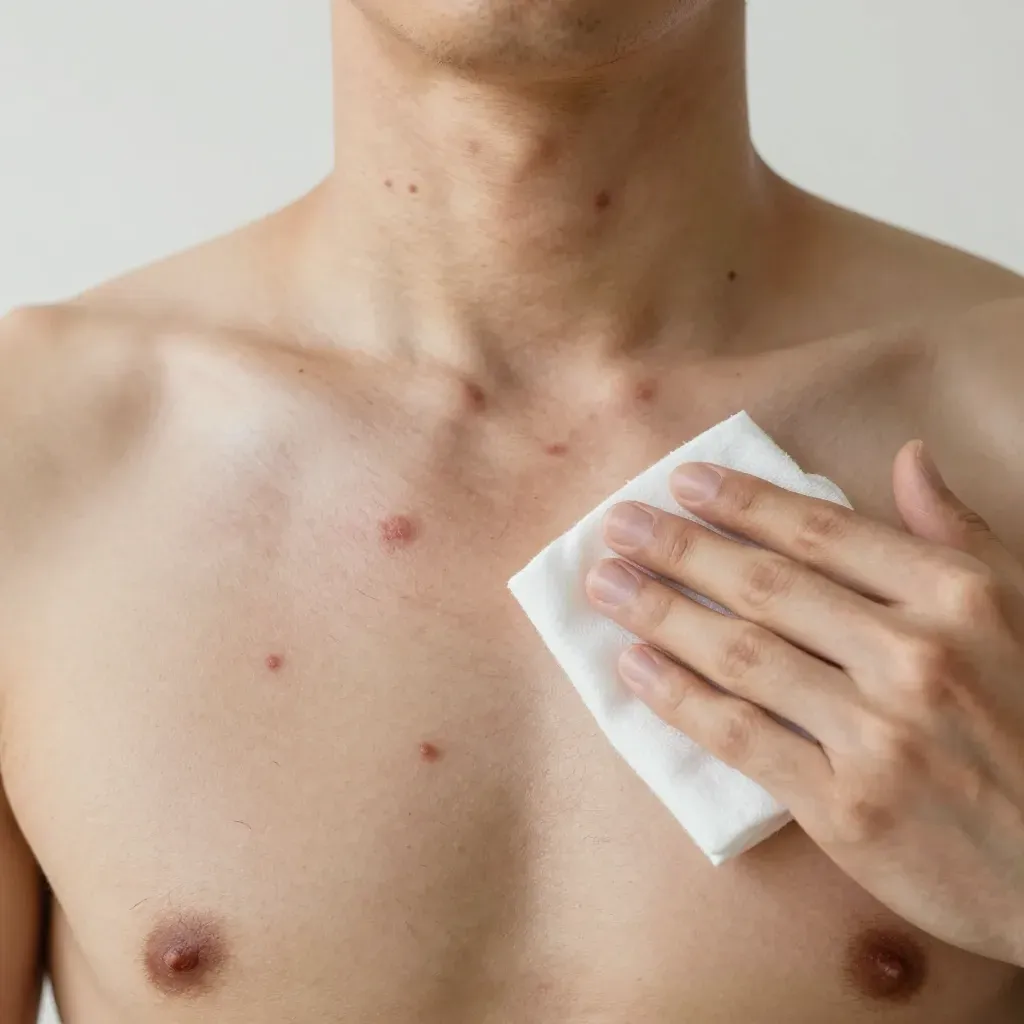
Chest ingrown hairs look like other skin irritations. Spot them by looking for these signs:
- Small, solid, rounded bumps (papules).
- Pus-filled, pimple-like lesions (pustules).
- Skin darkening (hyperpigmentation).
- Pain or tenderness.
- Itching or irritation.
- A visible hair trapped beneath the skin's surface.
These bumps appear after hair removal like shaving, waxing, or tweezing. Men with coarse or curly chest hair get them more often. The hair's sharp tip easily pierces the skin as it grows back.
Common Causes on the Chest
Several factors cause ingrown hairs on the chest area. Dead skin cells can clog a hair follicle. This forces the hair to grow sideways. Shaving is a primary cause. A razor cuts hair at an angle, creating a sharp edge. Tight clothing also contributes. Shirts can rub against the skin, forcing newly growing hairs back into the follicle. This friction irritates the area and promotes ingrown hairs. Sweat and oil buildup on the chest can also block follicles, leading to these painful bumps. Knowing these causes helps you prevent future problems.
Apply warm compress to soften skin
A warm compress softens skin and opens follicles. This brings trapped hair closer to the surface. Heat reduces inflammation and makes extraction less painful. Apply before any removal attempt. This prevents further skin damage.
Make a Warm Compress
Gather clean materials to avoid infection. Use a washcloth, towel, or gauze pad.
- Wash hands with soap and water.
- Run clean washcloth under warm tap water.
- Water temperature should feel warm on wrist, not hot.
- Wring out excess water until damp.
- Fold cloth into a small square for targeted application.
Application Method
Place compress directly on the ingrown hair bump. Hold firmly against skin for 10-15 minutes. Repeat this process 3-4 times daily. The heat draws the hair toward the surface naturally. It also increases blood flow to the area. This speeds healing and reduces swelling. Do not use boiling water. Excessive heat burns skin and worsens inflammation. Remove compress immediately if you feel discomfort. Consistent application works best. You should see improvement within 24-48 hours.
Alternative Compress Options
Other household items work as warm compresses. A warm tea bag provides gentle heat. Chamomile tea adds natural anti-inflammatory properties. Green tea contains tannins that reduce swelling. A heating pad on low setting works for larger areas. Always place a thin towel between pad and skin. Never apply heating pad directly. Microwaveable heat packs offer reusable convenience. Check temperature before applying. Follow manufacturer heating instructions carefully. Never sleep with any heating device on your chest. This risks burns and skin damage.
Use sterile tweezers for extraction
Only extract an ingrown hair when you see the tip at the skin's surface. Never dig for a deeply embedded hair. Wait 24-48 hours after warm compress treatment for best results.
Sterilize Your Tools First
Clean tools prevent infection. Follow these steps:
- Wash hands with antibacterial soap for 20 seconds.
- Rinse tweezers under hot running water.
- Soak tweezers in rubbing alcohol for 5 minutes.
- Alternatively, boil tweezers in water for 10 minutes.
- Let tools cool completely on clean paper towel.
- Wipe tweezers with alcohol pad right before use.
Extraction Technique
Work under bright lighting. Use a magnifying mirror for precision.
- Position tweezers parallel to skin surface.
- Grip only the visible hair tip firmly.
- Pull gently in direction of hair growth.
- Apply steady, even pressure. Avoid jerking motions.
- Extract entire hair shaft including root.
- If hair breaks, stop and reapply warm compress for another day.
What to Avoid
Improper technique causes scarring, infection, and hyperpigmentation.
- Do not puncture skin with needle or pin.
- Never squeeze bump like a pimple.
- Avoid digging tweezers under skin surface.
- Stop immediately if you see blood or feel sharp pain.
- Do not use fingers or nails to pick at bump.
- Never reuse same tweezers on another area without re-sterilizing.
If hair remains trapped after two gentle attempts, leave it alone. Let it heal naturally or see a dermatologist for professional extraction. Forcing the issue creates more problems than it solves.
Disinfect area immediately after
Clean the treated area right after hair extraction.
This step kills bacteria and prevents infection.
An open follicle is vulnerable to germs.
Proper disinfection aids healing and reduces inflammation.
Choose a Disinfectant
Use a gentle antiseptic to clean the skin. Harsh products cause more irritation.
- Rubbing Alcohol: A strong disinfectant. Apply a small amount with a cotton swab. It can dry out the skin.
- Witch Hazel: A natural astringent. It cleanses the pore and soothes redness without over-drying.
- Tea Tree Oil: Has natural antibacterial properties. Mix one drop with a teaspoon of a carrier oil like jojoba or coconut oil before applying.
- Antibiotic Ointment: A thin layer of a product like Bacitracin protects the open follicle and prevents infection.
How to Disinfect the Area
Follow these steps for safe application.
- Wash your hands thoroughly.
- Moisten a clean cotton ball or pad with your chosen antiseptic.
- Gently dab the solution onto the site of the removed hair.
- Do not rub the area, as this increases irritation.
- Allow the antiseptic to air dry completely.
Aftercare and Protection
After cleaning the area, protect it.
Apply a small amount of aloe vera gel or a 1% hydrocortisone cream to calm redness and soothe the skin.
If the area is bleeding slightly, you can cover it with a small adhesive bandage.
Avoid touching the area with your fingers.
Wear loose-fitting shirts for the next 24 hours to prevent friction.
Do not apply any heavy creams, oils, or scented lotions that could clog the freshly cleared follicle.
Exfoliate regularly to prevent recurrence
Regular exfoliation removes dead skin cells that block hair follicles.
Dead skin traps hair beneath the surface.
When the path is clear, hair grows straight out of the skin.
This simple habit helps you avoid the need to learn how to remove ingrown hair on chest frequently.
Consistent maintenance keeps the skin surface smooth and healthy.
Types of Exfoliation
Physical exfoliation uses tools like loofahs or sugar scrubs to rub away debris.
Use light pressure to avoid irritating the delicate chest area.
Chemical exfoliation uses mild acids to dissolve the bonds between dead cells.
Salicylic acid works well because it penetrates deep into the pore.
Glycolic acid smooths the skin surface and prevents buildup.
Method | Frequency | Best For |
|---|---|---|
Sugar Scrub | 2x weekly | Normal skin |
Salicylic Wash | 3x weekly | Oily or acne-prone skin |
Soft Brush | Daily | Gentle maintenance |
Prevention Strategies
Always exfoliate the chest area before you shave.
This process lifts the hair away from the skin for a cleaner cut.
A blunt hair tip is less likely to pierce the follicle wall.
Apply a non-comedogenic moisturizer after every exfoliation session.
Hydrated skin remains flexible and allows hair to exit the pore easily.
If you suffer from chronic ingrowns, consider long-term hair reduction.
The best laser machine for hair removal targets the follicle to stop growth entirely.
You can also follow an at home laser hair removal how to guide for a DIY approach.
If you experience similar issues on other parts of your body, learn how to remove facial ingrown hair for targeted face tips.
Consistent care prevents inflammation and long-term scarring on your chest.