
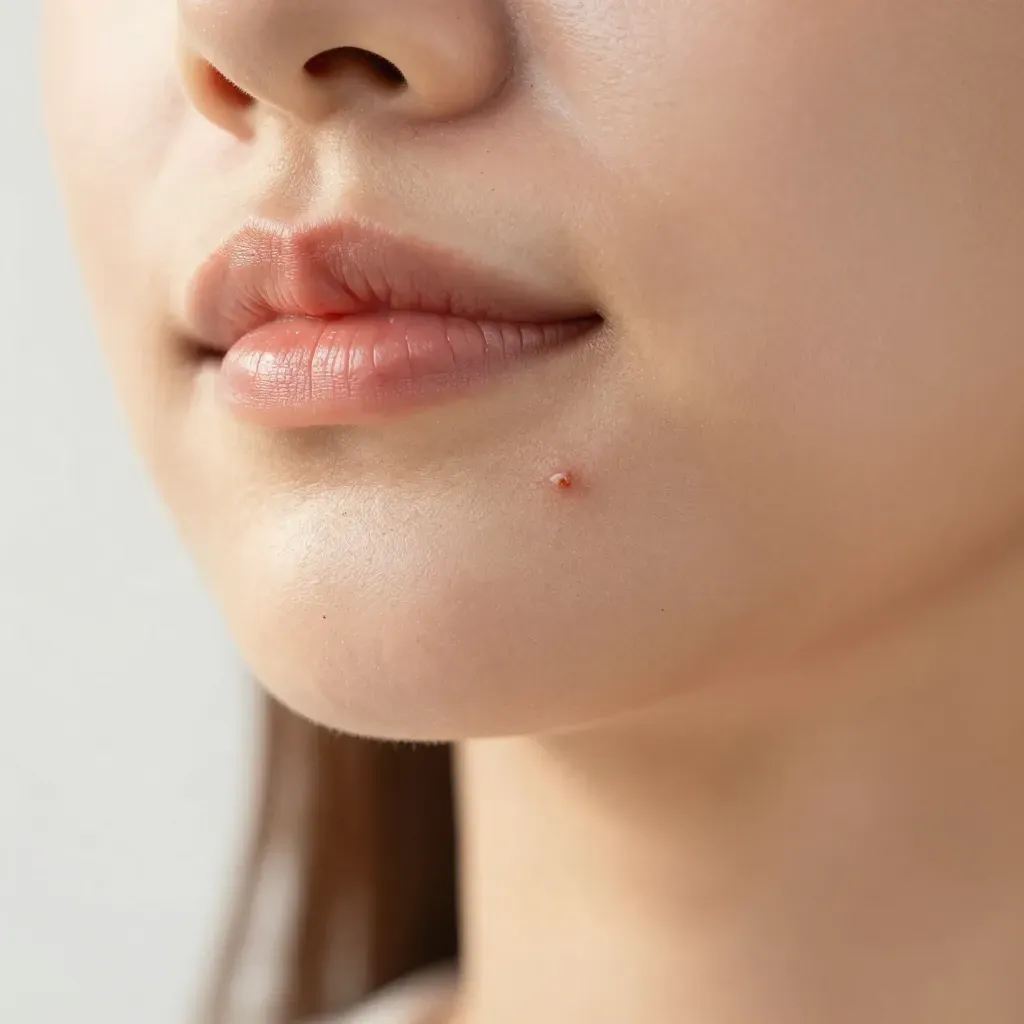
Table of Contents
Ingrown chin hairs curl back into skin causing painful red bumps.
Shaving mistakes, blocked pores, and curly hair cause them.
Treat with warm compresses 3-4 times daily until hair surfaces.
Extract only visible hairs with sterile tweezers.
Never pop or pluck - causes infection and scars.
Prevent by shaving with grain and exfoliating regularly.
Question | Answer |
|---|---|
What causes ingrown chin hairs? | Shaving mistakes, blocked pores, and curly hair texture cause ingrown chin hairs. |
How do I treat ingrown chin hairs at home? | Apply warm compresses 3-4 times daily to soften skin and bring the hair to surface. |
When should I extract an ingrown hair? | Extract only when you can clearly see the hair loop or tip above the skin surface. |
Why shouldn't I pop ingrown hairs? | Popping pushes bacteria deeper causing infection, scarring, and more ingrown hairs. |
How can I prevent ingrown chin hairs? | Shave with the grain, replace blades regularly, and exfoliate 2-3 times weekly. |
Understand what causes ingrown hairs on your chin
Ingrown chin hairs occur when hair curls back into skin instead of growing outward. Your immune system attacks the trapped hair as a foreign object, creating red bumps, pus, and painful inflammation.
Primary causes
- Shaving mistakes: Dull blades, against-grain strokes, and pulling skin taut cut hair at sharp angles below surface
- Hair removal damage: Waxing and tweezing break hairs unevenly, forcing regrowth sideways
- Blocked follicles: Dead skin cells and oil clog pores, trapping emerging hairs
- Hair texture: Coarse or curly hair naturally bends back toward skin
- Chin anatomy: Curved jawline makes clean shaving angles difficult
Risk factors
Factor | Impact on chin area |
|---|---|
Shaving frequency | Daily shaving increases irritation and cutting errors |
Skin type | Oily skin clogs follicles faster |
Hair thickness | Thick hair creates stronger curl-back force |
External friction | Masks and shirt collars push hair tips into skin |
Genetics determine your hair texture and growth pattern. Men with curly beards experience chin ingrown hairs most frequently. The sharper the hair tip after cutting, the easier it pierces surrounding skin tissue.
Apply warm compresses to soften skin and bring hair to surface
Heat therapy opens pores and softens skin tissue, making trapped chin hairs easier to extract. Warm compresses increase blood flow, reduce inflammation, and coax the hair tip to surface without force. The heat dilates blood vessels, bringing white blood cells to fight infection while relaxing the follicle opening.
Step-by-step process
- Boil water then let cool 2-3 minutes to safe temperature
- Soak clean cotton washcloth in hot water (not scalding)
- Wring out excess water until cloth is damp, not dripping
- Press firmly against ingrown hair on chin for 3-5 minutes
- Maintain steady pressure without rubbing to avoid irritation
- Re-warm cloth if it cools below body temperature
- Repeat process 3-4 times daily until hair becomes visible
- After final compress, gently massage area with mild cleanser using circular motions
Timing and temperature guidelines
Factor | Optimal range | Danger zone |
|---|---|---|
Water temperature | 110-115°F (43-46°C) | Above 120°F causes burns |
Compress duration | 3-5 minutes per session | Over 10 minutes damages skin barrier |
Daily frequency | 3-4 times daily | More than 5 irritates tissue |
Total treatment days | 1-3 days before extraction | After 5 days seek professional help |
Safety warnings and contraindications
- Never reuse same washcloth without washing — bacteria transfer causes infection
- Do not apply compress to broken, bleeding, or severely inflamed skin
- If skin blisters, peels, turns white, or feels numb, stop immediately
- Avoid combining with harsh scrubs or chemical exfoliants same day
- Diabetics, immunocompromised patients, and those with poor circulation must consult doctor first
- Do not apply makeup or aftershave immediately after treatment
Test water temperature on inner wrist first. Skin should feel hot but not painful. Too hot causes burns and worsens inflammation. Too cold fails to open pores effectively. Consistent heat application works best for superficial ingrown hairs trapped within top skin layers. Deep or cystic ingrown hairs may require additional treatment methods like salicylic acid or professional extraction. After 2-3 days of proper compresses, the hair loop should surface enough for safe removal with sterile tweezers. If no visible progress after 5 days, or if pain/swelling increases, seek dermatologist treatment to avoid infection or permanent scarring.
Use sterile tools to gently extract visible ingrown hairs
Extract ingrown chin hairs only when the loop or tip clearly surfaces. Premature removal pushes bacteria deeper and causes scarring. Follow proper facial extraction techniques to minimize risks.
Required tools and sterilization
- Pointed-tip tweezers with fine precision edges
- Rubbing alcohol (70% isopropyl)
- Cotton pads
- Magnifying mirror (5x minimum)
- Antiseptic solution
- Cold compress pack
Soak tweezers in alcohol for 60 seconds, air dry. Never use fingers or non-sterile tools.
Step-by-step extraction technique
- Cleanse chin with antibacterial soap
- Apply warm compress for 2 minutes
- Position magnifying mirror under bright light
- Gently lift hair loop with needle tip if needed
- Grasp exposed hair at base with tweezers
- Pull slowly in direction of natural growth
- Stop if hair resists or breaks below surface
- Apply cold compress for 2 minutes
Critical safety rules
Never do this | Safe alternative |
|---|---|
Pluck before hair surfaces | Wait until visible loop appears |
Squeeze or pop bump | Apply warm compresses only |
Dig under skin with needle | Lift only exposed tip |
Reuse tweezers without cleaning | Clean with alcohol before each use |
Extract multiple hairs at once | Focus on one, then disinfect |
Post-extraction care
- Dab antiseptic on extraction site
- Leave wound open to air
- Avoid touching or picking scab
- Skip shaving area for 48 hours minimum
- Apply gentle moisturizer once daily
- Watch for spreading redness, pus, or pain
Stop home extraction if hair breaks below surface or fails to emerge after 5 days. Seek dermatologist for deep ingrown hairs to prevent permanent scarring. Warning signs: worsening swelling, fever, red streaks, or cyst formation. Never extract large painful lumps without visible hair — these need medical drainage. For guidance on stubborn cases, see how to remove bad ingrown hairs.
Avoid popping or plucking to prevent infection and scarring
Popping and plucking ingrown chin hairs causes more harm than good. These actions push bacteria deeper into follicles, break hair fragments below surface, and damage surrounding skin tissue permanently.
Why popping causes infection
Squeezing ingrown hair bumps forces surface bacteria into open follicle. This triggers folliculitis — inflamed, infected hair follicles forming itchy, painful rash. Pressure ruptures hair shaft below skin, leaving sharp fragments that regrow sideways and create new ingrown cycle.
Why plucking worsens ingrown hairs
Plucking breaks hair below skin surface instead of removing entire follicle. This leaves jagged tip that pierces follicle wall during regrowth. Ingrown chin hairs should not be plucked — the fragment becomes trapped deeper, creating painful cystic bumps that last weeks.
Consequences of improper removal
Action | Immediate result | Long-term damage |
|---|---|---|
Popping bump | Spreads bacteria, increases inflammation | Crater scars, dark spots, permanent marks |
Plucking hair | Breaks shaft below skin | Deeper ingrown, cyst formation |
Digging with needle | Introduces germs, damages tissue | Hyperpigmentation, keloid scars |
Safe alternatives that work
- Apply warm compresses 3-4 times daily until hair surfaces naturally
- Use topical steroid creams to reduce inflammation without trauma
- Apply antimicrobial treatments for mild infections
- Seek professional dermatologist extraction for deep ingrown hairs
- Consider laser hair removal for chronic recurring issues
Ingrown hairs often resolve on their own with time. Patience prevents permanent damage. If swelling worsens after 5 days, or you notice spreading redness, pus, or red streaks, seek medical care immediately. These signs indicate serious infection requiring prescription antibiotics. For guidance on stubborn cases, see how to remove bad ingrown hairs.
Prevent future ingrown hairs with proper shaving and exfoliation
Prevention beats treatment. Proper technique stops ingrown chin hairs before they start.
Shaving technique that prevents ingrowns
- Shave with grain using short, gentle strokes
- Replace blades after 3-5 uses maximum
- Use pre-shave oil to soften hair
- Never pull skin taut while shaving
- Rinse blade after each stroke
Exfoliation schedule
Skin type | Frequency | Best method |
|---|---|---|
Oily | 3x weekly | Salicylic acid cleanser |
Normal | 2x weekly | Gentle scrub |
Sensitive | 1x weekly | Chemical exfoliant |
Dry | 1x weekly | Soft washcloth |
Pre-shave routine
- Wash face with warm water
- Apply exfoliating cleanser
- Use pre-shave oil on chin
- Lather with quality shaving cream
- Let cream sit 2 minutes before shaving
Post-shave care
- Rinse with cold water to close pores
- Apply alcohol-free aftershave balm
- Use non-comedogenic moisturizer
- Avoid touching chin area
- Skip makeup for 12 hours
Long-term prevention options
For chronic ingrown chin hairs, consider laser hair removal or electrolysis. These methods permanently reduce hair growth and eliminate ingrown risk. At-home laser devices work for mild cases. Avoid tight collars and chin straps that create friction. Keep skin hydrated daily — dry skin traps hairs more easily. Change pillowcases weekly to prevent bacterial buildup.