
Table of Contents
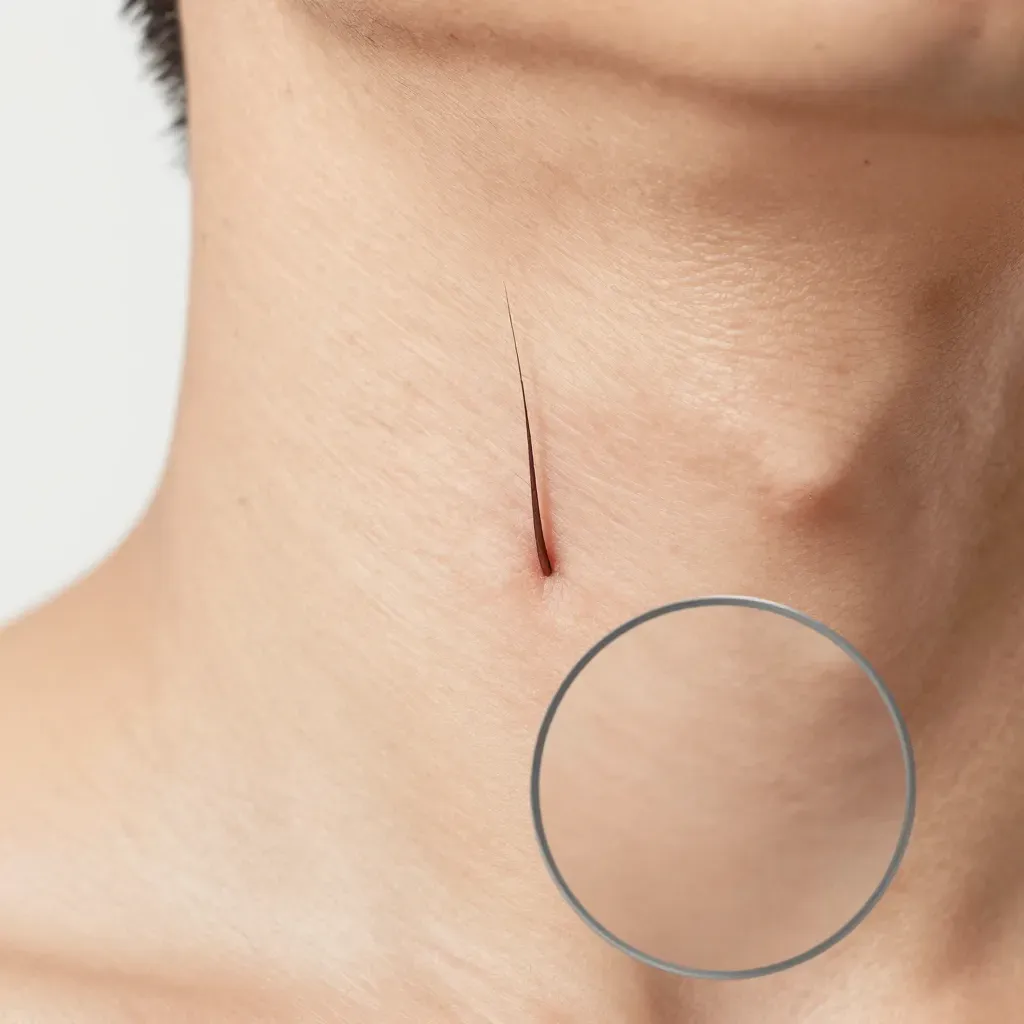
Neck ingrown hairs stem from multi-blade razors pulling hair up before cutting, letting it retract below skin.
Shaving against growth direction and dull blades worsen the problem.
Curly and coarse hair face highest risk due to natural growth patterns and sharp cut tips.
Tight collars rub hair back into follicles while sweat plugs trap them.
Prevention requires single-blade safety razors that cut at skin level.
Map neck hair direction by feeling the grain and shave only with it.
Exfoliate twice weekly with salicylic acid and apply warm compresses before shaving.
Safe removal demands sterile tools: boil metal tools 10 minutes then soak in 70% isopropyl alcohol 5 minutes.
Apply warm compress 3-5 minutes to soften skin.
Pierce surface gently with sterile needle, lift hair loop, grasp with tweezers and pull without twisting.
Post-removal care requires antibiotic ointment and 3 days no shaving.
See doctor for spreading redness beyond 1 inch, pus drainage, fever, or no improvement after 7 days.
Diabetics and immunocompromised need immediate medical care.
Doctor treatments include sterile incision, corticosteroid injections, and laser hair removal for permanent results.
Question | Answer |
|---|---|
What causes neck ingrown hairs? | Multi-blade razors pull hair up before cutting, letting it retract below skin surface. |
How do I prevent them? | Switch to single-blade safety razors, exfoliate twice weekly with salicylic acid, wear loose collars. |
What's the safest removal method? | Sterilize tools in boiling water and alcohol, apply warm compress 3-5 minutes, lift hair with needle, pull with tweezers. |
When should I see a doctor? | Seek care if redness spreads beyond 1 inch, pus appears, or no improvement after 7 days. |
What post-removal care is needed? | Apply antibiotic ointment, cover with bandage 24 hours, avoid shaving 3 days. |
Identify what causes neck ingrown hairs
Shaving mistakes create most neck ingrown hairs
Shaving against hair growth direction cuts hair below skin surface. Multi-blade razors pull hair up before cutting, allowing it to retract underneath. Dull blades leave sharp, uneven tips that pierce surrounding skin.
- Pulling skin taut while shaving
- Pressing too hard with razor
- Skipping lubricating shave gel
- Using same razor blade beyond 5-7 shaves
Hair texture determines risk level
Hair Type | Risk Factor | Mechanism |
|---|---|---|
Tight curls | Very High | Natural curl pattern grows inward |
Coarse hair | High | Sharp cut tip penetrates follicle wall |
Fine straight | Low | Grows directly out of follicle |
Friction and blockage trigger growth
Tight collars rub shaved neck skin, forcing hair tips back into follicles. Sweat mixes with dead skin cells, creating plugs that trap growing hair. Heavy pomades and aftershaves clog pores.
Quick prevention fixes
Switch to single-blade safety razor. Exfoliate neck twice weekly with chemical exfoliant containing salicylic acid. Wear looser shirt collars. Apply lightweight, oil-free moisturizer daily. Let hair grow 2-3 days between shaves.
Remove safely with sterile tools
Gather sterile tools first
Get pointed tweezers, fine needle, rubbing alcohol, cotton pads, and sterile gloves. Use medical-grade tools only. Household tweezers harbor bacteria. Buy a dedicated ingrown hair removal kit from pharmacy. Check tool tips under bright light for damage. Replace tools every 6 months. Have sterile gauze ready.
Sterilize everything twice
Boil metal tools for 10 minutes. Soak in 70% isopropyl alcohol for 5 minutes. Let air dry on clean paper towel. Never use tools straight from drawer. Repeat sterilization if tools touch any non-sterile surface. Wash hands thoroughly before putting on sterile gloves. Pour alcohol into clean container, never dip into bottle. Use new cotton pad for each tool.
Removal steps
Step | Action | Timing |
|---|---|---|
1 | Clean neck with antibacterial soap | 30 seconds |
2 | Apply warm compress for 3 minutes | 3 minutes |
3 | Gently pierce skin surface with needle | 5 seconds |
4 | Lift hair loop with needle tip | 10 seconds |
5 | Grasp hair with tweezers, pull gently | 5 seconds |
Work under bright light. Use magnifying mirror. Stop if blood appears. Apply light pressure with clean gauze if bleeding occurs. Remove entire hair including root. Do not twist or yank.
What never to do
Post-removal care
Apply antibiotic ointment immediately. Cover with small bandage for 24 hours. Avoid shaving area for 3 days. Watch for redness, pus, or increasing pain. Change bandage daily. Clean area twice daily with gentle soap. Use cold compress if swelling develops. Stop treatment if pain worsens after 24 hours.
Apply warm compresses first
Why heat works on ingrown neck hairs
Heat softens skin surface and opens pores. Blood flow increases, bringing trapped hair closer to surface. Warmth reduces inflammation and makes removal less painful. Heat draws out pus if infection present. Neck skin is thin, so heat penetrates quickly. This process takes 3-5 minutes to work effectively. Repeated applications throughout day speed up healing.
Make the perfect warm compress
Grab clean washcloth. Soak in hot water, wring out excess. Test temperature on inner wrist. Water should be hot, not scalding. Target 110-115°F. Fold cloth to palm-size square. Apply directly to ingrown hair spot. Reheat when cloth cools to body temperature.
- Boil water, let cool 2 minutes before soaking cloth
- Microwave damp cloth for 20 seconds max
- Add 1/2 teaspoon salt for extra drawing effect
- Use white cloth to monitor any discharge
- Replace cloth with fresh one each session
Application schedule
Timing | Duration | Frequency |
|---|---|---|
Before removal | 3-5 minutes | Single session |
After removal | 2 minutes | Twice daily for 2 days |
For stubborn ingrown | 5 minutes | 3 times daily until resolved |
For prevention | 1 minute | Before each shave |
Safety warnings
Pat dry gently after each session. Do not rub area. Apply fragrance-free moisturizer immediately after to prevent dryness. Stop using compresses if skin becomes irritated or overly dry. Wait 24 hours between sessions if skin feels sensitive.
Alternatives that work
Use heating pad on low setting with cloth barrier. Take hot shower for 5 minutes, focus water stream on neck. Use microwavable gel pack designed for facial use. Soak in warm Epsom salt bath, submerge neck area. Apply warm green tea bag directly as compress for added anti-inflammatory benefits.
Prevent by changing shaving technique
Ditch multi-blade razors
Multi-blade cartridges pull hair up before cutting.
This lets hair retract below skin.
Switch to single-blade safety razor immediately.
Safety razors cut hair at skin level.
Use closed comb design for neck control.
Change blade every 3 shaves maximum.
Never use same blade beyond 5 shaves.
Map your neck hair direction
Neck hair grows in multiple directions.
Rub fingers across neck to feel grain.
From jawline down feels smooth, upward feels rough.
Shave only with smooth direction.
Neck often requires upward strokes below jaw.
Never shave against grain on neck.
Use short 1-inch strokes only.
Prep skin right
Time | Action | Product |
|---|---|---|
2 min | Hot compress | Warm towel |
30 sec | Pre-shave oil | Tea tree oil |
1 min | Shave cream | Brush lather |
Exfoliate neck 12 hours before shaving.
Use salicylic acid, not physical scrub.
Apply oil against grain, cream with grain.
Post-shave seals protection
Rinse with coldest water possible.
Cold water closes pores fast.
Pat dry with clean towel.
Apply alcohol-free balm immediately.
Choose product with witch hazel.
Wait 5 minutes before adding moisturizer.
Avoid touching neck for 2 hours.
Reduce shave frequency
Shave neck maximum 3 times per week.
Let hair reach 1/8 inch length.
Use trimmer on off days at 0.5mm setting.
This trains hair to grow straight out.
Gradually extend time between shaves.
Skin heals better with less trauma.
Buy these specific products
Get Merkur 34C safety razor.
Buy Simpson badger brush.
Pick Proraso pre-shave oil.
Use Cremo shave cream.
Avoid menthol, fragrances.
Choose pump bottles, not aerosol.
Total cost under $80.
Lasts entire year.
Know when to see a doctor
Infection spreads fast on neck
Neck skin sits close to lymph nodes and major blood vessels.
Infection here can spread quickly.
See doctor immediately if you spot these signs.
- Redness spreading beyond 1 inch from bump
- Yellow or green pus draining
- Fever above 100.4°F
- Throbbing pain that wakes you at night
- Hot, hard lump under skin
- Red streaks radiating from site
These symptoms need antibiotics within 24 hours.
Home treatment fails after 7 days
Most ingrown neck hairs resolve in 3-5 days with proper care.
If hair remains trapped after 7 days, see doctor.
Deeply embedded hairs need medical removal.
Doctor uses sterile lancet and microscope.
Attempting removal beyond 7 days increases scarring risk.
Chronic ingrown hairs signal follicle damage.
High-risk medical conditions
Condition | Risk Level | Action |
|---|---|---|
Diabetes | Very High | See doctor at first sign of infection |
Immunocompromised | Very High | Medical removal only |
Blood thinners | High | Doctor must assess bleeding risk |
Keloid history | High | Prevent scarring with medical care |
These conditions turn minor ingrown hairs into serious problems.
Never attempt self-removal.
Doctor treatment options
Dermatologists offer targeted solutions.
They prescribe topical retinoids to prevent future ingrown hairs.
They inject inflamed bumps with corticosteroids.
They perform sterile incision and drainage.
They recommend laser hair removal for permanent solution.
Cost: $150-300 per visit.
Insurance covers if infected.
Timeline for seeking care
Waiting beyond 10 days guarantees scarring.
Neck scars are visible and hard to treat.
Early medical intervention saves skin.
What to expect at appointment
Doctor examines neck with magnifying glass.
They may take bacterial culture if pus present.
They use sterile tools to release hair.
Procedure takes 5-10 minutes.
They apply prescription antibiotic cream.
Follow-up scheduled in 1 week.
Bring list of current medications.
Arrive with clean, makeup-free neck.