
Table of Contents
Ingrown pubic hairs are red bumps from hair growing back into skin after shaving or waxing.
Pubic area risks include curly hair, sensitive skin, and moisture.
Causes: angled shaving cuts, dead skin buildup, friction.
Treat with warm compresses 10-15 minutes 3-4 times daily and gentle exfoliation 2-3 times weekly.
Prevent by shaving with hair direction using sharp single-blade razors and wearing loose clothing.
See doctor for spreading redness, severe pain, fever, or pus.
Chronic cases may need laser removal.
Question | Answer |
|---|---|
What causes ingrown pubic hairs? | Shaving creates sharp tips that curl back into skin while dead skin cells block follicles. |
How do I treat ingrown pubic hairs at home? | Apply warm compresses 10-15 minutes 3-4 times daily and gently exfoliate 2-3 times weekly. |
When should I see a doctor? | See a doctor for spreading redness, severe pain, fever, pus, or no improvement after three days. |
How can I prevent ingrown pubic hairs when shaving? | Shave with hair direction using a sharp single-blade razor and avoid pulling skin taut. |
Is exfoliation safe for the pubic area? | Yes, gentle exfoliation 2-3 times weekly with soft cloths or mild acids is safe when done carefully. |
Ingrown pubic hairs occur when hair grows back into the skin.
What ingrown pubic hairs are
Ingrown pubic hairs happen when hair grows back into the skin instead of upward through the follicle.
They appear as red, inflamed bumps that itch, hurt, or fill with pus.
They occur after shaving, waxing, or plucking when the hair tip becomes sharp and pierces surrounding skin.
The body reacts to the trapped hair with inflammation, creating visible lesions.
Primary causes
- Shaving cuts hair at an angle, creating pointed tips that curl back into skin
- Dead skin cells clog follicle openings and force hair to grow sideways
- Waxing and tweezing damage follicles and distort growth direction
- Tight clothing rubs against skin and pushes hair tips inward
- Pulling skin taut while shaving lets hair snap back below the surface
Why pubic area gets more ingrown hairs
The pubic region combines multiple risk factors.
Hair grows thicker and curlier here, increasing inward curling.
Skin remains more delicate and reactive.
The warm, moist environment creates ideal conditions for bacterial growth when follicles become irritated.
Risk Factor | Mechanism |
|---|---|
Curly hair texture | Natural coil pattern loops back into follicle walls |
Close shaving | Creates sharp hair tips below skin surface |
Skin sensitivity | More prone to inflammation and visible bumps |
Friction | Underwear and movement push hair into skin |
Moisture | Increases irritation and infection risk |
When to worry
Most ingrown hairs resolve on their own.
See a doctor if you notice spreading redness, severe pain, fever, or large cyst-like lumps.
These signs indicate infection that needs medical treatment.
Chronic ingrown hairs can cause hyperpigmentation or scarring if left untreated.
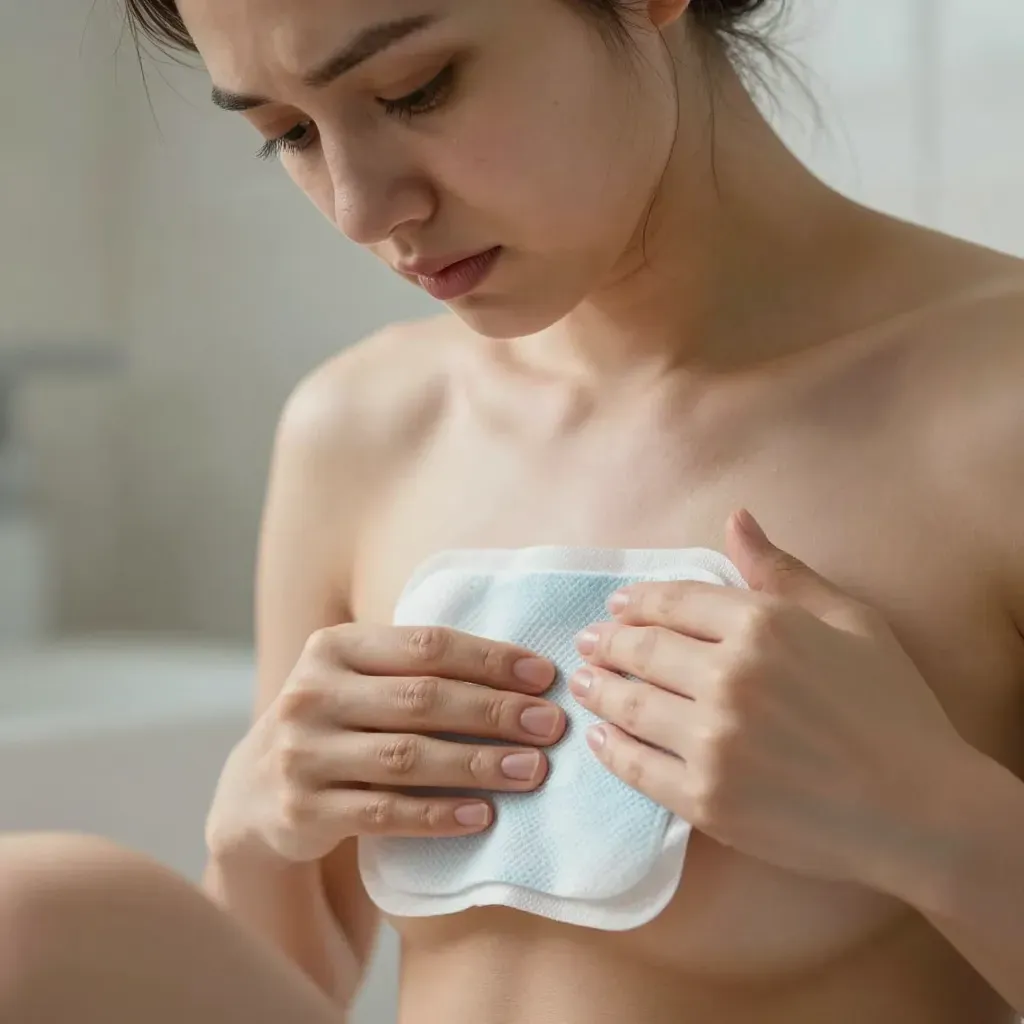
Warm compresses soften skin and draw out trapped hairs.
How warm compresses work
Warm compresses increase blood flow to the trapped hair follicle.
The heat softens the surrounding skin and opens the pore.
This combination allows the ingrown hair to break through the surface naturally.
Compresses also reduce inflammation, swelling, and discomfort.
The moisture helps draw out pus if the bump has become infected.
Proper technique
- Wash hands with soap and warm water first
- Fill a bowl with hot water that's tolerable to touch
- Submerge a clean, soft washcloth completely
- Wring out excess water so cloth is damp, not dripping
- Press cloth firmly against the ingrown hair bump
- Hold steady for 10-15 minutes without lifting
- Re-warm cloth if it cools before time is up
- Pat area dry gently with a clean towel after
Optimal timing
Treatment Phase | Duration | Frequency | Goal |
|---|---|---|---|
Active ingrown | 15 minutes | 3-4 times daily | Draw hair to surface |
After removal | 10 minutes | 2 times daily | Reduce inflammation |
Prevention | 5 minutes | Before hair removal | Soften hair follicles |
Chronic cases | 20 minutes | 4 times daily | Break down scar tissue |
Post-compress care
After removing the compress, inspect the area carefully.
If you see a small hair loop, sterilize tweezers with alcohol.
Gently lift the hair tip out from under the skin.
Do not pluck the entire hair—this creates a new ingrown.
Apply a thin layer of over-the-counter hydrocortisone cream.
Finish with fragrance-free moisturizer to prevent dryness.
Critical safety rules
- Test temperature on inner wrist before applying
- Stop immediately if pain increases or redness spreads
- Do not reuse the same washcloth without washing
- Avoid compresses if you have diabetes or poor circulation
- Seek medical help if no improvement after 3 days
Gentle exfoliation removes dead skin cells blocking hair growth.
How exfoliation helps
Dead skin cells block hair follicles and force hairs to grow sideways.
Exfoliation removes this barrier and exposes trapped hair tips.
It prevents future blockages when done regularly.
Physical exfoliation methods
- Soft washcloth: Rub gently in circular motions during shower
- Sugar scrub: Mix sugar with coconut oil for light abrasion
- Exfoliating gloves: Use minimal pressure to avoid irritation
- Dry brushing: Use soft-bristled brush before showering
Physical methods work fast but can irritate sensitive pubic skin.
Chemical exfoliation options
Salicylic acid (BHA) penetrates oil and unclogs follicles.
Glycolic acid (AHA) loosens surface cells gently.
Start with 2% salicylic acid or 5% glycolic acid.
Apply only to external areas, never mucous membranes.
Safe exfoliation schedule
Method | Frequency | Timing | Notes |
|---|---|---|---|
Physical | 2-3 times weekly | During shower | Stop if redness occurs |
Chemical | Every other day | After cleansing | Apply to dry skin |
Combination | Alternate methods | 12 hours apart | Monitor skin reaction |
Pre-shave | 24 hours before | Gentle only | Prevents over-exfoliation |
Critical warnings
- Avoid scrubs with large, jagged particles
- Never exfoliate over open wounds or infections
- Stop if you feel burning or stinging
- Do not combine chemical and physical same day
- Skip exfoliation day of and after hair removal
Seek medical help for infected or persistent ingrown hairs.
Warning signs of infection
Spreading redness, increasing pain, warmth, pus, or fever signal infection.
Large painful lumps, multiple bumps, or symptoms lasting over one week need medical care.
Diabetics and immunocompromised patients should seek help immediately.
Red streaks moving away from the bump indicate serious infection.
Medical treatments available
Dermatologists safely extract trapped hairs using sterile tools.
Topical antibiotics treat surface infections.
Oral antibiotics combat deeper infections or abscesses.
Corticosteroid injections quickly reduce severe inflammation.
Incision and drainage may be needed for large abscesses.
Treatment options comparison
Treatment | When Used | Recovery | Effectiveness |
|---|---|---|---|
Professional extraction | Visible hair loop | 1-2 days | Immediate relief |
Topical antibiotic | Surface infection | 3-5 days | 90% success rate |
Oral antibiotic | Deep infection/abscess | 7-10 days | 95% success rate |
Steroid injection | Severe inflammation | 24-48 hours | Reduces swelling fast |
Red flags: stop home treatment
- Bump grows larger after 3 days home care
- Fever or general unwell feeling develops
- Red streaks appear around lesion
- Recurring ingrown hairs in same spot
- Scarring or dark marks concern you
- Drainage smells foul or looks unusual
Long-term solutions for chronic cases
Laser hair removal prevents future ingrown hairs permanently.
Clinical chemical peels reduce follicle-blocking dead skin.
Prescription retinoids keep pores clear.
Electrolysis works for small areas with coarse hair.
Your doctor visit
Doctor examines area, asks about hair removal methods.
Cultures may be taken if infection suspected.
Most treatments done same day.
Follow-up ensures proper healing.
Cost ranges from $100-$500 depending on treatment type.
Delaying medical care risks abscess formation and permanent scarring.
Proper shaving techniques prevent future ingrown pubic hairs.
Why shaving technique matters
Shaving cuts hair at an angle, creating sharp tips that curl back into skin.
Proper technique minimizes this risk and keeps hair growing outward.
Pubic hair is coarse and curly, making it more prone to ingrown hairs than other body hair.
Pre-shave preparation
- Wash area with mild soap to remove bacteria and oils
- Soak in warm water for 5 minutes to soften hair follicles
- Trim long hair to 1/4 inch with scissors before shaving
- Apply fragrance-free shaving cream or gel liberally
- Let cream sit for 2 minutes to further soften hair
Shaving technique step-by-step
Step | Action | Why It Works |
|---|---|---|
1 | Use sharp single-blade razor | Multi-blades cut too close below skin surface |
2 | Shave with hair growth direction | Prevents sharp angled cuts that pierce skin |
3 | Use light, short strokes | Reduces friction and uneven pressure |
4 | Rinse blade after every stroke | Removes hair buildup that causes tugging |
5 | Never pull skin taut | Prevents hair from snapping below surface |
Post-shave care
Rinse with cool water to close pores and reduce inflammation.
Pat dry gently—never rub—with clean towel.
Apply alcohol-free moisturizer or aloe vera gel.
Wear loose cotton underwear for 24 hours.
Avoid swimming pools, hot tubs, and sexual activity for 24 hours.
Critical safety rules
- Change razor blade after 3-5 uses maximum
- Clean razor with alcohol before each use
- Shave every 2-3 days, not daily
- Skip shaving during active ingrown hair outbreaks
- Consider switching to electric trimmer for sensitive skin
Common mistakes that cause ingrown hairs
Mistake | Result | Fix |
|---|---|---|
Shaving against grain | Hair cut too short below skin | Always shave with hair direction |
Using dull blades | Tugging creates uneven cuts | Replace blades frequently |
Pressing too hard | Skin irritation and close cuts | Let razor weight do the work |
Tight clothing after | Friction pushes hair inward | Wear loose fabrics |
Consistent technique prevents 80% of ingrown pubic hairs.