
Table of Contents
Ingrown hairs form when hair grows sideways under skin instead of upward through follicle.
Causes: shaving creates sharp tips that curl back, waxing leaves fragments, dead skin blocks pores, tight clothing pushes hair back, curly hair naturally bends, pulling skin while shaving cuts below surface.
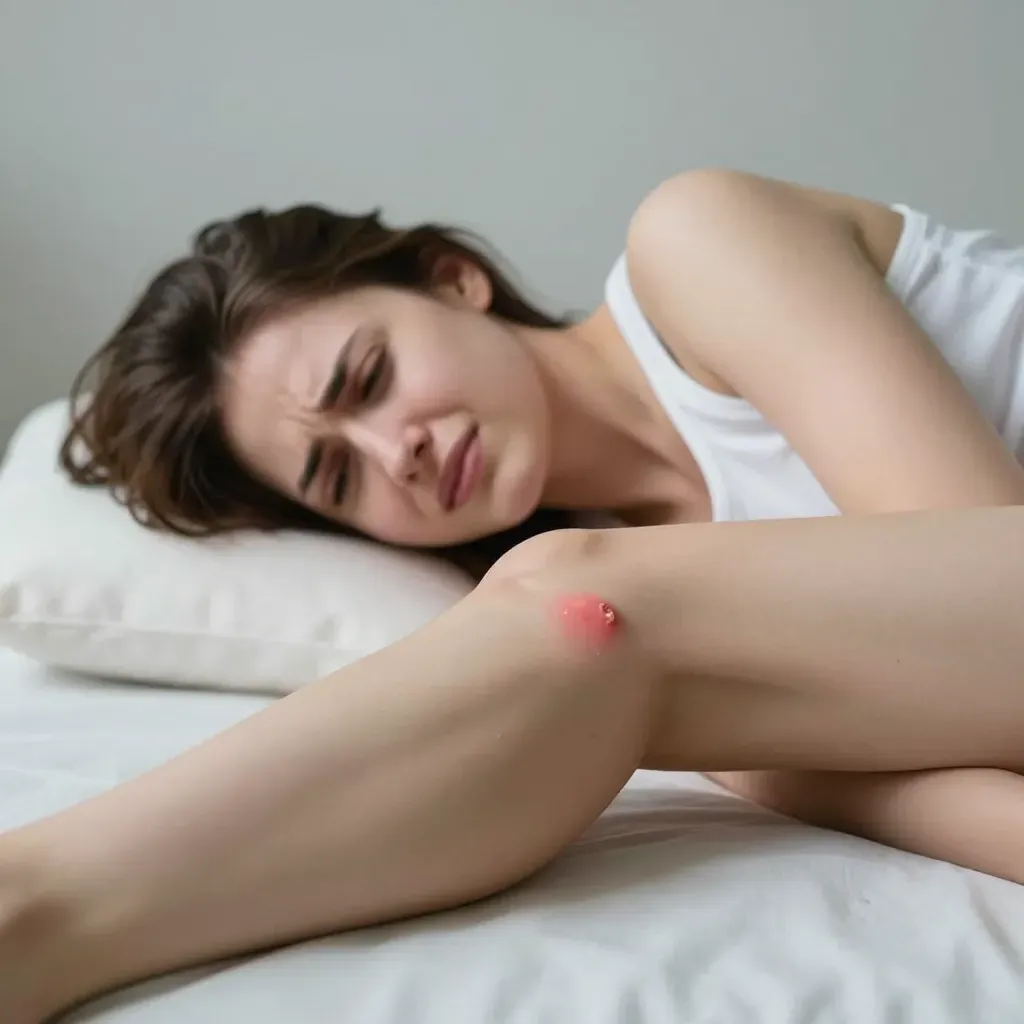
Stages: early red dot (1-2 days, mild itch), active red bump (3-5 days, tender), infected white/yellow head (1+ week, painful/warm), chronic dark spot (weeks, constant irritation).
Common spots: bikini line, beard/neck, underarms, lower legs, upper arms.
Home treatment: warm compress 10-15 min 3-4x daily; gentle exfoliation 30 sec 2x daily with soft brush; sterile needle only when hair visible—disinfect, prick surface, lift with tweezers, never dig.
Natural antibacterials: diluted tea tree oil 2x daily, aloe vera 3x daily, honey 1x daily, witch hazel 2x daily.
Avoid: picking, dirty tools, makeup over bump, shaving over it, tight clothing.
Prevention beats treatment.
Shave right: single-blade safety razor at 30-degree angle, with grain, no skin pulling, one pass, replace blade every 5 uses.
Pre-shave: hot shower 5 min, exfoliate 24 hrs before, shaving cream 2 min soak.
Post-shave: cold water rinse, pat dry, moisturize within 60 sec, wait 48 hrs to exfoliate, avoid tight clothes 24 hrs.
Alternatives: electric trimmer, depilatory creams, professional laser (6-8 sessions), sugaring.
Daily prevention: chemical exfoliant (glycolic/salicylic acid), loose cotton underwear, shower after sweating, non-comedogenic products, hands off.
See dermatologist if: no improvement in 3 days, bump grows in 5 days, hair trapped after 7 days, dark spots after 10 days, or warning signs—size doubles in 48 hrs, red streaks, foul pus, fever, hot skin, multiple bumps.
Medical treatments: incision/drainage, steroid injections, retinoid prescriptions, antibiotic creams, laser removal.
High-risk: diabetes, immune disorders, recurrent staph, keloid tendency, PCOS.
Costs: home treatment free-$20 (60% effective, risk scarring); dermatologist $100-300 (95% effective, prevents damage).
Best products: chemical exfoliants $10-25 (95% effective), physical scrubs $5-15 (70% effective), spot treatments $8-20 (85% effective), quality single-blade razor $20-50 (90% effective).
Essential tools: pointed tweezers, single-blade razor, disinfect with alcohol, replace blades every 5 shaves, avoid loofahs.
Invest in single-blade razor and chemical exfoliant—they prevent 90% of ingrown hairs.
Question | Answer |
|---|---|
What causes ingrown hair bumps? | Shaving creates sharp tips that curl back, waxing leaves fragments, dead skin blocks pores, tight clothing pushes hair back, curly hair naturally bends. |
How do I identify infection? | Identify infection by white/yellow head, rapid size increase, pain, warmth, red streaks, foul pus, fever. |
What's the fastest home treatment? | Warm compress 10-15 minutes 3-4 times daily softens skin and draws hair to surface. |
How can I prevent them permanently? | Prevent them by using single-blade razor with grain, daily chemical exfoliant, loose clothing, replacing blades every 5 shaves. |
When should I see a dermatologist? | Seek help if no improvement in 3 days, bump grows in 5 days, hair trapped after 7 days, or infection signs appear. |
What causes ingrown hair bumps and how to identify them
Root causes
Hair grows sideways under skin instead of upward through follicle.
- Shaving creates sharp angled tips that curl back into skin
- Waxing leaves hair fragments that get trapped during regrowth
- Dead skin cells block follicle openings and trap emerging hair
- Tight clothing pushes hair back into follicle through pressure
- Curly or coarse hair naturally bends back toward skin surface
- Pulling skin taut while shaving cuts hair below epidermis level
Visual identification guide
Stage | Appearance | Sensation | Duration |
|---|---|---|---|
Early | Small red dot | Mild itch | 1-2 days |
Active | Raised red bump | Tender | 3-5 days |
Infected | White/yellow head | Painful, warm | 1 week+ |
Chronic | Dark spot with visible hair | Constant irritation | Weeks |
Common locations
Ingrown hairs cluster where hair removal occurs frequently.
- Bikini line and pubic area—constant friction from underwear
- Beard and neck—daily shaving creates irritation
- Underarms—deodorant and tight sleeves block pores
- Lower legs—shaving against grain common mistake
- Upper arms—tight sleeves trap fine hairs
Safe home remedies for quick ingrown hair removal
Warm compress method
Apply warm compress for 10-15 minutes. Softens skin and draws hair to surface.
- Soak clean washcloth in hot water. Wring out excess moisture.
- Press gently on bump. Hold in place without rubbing.
- Repeat 3-4 times daily until hair visible.
- Follow with light moisturizer to prevent dryness.
Gentle exfoliation technique
Removes dead skin cells blocking hair growth.
- Use soft-bristled toothbrush or washcloth.
- Make small circular motions over bump for 30 seconds.
- Exfoliate twice daily. Stop if skin breaks or bleeds.
- Avoid harsh scrubs—they cause micro-tears.
Sterile needle extraction
Lift hair only when visible under skin surface.
- Disinfect needle with rubbing alcohol. Let dry completely.
- Gently prick skin surface to expose hair tip only.
- Use tweezers to pull hair out—never dig underneath.
- Stop if bleeding occurs. Apply antibiotic ointment immediately.
- Cover with bandage for 24 hours.
Natural antibacterial treatments
Prevent infection after hair release.
Treatment | Application | Frequency | Benefit |
|---|---|---|---|
Tea tree oil | Dilute 1:1 with water. Dab on bump. | 2x daily | Kills bacteria |
Aloe vera gel | Apply thin layer directly. | 3x daily | Soothes irritation |
Honey | Cover bump for 10 minutes. Rinse. | 1x daily | Natural antibiotic |
Witch hazel | Apply with cotton pad. | 2x daily | Reduces swelling |
What makes bumps worse
Avoid these common mistakes.
- Picking or scratching—introduces bacteria
- Using dirty tools—causes infection
- Applying makeup over bump—clogs follicle further
- Shaving over active bump—creates more irritation
- Wearing tight clothing—traps sweat and friction
Preventing ingrown hairs before they form
Shaving technique
Single-blade safety razors cut hair at skin level. Multi-blade cartridges pull hair up then cut below surface.
- Map hair growth direction. Shave with grain only.
- Hold razor at 30-degree angle. Let weight do work.
- Zero skin pulling. Creates uneven surface.
- One pass per area. Re-shaving causes trauma.
- Replace blade every 5 uses. Dull blades tug hair.
Pre-shave prep
Softens hair and lifts follicles before blade contact.
Action | Timing | Product | Why |
|---|---|---|---|
Hot shower | 5 minutes | Water only | Opens pores |
Exfoliate | 24 hrs before | Washcloth | Removes dead cells |
Cream application | 2 min soak | Shaving cream | Softens hair |
Post-shave protocol
Immediate steps prevent follicle closure around hair.
- Rinse with coldest water you can tolerate. Snaps pores shut.
- Pat dry with clean towel. Rubbing creates friction.
- Apply alcohol-free moisturizer within 60 seconds.
- Wait 48 hours before exfoliating again.
- Avoid tight clothing for 24 hours.
Alternative removal methods
Switch techniques if shaving causes chronic issues.
- Electric trimmer—cuts at surface, zero ingrowns
- Depilatory creams—dissolve protein bonds, no sharp tips
- Professional laser—permanent reduction after 6-8 sessions
- Sugaring—pulls in hair direction, less breakage
Daily prevention habits
Consistent routine stops buildup before it blocks follicles.
- Chemical exfoliant daily—glycolic or salicylic acid
- Loose cotton underwear—eliminates pressure
- Shower immediately after sweating—salt blocks pores
- Non-comedogenic products only—check labels
- Hands off policy—touching transfers bacteria
When to see a dermatologist for persistent bumps
Infection warning signs
Home treatment fails when bacteria take over.
- Bump doubles in size within 48 hours
- Red streaks radiate from center
- Pus drains with foul odor
- Fever accompanies skin changes
- Skin feels hot to touch
- Multiple bumps cluster together
Timeline for professional help
Days | Action | Reason |
|---|---|---|
3 | No improvement with home care | Early intervention prevents scarring |
5 | Bump grows larger or more painful | Indicates deep infection |
7 | Hair still trapped and invisible | Requires sterile extraction tools |
10 | Dark spots remain after hair removal | Post-inflammatory hyperpigmentation |
Dermatologist treatments
Medical procedures solve problems home methods cannot.
- Incision and drainage—sterile lancing releases trapped pus
- Steroid injections—reduce inflammation within 24 hours
- Retinoid prescriptions—prevent follicle blockage long-term
- Antibiotic creams—kill resistant bacteria
- Laser hair removal—permanent solution for chronic cases
High-risk situations
Certain conditions demand immediate medical attention.
- Diabetes—slow healing increases infection risk
- Immune disorders—body cannot fight bacteria
- Recurrent staph infections—requires culture testing
- Keloid formation—genetic scarring tendency
- PCOS or hormonal imbalances—excess hair growth
Cost vs benefit
Home treatment | Free to $20 | Works 60% of time | Risk of scarring |
|---|---|---|---|
Dermatologist visit | $100-300 | Works 95% of time | Prevents permanent damage |
Best products for ingrown hair treatment and prevention
Chemical exfoliants
Salicylic acid pads dissolve dead skin cells that trap hair.
Glycolic acid toners work overnight to prevent blockages.
Start with 2% concentration to avoid irritation.
Apply daily on problem areas like bikini line and beard.
Stop use 24 hours before shaving to prevent sensitivity.
- Look for "BHA" or "AHA" on packaging.
- Neck skin needs 1% concentration—thinner than other areas.
Physical exfoliants
Soft-bristle body brushes clear surface debris safely.
Washcloths work for sensitive skin when used gently.
Avoid sugar scrubs with large particles—they create micro-tears.
Use circular motions for 30 seconds max per area.
Exfoliate 2-3 times weekly, not daily.
- Dry brushing before shower increases circulation.
- Silicone scrubbers resist bacteria better than natural bristles.
Spot treatments
Tea tree oil kills bacteria and reduces swelling.
Witch hazel pads calm redness instantly.
Hydrocolloid patches draw out pus from infected bumps.
Apply spot treatments after warm compress for best absorption.
Never use undiluted essential oils directly on skin.
- Keep treatments in fridge for extra soothing effect.
- Benzoyl peroxide 2.5% works faster than tea tree.
Prevention products
Alcohol-free aftershave lotions keep pores open.
Non-comedogenic moisturizers prevent dryness without clogging.
Shaving creams with glycerin create protective barrier.
Look for "fragrance-free" labels to avoid irritation.
Replace shaving cream every 6 months—ingredients degrade.
- Use pre-shave oil on coarse hair.
- Ingrown hair serums with willow bark extract work dual-action.
Essential tools
Pointed tweezers with slanted tip grab hair precisely.
Single-blade safety razors cut at skin level only.
Loofahs spread bacteria—avoid them completely.
Disinfect all tools with alcohol before and after use.
Replace razor blades every 5 shaves maximum.
- Store tools in dry place.
- LED magnifying mirror helps identify trapped hairs early.
Product comparison
Product Type | Price Range | Best For | Frequency | Effectiveness |
|---|---|---|---|---|
Chemical exfoliant | $10-25 | Daily prevention | Once daily | 95% |
Physical scrub | $5-15 | Weekly maintenance | 2-3x/week | 70% |
Spot treatment | $8-20 | Active bumps | As needed | 85% |
Quality razor | $20-50 | Long-term prevention | Replace blades | 90% |