
Table of Contents
Viral ingrown hair removal videos show dangerous DIY methods that cause infections and scarring.
Professional medical videos demonstrate safe sterile techniques using proper tools.
Most viral clips come from Reddit and focus on shock value without safety warnings.
DIY mistakes like squeezing or unsterilized needles push bacteria deeper and create permanent scars.
Watch for warning signs that need immediate medical care like red streaks, fever over 101°F, or cysts larger than one inch.
Safe home treatment only works for surface hairs using warm compresses and sterilized tweezers after waiting 24-48 hours.
Deep cysts need professional medical intervention to prevent MRSA infections and nerve damage.
Question | Answer |
|---|---|
Why do ingrown hair removal videos go viral? | ASMR sounds and satisfaction triggers create addictive viewing. |
What is the safest home removal method? | Apply warm compresses then use sterilized tweezers only on visible hairs. |
When must you see a doctor? | Seek care for red streaks, fever over 101°F, cysts larger than one inch, or rapid swelling. |
What DIY mistakes cause serious harm? | Unsterilized tools cause infections and squeezing pushes bacteria deeper creating permanent scars. |
How do professional and viral videos differ? | Professionals show sterile technique focused on prevention while viral clips display dangerous methods for shock value. |
What these removal videos actually show
Two main video categories dominate search results
Professional Medical Videos | Viral Extraction Clips |
|---|---|
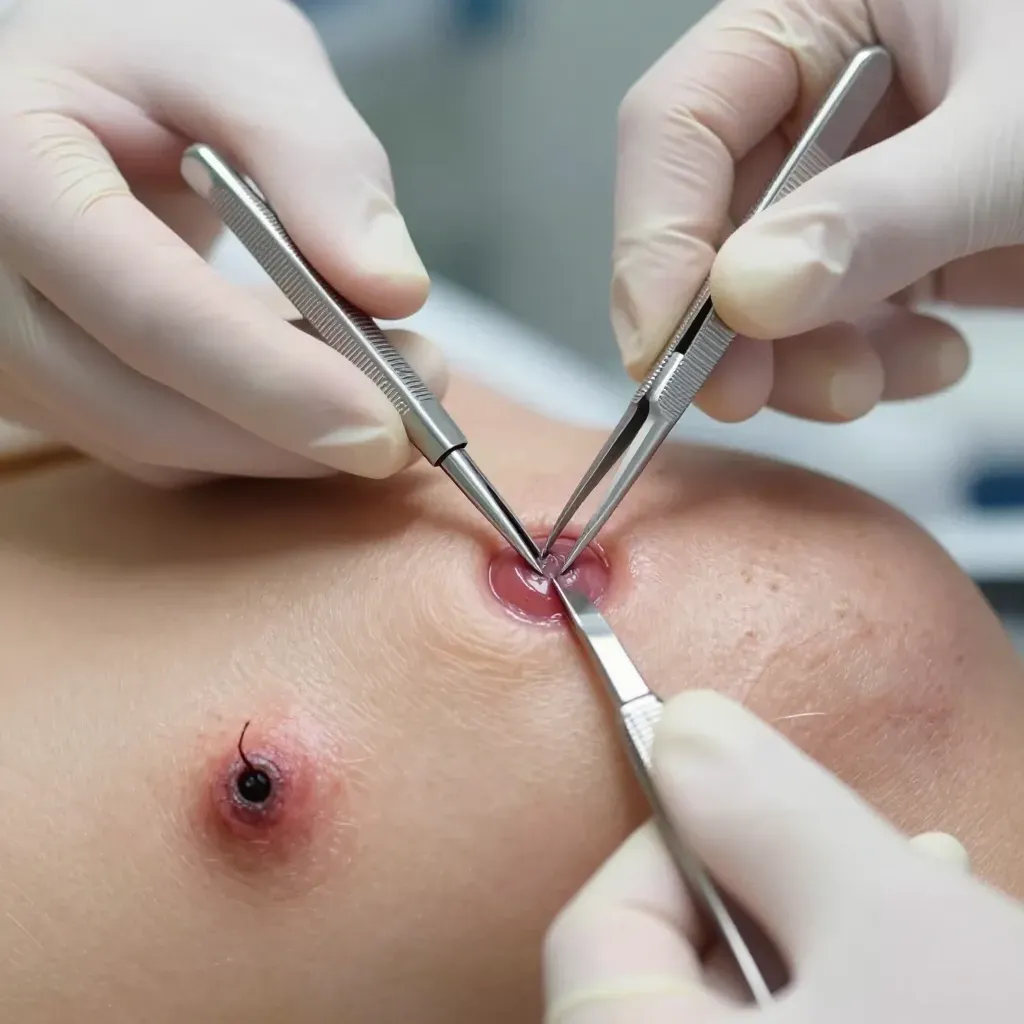
Dermatologists use sterile lancets and tweezers | DIY attempts with unsterilized needles |
Close-up shots of infected follicles | Shaky camera work and poor lighting |
Emphasis on preventing scarring | Focus on "popping" satisfaction |
Educational commentary about risks | Minimal safety warnings |
Typical footage elements you will see
- Inflamed bumps ranging from pea-sized to golf ball diameter
- Pus and blood drainage upon extraction
- Embedded hair coils pulled from deep tissue
- Before/after comparisons showing skin healing
- Tools like comedone extractors, scalpels, and cotton swabs
Most filmed body locations
- Beard area and neck (coarse hair texture)
- Bikini line and inner thighs (friction zones)
- Underarms (frequent shaving)
- Shoulders and back (hard-to-reach spots)
Viewers watch these videos for educational purposes, curiosity about medical procedures, or the psychological satisfaction of seeing problem resolution. Content ranges from 15-second shorts to 20-minute detailed procedures. Some dermatologist reaction videos analyze viral clips frame-by-frame to explain why certain techniques cause tissue damage.
Most viral clips originate from Reddit's r/Popping community where users share personal extractions. Professional content comes from licensed dermatologists who document treatment of recurrent ingrown hair cysts, often in patients with pseudofolliculitis barbae or hidradenitis suppurativa.
Why viral extraction clips get millions of views
Psychological triggers that hook viewers
- ASMR response from squelching sounds and visual release
- Completion satisfaction when problem gets resolved
- Disgust-attraction paradox makes content shareable
- Relatability factor—most people experience ingrown hairs
Platform-specific amplification patterns
Platform | Avg View Range | Viral Mechanism |
|---|---|---|
YouTube Shorts | 200K-2M | Auto-play loop, trending hashtags |
Reddit r/Popping | 500K-5M | Upvote snowball, cross-posting |
Instagram Reels | 100K-800K | Algorithm boost, hashtag discovery |
Content elements that guarantee shares
- Extreme close-ups revealing coiled hair structures
- Massive cysts with surprising pus volume
- Ancient ingrown hairs (5+ years trapped)
- Unusual locations like eyelids or earlobes
- DIY fails with cringe-worthy technique
Medical professionals now create reaction videos analyzing viral clips, explaining why amateur techniques cause tissue damage. This meta-content performs equally well, riding the trend while providing education. The low barrier to entry—just a phone and an ingrown hair—floods platforms with fresh content daily.
Monetization drives creator motivation. A single viral clip can generate $500-$5,000 in ad revenue. Sponsored dermatology channels earn more while building patient trust. The cycle feeds itself: more views incentivize more uploads, which trains algorithms to favor this content type.
Safe home techniques from professional videos
Step-by-step protocol from medical channels
- Apply warm compress 3-4 times daily for 10-15 minutes to soften skin
- Wait 24-48 hours before any extraction attempt
- Gently exfoliate with soft washcloth or salicylic acid product
- Only extract hairs visible at surface using sterilized tweezers
- Apply antibiotic ointment after removal
Tool sterilization methods shown in videos
Tool | Purpose | Sterilization method |
|---|---|---|
Stainless tweezers | Grasp visible hair coil | 70% alcohol + flame |
Comedone extractor | Even pressure application | Boil 10 minutes |
Medical lancet | Surface puncture only | Single-use sterile pack |
Warm compress | Open follicle | Clean towel + hot water |
What medical videos never demonstrate
- Squeezing or popping cysts
- Digging with unsterilized needles
- Continuing after bleeding starts
- Using household items like pins or knives
Licensed dermatologists show proper technique on actual patients. Camera angles reveal hair direction and follicle depth. Commentary explains tool selection and complication warnings. The focus stays on tissue preservation and scar prevention, not shock value. Professional content emphasizes patience—multiple compress applications over days. They discuss oral antibiotics and how to distinguish ingrown hairs from hidradenitis suppurativa. Prevention techniques include shaving with the grain, using sharp razors, avoiding tight clothing, and considering laser hair removal for chronic areas.
Dangers of copying DIY cyst removal
Common DIY mistakes that cause harm
Mistake | Immediate Consequence | Long-term Damage |
|---|---|---|
Squeezing with fingers | Bacteria pushed deeper | Scar tissue formation |
Unsterilized needles | Staph infection | Keloid scars |
Forcing hair out | Hair breaks under skin | Chronic inflammation |
Ignoring infection signs | Abscess formation | Hospitalization needed |
Complications requiring emergency care
- Red streaking from cyst site (blood poisoning risk)
- Fever over 101°F (systemic infection)
- Cyst diameter exceeding 1 inch (too deep for home treatment)
- Rapid swelling within hours (aggressive infection)
DIY extraction often leaves hair fragments embedded, causing cyst recurrence. Each failed attempt creates more scar tissue, making future professional removal harder. Blood vessel damage can lead to hematomas. Nerve injury causes permanent numbness. Facial cysts carry highest risk—improper technique near eyes or lips can cause vision damage or disfiguring scars. Chronic picking leads to post-inflammatory hyperpigmentation, especially in darker skin tones. Some DIYers develop MRSA infections requiring IV antibiotics. Videos rarely show the weeks of painful healing, antibiotic courses, or permanent skin damage that follows amateur extractions.
Red flags that mean see a doctor
Warning signs requiring immediate medical attention
Symptom | Concern Level | Action Required |
|---|---|---|
Red streaking from cyst | Critical | ER within 2 hours |
Fever over 101°F | Critical | ER immediately |
Cyst > 1 inch diameter | High | Doctor within 24 hours |
Rapid swelling | High | Same-day appointment |
Severe throbbing pain | Medium | Doctor within 48 hours |
When home treatment fails
- Cyst persists after 7 days of warm compresses
- Hair remains embedded after multiple extraction attempts
- Recurrence in same spot within weeks
- Development of multiple cysts in one area
- Scar tissue formation limiting movement
Medical professionals can prescribe oral antibiotics for deep infections. They perform sterile incision and drainage when cysts form abscesses. Dermatologists distinguish ingrown hairs from folliculitis, epidermoid cysts, and HS. They offer definitive solutions like laser hair removal for chronic cases. Professional extraction uses local anesthesia and proper wound care to prevent scarring. Doctors test for MRSA in recurrent infections. They assess for diabetes or immune issues if infections keep returning. Some patients need surgical removal of entire follicle to prevent regrowth.