
Table of Contents
Ingrown hair cysts form when hairs grow back into skin after removal.
YouTube videos skip safety steps and show dangerous extractions.
Only treat superficial cysts at home with warm compresses and sterile tools.
Deep or infected cysts need medical extraction to prevent serious complications.
Prevention requires proper shaving, regular exfoliation, and breathable clothing.
Question | Answer |
|---|---|
What causes ingrown hair cysts? | Hairs removed by shaving or waxing curl back into skin, triggering an immune response that forms a lump. |
When can I safely remove a cyst at home? | Home removal only works for superficial cysts with visible hair loops smaller than a pea. |
What warning signs require medical care? | Seek medical care for cysts with pus, spreading redness, severe pain, fever, or larger than a pea. |
How do I prevent future cysts? | Prevent cysts by shaving with hair growth, exfoliating 2-3 times weekly, and wearing loose cotton clothing. |
Why are YouTube extraction videos unsafe? | YouTube videos skip sterilization protocols and encourage dangerous extractions that risk infection and permanent scarring. |
Ingrown hair cysts form when trapped hairs grow downward under the skin
Ingrown hair cysts form when a hair follicle becomes blocked and the hair shaft grows downward into the skin instead of upward and out. Shaving, waxing, or tweezing removes the hair but leaves the follicle intact. The new hair tip curls back and punctures surrounding skin tissue. Your immune system treats this trapped hair as a foreign object and builds a protective barrier around it. This inflammatory response creates a lump beneath the skin's surface.
Cysts range from small, painless bumps to large, infected growths. Without treatment, they often enlarge and become tender. When bacteria enter the follicle, the cyst becomes infected—a condition called folliculitis. Infected cysts contain pus and appear as red, painful lumps that may drain fluid.
Common Locations and Causes
These cysts appear where hair is coarse and removal is frequent.
Body Area | Why Cysts Develop Here |
|---|---|
Legs & inner thighs | Coarse hair, tight clothing friction |
Beard & neck area | Curly hair texture, daily shaving |
Bikini line & pubic region | Sensitive skin, waxing trauma |
Armpits | Sweat, deodorant residue, shaving |
Stomach & chest | Shaving against hair growth direction |
Identifying Characteristics
- Firm lump under skin surface
- Redness and swelling
- Tenderness or pain when pressed
- Pus or fluid drainage
- Itching or burning sensation
- Darker pigmentation around site
Risk factors include curly or coarse hair types, improper shaving technique, wearing tight synthetic fabrics, and skipping regular exfoliation. The body's reaction to trapped hair combined with skin irritation creates ideal conditions for cyst formation. Areas with frequent hair removal remain most vulnerable to recurring issues.
YouTube videos show extraction methods but often skip critical safety steps
Ingrown hair cyst removal videos rack up millions of YouTube views. Creators focus on satisfying extraction moments while skipping critical safety protocols. Most clips lack proper sterilization demonstrations or infection warnings. This creates a dangerous gap between entertainment and medical reality.
Safety Steps YouTube Consistently Omits
- Complete hand washing and sterile glove usage
- Tool sterilization beyond quick alcohol wipes
- Pre-procedure skin disinfection
- Evaluation of cyst depth and infection signs
- Clear stop points for at-home attempts
- Post-extraction wound care instructions
What YouTube Shows | What Medicine Requires |
|---|---|
Household tweezers and needles | Autoclaved surgical instruments |
No skin prep or minimal cleaning | Full antiseptic surgical scrub |
Deep tissue excavation | Superficial visible hair removal only |
Continuation through heavy bleeding | Immediate cessation if bleeding occurs |
Missing aftercare details | Antibiotic ointment and sterile bandaging |
Creators often extract deep cysts requiring professional treatment. This encourages dangerous home attempts on infected tissue. Risks include MRSA infection, permanent scarring, and bloodborne pathogen transmission. Viewers request more extreme content, pushing creators toward shock value over safety.
Algorithm rewards graphic content with higher visibility, perpetuating unsafe practices. While some dermatology channels include warnings, majority prioritize viral potential over patient safety.
Apply warm compresses and use sterile tools for superficial cysts only
Only attempt home removal on superficial cysts with visible hair tips. Superficial cysts sit just below the surface, feel soft, and show no infection signs. Deep, firm, or painful cysts need medical care. Never extract cysts larger than a pea or those with spreading redness.
Warm Compress Protocol
Apply a warm, damp compress for 10-15 minutes, 3-4 times daily. This softens skin and draws hair closer to the surface. Use clean washcloths soaked in hot (not scalding) water. Repeat for 24-48 hours before attempting extraction.
Sterile Extraction Steps
Wash hands thoroughly with antibacterial soap. Sterilize tweezers and a needle with rubbing alcohol for 60 seconds. Cleanse the cyst area with antiseptic solution. Gently pierce skin surface if needed to expose the hair loop. Use tweezers to carefully lift the hair out—do not pluck completely. Apply antibiotic ointment and cover with a sterile bandage.
Safe to Treat at Home | Requires Doctor |
|---|---|
Visible hair loop at surface | Hair completely buried |
Soft, moveable lump | Hard, fixed lump |
No pus or drainage | Pus, blood, or fluid present |
Smaller than a pea | Larger than a pea |
No spreading redness | Redness radiating outward |
Required Sterile Tools
- Sharp needle or lancet
- Fine-point tweezers
- Rubbing alcohol (70% isopropyl)
- Antiseptic skin cleanser
- Antibiotic ointment
- Sterile gauze pads
- Adhesive bandages
Superficial cysts resolve within 2-3 days after hair release. If no improvement occurs after 48 hours of compress treatment, seek professional care. The risk of pushing infection deeper outweighs any benefit of continued home attempts.
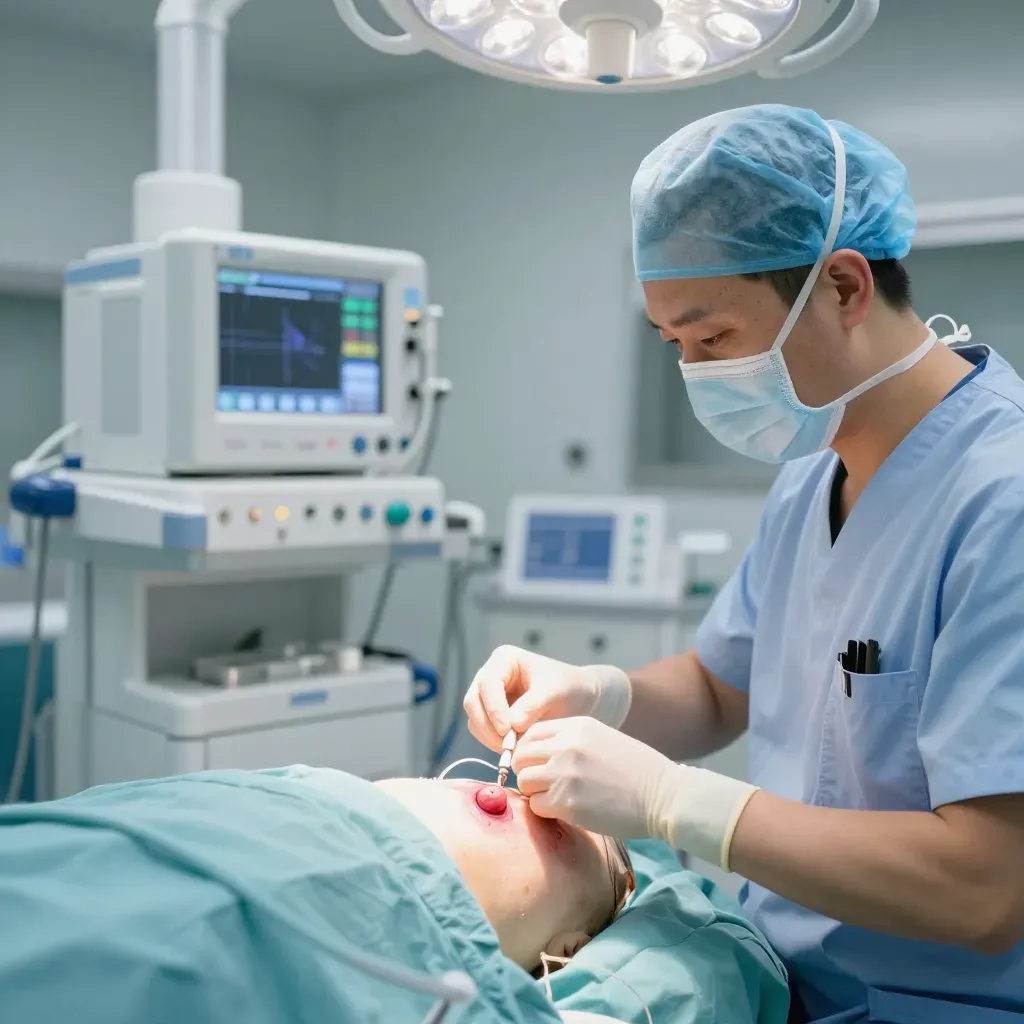
Deep or infected cysts require professional medical extraction
Deep cysts sit far below the skin surface and cannot be safely reached with household tools. Medical intervention prevents serious complications like cellulitis, abscess formation, and permanent scarring. Infected cysts contain bacteria that require prescription treatment.
Emergency Warning Signs
- Rapidly spreading redness or warmth
- Severe pain that worsens with touch
- Fever, chills, or general malaise
- Pus with foul odor or unusual color
- Red streaks extending from cyst site
- Cyst larger than 1 centimeter
- Duration longer than 2 weeks
Medical Treatment Options
Procedure | When Used | Recovery Time |
|---|---|---|
Incision and drainage | Large, pus-filled cysts | 3-7 days |
Steroid injection | Inflamed but not infected | 24-48 hours |
Oral antibiotics | Active infection present | 7-10 days |
Complete surgical excision | Recurrent or chronic cysts | 1-2 weeks |
Laser hair removal | Preventing future cysts | Multiple sessions |
Dermatologists use sterile technique under controlled conditions. They numb the area with local anesthesia before making precise incisions. This prevents unnecessary tissue damage and reduces scarring risk. Doctors may send cyst contents for lab analysis if cancer is a concern.
Professional removal costs $100-$500 depending on complexity. Insurance often covers infected cyst treatment. Recurring cysts may indicate underlying conditions like hidradenitis suppurativa requiring specialized care. Long-term prevention through laser hair removal eliminates future cyst formation in treated areas.
Post-Procedure Medical Care
- Prescription antibiotic ointment application
- Oral antibiotics for 7-10 days
- Wound check after 48 hours
- Suture removal if needed after 7-10 days
- Follow-up appointment for healing assessment
Medical extraction ensures complete cyst wall removal, preventing recurrence. DIY attempts often leave fragments behind, causing cysts to return larger and more infected. When in doubt, schedule a dermatology appointment rather than risk complications.
Prevention strategies reduce future cyst formation risk
Consistent prevention stops ingrown hairs before they become cysts. Focus on hair removal technique, skin preparation, and aftercare. These methods reduce follicle trauma and keep hair growing in the right direction.
Shaving Best Practices
Always shave with hair growth direction, not against it. Use a sharp, clean razor—replace blades after 5-7 uses. Wet skin with warm water for 3 minutes before shaving. Apply fragrance-free shaving gel or cream to reduce friction. Rinse blade after each stroke. Avoid stretching skin taut while shaving.
Exfoliation Schedule
Method | Frequency | Best For |
|---|---|---|
Physical scrub | 2-3 times weekly | Body areas |
Chemical exfoliant (salicylic acid) | Daily | Face, sensitive skin |
Dry brushing | Before showering | Legs, arms |
Exfoliating gloves | Every other day | All body areas |
Clothing and Lifestyle Adjustments
- Wear loose cotton underwear and breathable fabrics
- Change out of sweaty clothes immediately after workouts
- Avoid tight jeans or leggings that create friction
- Wash new clothing before first wear
- Use fragrance-free laundry detergent
Long-Term Hair Removal Solutions
Laser hair removal eliminates ingrown hairs by destroying follicles. Requires 6-8 sessions for permanent reduction. Works best on dark hair. Cost ranges $200-500 per area. Electrosis treats individual follicles with electric current—effective for all hair colors but more time-intensive. Both methods prevent future cyst formation in treated areas.
Post-Hair Removal Skin Care
- Apply cold compress for 5 minutes after shaving
- Use non-comedogenic moisturizer within 3 minutes
- Avoid touching or picking at bumps
- Apply tea tree oil or witch hazel as natural antiseptic
- Skip deodorant for 24 hours after armpit shaving
Moisturize daily with products containing lactic acid or urea to keep skin soft. These ingredients gently exfoliate while hydrating. For chronic issues, ask your doctor about topical retinoids that regulate skin cell turnover and prevent follicle blockage.