
Table of Contents
Ingrown hair cysts form when removed hair grows back into skin
Shaving waxing plucking create sharp tips that pierce follicle walls
Cysts show as firm bumps under skin lasting weeks or months
Home treatment works only for small uninfected cysts
Use warm compresses and gentle exfoliation
Never squeeze deep lumps
See doctors for large painful or infected cysts
Medical options include sterile drainage antibiotics steroid injections
Prevention requires proper shaving technique regular exfoliation loose clothing
Laser hair removal permanently destroys follicles and reduces recurrence by over 90%
Question | Answer |
|---|---|
What causes ingrown hair cysts | Hair removal methods create sharp tips that grow back into skin |
Can I treat cysts at home | Only small uninfected cysts respond to warm compresses and gentle exfoliation |
When should I see a doctor | Seek medical care for large painful infected or recurring cysts |
How do I prevent ingrown hair cysts | Use proper shaving technique exfoliate regularly and wear loose clothing |
Does laser hair removal stop cysts | Laser permanently destroys follicles and reduces recurrence by over 90% |
What causes ingrown hair cysts and how to identify them
What triggers cyst formation
Ingrown hair cysts develop when hair curls back into skin instead of growing outward. The follicle becomes blocked and creates a protective barrier around trapped hair, triggering inflammation and swelling beneath the surface.
Common causes include:
- Shaving, waxing, plucking or tweezing that removes only visible hair shafts while leaving follicles intact
- Coarse or curly hair growing at improper angles
- Frequent hair removal in the same area causing repeated trauma
- Clogged follicles from dead skin cells, oil or debris
- Tight clothing forcing hair to grow sideways into skin
High-risk areas include legs, inner thighs, beard region, and bikini line where hair is coarser and removal is more frequent. Improper technique creates sharp hair tips that easily pierce follicle walls.
How to recognize an ingrown hair cyst
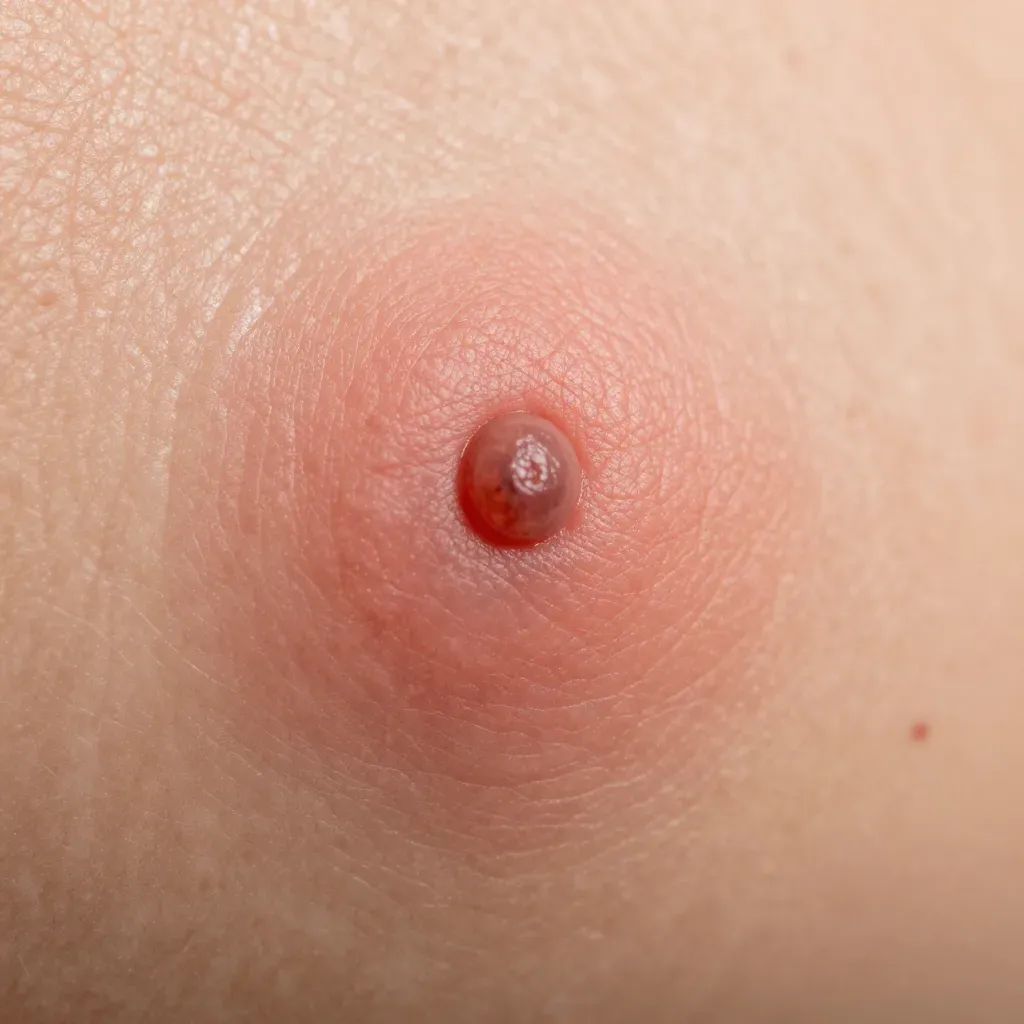
These cysts appear as firm bumps under the skin, differing from simple ingrown hairs by size and persistence. While regular ingrown hairs create small red bumps, cysts form deeper in tissue and last weeks or months.
Characteristic | Description |
|---|---|
Appearance | Small painless lump to large infected growth; may contain pus or fluid |
Texture | Hard lump when body creates protective barrier around trapped hair |
Location | Deep in skin tissue where hair removal occurs regularly |
Symptoms | Inflammation, swelling, tenderness, possible redness and warmth |
Duration | Weeks to months if untreated; may recur in same spot |
Infected cysts look like folliculitis—painful bumps with visible pus under the skin. The condition ranges from minor irritation to severely inflamed lesions requiring medical attention. Eruptive vellus hair cysts represent a specific type appearing as multiple small bumps when fine hairs become trapped.
Key identification tip: If a bump persists longer than two weeks, grows larger than a pea, or becomes increasingly painful, it likely a cyst rather than a simple ingrown hair.
Safe home removal techniques and when to avoid DIY
Safe home treatment conditions
Only treat small, uninfected cysts at home. Wait for hair to surface naturally. Never squeeze deep lumps—this pushes bacteria deeper and causes scarring.
Home Safe | See Doctor |
|---|---|
Small superficial bump | Large painful lump |
No/minimal tenderness | Severe pain |
Slight pink color | Red, warm, swollen |
Single occurrence | Recurring cyst |
Hair visible under skin | No visible hair |
Step-by-step home method
Apply warm compress for 10-15 minutes three times daily to soften skin. Cleanse with antiseptic. Use sterile needle to gently lift hair loop—never dig. Apply topical antibiotic. Stop if hair does not surface after 2-3 attempts.
- Warm compresses reduce inflammation
- Gentle exfoliation helps release trapped hair
- Topical retinoids or salicylic acid speed healing
- Tea tree oil reduces mild inflammation
- Loose clothing prevents friction
When DIY removal is dangerous
Avoid all home attempts for cysts showing infection signs or located in high-risk areas.
- Pus, spreading redness, warmth, or fever indicate infection
- Face, bikini line, and armpits need professional care
- Diabetes or immune issues increase infection risk
- Dark skin tones scar easily from improper removal
- Cysts larger than pea size require medical drainage
Seek immediate medical attention if cyst grows rapidly, causes severe pain, or does not improve after one week of home care.
Medical treatments for persistent or infected cysts
Professional removal procedures
Doctors perform sterile extraction using local anesthesia. Incision and drainage releases fluid and hair from large cysts. Sterile needle extraction works for superficial cysts. Complete surgical excision removes recurrent cysts and surrounding tissue.
Medication-based treatments
Oral isotretinoin shrinks severe cysts over 4-6 months. Antibiotics clear infections in 7-10 days. Topical retinoids and lactic acid keep follicles clear. Steroid injections reduce inflammation within 24-48 hours.
Treatment | Best For | Result Timeline |
|---|---|---|
Incision & Drainage | Large painful cysts | Immediate relief, 1-2 week healing |
Antibiotics | Infected cysts | 7-10 days |
Steroid Injection | Inflamed non-infected cysts | 24-48 hours |
Isotretinoin | Severe recurrent cases | 4-6 months |
Laser/Electrolysis | Chronic recurring cysts | Permanent after multiple sessions |
When to get immediate medical care
- Cyst larger than pea size or persists beyond 6 weeks
- Severe pain, rapid growth, or spreading redness
- Fever, pus, or warm skin indicating infection
- Recurrent cysts in same location
- Cysts on face, genitals, or sensitive areas
- Diabetes, immune disorders, or poor healing
Post-treatment care requires keeping area clean, avoiding hair removal until healed, and completing full antibiotic courses. Doctors may recommend laser hair removal for chronic cases to permanently eliminate problematic follicles and prevent recurrence.
Prevention strategies to stop cysts from forming
Proper hair removal technique
Shave with grain using sharp single-blade razors. Replace blades every 5-7 uses. Apply shaving cream to soften hair before removal. Avoid pulling skin taut while shaving—this creates sharp hair tips that pierce follicle walls. Waxing pulls hair from root but increases cyst risk if done improperly.
- Use electric trimmers for curly hair prone to ingrown
- Never dry shave or reuse dull blades
- Clean tools with alcohol after each use
- Wait 48 hours between shaves in same area
- Use warm water to open pores before removal
Exfoliation and skin care routine
Exfoliate 2-3 times weekly with salicylic acid, glycolic acid, or gentle scrub. Removes dead skin cells that clog follicles and trap growing hair. Apply non-comedogenic moisturizer daily to reduce friction and irritation. Use topical retinoids to keep follicles clear and promote proper hair growth. British Association of Dermatologists recommends chemical exfoliation over physical scrubbing for sensitive areas.
Product | Frequency | Benefit |
|---|---|---|
Chemical exfoliant | 2-3x/week | Prevents clogged follicles |
Moisturizer | Daily | Soothes irritation |
Retinoid cream | Daily | Keeps pores open |
Tea tree oil | Spot treatment | Reduces bacteria |
Clothing and lifestyle changes
Wear loose breathable fabrics especially after hair removal. Avoid tight underwear on bikini line or compression shorts on thighs. Change out of sweaty clothes immediately. Shower after exercise to prevent bacterial buildup. Friction from tight clothing forces hair to grow sideways into skin.
Permanent prevention solutions
For chronic recurring cysts, laser hair removal permanently destroys problematic follicles after 6-8 sessions. Works best on dark hair and light skin. Electrolysis treats all skin types but covers smaller areas. Both eliminate future ingrown hairs in treated zones. Cleveland Clinic notes laser treatment reduces cyst recurrence by over 90% in treated areas.
When laser hair removal helps with recurrent cysts
How laser stops cyst formation
Laser hair removal destroys hair follicles permanently.
This eliminates the root cause of ingrown hair cysts.
The laser targets pigment in hair, heating follicles to prevent future growth.
This stops hair from curling back into skin and creating cysts.
Best candidates have dark hair and light skin for maximum contrast.
Diode lasers work well for deeper follicles in bikini and beard areas.
IPL devices help milder cases but require more sessions.
Cleveland Clinic reports over 90% reduction in cyst recurrence after completing treatment series.
Professional vs at-home devices
Professional | At-Home |
|---|---|
Stronger lasers, fewer sessions | Weaker devices, more sessions |
$200-500 per area | $200-500 one-time cost |
All skin types safely treated | Best for light skin, dark hair |
Requires appointments | Convenient, use anytime |
Medical supervision | User error risk |
Treatment schedule and results
Most people need 6-8 sessions spaced 4-6 weeks apart.
Results appear after 2-3 treatments.
Maintenance sessions every 6-12 months prevent regrowth.
Works best on coarse hair in legs, bikini, and beard areas.
- Reduces cyst formation by 90% in treated areas
- Eliminates need for shaving, waxing, plucking
- Prevents scarring from repeated cysts
- Cost-effective long-term vs ongoing hair removal
When to consider laser
Consider laser if you get 3+ cysts monthly.
Chronic cysts lasting months also qualify.
Scarring from repeated infections indicates need for permanent solution.
Works for all body areas including brazilian laser hair removal and facial zones.
Dark skin requires Nd:YAG lasers to avoid pigmentation changes.
Check best laser hair removal for black skin guidelines.
See professional vs at-home laser hair removal comparison for your skin type.
At-home devices work for maintenance but professional treatment resolves severe recurrent cysts faster.