
Table of Contents
Ingrown hairs cause dark spots when hair grows back into skin, triggering inflammation and melanin overproduction.
Treat active ingrowns with warm compresses, gentle exfoliation, and salicylic acid—never pick or squeeze.
Fade marks with retinoids, vitamin C, niacinamide, and daily SPF 30+.
Prevent recurrence using single-blade razors, chemical exfoliants, and loose clothing.
See a dermatologist for large, painful bumps or infection.
Laser hair removal permanently stops the cycle.
Question | Answer |
|---|---|
What causes dark spots after ingrown hairs? | Post-inflammatory hyperpigmentation occurs when skin produces excess melanin during healing. |
How do you safely treat an active ingrown hair? | Apply warm compresses, gently exfoliate, use salicylic acid, and extract only with sterile tools if visible. |
What ingredients fade ingrown hair dark spots? | Retinoids, vitamin C, niacinamide, azelaic acid, and hydroquinone effectively interrupt melanin production. |
How can you prevent ingrown hairs and dark spots? | Use single-blade razors, shave with hair growth, apply chemical exfoliants, moisturize, and wear loose clothing. |
When should you see a dermatologist? | Seek professional help for bumps larger than pea size, spreading redness, severe pain, or no improvement after 5 days. |
Understand what causes ingrown hairs and dark spots
Ingrown hairs and dark spots connect directly.
Hair grows back into skin instead of out.
This triggers inflammation and pigment changes.
Understanding this mechanism drives effective ingrown hair dark spot removal.
The cycle starts with improper hair growth and ends with visible discoloration.
Ingrown hair formation
Sharp hair tips curl back into follicles.
Dead skin cells block hair exit points.
Shaving cuts hair at sharp angle below skin surface.
Curly or coarse hair types twist naturally.
Tight clothing presses hair into skin.
Improper hair removal techniques increase risk significantly.
- Shaving too close to skin surface
- Waxing pulls hair unevenly or breaks it below skin
- Friction from synthetic fabrics or tight jeans
- Clogged pores from heavy lotions or body butters
- Genetic curly or coarse hair texture
- Pulling skin taut during shaving creates snap-back effect
- Using dull razors that tug instead of cut
Dark spot development
Post-inflammatory hyperpigmentation creates dark marks.
Skin produces extra melanin after inflammation.
Picking or squeezing worsens discoloration dramatically.
UV exposure darkens existing spots within days.
Healing process leaves brown patches that persist for months.
Repeated ingrown hairs in same area intensify darkness and size.
- Exposing healing skin to sunlight without SPF
- Scratching or picking at ingrown bumps
- Using harsh scrubs on inflamed areas
- Applying perfume or alcohol-based products
- Delaying treatment of active ingrown hairs
Risk factor comparison
Factor | Ingrown Risk | Dark Spot Risk |
|---|---|---|
Shaving with dull blades | High | Medium |
Waxing sensitive areas | Medium | High |
Curly or coarse hair | High | Medium |
Medium to dark skin | Low | Very High |
Tight clothing daily | Medium | Low |
Picking at bumps | Low | Very High |
No sunscreen use | Low | High |
Prevention starts with proper hair removal technique.
Gentle exfoliation clears dead skin barriers.
Moisturizing softens hair for easier growth.
Sunscreen stops hyperpigmentation from worsening.
Consistent routine breaks the cycle.
Treat active ingrown hairs safely to prevent further damage
Treat ingrown hairs immediately to stop dark spots.
Safe methods reduce inflammation fast.
Wrong techniques worsen discoloration.
Follow these steps for safe ingrown hair dark spot removal prevention.
Identify active ingrown hairs
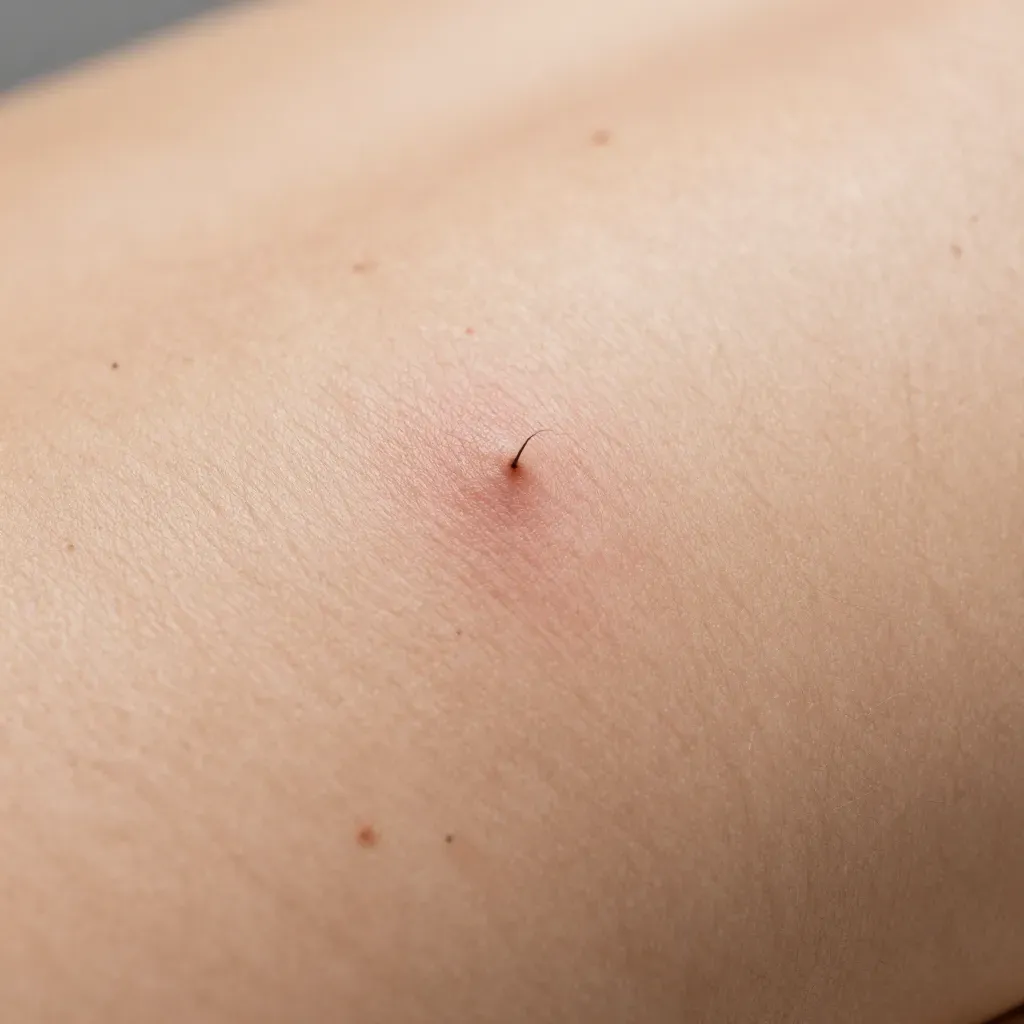
Look for red bumps with hair trapped underneath.
Pus indicates infection, not just inflammation.
Painful swelling means deeper ingrowth.
Visible dark spot beneath bump suggests older issue.
Early treatment prevents hyperpigmentation formation.
- Small red bump with white tip
- Tender to touch but not throbbing
- Hair visible under thin skin layer
- No spreading redness or warmth
Safe treatment steps
Apply warm compress for three minutes.
This softens skin and brings hair closer to surface.
Exfoliate gently with soft washcloth.
Use circular motions, not scrubbing.
Apply salicylic acid or benzoyl peroxide gel.
These reduce inflammation and kill bacteria.
If hair emerges, use sterilized tweezers only.
Pull straight out, never dig sideways.
Apply antibiotic ointment immediately after.
- Never squeeze or pop the bump
- Stop if bleeding occurs
- Clean tools with alcohol before use
- Wash hands thoroughly first
- Limit extraction attempts to two tries
Products that work fast
Product Type | How It Works | Application Frequency |
|---|---|---|
Salicylic acid 2% | Dissolves dead skin blocking hair | Once daily |
Benzoyl peroxide 5% | Kills bacteria, reduces swelling | Once daily |
Tea tree oil (diluted) | Natural anti-inflammatory | Twice daily |
Warm compress | Softens skin, draws hair out | 3-4 times daily |
Hydrocortisone 1% | Reduces redness and irritation | Twice daily for 3 days max |
What destroys skin and creates spots
Picking creates wounds that scar.
Squeezing pushes bacteria deeper.
Harsh scrubs cause micro-tears.
These actions guarantee dark marks.
- Avoid needles or pins completely
- Skip abrasive exfoliants on active bumps
- Never apply undiluted essential oils
- Stop all hair removal until healed
- Skip makeup or concealer on area
When professional help becomes necessary
See dermatologist if bump grows larger.
Spreading redness indicates infection.
Multiple ingrown hairs cluster together.
Pain becomes severe or throbbing.
No improvement after 5 days home treatment.
Doctor can extract safely and prescribe topical retinoids.
These prevent future ingrown hairs and fade existing spots.
Use proven methods to fade hyperpigmentation and dark marks
Dark spots fade with consistent treatment.
Target melanin production and skin cell turnover.
Results take 8-12 weeks, not days.
Active ingredients that work
These compounds interrupt melanin production effectively.
Ingredient | Mechanism | Strength | Frequency |
|---|---|---|---|
Retinoids | Accelerates cell turnover | 0.25-0.5% | Nightly |
Vitamin C | Antioxidant brightening | 10-20% | Morning |
Niacinamide | Blocks melanin transfer | 4-5% | Twice daily |
Azelaic acid | Gentle exfoliant | 10-20% | Daily |
Hydroquinone | Inhibits melanin synthesis | 2-4% | 8 weeks max |
Professional treatment options
Dermatologist procedures work faster for stubborn spots.
- Chemical peels with 20-30% glycolic acid
- Microneedling breaks pigment clusters
- Laser therapy targets melanin precisely
- Prescription tretinoin 0.1%
Laser hair removal stops future ingrowns while fading marks.
Timeline and expectations
Week 4: spots look 10-15% lighter.
Week 8: 30-40% improvement visible.
Week 12: 50-70% fading with consistent use.
Mistakes that worsen hyperpigmentation
These actions undo all progress.
- Skipping SPF 30+ daily
- Layering retinoids, acids, and vitamin C together
- Exfoliating active inflammation
- Using lemon juice or baking soda
- Picking at flaking skin
Non-negotiable sun protection
UV exposure darkens spots within minutes.
SPF 30+ blocks this reaction completely.
- Apply SPF 30 every morning
- Reapply every 2 hours outdoors
- Choose zinc oxide for sensitive bikini area
- Wear loose clothing over treated skin
Post-treatment sun avoidance speeds healing.
Implement prevention strategies to stop recurrence
Prevention stops the cycle permanently.
Build these habits into daily routine.
Change hair removal technique
Multi-blade razors cut hair too short below skin.
Switch to single-blade safety razors.
Shave with hair growth direction, not against.
Leave slight stubble visible.
Laser hair removal eliminates problem permanently.
- Replace blades every 5-7 shaves
- Use shaving cream, never soap
- Exfoliate 24 hours before shaving
- Wait 48 hours post-treatment before next shave
Exfoliate on schedule
Chemical exfoliants prevent dead skin buildup.
Physical scrubs irritate and worsen spots.
Skin Type | Acid | Frequency |
|---|---|---|
Normal | Glycolic 5% | Daily |
Sensitive | Lactic 5% | 3x/week |
Very sensitive | PHA 5% | 2x/week |
Moisturize strategically
Dry skin traps hairs underneath.
Lightweight, non-comedogenic lotions keep follicles clear.
- Apply within 3 minutes after showering
- Choose salicylic acid moisturizers for problem areas
- Avoid heavy butters on bikini area
Reduce friction
Tight clothing forces hairs to grow sideways.
- Wear cotton underwear daily
- Skip tight leggings for 24 hours post-shave
- Change out of sweaty clothes immediately
Follow daily product order
Time | Step 1 | Step 2 | Step 3 |
|---|---|---|---|
Morning | Cleanse | Vitamin C serum | SPF 30+ |
Evening | Cleanse | Exfoliant (3x/week) | Niacinamide moisturizer |
Consistency beats intensity.
Missing two days sets progress back one week.
Know when professional dermatologist treatment is necessary
Some ingrown hairs resist home treatment completely.
Professional intervention prevents permanent scarring.
Recognize these warning signs early.
Red flags requiring immediate care
- Bump grows larger than pea size
- Redness spreads beyond 1-inch diameter
- Pus drains with foul odor
- Fever accompanies the area
- Pain becomes throbbing or unbearable
- Dark spot triples in size within weeks
- Multiple ingrown hairs cluster in one area
- Scar tissue forms with raised texture
Professional treatment options
Dermatologists use medical-grade procedures.
Treatment | Purpose | Sessions Needed |
|---|---|---|
Steroid injection | Reduces inflammation within 24 hours | 1-2 |
Professional extraction | Removes deep ingrown hairs safely | 1 |
Chemical peel | Fades dark spots and prevents new ingrowns | 3-6 |
Laser hair removal | Stops hair growth permanently | 6-8 |
Microneedling | Breaks up pigment and smooths texture | 3-4 |
Laser hair removal eliminates root cause completely.
Prescription-strength topicals
Doctors prescribe stronger formulas than OTC.
- Tretinoin 0.1% – speeds cell turnover dramatically
- Hydroquinone 4% – fades dark spots in 6 weeks
- Triamcinolone cream – reduces inflammation
- Clindamycin – treats bacterial infection
Cost vs benefit analysis
Treatment | Cost Range | Success Rate |
|---|---|---|
Extraction + injection | $150-300 | 95% |
Chemical peel series | $600-1200 | 85% |
Laser hair removal | $800-2000 | 90% |
Microneedling series | $900-1500 | 80% |
Insurance rarely covers cosmetic procedures.
However, infected ingrown hairs qualify as medical.
What to expect during visit
Doctor examines affected area under magnification.
They assess infection depth and pigmentation severity.
Extraction takes 5-15 minutes with sterile tools.
Injections work within 24-48 hours.
Post-treatment care is mandatory
Follow doctor's instructions exactly.
- Apply prescribed creams twice daily
- Avoid sun completely for 72 hours
- Skip all hair removal for 1-2 weeks
- Use gentle cleanser only
- Return for follow-up in 4 weeks
Post-laser care prevents complications.
Prevention after professional treatment
Continue maintenance routine forever.
Switch to permanent hair removal methods.
Monthly chemical peels prevent recurrence.
Daily SPF 50+ stops new dark spots.
Skincare investment saves money long-term.