
Table of Contents
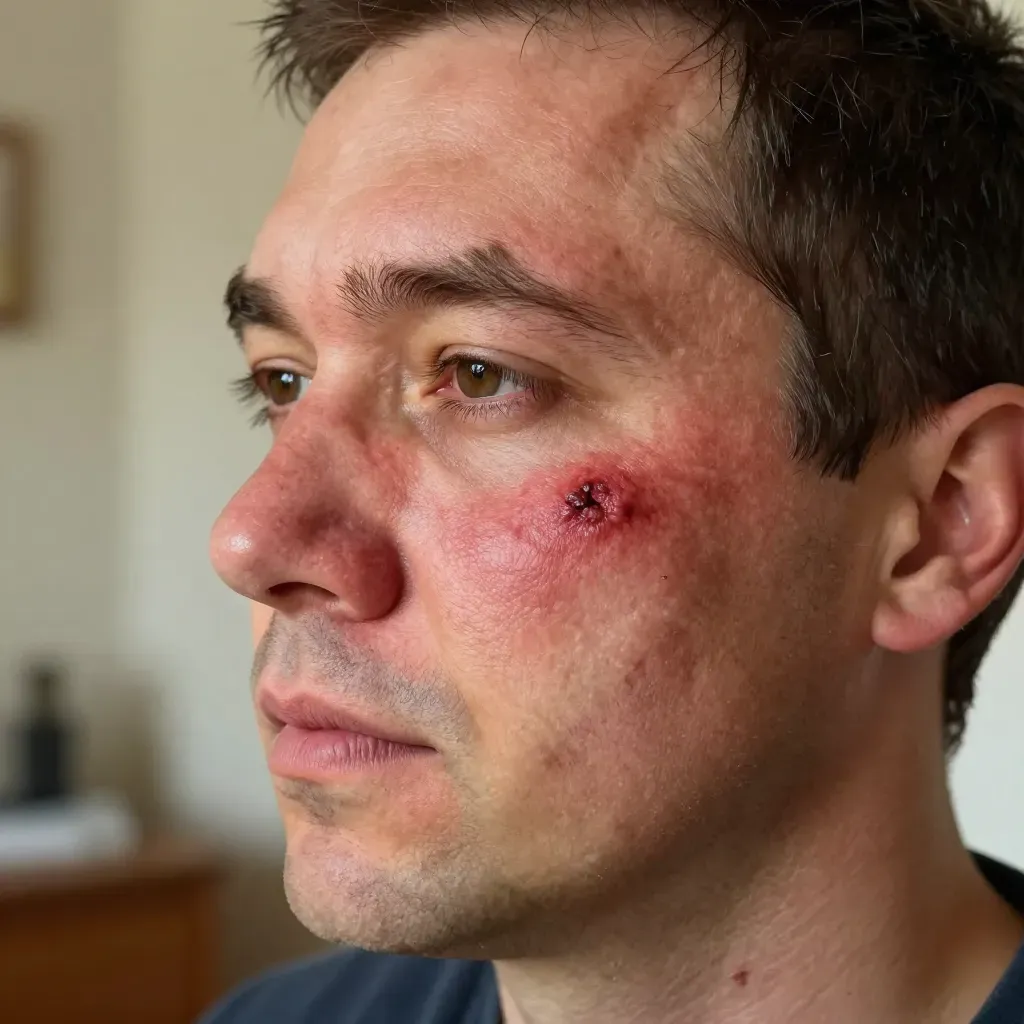
Ingrown hair keloid scars develop when trapped follicles trigger chronic inflammation and excess collagen production.
Darker skin tones and family history increase risk dramatically.
Common problem areas include beard, chest, and pubic region.
Razor bumps, tight clothing, and repeated trauma drive the inflammatory cycle.
Early intervention prevents permanent disfiguring scars.
Steroid injections flatten keloids with 70% success rate.
Combining laser therapy with steroids boosts improvement to 85%.
Silicone sheets and pressure massage help only newer scars.
Prevention means shaving with hair growth using sharp single blades.
Laser hair removal eliminates risk permanently.
See dermatologist immediately for keloids larger than 1 inch or causing pain.
Surgical excision plus radiation offers 90% success for severe cases.
Question | Answer |
|---|---|
What causes ingrown hair keloid scars? | Trapped follicles trigger chronic inflammation and excess collagen. |
Who faces highest risk? | People with darker skin tones, family history, and repeated trauma face highest risk. |
What treatments work best? | Steroid injections and laser therapy combined achieve 85% success. |
Can home remedies help? | Silicone sheets and massage help only newer scars. |
When should you see a dermatologist? | Seek care for keloids over 1 inch, severe pain, or rapid growth. |
Ingrown hair keloid scars form from chronic inflammation
Ingrown hair keloid scars develop when hair follicles become trapped beneath the skin's surface. The body responds to this irritation with an inflammatory reaction. This inflammation triggers excessive collagen production during the healing process.
People with darker skin tones are more susceptible to keloid formation. The condition often affects areas where hair removal occurs frequently. Common locations include the beard area, chest, and pubic region.
Causes of Chronic Inflammation
- Razor bumps from shaving
- Tight clothing rubbing against skin
- Repeated trauma to the same area
- Bacterial infection of hair follicles
The inflammatory cycle continues as new hairs attempt to grow. This creates a feedback loop of irritation and collagen overproduction. Over time, the raised scar tissue expands beyond the original injury site.
Risk Factors
Risk Factor | Impact Level |
|---|---|
Family history of keloids | High |
Age (15-45 years) | Moderate |
Skin trauma | High |
Certain medications | Low |
Early intervention is crucial for preventing keloid formation. The longer inflammation persists, the more likely permanent scarring becomes. Treatment should begin as soon as symptoms appear.
Medical treatments include steroid injections and laser therapy
Dermatologists offer several proven medical treatments for ingrown hair keloid scars. These procedures target the overgrown scar tissue directly and minimize recurrence risks.
Steroid Injections
Intralesional corticosteroid injections remain the first-line treatment. Doctors inject triamcinolone acetonide directly into the keloid. This reduces inflammation and collagen production. Most patients receive injections every 4-6 weeks. Treatment typically requires 4-8 sessions over 3-6 months. Success rates reach 70% for flattening scars. Side effects include skin thinning and lightening at injection sites. Pain during injection is minimal and brief.
Laser Therapy
Pulsed dye laser and fractional CO2 laser treatments target blood vessels in keloids. Laser energy breaks down scar tissue and reduces redness. Sessions occur monthly for 3-5 treatments. Laser therapy works best when combined with steroid injections. Patients experience minimal downtime. Results appear gradually over several months. Cost per session ranges from $200-500 depending on keloid size.
Combination Approaches
Doctors often combine multiple treatments for better outcomes. Steroid injections plus laser therapy show 85% improvement rates. Surgical excision followed by radiation therapy prevents regrowth. Cryotherapy combined with steroid injections reduces keloid size faster. Combination treatments cost more but require fewer total sessions.
Treatment Comparison
Treatment | Success Rate | Sessions Needed | Recurrence Risk | Avg Cost |
|---|---|---|---|---|
Steroid Injections | 70% | 4-8 | Medium | $100-300 |
Laser + Steroids | 85% | 3-5 | Low | $500-1500 |
Cryotherapy | 50% | 2-4 | Medium | $200-600 |
Surgery + Radiation | 90% | 1 + 3-5 radiation | Low | $3000-8000 |
Insurance typically covers medically necessary treatments. Cosmetic procedures may require out-of-pocket payment. Treatment choice depends on keloid size, location, and patient history. Board-certified dermatologists provide the safest outcomes.
Home remedies involve silicone sheets and pressure massage
Home remedies offer affordable keloid management options. These work best on newer scars. Consistent daily application over months produces results.
Silicone Sheets
Silicone sheets flatten scar tissue. Apply to clean, dry skin. Wear 12-24 hours daily. Replace every 2-4 weeks. Results show after 3-6 months. Reduces collagen overproduction. Costs $20-50 per box. Available OTC at pharmacies.
Pressure Massage
Massage breaks down scar fibers. Use firm circular pressure for 5-10 minutes twice daily. Apply moisturizer first. Start at keloid edges, work toward center. Continue minimum 3 months. Combine with silicone sheets. Stop if pain or bleeding occurs.
Additional Home Treatments
- Onion extract gels reduce redness
- Honey provides antibacterial protection
- Pressure earrings for ear keloids
- Compression garments for body keloids
- Vitamin E oil softens tissue
Home Remedy Comparison
Method | Cost | Time to Results | Effectiveness |
|---|---|---|---|
Silicone Sheets | $20-50 | 3-6 months | Moderate |
Pressure Massage | Free | 6-12 months | Low-Moderate |
Onion Extract | $15-30 | 2-4 months | Low |
Home treatments cannot remove large keloids. Seek medical care for scars wider than 1 inch. Combine home and professional care for best results. Track progress with monthly photos.
Prevention requires proper hair removal techniques
Prevent ingrown hair keloid scars through proper hair removal. Technique matters more than tool choice. Consistent practice stops ingrown hairs before they start.
Shaving Best Practices
- Shave after warm shower when hairs are soft
- Use sharp single-blade razors only
- Apply shaving cream liberally
- Shave with hair growth direction
- Rinse blade after each stroke
- Avoid stretching skin taut
- Limit strokes to one per area
Alternative Hair Removal
Consider alternatives if prone to keloids. Laser hair removal prevents ingrown hairs permanently. Electrolysis destroys follicles individually. Depilatory creams dissolve hair at skin surface. Waxing pulls hair from root but risks trauma.
Pre and Post Care
- Exfoliate skin 2-3 times weekly
- Apply warm compress before removal
- Use alcohol-free aftershave products
- Moisturize daily with non-comedogenic lotion
- Wear loose clothing after hair removal
- Avoid touching or picking at bumps
Method Risk Comparison
Method | Keloid Risk | Ingrown Risk | Long-term Cost |
|---|---|---|---|
Shaving | High | High | Low |
Waxing | Medium | Medium | Medium |
Laser | Low | Very Low | High |
Depilatory | Low | Low | Medium |
People with keloid history should avoid shaving completely. Test new products on small skin patches first. Track hair removal frequency and reactions. Adjust methods based on skin response. Prevention costs less than treatment.
See a dermatologist for large painful keloids
Large painful keloids require professional medical intervention. Home treatments cannot remove established thick scar tissue. Dermatologists offer specialized procedures for severe cases.
When to Seek Professional Care
- Keloid larger than 1 inch in diameter
- Severe pain or itching that disrupts daily life
- Rapid growth over a few weeks
- Signs of infection: redness, warmth, pus
- Keloid restricts movement
- Multiple keloids forming in one area
Advanced Treatment Options
Dermatologists perform surgical excision for large keloids. They remove the entire scar tissue mass. Surgery alone has 50-80% recurrence rate. Doctors combine surgery with radiation therapy. Radiation occurs immediately post-surgery. This combination drops recurrence to 10-20%. Treatment requires 3-5 radiation sessions. Total cost ranges $3000-8000. Insurance may cover medically necessary cases.
Treatment Timeline
Procedure | Duration | Recovery Time | Follow-up |
|---|---|---|---|
Initial Consult | 30-60 min | None | Schedule treatment |
Surgical Excision | 45-90 min | 1-2 weeks | Weekly checks |
Radiation Therapy | 15 min/session | None | Daily for 3-5 days |
Post-Care | Ongoing | 6-12 months | Monthly visits |
Choose board-certified dermatologists with keloid experience. Ask about recurrence rates and before-after photos. Discuss all treatment options and costs upfront. Follow post-treatment instructions exactly. Use compression therapy as directed. Attend all follow-up appointments. Monitor for signs of regrowth. Early retreatment prevents large recurrence.