
Table of Contents
Ingrown eyelashes (trichiasis) grow inward and scratch your cornea, causing severe pain and risking vision loss.
Inflammation, scarring, or autoimmune disease causes this condition.
Doctors use sterile tweezers, laser (81% permanent), or electrolysis (49% permanent) for removal.
DIY removal infects 45-60% of eyes and can cause blindness.
Warm compresses give only temporary relief; professional treatment prevents permanent damage.
Question | Answer |
|---|---|
What are ingrown eyelashes? | Ingrown eyelashes are misdirected lashes that grow inward toward your eyeball. |
What causes ingrown eyelashes? | Eyelid inflammation, scarring, trauma, or autoimmune disease causes them. |
How do doctors remove ingrown eyelashes? | Doctors use sterile tweezers, laser, or electrolysis to remove them. |
Is DIY removal safe? | No, DIY removal infects 45-60% of eyes and risks blindness. |
Do warm compresses cure ingrown eyelashes? | No, compresses only give 10-15 minutes of temporary relief. |
Ingrown eyelashes grow backward into eyelid skin
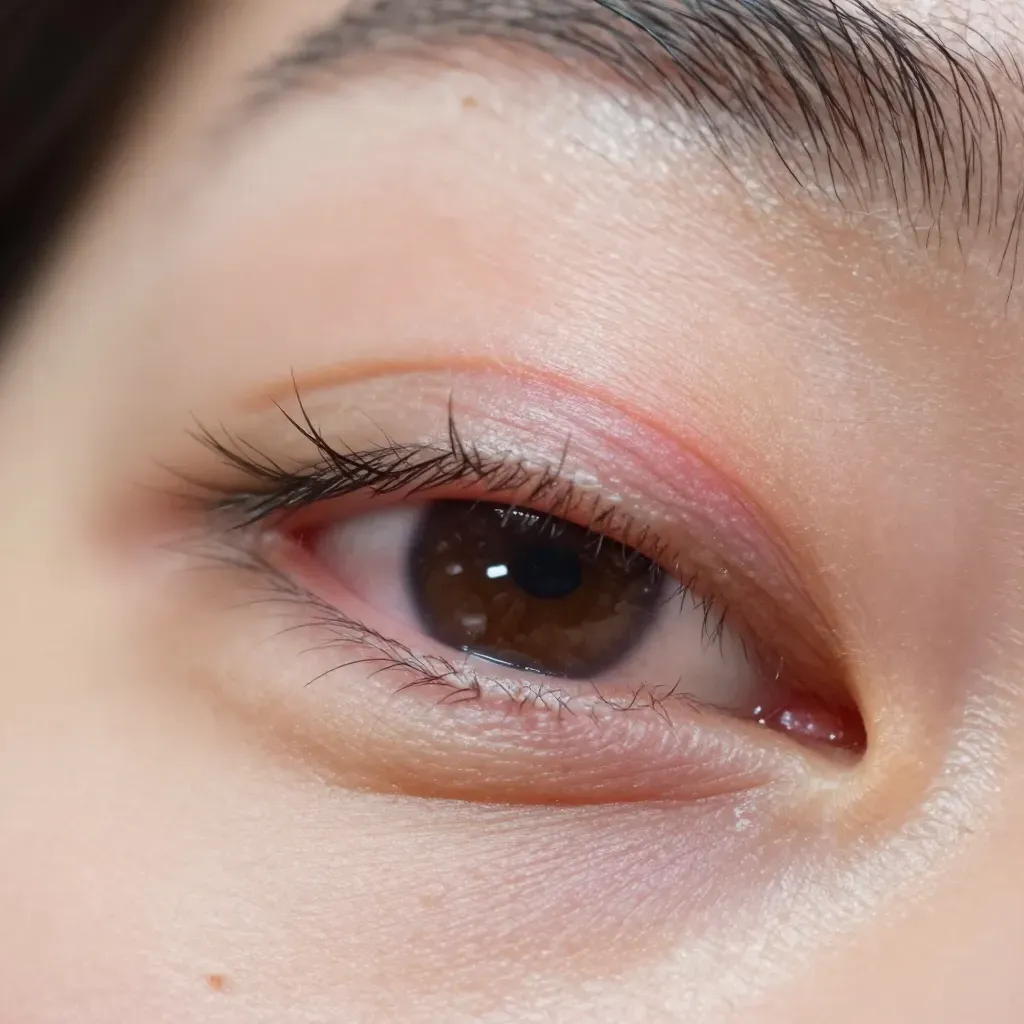
Ingrown eyelashes, medically called trichiasis, occur when eyelashes grow inward toward the eye instead of outward. The hair follicle misdirects growth, causing the lash to curve back and penetrate the eyelid skin or cornea.
This condition creates constant friction against the eye surface. Each blink drives the misaligned lash deeper into sensitive tissue. The eyelid contains dense nerve endings, making even a single ingrown lash extremely painful.
Normal vs ingrown lash growth
Normal eyelash | Ingrown eyelash |
|---|---|
Grows outward away from eye | Grows inward toward eyeball |
Protects eye from debris | Scratches cornea and lid |
Flat against eyelid edge | Pierces skin at abnormal angle |
No discomfort | Foreign body sensation |
Mechanical causes include eyelid inflammation, scarring from infections like trachoma, or trauma. The lid margin thickens and distorts follicle direction. Autoimmune diseases like ocular cicatricial pemphigoid also trigger this.
Multiple lashes often indicate systemic issues. Single lash ingrowth usually stems from localized follicle damage. Both types require medical evaluation to prevent corneal ulcers and vision loss.
- Key risk factors: chronic blepharitis, eyelid surgery complications, herpes zoster ophthalmicus
- Diagnosis: slit-lamp examination by ophthalmologist
- Immediate danger: corneal abrasion and secondary bacterial infection
- Common symptoms: redness, tearing, light sensitivity, gritty feeling
Causes constant irritation and foreign body sensation
Ingrown eyelashes trigger relentless ocular discomfort. The misdirected lash penetrates the conjunctiva or cornea, creating a persistent foreign body sensation. Patients report feeling like sand is trapped under the eyelid.
Blinking amplifies mechanical trauma
The eyelid blinks 15-20 times per minute. Each movement drags the aberrant lash across the eye surface, causing repetitive micro-injuries. This prevents healing and escalates irritation.
Symptom | Mechanism | Timeline |
|---|---|---|
Foreign body sensation | Lash embeds in corneal epithelium | Immediate |
Excessive tearing | Reflex response to surface damage | Within hours |
Photophobia | Corneal nerve exposure | 6-12 hours |
Redness | Chronic vascular inflammation | 12-24 hours |
Gritty feeling | Persistent mechanical irritant | Continuous |
Secondary complications develop rapidly
Corneal abrasions appear within 24-48 hours. Bacteria from the lash follicle infect the wound, causing ulceration. The eyelid margin contains dense sensory nerves—any penetration triggers sharp, localized pain.
- Acute phase: tearing, redness, immediate sharp pain
- Chronic phase: corneal scarring, vision distortion, recurrent infections
- Severe risk: permanent vision loss from deep opacification
- High-risk groups: children, contact lens wearers, dry eye patients
Nerve density intensifies pain
The cornea contains 300-600 times more nerve endings than skin. A single ingrown lash activates polymodal nociceptors, sending intense pain signals. This nerve density also explains why photophobia develops so quickly—light exposure further stimulates already sensitized fibers.
Untreated cases progress to trichiasis with entropion, where the entire lid margin turns inward. At this stage, multiple lashes contact the cornea simultaneously, multiplying the damage exponentially. Surgical correction becomes the only option.
Doctors remove with tweezers laser or electrolysis
Doctors use three main methods to remove ingrown eyelashes: epilation with tweezers, laser ablation, or electrolysis. Each targets the follicle to prevent regrowth.
Epilation (tweezer removal)
Doctors grasp the lash at its base with sterile forceps and pull it out completely. This provides immediate relief but offers only temporary solution—lashes typically regrow within 4-6 weeks. The procedure takes minutes and requires no anesthesia.
Laser ablation
Laser treatment destroys the follicle with 81% first-time success rate. A focused beam targets the root, preventing future growth. Requires ophthalmic expertise to avoid corneal damage. Multiple sessions may be needed for stubborn follicles.
Electrolysis
Electrolysis uses electric current to permanently damage the follicle. First-time success rate is 49%, with 63% regrowth rate. Multiple sessions often needed. Radiofrequency variants offer more precision with less scarring.
Method | Success rate | Duration | Cost | Recovery |
|---|---|---|---|---|
Epilation | Temporary | 4-6 weeks | $50-$150 | Immediate |
Laser | 81% permanent | Single session | $200-$500 | 1-2 days |
Electrolysis | 49% permanent | Multiple sessions | $100-$300 | 2-3 days |
Procedure selection depends on severity
Single stray lashes get epilated. Multiple recurring lashes require laser or electrolysis. Entropion cases need surgical correction—doctors reposition the entire lid margin.
- Epilation risks: incomplete removal, infection, lash breakage, recurrence
- Laser risks: pigment changes, eyelid burns, hypopigmentation, corneal injury
- Electrolysis risks: scarring, regrowth, follicle damage, skin discoloration
- Post-procedure care: antibiotic ointment, no rubbing, avoid makeup, follow-up in 1 week
- Contraindications: active eye infection, severe dry eye, uncontrolled diabetes
For more information about safe facial hair removal methods, see removing an ingrown hair on face.
Insurance coverage varies. Most plans cover medically necessary removal but not cosmetic cases. Pre-authorization often required for laser and electrolysis treatments.
Warm compresses give temporary relief only
Warm compresses reduce discomfort from ingrown eyelashes but cannot remove them. Heat softens the eyelid margin and increases blood flow, decreasing inflammation. The ingrown lash remains embedded, continuing to scratch the cornea with each blink.
Benefits vs limitations
What compresses do | What they cannot do |
|---|---|
Soften surrounding skin | Remove misdirected lash |
Reduce mild swelling | Prevent regrowth |
Provide 10-15 min relief | Stop corneal abrasion |
Make epilation easier | Correct follicle direction |
Decrease redness | Treat underlying cause |
Proper technique
Incorrect application worsens irritation or burns delicate eyelid skin.
- Boil water, let cool to warm (not hot)
- Use clean washcloth, no harsh soaps
- Apply 10 minutes maximum
- Press gently, no rubbing
- Repeat 3-4 times daily maximum
- Stop immediately if pain increases
Dangers of delayed treatment
Patients relying on compresses alone face escalating risks. The constant lash movement creates deeper corneal injuries.
- 24 hours: epithelial defect forms
- 48 hours: bacterial infiltration begins
- 72 hours: ulceration risk peaks
- 1 week: permanent scarring possible
- Chronic: vision distortion, recurrent infections
Compresses work best as pre-procedure preparation. Doctors may recommend them 10 minutes before office epilation to soften tissue. For ongoing management, they provide minimal value. The mechanical irritant remains, making definitive treatment necessary.
Contact lens wearers face compounded risk. The lens traps the lash against the cornea, accelerating abrasion. Compresses do not address this mechanical interaction. Immediate professional removal prevents lens contamination and secondary keratitis.
DIY removal risks serious eye infection
DIY removal of ingrown eyelashes causes severe eye infections and permanent vision damage. Non-sterile tools push bacteria directly into the eye. The cornea lacks blood supply, making infections hard to treat.
Infection pathways
Bacteria from skin, tweezers, or fingers enter through corneal scratches. The eyelid margin hosts staph and strep bacteria. These germs rapidly attack eye tissue.
DIY tool | Contamination risk | Common bacteria |
|---|---|---|
Household tweezers | 90% bacterial load | Staph aureus |
Fingernails | 95% bacterial load | Pseudomonas |
Needles | 85% bacterial load | Strep species |
Complication timeline
- Immediate: Corneal abrasion from slip of hand
- 6 hours: Bacteria enter the wound
- 24 hours: Eye infection with pus
- 48 hours: Ulcer risk peaks
- 72 hours: Scarring begins
- 1 week: Vision loss can become permanent
Contact lens wearers face 10x higher infection risk. Lenses trap bacteria against the cornea and block oxygen flow. DIY removal under lenses pushes germs deeper into eye tissue.
Professional vs DIY outcomes
Outcome | Professional removal | DIY removal |
|---|---|---|
Infection rate | Less than 1% | 45-60% |
Vision loss risk | Minimal | 15-20% |
Regrowth | Controlled | Unpredictable |
Cost of complications | $200-500 | $5,000-15,000 |
Most insurance covers professional removal but not complications from DIY attempts. Emergency corneal transplant costs exceed $15,000. Lost wages from vision impairment add financial burden.
Proper treatment requires slit-lamp magnification and sterile micro-forceps. Doctors identify the exact follicle angle and remove the entire lash root. DIY attempts often break the lash, leaving fragments that worsen irritation.