
Table of Contents
Neck ingrown hairs occur when shaved hair regrows into skin instead of outward.
Multi-blade razors cut hair at sharp angles below skin surface.
Curly hair increases risk by 50% due to natural curl pattern.
Shaving against grain lifts hair creating downward-pointing tips.
Tight clothing and dead skin cells block hair exit.
Prevent by shaving with grain using single-blade safety razors.
Exfoliate daily with salicylic acid to clear pores.
Remove safely with warm compresses and sterile tools when hair loop is visible.
Never squeeze or dig.
Treat infections with benzoyl peroxide wash and antibiotic ointment.
Stop shaving until healed.
Laser hair removal eliminates ingrown hairs permanently after 6-8 sessions for $900-2400 total.
Question | Answer |
|---|---|
What causes neck ingrown hairs after shaving? | Shaving cuts hair below skin creating sharp tips that grow inward especially with curly hair. |
How do you safely remove an ingrown hair? | Apply warm compress for 10 minutes then use sterile tweezers to lift and pull hair in growth direction. |
What prevents neck ingrown hairs? | Shave with hair growth using single-blade razor and exfoliate daily with salicylic acid. |
When should you see a doctor for ingrown hairs? | See doctor if redness spreads after 3 days pus drains for over a week or fever develops. |
Does laser hair removal stop ingrown hairs permanently? | Yes laser destroys follicles eliminating 90% of ingrown hairs after 6-8 sessions permanently. |
Identify what causes neck ingrown hairs after shaving.
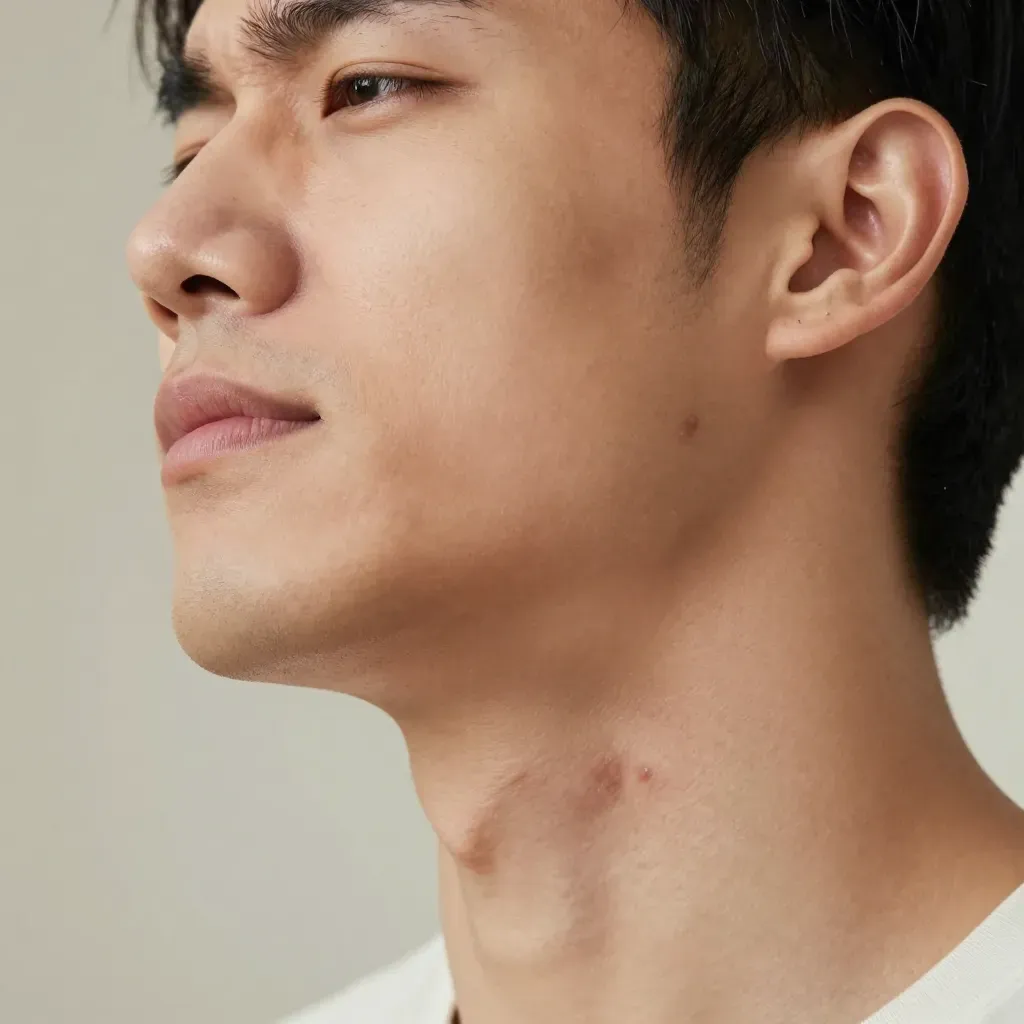
Neck ingrown hairs develop when shaved hair regrows into skin instead of outward. This condition called pseudofolliculitis barbae creates painful red bumps and potential infection. Understanding triggers prevents recurrence.
Primary triggers
Shaving cuts hair at a sharp angle easily piercing skin. Curly or coarse hair naturally curls back toward skin after cutting. Tight collars press on freshly shaved skin trapping emerging hair. Dead skin cells clog follicles blocking normal growth. Bacterial buildup in razors introduces infection.
Hair and skin factors
Coarse facial hair grows at sharp angles from follicles. Curly hair increases ingrown risk by 50% due to natural curl pattern. Oily skin traps hair beneath surface creating blockage. Darker skin tones experience more inflammation and hyperpigmentation. Sensitive skin reacts aggressively to trapped hair.
Shaving technique errors
Pulling skin taut creates ultra-close cuts below surface. Multi-blade razors cut hair too deep beneath skin level. Shaving against grain lifts hair creating sharp downward angle. Dull blades leave jagged tips piercing follicle walls. Insufficient lubrication causes razor drag and uneven cutting.
Cause | Mechanism | Risk Level |
|---|---|---|
Close shaving | Hair cut below skin surface | High |
Curly hair texture | Natural curl directs hair inward | High |
Tight clothing | Physical pressure traps emerging hair | Medium |
Dull blades | Jagged tips pierce follicle wall | Medium |
Against-grain shaving | Sharp hair end points downward | High |
Skipping exfoliation | Dead skin blocks hair exit | Medium |
Men experience neck ingrown hairs more frequently due to beard coarseness and daily shaving demands. The neck's skin is thinner more prone to irritation than facial skin. Shaving over acne or existing bumps worsens condition. Heavy aftershaves clog pores trapping hair. Recognize early signs: small red bumps itching visible hair loop under skin surface. Infected bumps develop white pus-filled heads and increased tenderness. Chronic cases lead to hyperpigmentation and permanent scarring.
Apply safe removal techniques using warm compresses and sterile tools.
Never dig or squeeze ingrown hairs. This drives bacteria deeper causes infection and scarring. Safe removal requires gentle technique proper tools and patience.
Warm compress preparation
Take clean washcloth. Wet with hot water not scalding. Wring out completely. Press firmly on ingrown hair for 10 minutes. Repeat 3-4 times daily until hair surfaces. Heat softens skin opens pores and reduces swelling. Makes hair visible and accessible.
Sterile tool technique
Boil needle or tweezers for 10 minutes. Or wipe with 70% isopropyl alcohol. Let tools cool completely. Wash hands thoroughly. Put on clean gloves if available. Use magnifying mirror for precision. Fine-point tweezers work best.
Step-by-step removal
Clean neck area with antibacterial wash. Apply warm compress for 10 minutes. Sterilize tools. Gently insert needle tip under hair loop. Lift upward slightly. Do not pierce skin. Grasp exposed hair with tweezers. Pull slowly in growth direction. Apply tea tree oil or antiseptic. Cover with bandage if needed.
Essential Steps | Critical Warnings |
|---|---|
Wash hands and neck | Never dig under skin |
Heat compress 10 min | Don't squeeze bump |
Sterilize all tools | Avoid dirty fingers |
Lift hair gently | Skip if no visible loop |
Pull with grain | No shaving for 48 hours |
Apply antiseptic | See doctor if infected |
Stop if bleeding occurs or hair remains hidden. Deep ingrown hairs need dermatologist care. Signs of infection include spreading redness increasing pain pus or fever. Chronic neck ingrown hairs respond well to laser hair removal which eliminates root cause permanently.
Treat infected ingrown hairs with proper hygiene and care.
Stop hair removal now. Infected ingrown hairs create pus-filled bumps spreading bacteria.
Infection identification
White or yellow pus head. Redness spreading beyond edges. Warmth and throbbing pain. Clustered bumps indicate folliculitis. Fever means systemic infection.
Home treatment protocol
Wash hands with antibacterial soap. Clean neck with benzoyl peroxide wash twice daily. Apply warm compress 15 minutes 3 times daily. Use OTC antibiotic ointment like bacitracin. Cover with breathable bandage. Change daily. No touching picking squeezing. Wash pillowcases and collars daily. No shaving until healed.
Medical warning signs
Spreading redness after 3 days needs antibiotics. Large painful lump requires lancing. Fever over 100.4°F signals serious infection. Pus drainage over week won't resolve. Recurring infections damage skin permanently. Diabetes or immune issues need immediate care.
Do This | Never Do This |
|---|---|
Keep clean and dry | Squeeze bump |
Apply warm compress | Shave over area |
Use antibiotic ointment | Use harsh scrubs |
Change bandages | Touch with dirty hands |
See doctor if worsens | Ignore spreading redness |
Chronic infections cause permanent scarring. Dermatologists prescribe stronger antibiotics. Professional ingrown hair removal prevents future infections. Laser treatment eliminates neck ingrown hairs permanently after 6-8 sessions. Cost $150-300 per session stops recurring infections.
Prevent future neck ingrown hairs through grooming adjustments.
Change grooming habits to eliminate neck ingrown hairs permanently. Small adjustments prevent painful bumps.
Shaving technique modifications
Shave with hair growth direction only. Use single-blade safety razor. Set blade to leave 0.5mm hair length. Never pull skin taut. Make single passes per area. Rinse blade after each stroke. Replace blades every 3-5 shaves. Shave every other day maximum. Let hair grow slightly longer between shaves.
Tool and product upgrades
- Ditch multi-blade cartridges
- Switch to safety razor or electric trimmer
- Use sharp blades only
- Apply pre-shave oil to soften hair
- Use shaving cream not gel
- Choose alcohol-free aftershave balm
- Clean tools with alcohol weekly
- Store razors dry not in shower
Skin preparation routine
Exfoliate neck daily with salicylic acid scrub. Shower before shaving to open pores. Apply warm compress for 2 minutes pre-shave. Massage shaving cream in circular motions. Map hair growth direction first. Stretch neck skin gently not tightly.
Post-shave care protocol
- Rinse with cold water to close pores
- Pat dry never rub
- Apply tea tree oil or witch hazel
- Use non-comedogenic moisturizer
- Avoid touching neck for 2 hours
- Skip tight collars for 24 hours
- Change pillowcases daily
- Clean phone screens regularly
Adjustment | Benefit | Implementation |
|---|---|---|
With-grain shaving | Reduces sharp hair tips | Map direction first |
Single-blade razor | Less skin irritation | Use safety razor |
Daily exfoliation | Prevents pore blockage | Salicylic acid scrub |
Blade replacement | Eliminates dull cuts | Every 3-5 uses |
Longer hair length | Prevents inward growth | 0.5mm minimum |
Switch to electric trimmer for zero ingrown risk. Trim hair to 1mm length instead of shaving. Use laser hair removal for permanent solution. Stop shaving completely if chronic ingrown persist. Dermatologists prescribe retinoids to prevent follicle blockage. Consider growing beard to eliminate neck shaving entirely.
Consider laser hair removal for permanent ingrown hair elimination.
Laser destroys follicles preventing regrowth. Stops ingrown hairs permanently. Works for neck beard and body.
How it works
Laser targets hair melanin. Heat destroys follicle. Hair stops growing. No growth equals no ingrown. Medical-grade lasers work best. Diode lasers suit darker skin. Nd:YAG safest for all skin.
Treatment details
6-8 sessions needed. 4-6 weeks apart. 15-30 minutes each. Neck responds fast. Improvement after 2-3 sessions. Permanent results in 6 months.
Cost
$150-300 per session. $900-2400 total. Cheaper than lifetime shaving. Insurance doesn't cover. Payment plans available.
Method | Ingrown Rate | Duration | Cost |
|---|---|---|---|
Shaving | High | 1-2 days | $5000+ lifetime |
Waxing | Medium | 3-4 weeks | $2000/year |
Laser | None | Permanent | $900-2400 one-time |
Best candidates
Chronic ingrown hairs weekly. Scarring and dark spots. Painful razor bumps. Failed other methods. Want permanent fix.
Laser eliminates 90% of ingrown hairs permanently. Dermatologists perform treatments. At-home devices need more sessions. Stop shaving during treatment. Avoid sun. Skin red for 24 hours. Some need yearly touch-ups.
Find certified providers. Check reviews. Get consultation. Darker skin needs experienced tech. Ask about laser type. Patch test first. Most men see dramatic improvement.
Alternative: grow beard. Use electric trimmer at 1mm. No blade contact. Zero ingrown risk. Cheaper short-term. Laser for permanent smooth skin.