
Table of Contents
Ingrown bikini hairs occur when shaved or waxed hair grows back into skin instead of out.
Curly hair and friction triple your risk.
Safe removal needs clean skin, warm compress, sterile tweezers, pulling with hair growth.
Prevent by exfoliating 2-3x weekly, shaving with grain, moisturizing, wearing loose cotton.
Seek medical care for pus, severe pain, or spreading redness.
Laser hair removal permanently prevents them by destroying follicles in 6-8 sessions.
Question | Answer |
|---|---|
What causes ingrown bikini hairs? | Shaving, waxing, tweezing cut hair that grows back into skin, especially curly hair. |
How do I safely remove them? | Clean skin, warm compress, sterile tweezers, pull with hair growth. |
What prevents them? | Exfoliate 2-3x weekly, shave with grain, moisturize, wear loose cotton. |
When should I see a doctor? | Seek care for pus, severe pain, spreading redness, or failed extraction. |
Does laser permanently fix them? | Yes, laser destroys follicles in 6-8 sessions and prevents ingrown hairs permanently. |
Understanding what causes ingrown hairs in the bikini area.
Hair removal methods directly trigger ingrown hairs.
Shaving, waxing, and tweezing remove hair strands but leave follicles intact. New hair grows and curls back into skin instead of outward. This creates painful, itchy bumps. The bikini area suffers most because hair there grows dense and curly. Each method creates specific problems that increase ingrown hair risk.
Method | Why It Causes Ingrown Hairs | Risk Level | Prevention Tip |
|---|---|---|---|
Shaving | Blade cuts hair at sharp angle, sharp tip pierces surrounding skin | High | Use sharp razor, shave with grain |
Waxing | Hair breaks below surface, grows sideways under skin | Medium | Ensure complete removal, exfoliate after |
Tweezing | Leaves fragment behind, new hair gets trapped | Medium | Pull in direction of growth |
Depilatory creams | Dissolves hair at skin level, regrowth sharpens | Low | Limit use to once weekly |
Hair type and genetics create predisposition.
Curly, coarse, or thick hair naturally grows in non-linear patterns. Tight curls push hair back into skin immediately after removal. Bikini area hair tends to be dense and curly. People with naturally curly hair experience ingrown hairs three times more frequently than those with straight hair. Coarse hair has sharper edges when cut, making it easier to pierce skin.
Friction and environment block hair growth.
Tight clothing rubs against freshly waxed or shaved skin. Sweat and oil clog follicles. Dry skin blocks hair exit points. Increased friction causes inflammation that traps hair beneath surface. The bikini area experiences constant friction from underwear and clothing.
- Avoid tight underwear 24 hours after hair removal
- Moisturize before and after to reduce friction
- Exfoliate 2-3 times weekly to clear dead skin cells
- Wear breathable cotton fabrics in bikini area
- Cleanse after sweating to prevent oil buildup
- Apply warm compress before removal to open pores
- Use non-comedogenic products only
Learning safe techniques to remove ingrown hairs at home.
Preparation prevents infection and scarring.
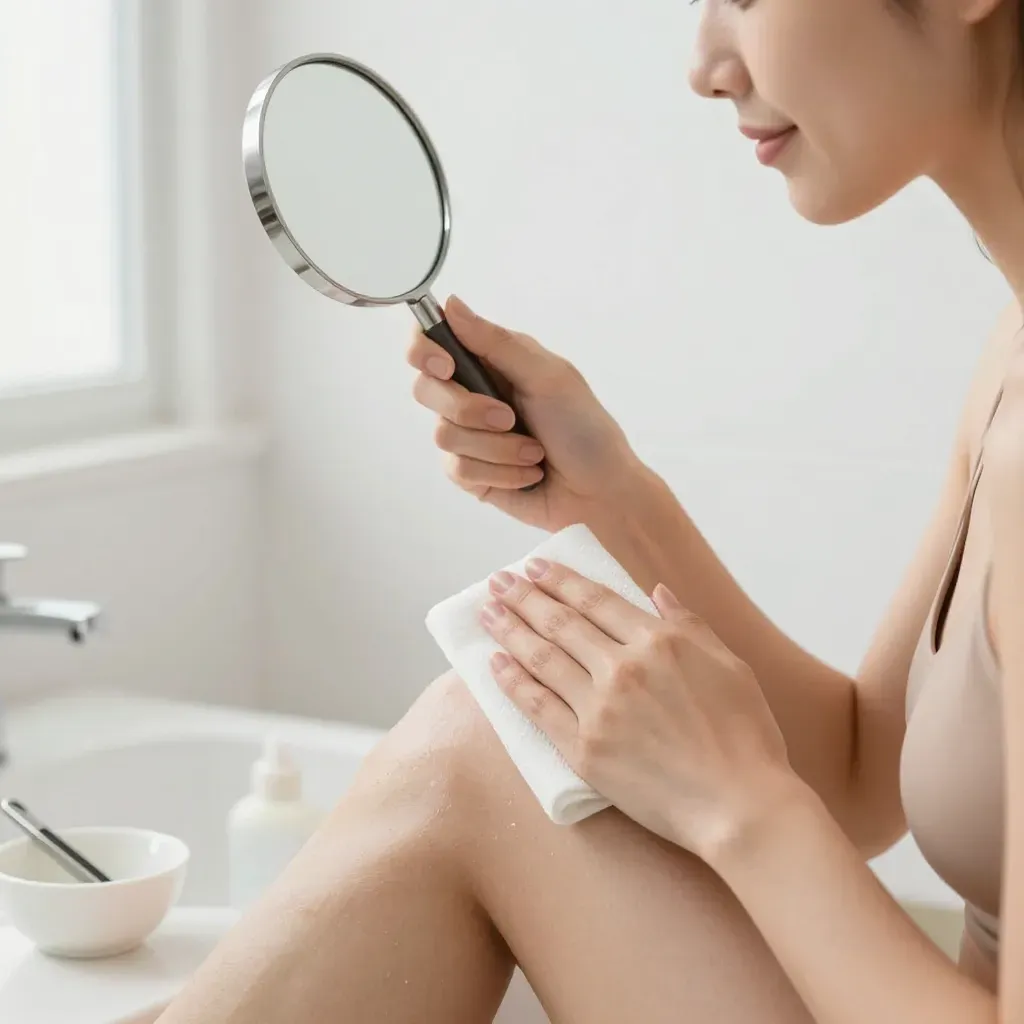
Clean the area with antibacterial soap. Apply warm compress for 5-10 minutes to soften skin and open pores. Sterilize tools with rubbing alcohol. Never attempt removal on infected or cystic bumps. Wait 24-48 hours after hair removal before extracting.
Tools you need for safe extraction.
- Pointed tweezers with fine tip
- Sterile needle or lancet
- Rubbing alcohol for sterilization
- Cotton pads and warm water
- Hydrocortisone cream for aftercare
- Magnifying mirror for visibility
Step-by-step extraction process.
Step | Action | Time | Warning Sign |
|---|---|---|---|
1 | Gently exfoliate area to remove dead skin | 1 min | Stop if bleeding starts |
2 | Locate hair loop under skin surface | 2 min | If hair not visible, abort |
3 | Use needle to lift hair tip above skin | 1 min | Do not dig deep |
4 | Grasp hair with tweezers, pull in growth direction | 30 sec | Do not yank or force |
5 | Apply antiseptic and hydrocortisone cream | 1 min | Watch for infection signs |
Aftercare prevents recurrence and infection.
Apply thin layer of antibiotic ointment twice daily for 3 days. Avoid shaving or waxing the area for one week. Wear loose cotton underwear to reduce friction. Continue gentle exfoliation every other day. Monitor for increasing redness, pus, or pain.
Alternative gentle methods for sensitive skin.
For mild cases, apply warm compress twice daily for 15 minutes. The hair often releases on its own within 3-5 days. Use chemical exfoliants containing salicylic acid or glycolic acid to dissolve dead skin blocking the follicle. Apply once daily until hair emerges.
Implementing effective prevention strategies daily.
Daily exfoliation eliminates dead skin blockages.
Exfoliate bikini area 2-3 times weekly. Chemical exfoliants dissolve dead skin cells. Physical scrubs remove surface debris. Alternate between both methods. Chemical options work better for sensitive skin. Start with lower concentrations.
Type | Examples | How Often | How to Apply |
|---|---|---|---|
Salicylic Acid | 2% liquid, pads | 3x/week | Gentle swipe, 30 sec |
Glycolic Acid | 5-10% toner | 2x/week | Cotton pad, 1 min |
Physical Scrub | Soft washcloth | 2x/week | Light circles, no pressure |
Correct shaving technique stops ingrown hairs before they start.
Shave after warm shower when hair is soft. Use single-blade sharp razor. Apply shaving cream generously. Shave with hair growth direction. Rinse blade after each stroke. Limit to one pass per area. Never rush the process.
- Replace blades every 5-7 uses
- Never dry shave
- Stretch skin taut
- Rinse with cool water after
- Pat dry gently
- Wait 24 hours between shaves
Strategic moisturizing keeps follicles clear.
Apply non-comedogenic moisturizer within 2 minutes post-removal. Choose lightweight formulas with hyaluronic acid. Avoid coconut oil and heavy butters. Reapply daily even on rest days. Moisturized skin lets hair exit easily. Dry skin traps hair.
Clothing friction triggers ingrown hairs.
Wear loose cotton underwear for 48 hours after hair removal. Skip tight jeans and leggings. Change sweaty clothes immediately. Sleep without underwear when possible. Breathable fabrics reduce irritation. Synthetic materials worsen friction.
Laser hair removal provides permanent prevention.
Laser destroys hair follicles completely. Prevents ingrown hairs permanently. Requires 6-8 sessions for 90% reduction. Costs $200-400 per session. Works best on dark hair. Results last years. Consider it for chronic cases.
Recognizing when professional medical treatment is necessary.
Infection signs demand immediate medical attention.
Infected ingrown hairs become folliculitis. Look for increasing redness, warmth, severe pain, pus, and spreading inflammation. Normal ingrown hairs show small red bumps with visible hair loops. Infected ones form hard lumps or cysts under skin. Fever indicates systemic infection.
Normal | Infected | Action |
|---|---|---|
Small red bump | Large painful lump | See doctor |
Visible hair loop | Pus/drainage | Antibiotics needed |
Mild itch | Severe pain | Medical drainage |
Resolves 3-5 days | Worsens daily | Immediate care |
Failed home extraction needs professional help.
If hair remains trapped after two attempts, stop. Continuing causes scarring and infection. If bump grows larger, deeper, or more painful after 48 hours, see dermatologist. Deep ingrown hairs form cysts requiring surgical removal. Dermatologists use sterile tools and local anesthesia.
Chronic recurring cases need medical intervention.
Recurring bumps indicate underlying follicle damage. Four years of ingrown hairs suggests chronic condition. Dermatologists prescribe topical retinoids to prevent blockage. Oral medications reduce inflammation. Professional extraction prevents complications.
Medical treatment options for severe cases.
- Incision and drainage for cystic ingrown hairs
- Topical antibiotics for mild infections
- Oral antibiotics for spreading infections
- Steroid injections for inflammation
- Chemical peels to prevent recurrence
- Laser hair removal for permanent solution
Exploring laser hair removal as a permanent solution.
How laser treatment eliminates ingrown hairs permanently.
Laser targets melanin in hair follicles. Heat destroys follicle at root. Hair stops growing permanently. No hair equals no ingrown hairs. Treating active ingrown hairs during sessions helps resolve current bumps while preventing future ones. Laser works best on dark hair against light skin. Newer lasers treat darker skin tones safely. The bikini area responds well due to coarse hair texture. Each pulse treats multiple follicles simultaneously.
Treatment timeline and session requirements.
Most people need 6-8 sessions for 90% hair reduction. Sessions spaced 4-6 weeks apart. Each session lasts 15-30 minutes. Maintenance sessions once or twice yearly after initial series. Results visible after 2-3 sessions. Hair becomes finer and sparser. Complete series takes 8-12 months total. Hormonal changes may require additional touch-ups over time.
Session Number | Expected Reduction | Frequency | Cost Range |
|---|---|---|---|
1-3 | 20-30% | 4-6 weeks | $200-400 |
4-6 | 60-80% | 4-6 weeks | $200-400 |
7-8 | 90%+ | 4-6 weeks | $200-400 |
Maintenance | Touch-ups | 6-12 months | $150-300 |
Candidacy and preparation requirements.
Avoid sun exposure 2 weeks before treatment. Stop waxing and plucking 4 weeks prior. Shave area 24 hours before session. Inform practitioner about active ingrown hairs. Active infection requires postponement. Works best on dark hair. Blonde, gray, and red hair respond poorly. Recent tanning disqualifies treatment. Certain medications increase sensitivity. Pregnancy contraindicates treatment.
What happens during laser sessions.
Practitioner applies cooling gel. Laser device zaps follicles. Feels like rubber band snaps. Some redness and swelling normal. Apply ice pack after. Avoid hot showers 24 hours. No workouts for 48 hours. Sunscreen mandatory on treated area. Mild ingrown hairs may resolve during treatment cycle. Multiple follicles treated per pulse.
Benefits beyond ingrown hair prevention.
- Permanent hair reduction saves time
- Eliminates razor burn and irritation
- Smoother skin texture
- No more stubble or shadow
- Cost-effective long-term vs. years of waxing
- Boosts confidence and comfort
- Reduces hyperpigmentation from old ingrown hairs
- Reduces need for ingrown hair removal products