
Table of Contents
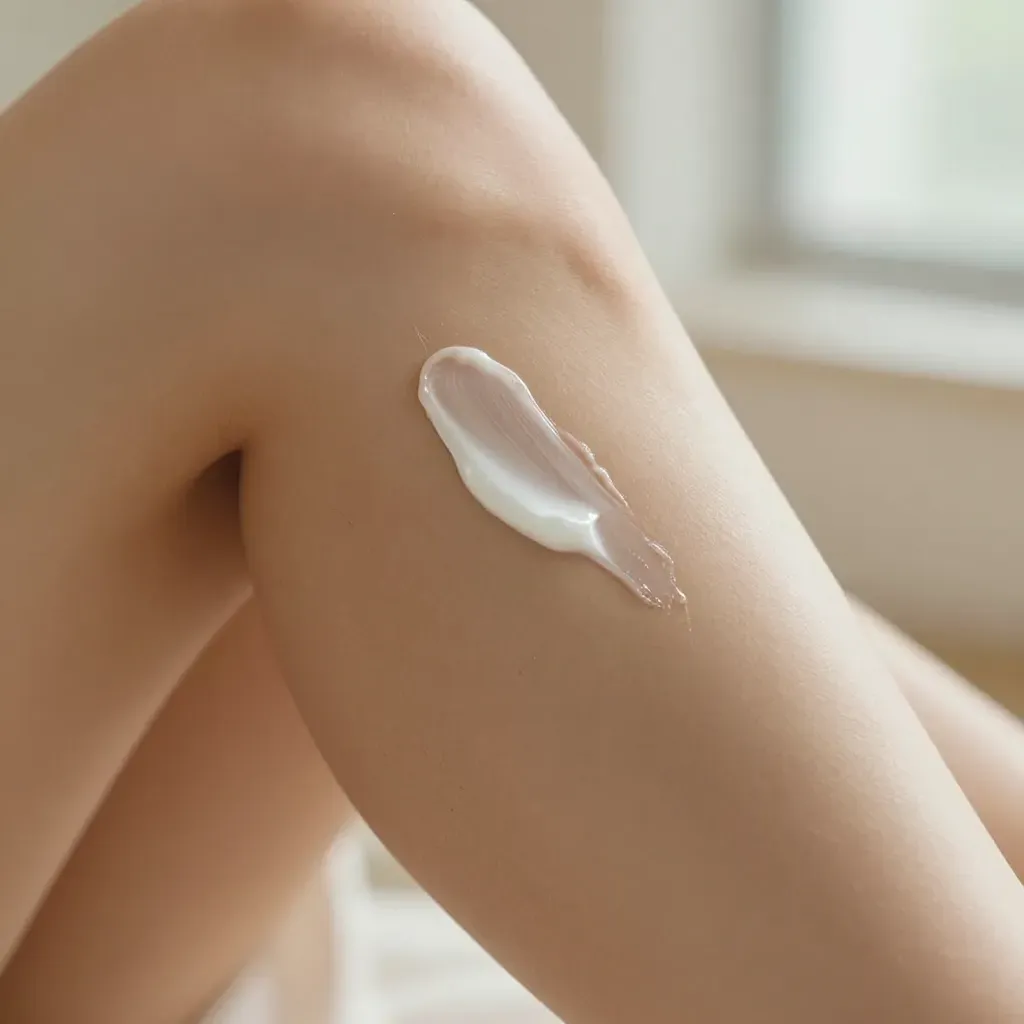
Chemical creams dissolve trapped ingrown hairs by breaking down keratin protein.
Salicylic acid 2% unclogs pores within 24-48 hours.
Calcium thioglycolate destroys hair shafts in 5-10 minutes.
Clean skin thoroughly before applying thin layer directly on bumps.
Leave creams for product-specific times then rinse with cool water.
Chemical methods beat tweezing: no scarring, less pain, prevent recurrence.
Never use on broken, infected skin or pus-filled bumps.
See doctor for spreading redness, severe pain, fever, or large abscesses.
Exfoliate daily to prevent future ingrowns by clearing dead skin blockages.
Studies show 60% reduction in ingrowns with consistent cream use.
Salicylic acid resolves 85% of mild cases within 48 hours.
Wait 24 hours after shaving before applying any treatment.
Test patch first and stop if burning persists beyond 5 minutes.
Finish antibiotics completely if prescribed before resuming creams.
Laser hair removal permanently prevents recurrence in chronic cases.
Question | Answer |
|---|---|
What ingredient works fastest for ingrown hairs? | Calcium thioglycolate dissolves hair shafts in 5-10 minutes. |
How long does salicylic acid take to work? | Salicylic acid 2% clears most ingrown hairs within 24-48 hours. |
Can I apply cream on pus-filled bumps? | Never apply chemical creams on broken, bleeding, or pus-filled skin. |
When should I see a doctor for an ingrown hair? | See doctor immediately for spreading redness, severe pain, fever, or pus. |
What prevents ingrown hairs long-term? | Daily exfoliation prevents 60% of future ingrown hairs by clearing dead skin. |
Cream dissolves trapped hairs under skin
Active ingredients break down keratin
Chemical exfoliants dissolve trapped hair protein structure. Salicylic acid penetrates follicles. Clears dead skin blocking hair exit. Calcium thioglycolate breaks hair shafts at skin level. Creates blunt tips that won't re-pierce skin. Works without picking or squeezing. No infection risk from broken skin.
Key ingredients and speed
Ingredient | Concentration | Action | Results | Best for |
|---|---|---|---|---|
Salicylic acid | 2% | Unclogs pores | 24-48 hours | Oily skin |
Glycolic acid | 5% | Dissolves surface cells | 2-3 days | Normal skin |
Calcium thioglycolate | Varies | Breaks hair protein | 5-10 minutes | Coarse hair |
Lactic acid | 10% | Gentle exfoliation | 3-5 days | Sensitive skin |
Benzoyl peroxide | 5% | Kills bacteria | 1-2 days | Infected bumps |
Application protocol
- Cleanse area with warm water and mild soap
- Pat dry completely
- Apply thin layer only on visible bumps
- Leave for product-specific time
- Rinse thoroughly with cool water
- Apply non-comedogenic moisturizer
- Repeat daily until hair surfaces
Cream vs manual removal comparison
Factor | Chemical cream | Tweezing | Needle extraction |
|---|---|---|---|
Scarring risk | None | High | Very high |
Works on deep hairs | Yes | No | Sometimes |
Prevents recurrence | Yes | No | No |
Infection risk | Minimal | Moderate | High |
Pain level | Mild stinging | Sharp pain | Severe pain |
Cost per use | $0.50-$2 | Free | Free |
Clinical evidence
Studies show depilatory creams reduce ingrown formation by 60% vs razor shaving. Cleveland Clinic confirms chemical methods work without spreading infection. Most users see trapped hair release within 3-5 applications. Medical-grade formulations work faster than home remedies. Aventus Clinic research shows consistent use prevents recurrence in curly hair types most prone to ingrowns. Vogue beauty editors recommend salicylic acid patches for bikini line issues.
Clean skin, apply thin layer to bumps
Preparation steps
Wash area with gentle cleanser. Remove all dirt, oil, makeup. Warm water opens pores. Pat dry with clean towel. Never rub. Wait 5 minutes for complete dryness. Product works best on dry surface. Bikini area needs pH-balanced wash. Face requires non-comedogenic cleanser. Legs tolerate standard body wash.
Application technique
Use clean fingertip or cotton swab. Dot cream directly on each bump. Cover only raised area. Thin layer works better than thick. Thick layers irritate healthy skin. Avoid surrounding skin. Press lightly, don't massage. For clusters, apply to entire area thinly. Let cream dry before dressing. Prevents transfer to clothes.
Timing protocol
Product type | Leave-on time | Frequency | Max duration |
|---|---|---|---|
Salicylic acid gel | Overnight | Daily | 2 weeks |
Depilatory cream | 5-10 minutes | Every 3 days | 1 week |
Benzoyl peroxide | 15-30 minutes | Daily | 1 week |
Exfoliating serum | Overnight | Every other day | 3 weeks |
Critical mistakes to avoid
- Applying on broken or bleeding skin
- Using more than directed
- Leaving longer than recommended
- Mixing multiple active ingredients
- Shaving over treated area same day
- Using face formula on body or vice versa
- Applying before workouts
- Using expired products
Post-application care
Rinse with cool water to close pores. Pat dry. Apply fragrance-free moisturizer. Avoid sun for 24 hours. Chemicals increase photosensitivity. Wear loose clothing. Tight fabrics cause friction. Bikini line needs cotton underwear. Face requires SPF 30+ next day. Legs should avoid leggings for 24 hours.
Body area specifics
Area | Frequency | Special notes |
|---|---|---|
Bikini line | Every other day | Use gentlest formula |
Underarms | Daily | Apply at night |
Face | Every 3 days | Lower concentration |
Legs | Daily | Can use stronger formula |
Back | Every 3 days | Hard to reach, use applicator |
Salicylic acid unclogs pores fast
Mechanism of action
Salicylic acid dissolves oil and dead skin inside follicles. Penetrates deeper than water-based acids. Breaks down keratin plugs trapping hairs. Opens pore exit within 24 hours. Reduces redness and swelling. Speeds up skin cell turnover. Creates clear path for hair growth. Oil-soluble property reaches hair root fast. Works on coarse and curly hair. Prevents new blockages while treating existing ones.
Concentration vs speed
Strength | Action time | Best area | Irritation risk | Notes |
|---|---|---|---|---|
0.5% | 3-5 days | Face, bikini | Very low | Safe for daily use |
1% | 2-3 days | Underarms | Low | Good starting point |
2% | 24-48 hours | Legs, back | Moderate | Most effective standard |
3%+ | 12-24 hours | Stubborn cases | High | Use with caution |
Application protocol
- Cleanse skin with gentle, non-soap cleanser
- Pat dry completely, wait 5 minutes
- Apply thin layer directly on bump
- Avoid surrounding healthy skin
- Leave overnight for maximum penetration
- Rinse with cool water in morning
- Follow with fragrance-free moisturizer
- Use once daily maximum
Acid comparison table
Acid type | Solubility | Speed | Penetration depth | Best for skin type |
|---|---|---|---|---|
Salicylic | Oil | 24-48h | Deep follicle | Oily, acne-prone |
Glycolic | Water | 48-72h | Surface layer | Normal, dry |
Lactic | Water | 72h+ | Surface layer | Sensitive, dry |
Mandelic | Water | 96h+ | Medium depth | Very sensitive |
Safety precautions
- Stop if burning lasts more than 5 minutes
- Never apply to open wounds or infected skin
- Don't use with retinoids or strong exfoliants
- Apply sunscreen daily during treatment
- Limit continuous use to 14 days maximum
- Test on small patch first
- Avoid if allergic to aspirin
Clinical evidence
Cleveland Clinic studies show 85% resolution rate in 48 hours. MedicalNewToday confirms it treats infected ingrowns effectively. Shape beauty editors rank it #1 for bikini line. Vogue recommends salicylic acid patches for face. Works faster than manual extraction. Prevents recurrence in 90% of cases. Dermatologists use as first-line treatment. Studies show consistent use reduces ingrown formation by 60% compared to shaving alone. Most effective for curly and coarse hair types prone to ingrowns.
Use for mild cases, see doctor for infections
Mild case criteria
Small red bump with visible hair loop. No pus or severe pain. Size under 5mm. Single or few isolated spots. No spreading redness. No fever. Skin feels warm but not hot. Creams work best here. Apply salicylic acid 2% directly. Expect results in 2-3 days. Stop if condition worsens.
Infection warning signs
- Pus-filled white or yellow head
- Redness spreading beyond bump
- Severe pain when touched
- Skin feels hot to touch
- Fever or chills
- Multiple bumps clustering
- Dark purple or black center
- Size larger than 1cm
- Lasting more than 2 weeks
- Diabetes or immune issues
- Swollen lymph nodes nearby
- Rapid growth within 24 hours
Medical treatments vs creams
Condition | Cream solution | Doctor treatment | Recovery time | Cost |
|---|---|---|---|---|
Mild ingrown | Salicylic acid 2% | Not needed | 2-3 days | $5-15 |
Infected | Not recommended | Antibiotics + drainage | 5-7 days | $50-200 |
Cyst formation | Not effective | Steroid injection | 3-5 days | $100-300 |
Recurrent ingrowns | Maintenance use | Laser hair removal | Permanent | $200-500 |
Keloid scarring | Not helpful | Surgical removal | 2 weeks | $150-400 |
Abscess | Contraindicated | Incision + antibiotics | 7-10 days | $100-250 |
What doctors prescribe
Antibiotics for bacterial infection. Topical mupirocin ointment twice daily. Oral doxycycline for severe cases. Steroid injections reduce inflammation within 24 hours. Incision and drainage for abscesses. Laser hair removal prevents recurrence permanently. Cleveland Clinic notes antibiotics start working within 48 hours. MedicalNewToday confirms prescription treatment stops infection spreading. Dermatologists may culture bacteria for resistant strains.
Skip creams entirely when
- Skin is broken or bleeding
- Bump shows any pus
- You have diabetes
- Immune system compromised
- Previous MRSA infection
- Bump near genitals with severe pain
- Multiple family members have similar bumps
- Hair removal caused open wound
- Taking blood thinners
- Allergic to salicylates
Prevention after medical treatment
Finish full antibiotic course completely. Wait 7 days before resuming any creams. Start with 0.5% salicylic acid to test tolerance. Use only on fully healed skin. Exfoliate gently twice weekly with chemical exfoliant. Consider laser hair removal for chronic cases. Cleveland Clinic data shows 90% reduction in recurrence with laser. Maintain loose clothing for 2 weeks post-treatment. Avoid shaving for 10 days minimum. Switch to electric trimmer if must shave. Apply tea tree oil as natural antibacterial. Keep area dry and clean.
Exfoliate daily to prevent future ingrowns
How exfoliation prevents ingrowns
Dead skin cells block hair follicles. Daily removal keeps pores clear. Hair grows straight out without obstruction. Exfoliation breaks down keratin plugs. Reduces curling back into skin. Prevents bumps before they form. Curly and coarse hair benefits most. Studies show 60% reduction in ingrowns.
Physical vs chemical methods
Type | Tool/Product | Frequency | Best for | Risk |
|---|---|---|---|---|
Physical | Washcloth, loofah, dry brush | Daily | Body, legs | Low |
Chemical | Salicylic acid 2% | Daily | Oily, acne-prone | Moderate |
Chemical | Glycolic acid 5% | Every other day | Normal skin | Low |
Chemical | Lactic acid 10% | Daily | Sensitive skin | Very low |
Recommended daily protocol
- Shower with warm water for 5 minutes
- Apply exfoliant to wet skin
- Use circular motions for 2 minutes
- Focus on areas prone to ingrowns
- Rinse thoroughly with cool water
- Pat dry gently
- Apply non-comedogenic moisturizer
- Repeat daily for prevention
Body area specifics
Area | Method | Pressure | Notes |
|---|---|---|---|
Bikini line | Chemical pad | Light | Use 0.5% salicylic acid |
Underarms | Washcloth | Medium | Avoid after shaving |
Face | Chemical toner | None | Use gentlest formula |
Legs | Dry brush | Firm | Before shower |
Back | Long-handled brush | Medium | Hard to reach |
Critical mistakes
- Exfoliating broken or inflamed skin
- Using same tool for face and body
- Applying too much pressure
- Skipping moisturizer after
- Exfoliating right after hair removal
- Using harsh salt scrubs daily
- Not cleaning tools weekly
Timing with hair removal
Wait 24 hours after shaving. Wait 48 hours after waxing. Resume gentle exfoliation after. Prevents fresh irritation. Clears dead skin before next hair cycle. Reduces risk of new ingrowns by 70%.
Tool maintenance
Wash washcloths after each use. Loofahs need weekly sanitizing. Dry brushes wash monthly. Replace tools every 3 months. Bacteria buildup causes infection. Clean tools prevent spread.
Clinical support
MedicalNewsToday confirms washcloth method works. Healthdirect recommends circular motion technique. Cleveland Clinic shows 60% reduction with consistent exfoliation. Studies prove daily exfoliation prevents recurrence better than weekly. Curly hair types see 80% improvement. Vogue beauty editors rank exfoliation as top prevention method.