
Table of Contents
Ingrown hair removal dermatologists provide sterile extraction and permanent prevention for severe cases.
Book an appointment for spreading redness, pus, fever, or ingrowns lasting over three weeks.
Professional removal takes 10-15 minutes per lesion and heals within 3-7 days.
Laser hair removal eliminates 80-90% of ingrowns permanently after 6-8 sessions.
Prevent recurrence by using single-blade razors and exfoliating 2-3 times weekly.
Question | Answer |
|---|---|
When should I see a dermatologist for ingrown hairs? | See a dermatologist immediately for spreading redness, pus, fever, or ingrowns lasting over three weeks. |
What procedures do dermatologists use to remove ingrown hairs? | Dermatologists use sterile manual extraction, incision and drainage, chemical cauterization, and laser hair removal. |
How long does recovery take after professional ingrown hair removal? | Manual extraction heals in 3-5 days, incision and drainage takes 7-14 days, and laser treatment recovers in 24-72 hours. |
Does laser hair removal permanently prevent ingrown hairs? | Yes, laser hair removal eliminates 80-90% of ingrown hairs permanently after 6-8 sessions. |
How much does dermatologist ingrown hair treatment cost? | Manual extraction costs $75-$150, incision and drainage $150-$300, and laser hair removal $200-$500 per session. |
When to see a dermatologist for ingrown hairs
Most ingrown hairs resolve within one to two weeks. See an ingrown hair removal dermatologist immediately for spreading redness, severe swelling, pus, or fever. These signs indicate infection requiring medical intervention. Waiting too long allows bacteria to spread deeper into skin.
Red flag symptoms
- Pain increases instead of improves
- Red area larger than a quarter
- Yellow or green discharge
- Red streaks spreading from bump
- Fever above 100.4°F
- Ingrown hair lasts more than 3 weeks
When home treatment fails
Stop DIY methods after 3 days of warm compresses with no improvement. Repeated picking causes scarring and dark spots. Dermatologists use sterile tools to remove trapped hairs without skin damage. Professional extraction prevents infection and reduces healing time from weeks to days.
High-risk situations
Condition | Why see a dermatologist |
|---|---|
Curly or coarse hair | Higher risk of recurring ingrowns |
Facial ingrown hairs | Can cause permanent scarring |
Bikini area ingrowns | Prone to infection, sensitive skin |
History of keloids | Early treatment prevents scar formation |
Diabetes or immune issues | Infections spread faster |
Darker skin tones | Risk of post-inflammatory hyperpigmentation |
Book an appointment for recurring ingrown hairs in the same area. Chronic cases need prescription creams or laser hair removal. Dermatologists identify underlying conditions like folliculitis that mimic ingrown hairs.
What dermatologists do during removal procedures
Initial assessment
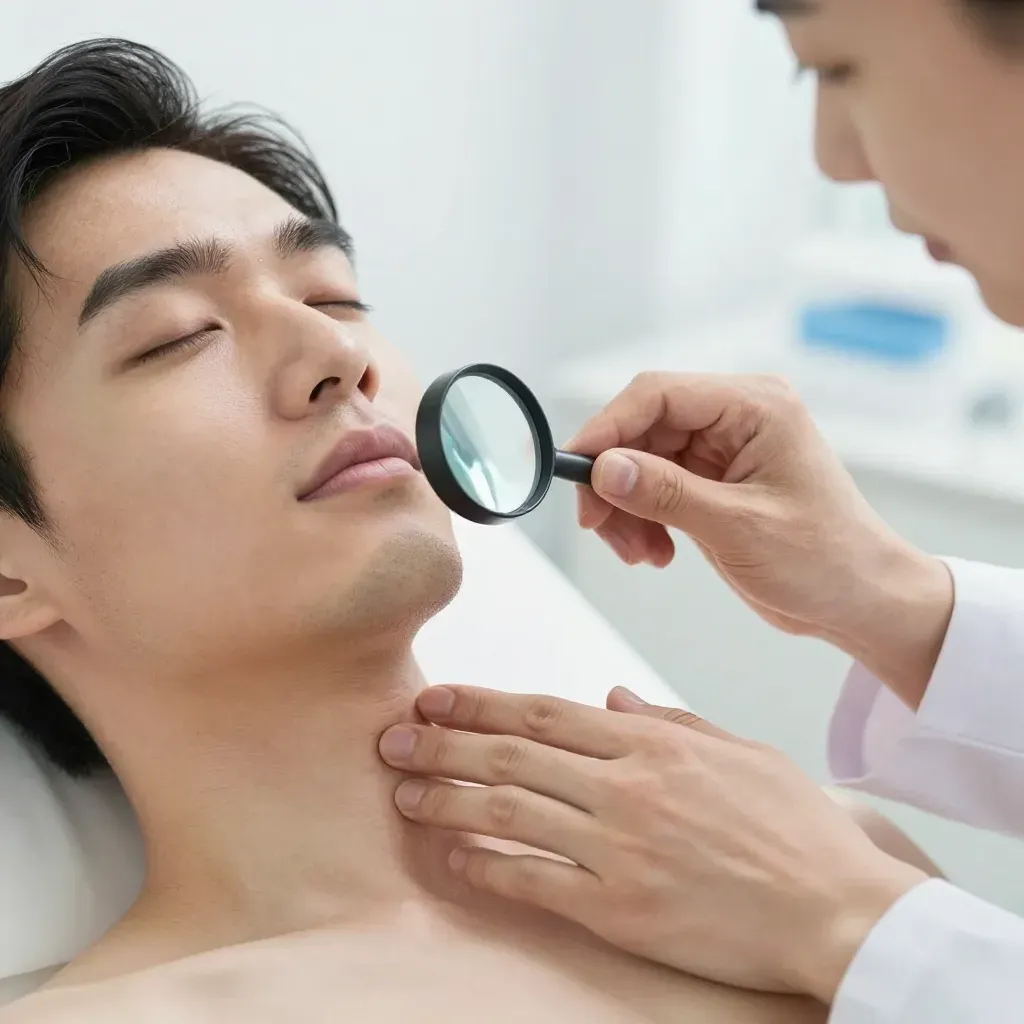
Dermatologists examine the lesion under 10x magnification.
They differentiate ingrown hairs from folliculitis, cysts, or MRSA infections.
Severe cases get swabbed for bacterial culture.
This determines antibiotic selection.
Assessment takes 5 minutes.
Sterile extraction method
Doctors clean skin with antiseptic solution.
Local anesthetic numbs the area within 2 minutes.
Sterile 18-gauge needle or #11 blade creates a tiny opening.
Forceps grasp and remove the entire hair shaft.
They debride any inflammatory tissue.
Each lesion requires 10-15 minutes.
- Single-use instruments eliminate cross-contamination
- Minimal incision reduces scarring risk
- Complete hair removal prevents immediate recurrence
Advanced treatment options
Procedure | When used | Session length |
|---|---|---|
Manual extraction | Acute infected ingrown | 15 minutes |
Incision & drainage | Large abscess formation | 20 minutes |
Electrolysis | Small localized area | 30 minutes |
Laser hair removal | Chronic recurrent cases | 6-8 sessions |
For chronic cases dermatologists recommend laser hair removal as permanent prevention.
The laser targets follicles during active growth phase.
Multiple sessions spaced 4-6 weeks apart achieve optimal results.
This eliminates future ingrown hairs in treated areas.
Post-procedure treatment
Doctors apply topical antibiotic ointment immediately.
Sterile dressing covers the wound for 24 hours.
They prescribe oral antibiotics for severe infections.
Patients receive printed aftercare instructions.
Dermatologists schedule follow-up in 7 days to monitor healing.
Treatment options available at dermatology clinics
Prescription topicals
Dermatologists prescribe stronger creams than drugstore options.
Retinoids (tretinoin) unclog pores and reduce inflammation.
Topical antibiotics (clindamycin) treat active infections.
Steroid creams reduce swelling and redness quickly.
Results appear in 2-4 weeks with daily use.
In-office removal procedures
Procedure | Best for | Cost |
|---|---|---|
Manual extraction | Single deep ingrown | $75-$150 |
Incision & drainage | Large abscesses | $150-$300 |
Chemical cauterization | Recurrent spots | $100-$200 |
Cryotherapy | Inflamed lesions | $75-$200 |
All procedures use local anesthesia and finish within 30 minutes.
Laser hair removal for prevention
Clinics use laser as permanent solution for chronic ingrown hairs.
Diode and Nd:YAG lasers work safely on darker skin tones.
Patients need 6-8 sessions spaced 4-6 weeks apart.
Each session costs $200-$500 depending on area size.
Laser eliminates 80-90% of ingrown hairs permanently.
Advanced therapies
- Microneedling breaks down scar tissue from old ingrowns
- Chemical peels clear dead skin blocking follicles
- Steroid injections shrink painful cysts within 48 hours
- Photodynamic therapy reduces severe folliculitis inflammation
Combination treatment plans
Dermatologists create customized protocols for each patient.
Example: Extraction plus topical antibiotics plus laser sessions.
This approach treats current problems while preventing future ones.
Most patients see 70% improvement within one month.
Recovery time and aftercare instructions
Immediate aftercare (first 48 hours)
Keep original dressing dry and intact for 24 hours.
Remove bandage after one day.
Wash area gently with mild fragrance-free soap.
Pat dry with clean towel.
Apply prescribed antibiotic ointment twice daily for three days.
Cover with sterile bandage if drainage continues.
Recovery timeline by procedure type
Procedure | Initial healing | Complete recovery |
|---|---|---|
Manual extraction | 3-5 days | 7 days |
Incision & drainage | 7-10 days | 14 days |
Chemical cauterization | 5-7 days | 10 days |
Laser hair removal | 24 hour redness | 3 days |
Activity restrictions
- No swimming pools, hot tubs, or lakes for 48 hours
- Avoid gym and sweating for 24 hours minimum
- Skip makeup, lotion, sunscreen on site for 3 days
- Do not shave over treated area until fully healed
- Wear loose breathable clothing to prevent friction
- Change pillowcases and towels daily for first week
Warning signs requiring medical attention
Contact your dermatologist immediately if:
- Pain worsens after day two instead of improving
- Redness expands beyond half inch from treatment site
- Thick yellow or green discharge develops
- Fever reaches 100.4°F or higher
- Wound edges separate or reopen
- Black scab forms indicating tissue death
Long-term prevention protocol
Continue prescription retinoid cream for four weeks minimum.
Begin gentle chemical exfoliation after seven days.
Use benzoyl peroxide wash on area twice weekly.
Switch to electric razor or depilatory creams.
Wait two weeks before waxing or sugaring again.
Schedule follow-up visit at two weeks for assessment.
Book laser hair removal consultation for recurring ingrown hairs.
Prevention tips from skin care professionals
Shaving techniques
Switch to single-blade safety razors immediately. Multi-blade cartridges cut hair below skin level causing ingrowns. Shave with the grain only, never against. Replace blades after 5-7 uses maximum. Soften hair with warm water for 2 minutes before shaving. Apply shaving cream with brush to lift hairs from skin. Stretch skin taut while shaving each section. Rinse blade after every single stroke. Finish with cold water rinse.
Exfoliation schedule
Exfoliate 2-3 times weekly maximum, never daily. Chemical exfoliants work better than physical scrubs that irritate. Use salicylic acid 2% or glycolic acid 5-10% for best results. Apply exfoliant 24 hours after shaving, never before. Reduce frequency immediately if irritation or redness occurs. Stop completely if skin feels sensitive.
Skin type | Exfoliant | Frequency |
|---|---|---|
Oily | Salicylic acid 2% | 3x/week |
Dry | Lactic acid 5% | 2x/week |
Sensitive | PHA 5% | 1x/week |
Dark skin | Mandelic acid 5% | 2x/week |
Post-hair removal care
Apply cold compress immediately after shaving to close pores. Use alcohol-free witch hazel as toner to calm skin. Moisturize within 5 minutes with non-comedogenic lotion. Wear loose cotton clothing for 24 hours minimum. Avoid touching, picking, or squeezing bumps. Change bed sheets and pillowcases daily for first week.
Key ingredients to use
- Benzoyl peroxide wash 5% kills bacteria effectively
- Hydrocortisone cream 1% reduces swelling and redness
- Tea tree oil 1:10 dilution acts as natural antiseptic
- Adapalene 0.1% prevents clogged follicles long-term
- Azelaic acid 10% treats dark marks from old ingrowns
Alternative hair removal methods
Consider laser hair removal for permanent prevention. Depilatory creams cause fewer ingrowns than shaving. Electric razors cut hair above skin surface safely. Waxing requires 3 weeks hair growth between sessions. Sugaring is gentler than waxing for sensitive bikini areas. Threading works well for facial hair but can cause ingrowns.
Professional maintenance schedule
Visit dermatologist quarterly for chronic recurring cases. Get chemical peels monthly to prevent dead skin buildup. Schedule laser hair removal sessions 4-6 weeks apart. Follow up 2 weeks after any extraction procedure. Take photos monthly to track improvement. Adjust treatment plan based on results.