
Table of Contents
See a doctor for painful, infected, or recurring ingrown hairs to prevent scarring and complications.
Dermatologists safely extract trapped hairs using sterile tools under local anesthesia.
Medical treatments include professional extraction, antibiotics for infections, steroid injections for inflammation, and laser hair removal for prevention.
Red flags needing care include severe pain, swelling, pus, spreading redness, fever, recurring spots, and dark scars.
Appointments take 15-30 minutes and cost $100-$400 depending on procedure.
Prevention involves proper shaving techniques, regular exfoliation, and considering laser hair removal.
Find board-certified dermatologists through medical directories and referrals for best results.
Most insurance covers medically necessary extractions but not cosmetic laser treatments.
Question | Answer |
|---|---|
When to see a doctor? | Severe pain, swelling, pus, spreading redness, fever, recurring spots, or dark scars require medical care. |
What treatments help? | Dermatologists offer sterile extraction, antibiotics, steroid injections, and laser hair removal. |
What does extraction cost? | Professional extraction costs $150-$400 per session with insurance covering medical necessity. |
How to prevent recurrence? | Use single-blade razors, shave with the grain, exfoliate 2-3 times weekly, and consider laser removal. |
Who is most qualified? | Board-certified dermatologists using sterile tools prevent infection and scarring most effectively. |
See a doctor for painful, infected, or recurring ingrown hairs.
Ingrown hairs sometimes need professional care. Doctors treat complications and prevent scarring.
Red flags for medical care
Get help if you have:
- Severe pain, swelling, or pus
- Spreading redness or warmth
- Fever or feeling ill
- Same spot keeps getting ingrown hairs
- Dark scars or keloids forming
- Abscesses or boils
What doctors do
Treatment | Best for |
|---|---|
Professional extraction | Deep, painful ingrown hairs |
Antibiotic ointments/pills | Infections or folliculitis |
Corticosteroid injections | Inflammation and scarring |
Minor surgical removal | Chronic or embedded hairs |
Laser hair removal | Preventing future ingrowns |
Who to see
- Dermatologists - Skin and hair specialists
- General practitioners - Mild cases and referrals
- Plastic surgeons - Severe scarring or cysts
What happens at your appointment
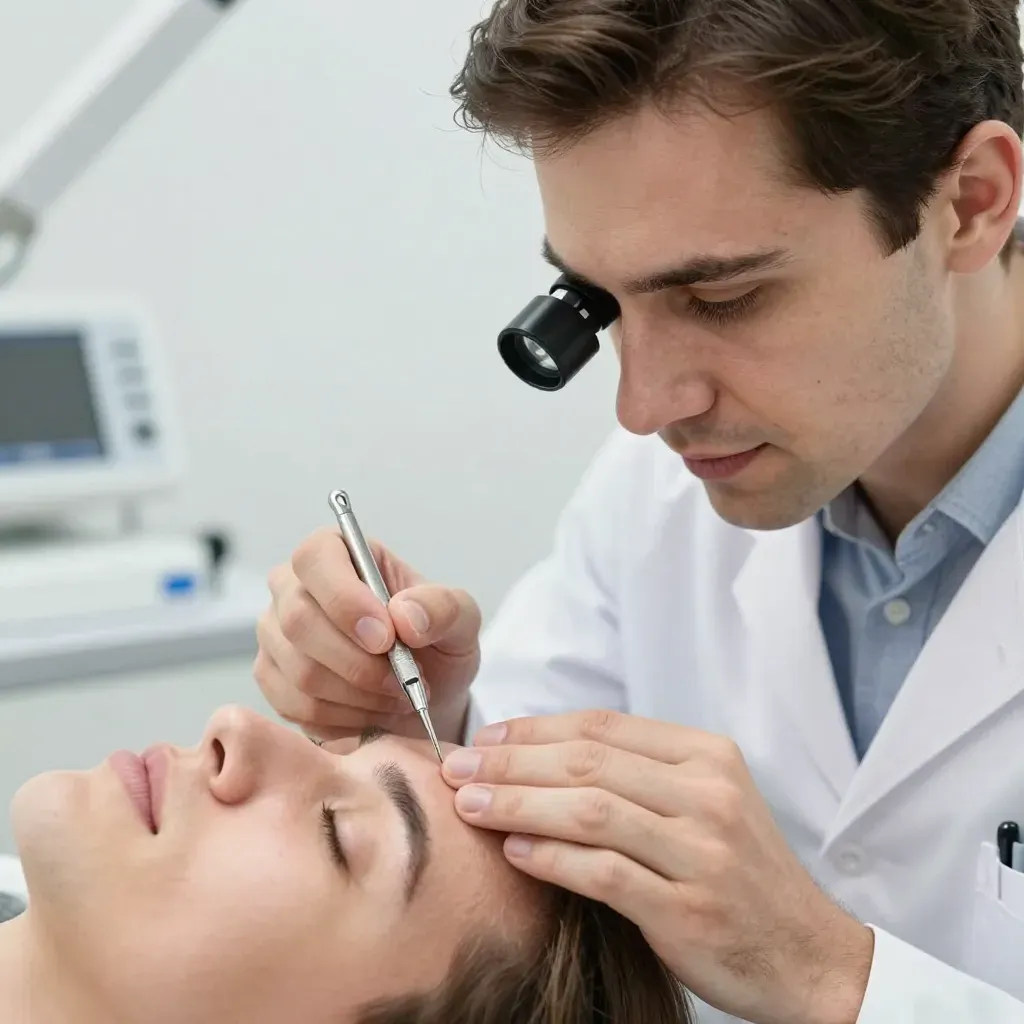
Doctor examines the affected area under good lighting. They apply local anesthetic if needed. Sterile needles or scalpels release trapped hairs safely. The area gets cleaned and bandaged. You receive aftercare instructions. Most procedures take 15-30 minutes. Patients report immediate pain relief.
Typical costs
Service | Cost range |
|---|---|
Consultation | $100-$250 |
Extraction procedure | $150-$400 |
Laser hair removal (per session) | $200-$500 |
Dermatologists safely extract ingrown hairs and treat infections.
Dermatologists specialize in skin and hair conditions. They treat ingrown hairs with sterile medical instruments. Professional extraction prevents complications and scarring. Doctors identify underlying causes like folliculitis or keratosis pilaris.
Professional extraction techniques
Dermatologists use sterile lancets and needles to release trapped hairs. They apply local anesthetic for comfort. Magnification tools ensure precision. The process takes 5-15 minutes per lesion. Doctors remove the entire hair follicle to prevent recurrence. They clean the area with antiseptic solution. Sterile technique eliminates infection risk.
Infection treatment protocols
Doctors prescribe topical antibiotics for mild infections. Oral antibiotics treat spreading cellulitis. They culture pus to identify bacteria. Warm compresses reduce inflammation. Steroid creams calm severe swelling. Treatment lasts 7-14 days. Follow-up appointments ensure proper healing.
DIY extraction | Dermatologist extraction |
|---|---|
Unsterile tools | Medical-grade sterile instruments |
High infection risk | Zero infection risk |
Partial hair removal | Complete follicle extraction |
Scarring likely | Minimal scarring |
No pain control | Local anesthesia available |
Specialized tools used
- 18-gauge sterile hypodermic needles
- Comedone extractors with lancets
- Surgical scalpels for cystic cases
- Wood's lamp for skin analysis
- Magnifying dermatoscopes
Aftercare instructions
Apply prescribed antibiotic ointment twice daily. Keep area clean and dry. Avoid shaving for 48-72 hours. Use loose clothing to prevent friction. Return if redness worsens. Healing takes 3-7 days. Doctors provide written care sheets. Follow-up visits monitor progress.
Most insurance plans cover medically necessary extractions. Cosmetic removal costs $150-$300 per session. Dermatologists treat hundreds of cases monthly. They recognize rare complications like dissecting cellulitis. Early treatment prevents permanent scarring and hyperpigmentation.
Laser removal, antibiotics, and minor surgery treat severe cases.
Severe ingrown hair cases need advanced medical treatments. Chronic infections, cysts, and scarring require specialist intervention. Doctors combine multiple therapies for best results.
Laser hair removal
Laser treatment destroys hair follicles permanently. It prevents future ingrown hairs in treated areas. Dermatologists use Nd:YAG lasers for dark skin. Diode lasers work best for light skin. Sessions occur every 4-6 weeks. Most patients need 6-8 treatments. Results last years. Insurance rarely covers it. Costs $200-$500 per session.
Antibiotic treatments
Doctors prescribe oral antibiotics for spreading infections. Topical antibiotics treat localized folliculitis. Common prescriptions include doxycycline and mupirocin. Treatment courses last 7-14 days. Doctors test pus samples to select effective antibiotics. Antibiotics reduce inflammation and prevent scarring. They work best combined with extraction.
Minor surgical procedures
Surgeons remove chronic cysts under local anesthesia. They excise entire inflamed follicles. Incision and drainage treats abscesses. These procedures take 20-45 minutes. Stitches may be required. Healing takes 1-2 weeks. Procedures prevent recurrence in treated spots. Costs range $300-$800.
Treatment | Best for | Success rate |
|---|---|---|
Laser removal | Prevention, chronic cases | 85-95% |
Oral antibiotics | Infections, folliculitis | 90% |
Surgical excision | Cysts, abscesses | 95% |
Treatment timelines
- Acute infection: 1-2 weeks with antibiotics
- Chronic cysts: Single surgical procedure
- Prevention: 6-8 laser sessions over 6 months
- Complete resolution: 3-6 months for severe cases
Severe cases often involve multiple infected follicles. Doctors treat active infections first. They address underlying causes second. Maintenance plans prevent recurrence. Patients with curly hair benefit most from laser prevention. Medical treatments stop the cycle of inflammation and scarring.
Prevent future ingrown hairs with proper skincare and hair removal.
Prevention stops the cycle of ingrown hairs. Doctors recommend specific routines after treatment.
Shaving best practices
Use single-blade razors or electric shavers. Shave with the grain, not against it. Replace blades every 3-5 shaves. Apply shaving cream or gel. Rinse with warm water. Avoid stretching skin taut while shaving.
Alternative hair removal methods
Method | Ingrown risk | Doctor recommendation |
|---|---|---|
Very low | Highly recommended | |
Depilatory creams | Medium | Use with caution |
Waxing | High | Avoid if prone |
Sugaring | Medium | Better than waxing |
Exfoliation routine
Exfoliate 2-3 times weekly. Use chemical exfoliants with salicylic acid or glycolic acid. Physical scrubs work but irritate sensitive skin. Loofahs and washcloths help daily. Exfoliate before shaving, not after. For quick ingrown hair remedy tips, see our guide.
Moisturizing and skincare
- Apply non-comedogenic moisturizer daily
- Use tea tree oil for antibacterial benefits
- Wear loose cotton clothing
- Avoid tight synthetic fabrics
- Keep skin clean and dry
Products to avoid
Skip heavy, oily lotions that clog pores. Avoid alcohol-based aftershaves that dry skin. Don't use dull razors. Stop picking at bumps. Avoid tight clothing on treated areas. Consider at-home laser hair removal safe options for maintenance.
Post-treatment maintenance
Follow doctor's aftercare plan. Use prescribed topical treatments. Schedule follow-up visits. Consider maintenance laser sessions yearly. Track problem areas. Adjust routine seasonally. Learn how do I remove an ingrown hair safely if one appears.
Find qualified doctors through dermatology clinics and referrals.
Where to find qualified doctors
Search American Academy of Dermatology directory. Ask primary care doctors for referrals. Check university hospital clinics. Read verified reviews on Healthgrades. Verify board certification on state medical boards. Look for ethnic skin expertise for darker tones.
Essential credentials
Credential | Why it matters |
|---|---|
Board certification | Proves specialized dermatology training |
5+ years experience | Expertise in complex cases |
Hospital privileges | Access to emergency care |
Key questions to ask
- How many ingrown hair cases monthly?
- What are your infection rates?
- Do you offer laser removal?
- What experience with my skin type?
- Total costs including follow-ups?
Insurance and costs
Medical extractions often covered. Laser treatments usually cosmetic. Get written estimates. Ask about payment plans. Compare three clinics. Check HSA/FSA eligibility.
Find specialists through best laser hair removal portland directories. For brazilian laser hair removal sessions, choose board-certified dermatologists. Research best laser hair removal charleston sc options.