
Table of Contents
Ingrown hair removal starts with warm compresses at 110-120°F applied 3-4 times daily for 10-15 minutes to soften skin and bring trapped hairs to the surface naturally without digging.
Tea tree oil diluted in carrier oil reduces bacterial inflammation when applied after compresses, while sugar scrubs or baking soda paste exfoliate dead skin blocking follicles twice weekly to prevent future trapped hairs.
Crushed uncoated aspirin mixed with water creates a salicylic acid paste that dissolves skin binding the hair and reduces swelling when applied every 12 hours for up to three days.
Never squeeze or pick bumps as this drives bacteria deeper causing infection and permanent scarring, and avoid exfoliating active infections or applying undiluted essential oils which cause chemical burns.
Seek professional extraction immediately if red streaks appear, fever develops, pus drains longer than 48 hours, or no improvement occurs after five days of home treatment to prevent keloid scarring and ensure sterile complete follicle removal.
Question | Answer |
|---|---|
How long should I apply a warm compress to an ingrown hair? | Apply warm compresses for 10-15 minutes, 3-4 times daily, rewetting the cloth every 2-3 minutes to maintain heat between 110-120°F. |
Can I apply tea tree oil directly to an ingrown hair bump? | Never apply undiluted tea tree oil directly to skin; always dilute 2-3 drops in one tablespoon of carrier oil like jojoba or coconut to prevent chemical burns. |
When should I stop home treatment and see a professional for ingrown hair removal? | Abandon home remedies after five days without improvement or immediately if you notice red streaks, fever, pus lasting over 48 hours, or increasing pain. |
Is it safe to exfoliate an ingrown hair that has pus or is infected? | Never exfoliate active infections or open wounds as this spreads bacteria and creates scars; wait until pus drains and skin closes completely. |
How does aspirin help remove ingrown hairs? | Crushed uncoated aspirin creates a salicylic acid paste that dissolves dead skin binding the hair while reducing inflammation and pain. |
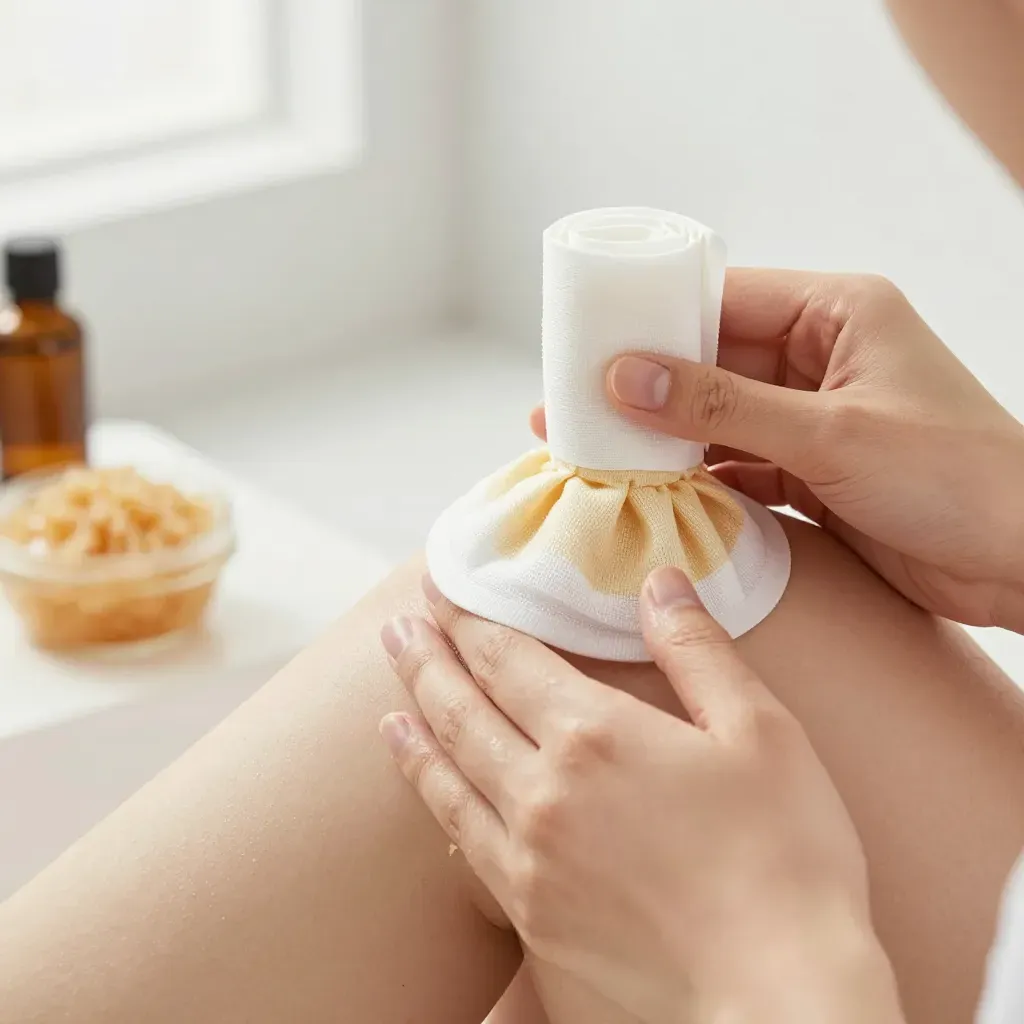
Warm compresses soften skin and bring hairs to the surface fast
Heat dilates blood vessels and softens the epidermis trapping the hair. This brings the loop closer to the surface where you can extract it safely without digging or cutting.
Proper technique
- Use clean washcloth or small towel
- Soak in hot water between 110-120°F
- Test temperature on inner wrist first to avoid burns
- Apply directly to bump for 10-15 minutes
- Rewet cloth every 2-3 minutes to maintain heat
- Repeat 3-4 times daily until hair surfaces
Add Epsom salts for extra drawing power. One tablespoon per cup of hot water reduces inflammation faster and pulls the hair tip toward the opening.
What to expect
Skin softens within minutes. Pores open. The hair tip becomes visible at the surface or a whitehead forms indicating ready extraction. Most ingrowns surface within 24-48 hours of consistent treatment.
Method | Best for | Duration | Frequency |
|---|---|---|---|
Warm compress | Deep ingrowns, new bumps | 10-15 min | 3-4x daily |
Cold compress | Swelling, pain relief | 5-10 min | As needed |
Critical warnings
Do not squeeze or pick after compressing. This drives bacteria deeper and causes infection or permanent scarring. Wait until the hair breaks the skin naturally or use a sterile needle only if the loop is fully visible and raised above the surface.
Combine with gentle exfoliation between compresses for faster results. Dead skin blocks the opening and prevents the hair from exiting even when softened.
Tea tree oil kills bacteria and reduces swelling from ingrown hairs
Tea tree oil packs potent antibacterial and anti-inflammatory compounds that attack the root cause of ingrown hair complications. The terpinen-4-ol compound destroys staph bacteria living in blocked follicles while reducing the redness and swelling that makes bumps painful and visible.
Dilution is mandatory
Never apply undiluted tea tree oil directly to skin. Full strength causes chemical burns and dermatitis. Mix with a carrier oil to safely deliver benefits without damage.
- Combine 2-3 drops tea tree oil with 1 tablespoon jojoba or coconut oil
- Stir thoroughly in clean container
- Store in dark glass bottle away from sunlight
- Discard after 30 days
Application protocol
Apply only to clean, dry skin after warm compress treatment when pores remain open.
Step | Action | Duration |
|---|---|---|
1 | Dip cotton swab in diluted oil | - |
2 | Dab directly onto bump | 30 seconds |
3 | Let absorb naturally | 10 minutes |
4 | Rinse with cool water | - |
Repeat twice daily until inflammation subsides. Most users see redness reduction within 24 hours.
Sensitivity warnings
Patch test on inner arm 24 hours before facial application. Discontinue if burning, rash, or increased redness occurs. Pregnant women and children under 12 should avoid tea tree oil entirely.
For severe infections with pus or spreading redness, tea tree oil helps but professional extraction becomes necessary to prevent scarring.
Exfoliation with sugar or baking soda prevents future blockages
Dead skin cells form a cap over hair follicles forcing new growth sideways into the dermis. Mechanical exfoliation removes this barrier before it traps hairs and clears existing blockages so trapped hairs can break through to the surface.
Sugar scrub method
Mix one cup white sugar with half cup olive oil or coconut oil. Add ten drops tea tree oil for antibacterial boost. Apply to affected area in circular motions using gentle pressure for two minutes. Rinse with warm water. Use twice weekly on healing ingrowns and every three days for prevention.
Baking soda paste
Create paste using one tablespoon baking soda and few drops of water. Consistency should resemble toothpaste. Apply to bump and surrounding area. Let dry for five minutes. Rinse thoroughly. Baking soda neutralizes skin pH and reduces inflammation while granules scrub away debris.
Method | Best for | Frequency | Pressure |
|---|---|---|---|
Sugar scrub | Large areas, prevention | 2-3x weekly | Light circular |
Baking soda | Single stubborn bumps | Daily until cleared | Minimal, let paste work |
Critical warnings
Never exfoliate active infections or open wounds. This spreads bacteria and creates scars. Wait until pus drains and skin closes. Stop immediately if bleeding occurs. Over-exfoliation strips protective oils and causes more ingrowns by triggering thick protective callus formation.
Follow with fragrance-free moisturizer to restore barrier function. Dry skin produces more dead cells faster creating the cycle you are trying to break. For persistent bumps that resist home treatment see professional removal options.
Aspirin paste draws out inflammation and releases trapped follicles
Crushed aspirin delivers salicylic acid directly to trapped follicles. This beta-hydroxy acid dissolves dead skin binding the hair while reducing inflammation and pain through acetylsalicylic acid's anti-inflammatory properties.
Preparation
Use uncoated aspirin tablets only. Coatings prevent proper dissolution.
- Crush 2-3 tablets into fine powder using back of spoon
- Add few drops of water to create paste
- Consistency should be thick enough to stay on bump without running
- Optional: add honey for antibacterial boost
Application protocol
Apply only to closed bumps not open wounds.
Step | Action | Time |
|---|---|---|
1 | Clean area with mild soap | 1 min |
2 | Apply paste covering bump completely | - |
3 | Let dry completely | 10-15 min |
4 | Rinse with cool water | - |
Repeat every 12 hours for up to three days. Salicylic acid continues exfoliating for hours after removal.
Safety warnings
Do not use if allergic to aspirin or taking blood thinners. Avoid on broken skin as systemic absorption occurs. Discontinue if intense burning or rash develops. Pregnant women should consult physicians before use.
This method works best combined with warm compresses. The acid softens skin while heat brings hair to surface creating optimal extraction conditions without force.
When home remedies fail professional extraction becomes necessary
Abandon home treatment after five days without visible improvement. Deeply embedded hairs or cystic formations resist kitchen remedies and require sterile intervention to prevent permanent damage.
Warning signs demanding immediate care
- Red streaks spreading from bump indicate lymphangitis
- Fever or chills signal systemic infection
- Pus drainage lasting more than 48 hours
- Pain increasing despite warm compresses
- Bump larger than pencil eraser or hardening under skin
Risks of DIY extraction
Needles and tweezers at home push bacteria deeper into dermis. Improper cutting angle fractures the hair shaft leaving root embedded. Self-extraction causes keloid scarring and post-inflammatory hyperpigmentation persisting for months.
Factor | Home Attempt | Professional |
|---|---|---|
Tool sterilization | Alcohol wipe insufficient | Autoclave sterilization |
Magnification | None | 10x loupe or dermatoscope |
Hair removal | Shaft often breaks | Complete follicle extraction |
Scar risk | High | Minimal |
Professional techniques
Licensed estheticians use sterile lancets to create precise opening. Magnification reveals exact hair angle for complete removal without trauma. Post-extraction cortisone injections prevent regrowth and reduce scarring.
Find certified estheticians specializing in ingrown extraction for safe resolution. For severe cystic cases or recurring infections see dermatological removal services.