
Table of Contents
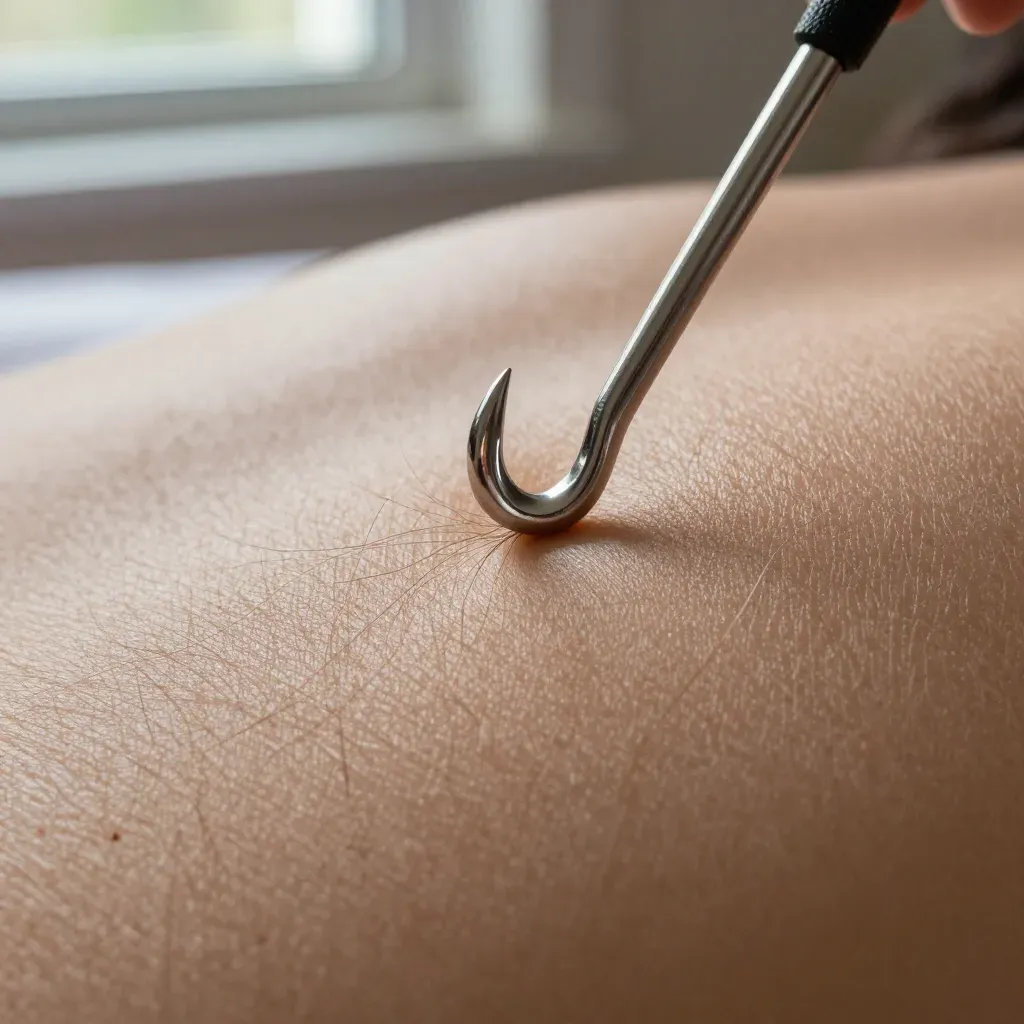
An ingrown hair removal hook uses a curved stainless steel tip to slide under skin and lift trapped hair loops without piercing the surface.
Sterilize with 70% isopropyl alcohol for five minutes before each use to prevent bacterial infection.
Soften skin with a warm compress, hold the hook at fifteen degrees, slide horizontally under the visible loop, rotate to seat the hair, then pull parallel to the skin surface to extract the complete shaft.
Apply antiseptic immediately after extraction and twice daily for forty-eight hours while keeping the area dry.
Prevent future ingrowns by exfoliating weekly with salicylic acid and shaving with sharp single-blade razors moving with the grain.
Question | Answer |
|---|---|
What is an ingrown hair removal hook? | It is a curved stainless steel tool that slides under the skin surface to lift trapped hair loops without piercing the epidermis. |
Why must I sterilize the hook before use? | Unsterilized hooks carry bacteria that cause folliculitis and scarring when pushed into open follicles during extraction. |
How do I use the hook correctly? | Hold it at fifteen degrees, slide horizontally under the visible hair loop, rotate to seat the hair, then pull parallel to the skin surface toward hair growth. |
What antiseptic should I use after extraction? | Apply 70% isopropyl alcohol, povidone-iodine, or chlorhexidine immediately to kill bacteria entering the open follicle. |
How do I prevent future ingrown hairs? | Exfoliate weekly with salicylic or glycolic acid to clear dead skin and shave with sharp single-blade razors moving with the grain. |
An ingrown hair removal hook lifts trapped hairs from under the skin.
An ingrown hair removal hook uses a curved stainless steel tip to slide beneath the skin surface. It catches the trapped hair loop from below. You lift the shaft upward and out without piercing the epidermis. This prevents the trauma caused by tweezers or needles. The tool resembles a small dental pick with a rounded end that prevents skin puncture. You hold it like a pencil for maximum control. The hook works specifically on hairs that have curled back into the skin but remain visible as dark loops or dots near the surface.
The curved tip measures mere millimeters in diameter. This thin profile slips between the keratin layer and the hair shaft. You feel slight resistance as the metal catches the strand. Rotate the tool slightly to seat the hair firmly in the curve. Pull parallel to the skin surface not upward at a sharp angle. This prevents breaking the hair mid-extraction and forcing it deeper. The motion requires gentle pressure only. Forcing the hook causes bleeding and post-inflammatory hyperpigmentation.
Hook vs Other Methods
Tool | Mechanism | Risk Level |
|---|---|---|
Removal hook | Slides under hair loop | Low |
Tweezers | Grips surface only | Medium |
Needle | Pierces skin | High |
Fingers | Squeezes bump | High |
Tool Variations
- Double-ended: Two curve sizes for face and body
- Single-ended: Better grip control for precision work
- Stainless steel: Medical-grade rust-proof easy sterilization
- Combo tools: Hook plus comedone extractor for blackheads
Use the hook only when you see a dark hair loop or dot beneath the surface. Do not use on red swollen or pus-filled bumps. The tool extracts visible trapped hairs. It cannot retrieve deep buried shafts without causing skin damage. For stubborn embedded ingrown hair removal or painful ingrown hair bump removal consult a dermatologist. Choose quality stainless steel tools to prevent rust and infection. Sterilize before each use with rubbing alcohol.
Sterilize the hook with rubbing alcohol before every use.
Unsterilized hooks carry bacteria from previous extractions. Staphylococcus aureus and streptococcus colonize the metal surface. You push these pathogens deep into follicles during use. This causes folliculitis, abscesses, and permanent scarring. Sterilization kills 99.9% of surface microbes before they enter broken skin.
Use 70% isopropyl rubbing alcohol. Higher concentrations evaporate too quickly to penetrate bacterial cell walls. Lower concentrations lack killing power. Pour alcohol into a small cup. Submerge the hook tip completely. Wait five minutes minimum. This contact time dissolves bacterial membranes effectively.
Sterilization Steps
Step | Action | Time |
|---|---|---|
1 | Rinse hook with warm water to remove debris | 30 seconds |
2 | Submerge in 70% isopropyl alcohol | 5 minutes |
3 | Air dry on clean paper towel | 2 minutes |
4 | Use immediately or store in sterile case | Immediate |
Never wipe the hook with a dirty cloth or blow on it to dry. Both actions recontaminate the surface. Let alcohol evaporate naturally. The brief wet contact poses no risk. Dry tools drag on skin and cause micro-tears.
Storage Protocol
- Store in original plastic case or clean sealed bag
- Keep away from bathroom humidity to prevent rust
- Never share your hook with others
- Replace if you drop it on dirty surfaces mid-procedure
Skip sterilization once and you risk severe infection requiring medical drainage. Dirty tools also spread bacteria between body areas. A hook used on infected ingrown hair bumps then used on the face causes cross-contamination. Treat the tool like surgical equipment. Clean it every single time without exception.
Slide the curved tip under the hair loop and pull upward gently.
Soften the skin with a warm compress for ten minutes. This relaxes the epidermis and raises the hair loop closer to the surface. Dry the area completely. Wet skin slides and tears.
Hold the hook like a pencil at fifteen degrees to the skin surface. Position the curved tip directly over the visible dark loop. Slide forward horizontally. Do not dig downward. You should feel the metal slip between the keratin layer and the hair shaft with minimal resistance. If you feel scraping or pain, you hit skin. Back out and re-angle.
Rotate the hook slightly once beneath the loop. This seats the hair in the curve. Pull parallel to the skin surface toward the hair growth direction. Do not pull straight up. Upward motion snaps the hair shaft and drives the fragment deeper. The hair should emerge smoothly with the root bulb attached.
Extraction Checklist
Action | Correct | Incorrect |
|---|---|---|
Angle | 15-30 degrees parallel | 90 degrees perpendicular |
Motion | Slide forward horizontally | Dig downward |
Pull | Parallel to skin surface | Straight up |
Resistance | Stop and reposition | Force through |
Stop immediately if you see blood. Blood means you pierced the follicle wall. Apply pressure with gauze. Abort the extraction and treat as embedded ingrown hair removal requiring professional care. For long ingrown hair removal or coiled strands, use the larger curve side of double-ended hooks. Scalp ingrown hair removal requires extra caution due to thin skin and dense follicles.
Apply antiseptic immediately after extraction to kill bacteria.
Extraction leaves the follicle open and vulnerable. Bacteria enter through the micro-channel created by the hook. You have minutes to kill surface pathogens before they colonize the wound. Skip this step and you risk infection, delayed healing, and worse scarring than the original ingrown caused.
Use 70% isopropyl alcohol, povidone-iodine, or chlorhexidine gluconate. Alcohol stings but evaporates fast. Iodine stains skin temporarily but provides longer protection. Chlorhexidine offers residual antibacterial activity for hours. Tea tree oil works as a natural alternative with antimicrobial properties but acts slower than medical antiseptics.
Antiseptic Options
Agent | Sting Level | Duration | Best For |
|---|---|---|---|
70% Isopropyl alcohol | High | Seconds | Quick disinfection |
Povidone-iodine | Low | Hours | Deep follicle protection |
Chlorhexidine | None | 24 hours | Sensitive skin |
Tea tree oil | Medium | Minutes | Natural preference |
Apply with a clean cotton pad. Dab directly on the extraction site. Do not rub. Rubbing drives debris back into the pore. Cover with a breathable bandage if the area rubs against clothing. Bikini area ingrown hair removal especially requires coverage due to friction from underwear.
Aftercare Protocol
- Reapply antiseptic twice daily for 48 hours
- Keep area dry except for cleaning
- Avoid makeup or heavy creams over the site
- Do not touch with unwashed hands
- Watch for spreading redness or warmth
Redness that expands beyond the original bump indicates infection. See a doctor for severe ingrown hair removal complications. Proper antiseptic use prevents ingrown hair bump removal from becoming a medical procedure.
Apply antiseptic cream after extraction and exfoliate regularly to prevent future ingrown hairs.
Disinfect the wound immediately
Apply antiseptic cream within thirty seconds of extraction. Open follicles invite bacteria. Use benzoyl peroxide or tea tree oil directly on the site. This kills staph bacteria before they enter the bloodstream. Pat dry with sterile gauze. Do not rub. Reapply cream twice daily for three days. Watch for spreading redness or pus. These signal infection requiring medical care.
Exfoliate dead skin weekly
Dead skin blocks hair exits and forces new growth sideways. Exfoliate three times weekly using chemical or physical methods. Salicylic acid dissolves keratin plugs at 2% concentration. Glycolic acid speeds cell turnover without scrubbing. Physical scrubs with microbeads work but irritate sensitive bikini areas. Chemical exfoliants penetrate deeper with less trauma.
Method | Best for | Frequency | Strength |
|---|---|---|---|
Salicylic acid pads | Face, bikini line | Every 2 days | 0.5-2% |
Glycolic acid serum | Legs, arms | Twice weekly | 5-10% |
Exfoliating gloves | Back, chest | Once weekly | N/A |
Lactic acid lotion | Sensitive skin | Every 3 days | 5-12% |
Maintain the routine
Stop shaving for forty-eight hours after hook extraction. Resume hair removal only after redness fades. Use sharp razors with single blades. Shave with the grain, never against. Moisturize daily with non-comedogenic lotion to keep follicles clear. Tight clothing traps sweat and causes friction. Wear loose cotton until skin heals completely. Laser hair removal stops ingrowns permanently by destroying follicles.