
Table of Contents
Scalp ingrown hairs form when cut hairs curl back into skin creating red bumps along hairlines and shaved areas.
Apply warm compresses 3-4 times daily for 5-7 days to bring hairs to the surface.
Extract visible hair tips only using sterilized tweezers pulling straight up in the growth direction.
Seek medical care immediately for signs of infection including pus spreading redness or fever.
Prevent recurrence by shaving with sharp single-blade razors or choose permanent laser hair removal.
Question | Answer |
|---|---|
What do scalp ingrown hairs look like? | They appear as small red or flesh-colored bumps with possible hair loops visible beneath the surface. |
How do I safely remove an ingrown hair from my scalp? | Wait until the hair tip breaks the surface then extract with sterilized tweezers pulling straight up. |
When is a scalp ingrown hair considered infected? | Infection occurs when you see pus drainage feel warmth around the bump or notice spreading redness. |
How can I prevent ingrown hairs when shaving my head? | Prevention requires sharp single-blade razors shaving with the grain only and exfoliating twice weekly. |
What permanent solution stops scalp ingrown hairs completely? | Laser hair removal destroys follicles and ends the cycle permanently. |
Identify ingrown hairs on scalp and spot infection signs
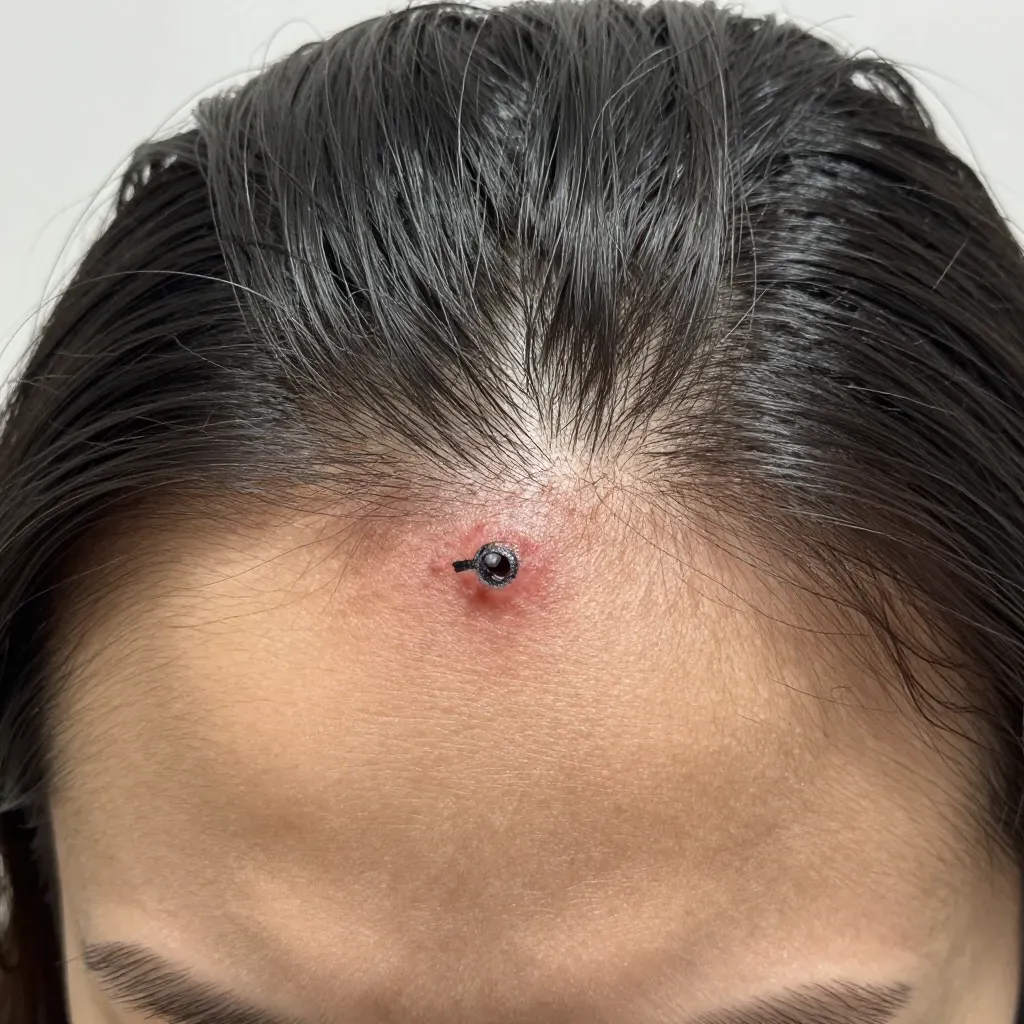
Scalp ingrown hairs appear as small red or flesh-colored bumps along hairlines, crowns, or shaved areas. They occur when cut hairs curl back and reenter skin instead of growing outward. You may see a hair tip trapped beneath the surface or a loop of hair visible under thin skin.
Visual identification guide
- Early stage: Tiny red bump resembling a pimple without whitehead
- Visible hair: Dark loop or tip visible beneath translucent skin
- Deep cyst: Raised lump under skin, painful to touch, may feel hard
- Location clues: Common after head shaving, fades, or tight hairstyles
Infection warning signs
Sign | Description | Action needed |
|---|---|---|
Pus drainage | Yellow or white fluid from bump center | Clean area, seek care if spreads |
Warmth | Skin feels hot compared to surrounding scalp | Apply warm compress, monitor |
Spreading redness | Red area expands beyond bump borders | Medical attention required |
Fever | Body temperature rises above 100.4°F | See doctor immediately |
Curly or coarse hair types face higher risk. Tight headwear and aggressive shaving push hairs against skin edges. Check shaved areas daily for 3-5 days post-trim to catch early formation.
Apply warm compresses to bring deep hairs to surface
Warm compresses soften scalp skin and open follicles. Heat draws trapped hairs toward the surface while reducing swelling. This prepares deep bumps for safe extraction without cutting or digging.
Compress technique
- Soak clean washcloth in hot water (warm not scalding)
- Wring until damp but not dripping
- Press firmly against the bump for 5-10 minutes
- Repeat 3-4 times daily
- Use fresh cloth each session to prevent bacteria spread
Healing timeline
Day | Scalp changes | Action |
|---|---|---|
1-2 | Pain drops, redness fades | Continue treatment |
3-4 | Hair loop visible under skin | Prepare sterilized tweezers |
5-7 | Whitehead forms or hair breaks surface | Safe to extract |
7-10 | Deep cysts finally surface | Seek help if no change |
Do not squeeze closed bumps. Pressure drives infection deeper into scalp tissue and causes scarring. Stop compresses once hair tip clears the surface. Deep cysts may need a full week before safe removal.
Extract visible hairs with sterilized tweezers only
Wait until the hair tip breaks the surface or a whitehead forms. Extracting too early drives bacteria deeper and causes scars. The hair must be visible above skin level before you touch it.
Tool preparation
- Wash hands with antibacterial soap for 30 seconds
- Clean tweezers with rubbing alcohol or boiling water
- Let tools air dry completely
- Have clean gauze ready
Extraction steps
Step | Action | Warning |
|---|---|---|
1 | Gently lift hair tip with sterile needle if looped under skin | Do not pierce or dig under skin |
2 | Grasp exposed hair with tweezers close to skin surface | Avoid grabbing skin tissue |
3 | Pull straight up and out in hair growth direction | Never twist or yank sideways |
4 | Clean area with mild soap | Skip alcohol which irritates |
Stop if you feel resistance. Forcing extraction tears follicles and creates wounds. Deep cysts need dermatologist intervention. Apply antibiotic ointment after successful removal. Leave the area alone if extraction fails and restart warm compresses the next day.
Treat infected scalp cysts immediately to prevent complications
Infected scalp cysts form when bacteria enter trapped follicles. Pus accumulates beneath skin creating painful pressure. Immediate treatment prevents cellulitis, permanent follicle destruction, and scarring.
Infection severity guide
Stage | Symptoms | Action required |
|---|---|---|
Mild | Small whitehead, localized tenderness | Topical antibiotic ointment, warm compresses 4x daily |
Moderate | Persistent drainage, skin warmth | Prescription topical antibiotics, oral pain relievers |
Severe | Hard fluctuant mass, spreading erythema | Urgent care for oral antibiotics or surgical drainage |
When to seek emergency care
- Fever exceeding 100.4°F or systemic chills
- Red streaks extending from cyst toward ear or neck
- Scalp skin turns dusky purple or black
- Facial swelling or eye involvement
- Immunocompromised status (diabetes, chemotherapy)
Home drainage attempts introduce new bacteria and cause trauma. Dermatologists perform sterile incision and drainage (I&D) for large cysts, packing wounds to prevent premature closure. Complete full antibiotic courses despite symptom resolution. Monitor for recurrence at same site indicating residual follicle damage.
Prevent recurrence by changing head shaving techniques
Dull blades and improper angles cut hairs below skin level. Curly or coarse hair types face highest recurrence risk. Sharp blades slice cleanly while dull ones pull and snap hair beneath the surface.
Razor selection rules
- Replace blades every 5-7 shaves or when tugging occurs
- Single-blade razors reduce buried hair ends vs multi-blade systems
- Electric foil shavers leave hair above skin level
- Never share razors or reuse disposable heads
Scalp shaving protocol
Step | Action | Purpose |
|---|---|---|
Prep | Exfoliate scalp with soft brush 24 hours pre-shave | Removes dead skin blocking follicles |
Soften | Hot shower or towel for 3 minutes | Opens pores, softens hair shafts |
Shave | With grain only, light pressure, short strokes | Prevents hair snapping below surface |
Aftercare | Cold rinse, alcohol-free moisturizer | Closes pores, reduces irritation |
Exfoliate twice weekly with salicylic acid or soft scalp brush to free trapped hairs. Stop shaving entirely if ingrowns persist. Laser hair removal destroys follicles to end the cycle permanently. It works best on dark hair against light skin but newer devices treat all types. Space treatments 4-6 weeks apart for complete scalp coverage.