
Table of Contents
Neck ingrowns form when shaved hair reenters skin, caused by coarse curls, against-grain shaving, dull blades, and collar friction.
Remove safely with warm compresses to soften skin, then lift visible tips with sterile needles and tweezers.
Seek medical care for pus, red streaks, hard cysts over three weeks, or fever.
Prevent by shaving with grain using sharp single-blade razors, daily acid exfoliation, and loose collars for 48 hours post-shave.
Laser destroys follicles permanently after 6-8 sessions.
Question | Answer |
|---|---|
What causes ingrown hairs on the neck? | Shaved hair cut below skin curls back into tissue instead of growing outward. |
How do you safely remove an ingrown hair at home? | Warm compresses soften skin before lifting visible tips with sterile needles and pulling up with tweezers. |
When should you see a doctor for an ingrown hair? | See a doctor for pus with red streaks, hard cysts over three weeks, or fever. |
How can you prevent neck ingrown hairs? | Shave with grain using sharp single-blade razors, exfoliate daily with acids, avoid tight collars for 48 hours post-shave. |
Does laser hair removal stop ingrowns permanently? | Yes, laser destroys follicles after 6-8 sessions to permanently stop regrowth. |
What causes painful ingrown hairs on your neck
How trapped hair forms
Hair grows out of follicles normally, then doubles back and reenters your skin. Instead of emerging above the surface, the shaft pierces the follicle wall and grows into surrounding tissue. Your immune system treats this embedded hair as a foreign object, triggering inflammation, redness, and painful papules along your jawline and neckline. Infected cases develop pustules with pus surrounding the trapped follicle.
Why your neck suffers most
The neck combines coarse terminal hair with constant mechanical friction. Shaving cuts hair below the skin surface. When thick, curly regrowth attempts to push through, it often curls back into the epidermis or grows sideways beneath the skin instead of exiting the follicle properly. Shirt collars and clothing friction further irritate the area, compressing hair and forcing it deeper into follicle walls.
- Shaving technique: Going against the grain or using dull blades cuts hair below skin level
- Hair texture: Curly or coarse strands naturally curve back toward skin during regrowth
- Clogged follicles: Dead skin cells and sebum block the exit path, forcing hair sideways
- Tight clothing: Collars press hair back into the neck during the critical first 48 hours of regrowth
- Skin tension: Stretching skin while shaving causes hair to retract below surface when released
Risk Factor | Neck-Specific Impact |
|---|---|
Curly/coarse hair | 70% higher chance of curling back into skin rather than growing outward |
Daily shaving | Repeated micro-cuts trap hair below surface; neck skin is thinner than face |
Thick collars | Physical pressure redirects hair growth angle parallel to skin surface |
Blade quality | Dull blades tear rather than cut, creating jagged tips that snag tissue |
Step-by-step safe removal at home
Soften the area first
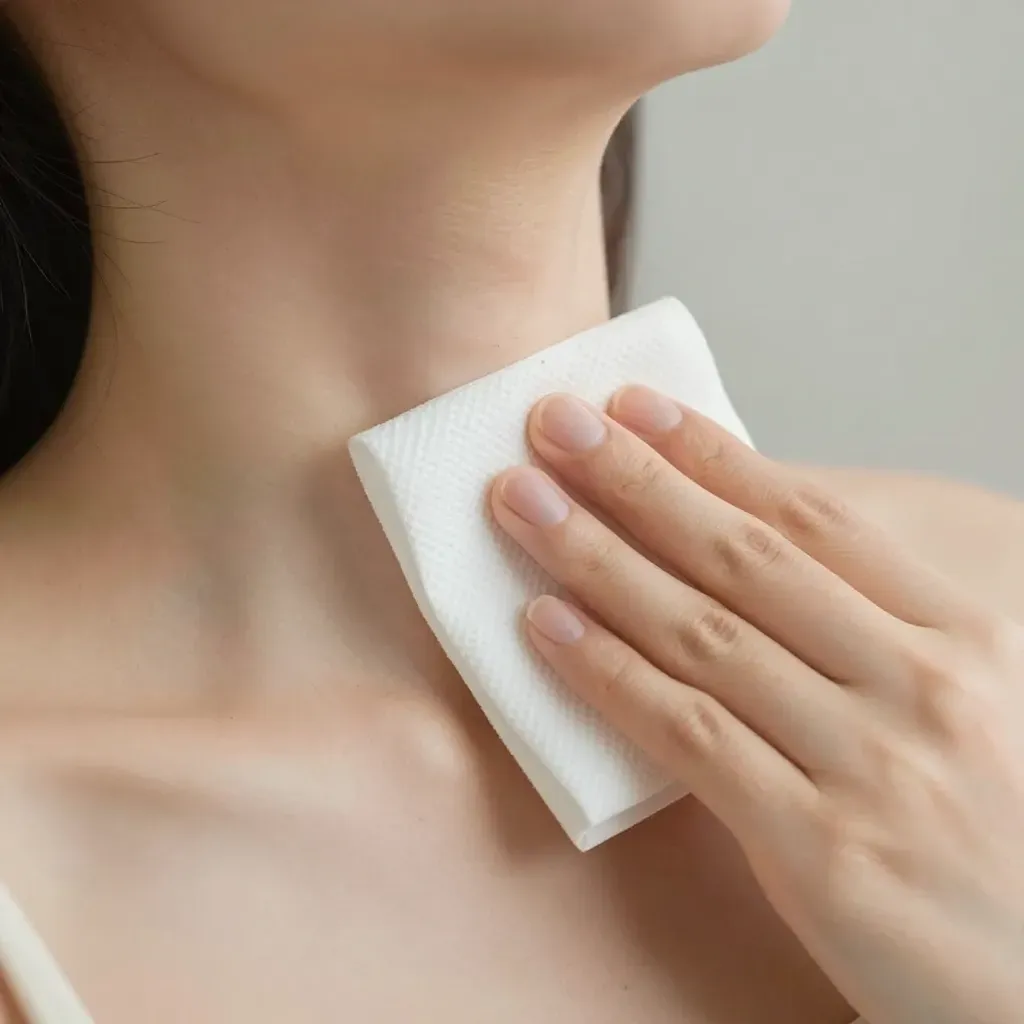
Wet a washcloth with hot water. Wring it out. Press it against the neck bump for 5 minutes. Repeat 3-4 times daily. Heat opens pores and softens the skin barrier, allowing the hair to break through naturally. For deeper bumps, apply a warm compress for 10-15 minutes to draw the hair closer to the surface.
Gentle extraction technique
Once the hair tip becomes visible:
- Sterilize a needle with rubbing alcohol
- Gently lift the hair tip out horizontally. Do not dig underneath the skin
- Use clean tweezers to grasp the exposed hair and pull it straight up
- Stop immediately if you meet resistance or see bleeding
Exfoliation to release trapped hairs
Wash the neck using a washcloth with circular motions for several minutes. This physical exfoliation helps release hairs stuck beneath dead skin cells. Salicylic acid or glycolic acid pads applied daily dissolve the cellular debris blocking the follicle exit.
Do This | Never Do This |
|---|---|
Warm compress 5-10 min | Squeeze or pop the bump |
Sterile needle to lift visible tip only | Dig under skin with needles or pins |
Gentle circular washing | Pluck hair below skin surface |
Stop if pain or bleeding occurs | Continue shaving over active bumps |
When to seek professional extraction help
Infection indicators requiring medical care
Bumps growing larger and more painful signal infection. Pustules containing yellow or green pus indicate bacterial involvement. Red streaks spreading from the bump suggest cellulitis. Fever accompanying neck swelling means the infection has progressed beyond the follicle. These symptoms require antibiotic treatment from a dermatologist.
Deep cysts and chronic cases
Hard lumps persisting beyond three weeks resist home remedies. Cysts sitting deep beneath the skin surface need professional incision and drainage. Dermatologists use sterile instruments to extract the hair and accumulated debris without rupturing the follicle wall. Steroid injections reduce inflammation in stubborn, recurring bumps.
- Multiple painful lumps clustered together
- Darkening skin or hyperpigmentation from repeated inflammation
- Hair trapped completely beneath skin with no visible tip
- Previous scarring from DIY extraction attempts
Symptom | Action Required |
|---|---|
Pus-filled bump with red streaks | Immediate dermatologist visit for antibiotics |
Hard lump lasting 3+ weeks | Professional extraction or steroid injection |
Recurring monthly ingrowns | Consultation for laser hair removal |
Open wound from picking | Wound care to prevent secondary infection |
Prevention tips for smooth neck skin
Shave with the grain
Shave in the direction of hair growth only. Going against the grain cuts hair below the skin surface and creates sharp tips that pierce follicle walls when they regrow. Use a sharp, single-blade razor. Dull blades tear hair and create jagged ends that snag tissue. Rinse the blade after every stroke. Never stretch your neck skin taut while shaving. Releasing stretched skin snaps hair back below the surface.
Exfoliate and moisturize
Remove dead skin cells blocking follicle exits. Use a salicylic acid or glycolic acid cleanser daily to dissolve cellular debris. Physical exfoliation with a soft brush lifts hairs before they trap themselves. Exfoliate 24 hours before shaving. Apply fragrance-free moisturizer immediately after shaving to soften emerging hair and reduce friction from shirt collars.
Clothing and timing
Wear loose cotton collars for 48 hours after shaving. Tight clothing presses fresh-cut hair back into the skin during the critical regrowth phase. Let neck hair grow 1-2 millimeters between shaves. This length allows hair to break through the skin surface rather than curling underneath.
Do | Avoid |
|---|---|
Sharp single-blade razor | Multi-blade cartridges cutting below skin level |
Shave with hair growth direction | Against-the-grain passes for "closer" shave |
Loose cotton collars | Tight shirts pressing on fresh-shaved skin |
48-hour rest between shaves | Daily shaving over irritated skin |
- Apply warm water for 3 minutes before shaving to soften hair shafts
- Use shaving gel labeled "non-comedogenic" to prevent clogged pores
- Replace blades every 5-7 shaves to maintain clean cuts
- Wear breathable fabrics that don't trap heat against the neck
Permanent laser solutions for chronic cases
How laser breaks the cycle
Laser targets the hair follicle with concentrated light energy. The pigment absorbs the heat and destroys the root structure. Without a functioning follicle, hair cannot regrow. No regrowth means no trapped hairs curling back into your neck skin. Laser treatment resolves current ingrown hairs while preventing future ones. The procedure works on mild to moderate existing bumps. Heat from the laser helps release trapped hairs from beneath the skin surface.
Treatment protocol
Most neck areas require 6 to 8 sessions spaced 4 to 6 weeks apart. Each session treats active follicles in their growth phase. Results become permanent after completing the full series. Touch-ups handle any dormant follicles that activate later.
- Avoid treatment over active infections or open wounds
- Shave the area 24 hours before your appointment
- Sessions last 10 to 15 minutes for the neck area
- Mild redness fades within 24 hours
At-home devices versus clinic treatments
Professional Clinic | At-Home Devices |
|---|---|
Medical-grade diode or Nd:YAG lasers | IPL technology with lower energy output |
Safe for all skin tones including dark skin | Limited effectiveness on dark skin tones |
6-8 sessions for permanent reduction | Requires ongoing maintenance treatments |
Handles severe chronic cases | Best for mild prevention between shaves |
Consider comparing at-home versus clinic options based on your skin tone and severity. 2025 at-home devices offer convenience but clinic treatments deliver faster permanent results for stubborn neck ingrowns.