
Table of Contents
Doctors examine infection severity and hair depth before starting any ingrown hair removal procedure.
They sterilize the area and select tools like needles, scalpels, or comedone extractors based on how deep the hair sits.
Laser therapy offers permanent relief by destroying follicle roots to stop chronic recurrence.
Aftercare requires keeping wounds dry for 48 hours then cleaning twice daily with saline until healed.
Prevention includes shaving with the grain, daily chemical exfoliation, and wearing loose clothing to reduce friction.
Question | Answer |
|---|---|
When do doctors delay ingrown hair removal? | Doctors postpone extraction when cellulitis spreads or active infections like herpes are present near the site. |
What tools remove deep ingrown hairs? | Physicians use #11 scalpels for deep cysts and 18-gauge needles for shallow hair loops. |
How does laser treatment prevent ingrown hairs? | Lasers target melanin to heat and destroy follicle roots, stopping hair production permanently. |
What aftercare prevents infection? | Patients keep the site dry for 48 hours then clean twice daily with saline and apply antibiotic ointment. |
How can you prevent future ingrown hairs? | Shave with the grain using single-blade razors, exfoliate daily with acids, and wear loose cotton clothing. |
Doctors examine the infected area before starting the procedure
Doctors start every ingrown hair removal procedure with a thorough skin assessment. They check for active infection, cyst formation, and inflammation depth before touching sterile tools.
Visual inspection identifies redness patterns and pus pockets. Physicians palpate the area to locate the trapped follicle beneath the surface. They determine if the hair sits shallow or runs deep into the dermis. This exam dictates whether they use simple extraction or surgical excision.
Assessment includes these critical checks:
- Infection severity grading
- Hair depth measurement
- Skin type evaluation
- Allergy history review
- Previous keloid scarring check
When doctors postpone extraction
Physicians delay the procedure if cellulitis spreads beyond the bump. They prescribe antibiotics first for severe bacterial infection. Patients with active herpes or impetigo near the site wait until lesions heal completely.
Documentation standards
Clinicians photograph the lesion before touching it. They mark surrounding inflammation borders with surgical pens. This creates a baseline for tracking healing progress post-extraction.
Medical teams verify patient blood thinners and diabetes status. These conditions increase bleeding risks during follicle extraction. Doctors adjust technique based on clotting factors and immune health.
Providers classify lesions into treatment categories:
Grade | Appearance | Action |
|---|---|---|
Mild | Red bump, visible hair loop | Same-day extraction |
Moderate | Pus, localized swelling | Antiseptic prep then removal |
Severe | Cyst, spreading redness | Delay, prescribe antibiotics first |
Dermatologists ask about previous ingrown hair history in the same area. Recurrent cases signal underlying folliculitis or improper shaving techniques. Doctors address these root causes before proceeding.
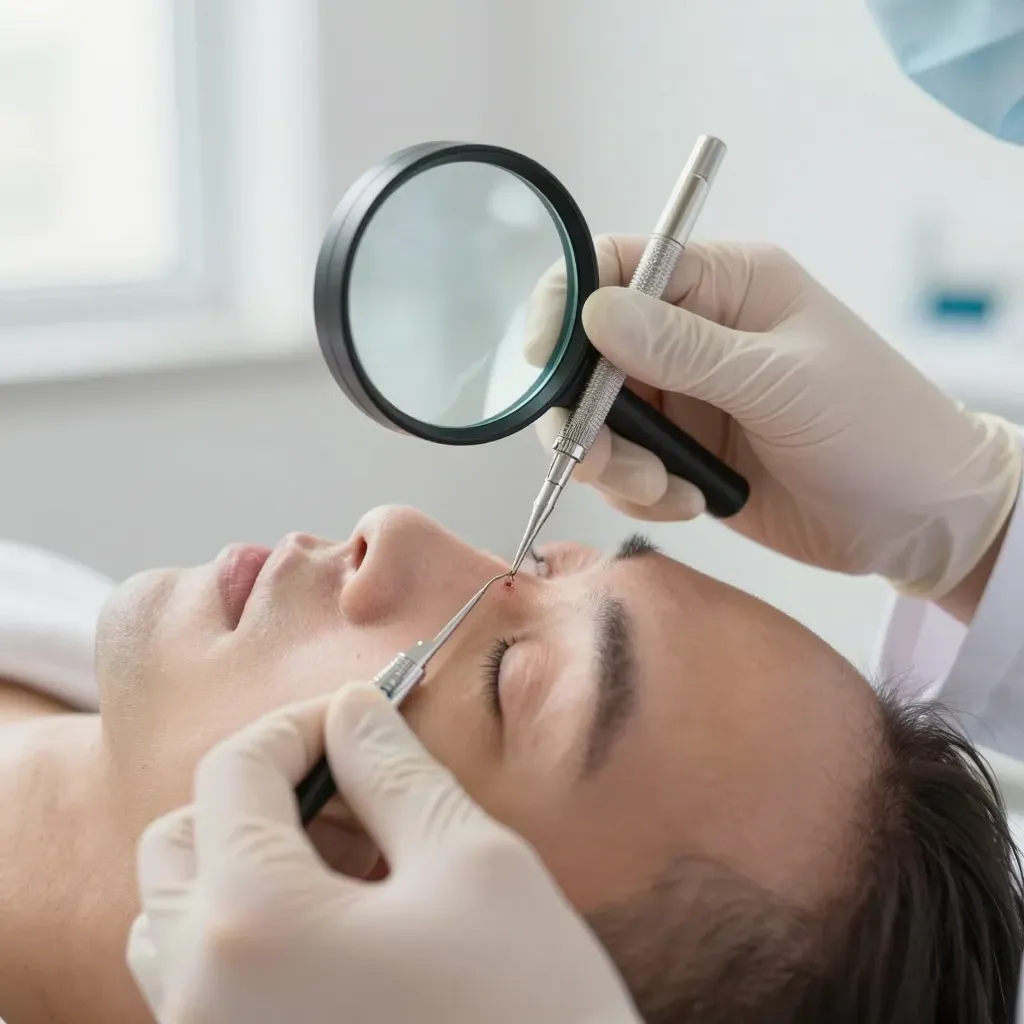
Sterile tools extract trapped hairs from under the skin
Medical teams prep sterile fields before touching any extraction tools. They swab the lesion with povidone-iodine or chlorhexidine to kill surface bacteria. This prevents contamination during the ingrown hair removal procedure.
Clinicians select tools based on hair depth and skin thickness:
Tool | Use Case | Technique |
|---|---|---|
18-gauge needle | Shallow loops | Lift hair tip only |
#11 scalpel | Deep cysts | Small incision, 2-3mm |
Comedone extractor | Visible heads | Press around follicle |
Magnifying loupes | All cases | 4x magnification for precision |
Anesthesia administration
Doctors inject 1% lidocaine with epinephrine around the lesion base. This numbs the area and reduces bleeding. Patients feel pressure but no sharp pain during deep hair removal.
Extraction technique
Physicians make a tiny incision parallel to the hair shaft if the loop sits deep. They use sterile forceps to grasp the exposed hair end. Pulling follows the natural growth direction to avoid breaking the shaft. Broken hairs regrow and repeat the cycle.
For surface-level extractions, clinicians use the loop end of a comedone extractor. They apply even pressure around the bump until the hair emerges. No cutting required for superficial cases.
Post-extraction steps include:
- Immediate pressure with sterile gauze to stop bleeding
- Application of topical antibiotic ointment
- Covering with breathable dressing
- Patient instruction on home wound care
Doctors send extracted hairs to pathology only if they suspect foreign body reaction or unusual skin growth. Standard cases require no lab analysis.
Laser treatment destroys follicles to stop chronic ingrown hairs
Laser therapy offers permanent relief for patients suffering recurring ingrown hairs. The laser targets melanin in the follicle shaft, converting light energy to heat that destroys the root structure. Damaged follicles stop producing hairs entirely, eliminating the source of chronic inflammation.
Different laser systems suit various skin and hair combinations:
Laser Type | Best For | Wavelength |
|---|---|---|
Diode | Light to medium skin | 800-810 nm |
Alexandrite | Light skin, dark hair | 755 nm |
Nd:YAG | Dark skin tones | 1064 nm |
Treatment protocol
Technicians shave the treatment area 24 hours before the session. They apply cooling gel or use built-in cooling systems to protect the epidermis. Each pulse covers a quarter-sized area, delivering energy directly to the buried follicle causing pubic or body ingrowns.
Candidacy requirements
Ideal candidates have dark hair against lighter skin for maximum contrast. Gray, blonde, or red hairs lack sufficient melanin for effective targeting. Patients with active infections in the treatment zone must wait until skin heals completely.
Typical treatment plans include:
- 6-8 sessions spaced 4-6 weeks apart
- Reduction of 70-90% hair growth
- Touch-up sessions annually for maintenance
- Avoidance of sun exposure 2 weeks pre and post treatment
Most patients describe the sensation as a rubber band snap against the skin. Topical anesthetics minimize discomfort in sensitive regions. At-home diode devices offer maintenance between professional treatments but lack the power to destroy deep follicles initially.
Aftercare prevents infection and speeds up healing time
Patients receive sterile gauze dressings immediately after extraction. They keep the initial bandage in place for 24 hours to protect the open follicle from bacterial contamination. Pressure application stops bleeding within minutes for most superficial removals.
First 48 hours protocol
Keep the wound completely dry during the initial healing window. Avoid shower spray directly hitting the extraction site. Pat the area gently with clean tissue if moisture accumulates. Do not apply makeup, deodorant, or fragranced products near the lesion.
Cleaning routine
After 24 hours, rinse the area twice daily with sterile saline or mild soap. Apply thin layers of topical antibiotic ointment like mupirocin or bacitracin. Cover with breathable adhesive bandages during daytime to prevent friction from clothing. Leave the site uncovered at night to allow oxygen exposure.
Watch for these infection warning signs:
- Increasing redness spreading beyond original bump borders
- Thick yellow or green discharge
- Warmth radiating from the site
- Fever above 100.4°F
- Red streaks extending toward heart
Activity restrictions
Avoid swimming pools, hot tubs, and gyms for 72 hours post-procedure. Sweat and chlorine irritate fresh wounds. Skip tight clothing that rubs against the extraction zone. Leg extractions require loose pants to prevent fabric friction.
Healing expectations by extraction depth:
Depth | Scab formation | Full healing |
|---|---|---|
Surface | Day 2-3 | 5-7 days |
Deep cyst | Day 3-5 | 10-14 days |
Surgical excision | Day 5-7 | 2-3 weeks |
Do not pick scabs. Premature removal causes scarring and reopens infection pathways. Resume shaving only after complete epithelial healing, typically 2 weeks post-extraction.
Prevention methods reduce the need for future procedures
Preventing ingrown hairs eliminates the need for repeated extraction procedures. Simple habit changes stop hairs from curling back into the skin or getting trapped beneath the surface.
Shaving technique modifications
Always shave with the grain, never against it. Use single-blade safety razors instead of multi-blade cartridges that cut hairs below skin level. Replace blades every 5-7 shaves to ensure clean cuts without tugging. Soften hair with warm water and shaving gel for 3 minutes before blade contact.
Exfoliation schedule
Mechanical exfoliation removes dead skin cells that block follicle openings. Use salicylic acid or glycolic acid cleansers daily in high-risk areas. Physical scrubs with microbeads work twice weekly for body areas prone to ingrowns. Do not exfoliate immediately after shaving; wait 24 hours.
Method | Frequency | Best For |
|---|---|---|
Chemical exfoliant (BHA/AHA) | Daily | Face, neck, bikini line |
Dry brushing | Pre-shower daily | Legs, arms |
Physical scrub | 2x weekly | Back, buttocks |
Clothing choices matter:
- Wear loose cotton underwear to reduce friction
- Choose breathable fabrics over synthetics
- Avoid tight leggings immediately after shaving
- Change out of sweaty clothes promptly
Consider at-home laser maintenance between professional sessions. Regular IPL treatments thin hair growth permanently, reducing the volume of hairs that could potentially become ingrown. For persistent cases, professional laser hair removal offers the only permanent prevention strategy by destroying follicles entirely.